Alphabet Recognition Extra Challenge Letter Recognition Worksheets for Ages 7-9
3 filtered results
-
From - To
Discover our engaging "Alphabet Recognition Extra Challenge" worksheets for ages 7-9 at Kids Academy! These advanced letter recognition worksheets are specifically designed to strengthen your child's grasp of the alphabet through fun and challenging activities. Perfect for young learners who have a basic understanding of letters, these printables push their skills further, fostering increased confidence and mastery. From puzzles to creative writing prompts, each worksheet offers unique tasks to enhance learning. Help your child advance their alphabet knowledge in a stimulating way. Visit Kids Academy for a delightful blend of education and fun with our excellent resources!
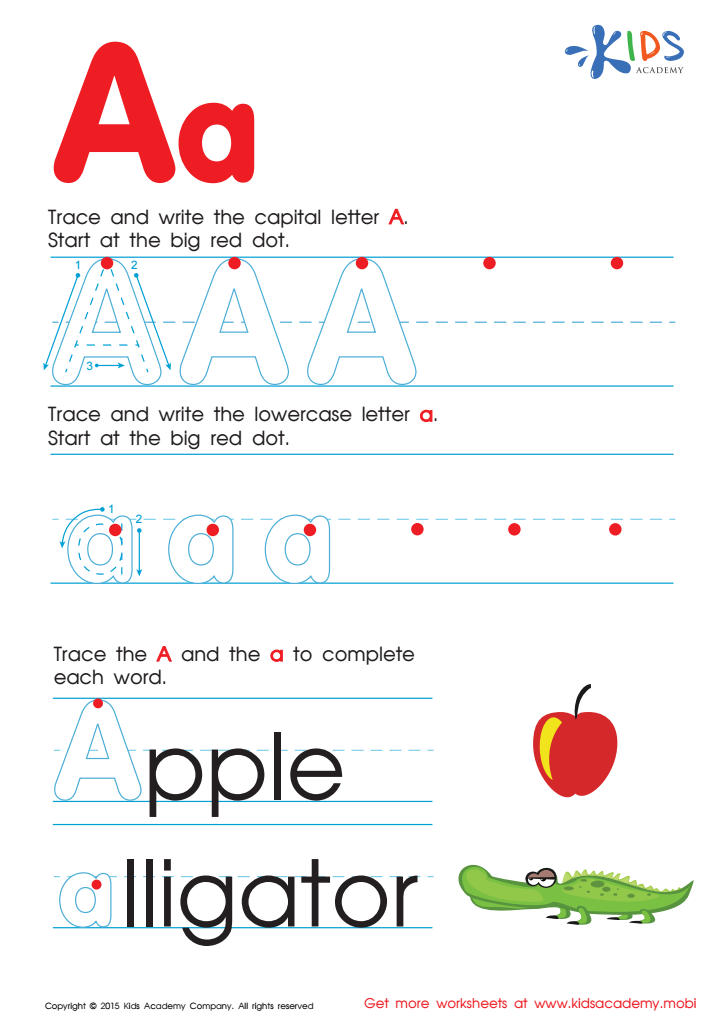
Letter A Tracing Page
 Assign to My Students
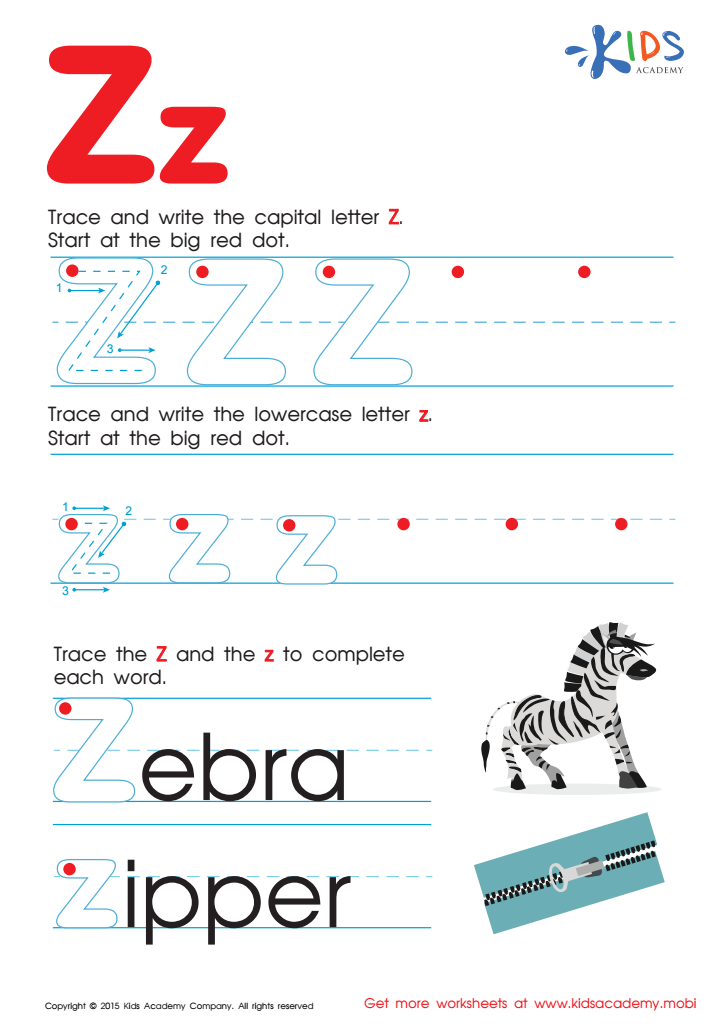
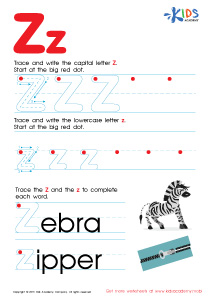
Letter Z Tracing Page
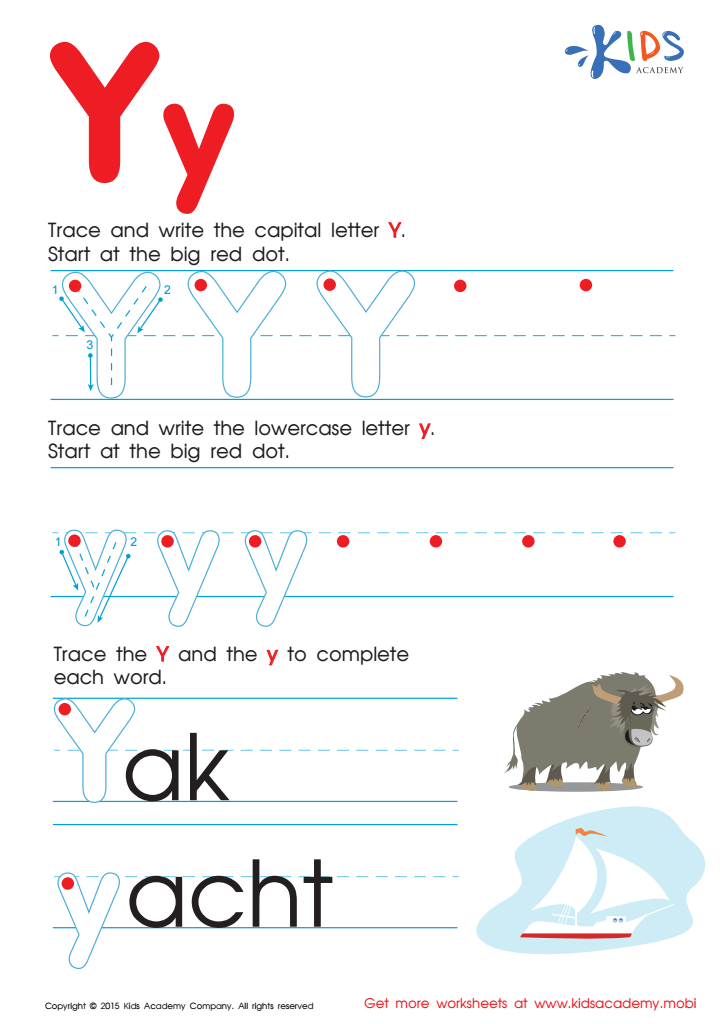
Letter Y Tracing Page








Alphabet recognition is foundational to literacy, and an Extra Challenge Letter Recognition for Ages 7-9 can significantly reinforce this skill. At this age, children should be transitioning from basic letter recognition to employing their knowledge for beginning reading and writing. Strengthening letter recognition during this period offers several key benefits.
Firstly, heightened familiarity with the alphabet aids in developing fluency in both reading and writing. As children distinguish between similar-looking letters and correctly identify both upper and lowercase forms, their overall confidence in handling text increases.
Secondly, mastering letter recognition exercises, especially those categorized as "extra challenges," stimulates cognitive growth. These activities often require memory, analytic abilities, and fine motor control, which are critical for academic success and practical life skills.
Additionally, advanced letter recognition challenges can identify potential learning difficulties, enabling early intervention. Teachers and parents can tailor support to address areas requiring more focus, ultimately promoting an inclusive educational environment.
Lastly, these challenges often present in engaging and playful manners, contributing to a positive attitude toward learning. An enthusiasm for literacy established through such stimulating experiences can lay a durable foundation for lifelong learning. For these reasons, parents and teachers should advocate for and support alphabet recognition advancements for children within this age group.