Chess strategy learning Extra Challenge Worksheets for Ages 7-9
7 filtered results
-
From - To
Enhance your child's chess skills with our "Chess Strategy Learning Extra Challenge Worksheets" designed specifically for ages 7-9. These engaging worksheets provide a fun way for young learners to explore essential chess strategies, tactics, and game dynamics. Incorporating creative exercises, puzzles, and real-game scenarios, these resources cultivate critical thinking, problem-solving, and strategic planning abilities. Tailored to suit young minds, our worksheets not only reinforce chess fundamentals but also make learning enjoyable and interactive. Perfect for at-home practice or classroom use, these extra challenges encourage kids to think ahead, improve their gameplay, and develop a lifelong love for chess!
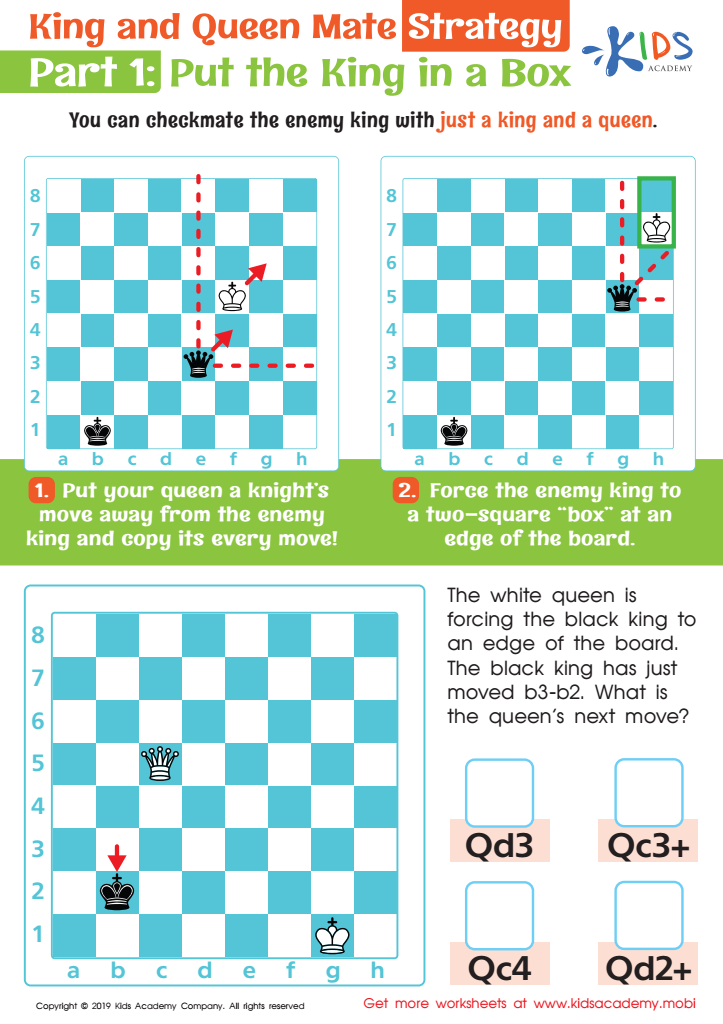
King and Queen Mate Strategy: Part 1 Worksheet
 Assign to My Students
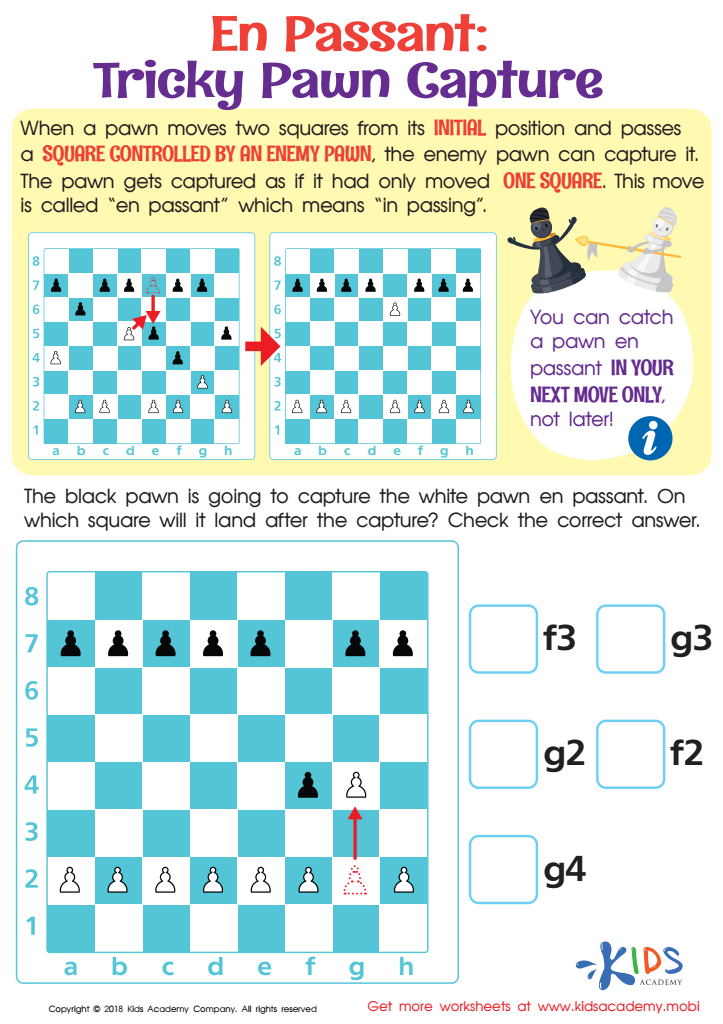
En Passant: Tricky Pawn Capture Worksheet
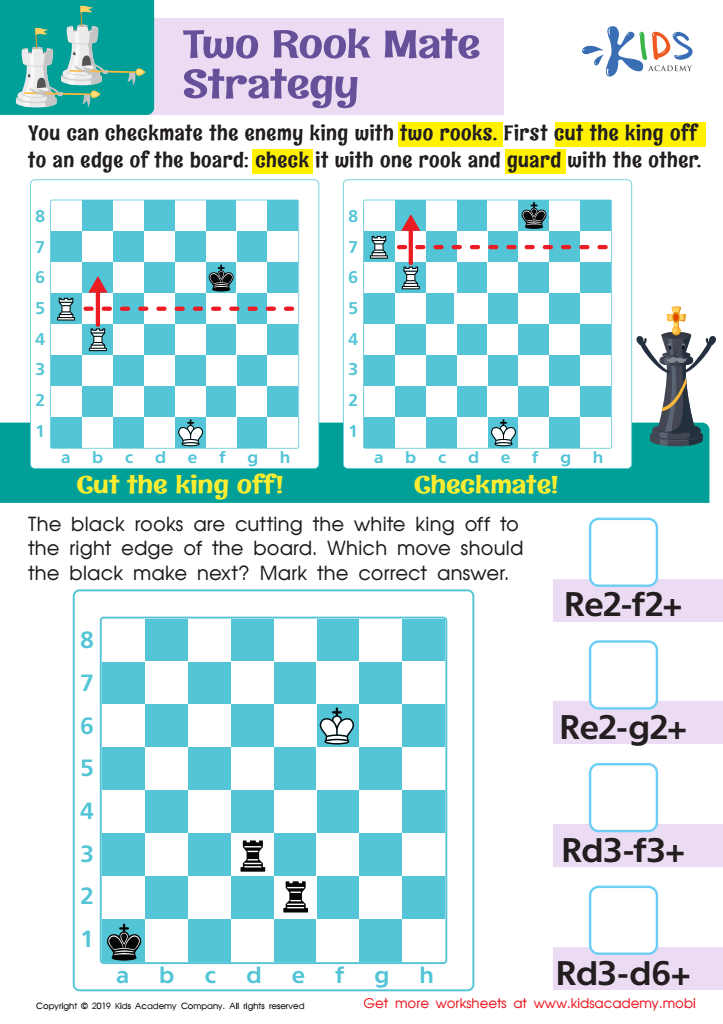
Two Rook Mate Strategy Worksheet
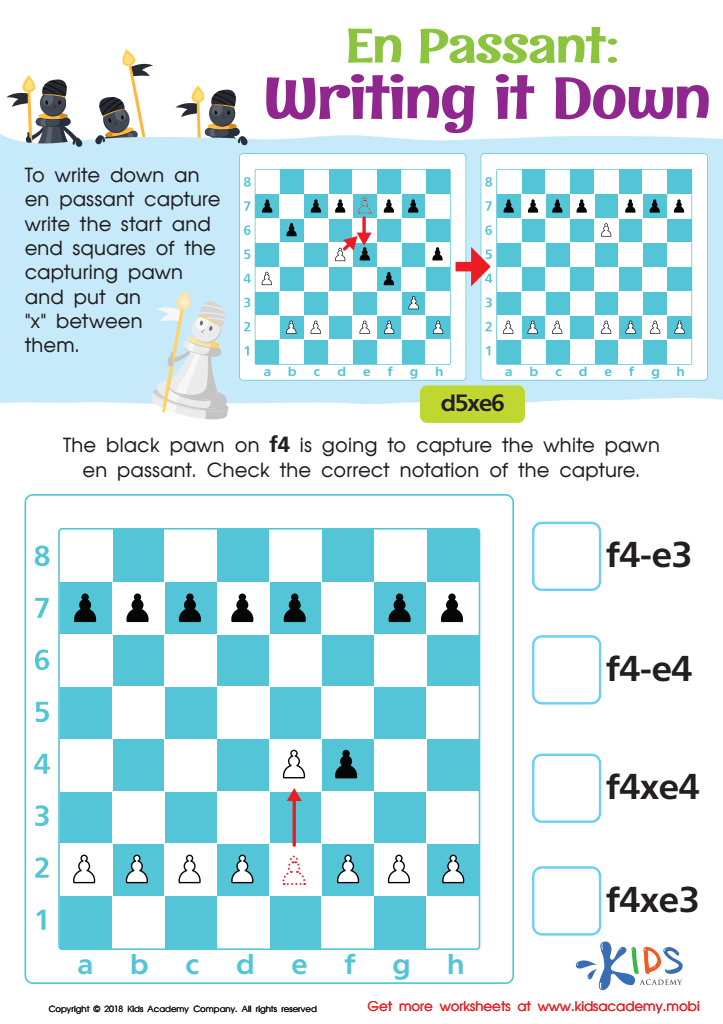
En Passant: Writing it Down Worksheet
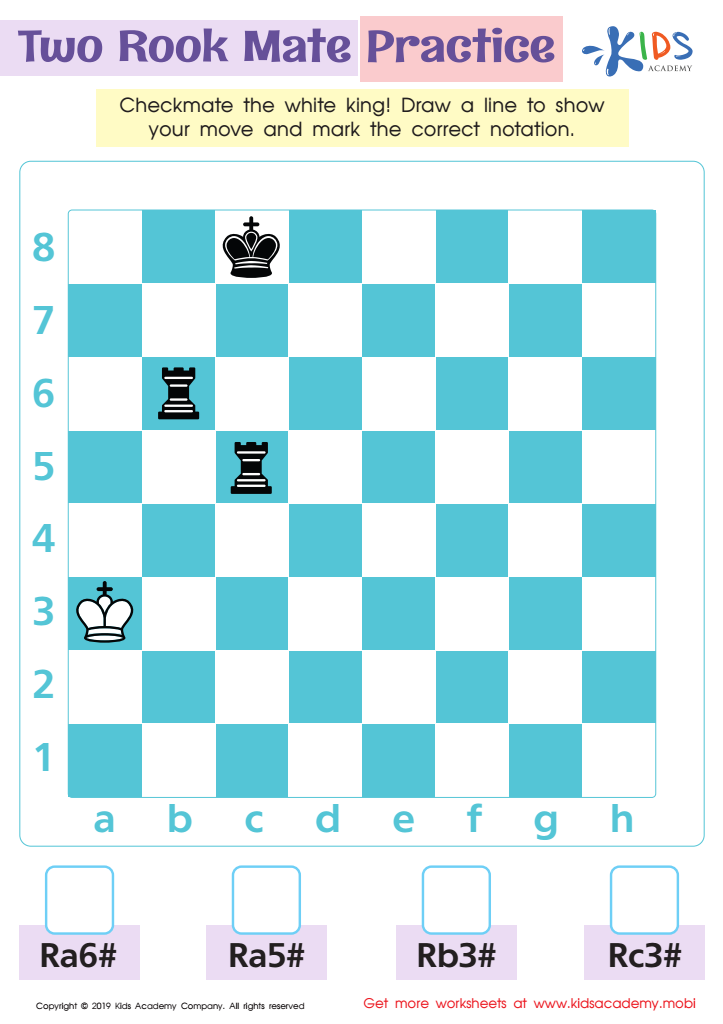
Two Rook Mate Practice Worksheet
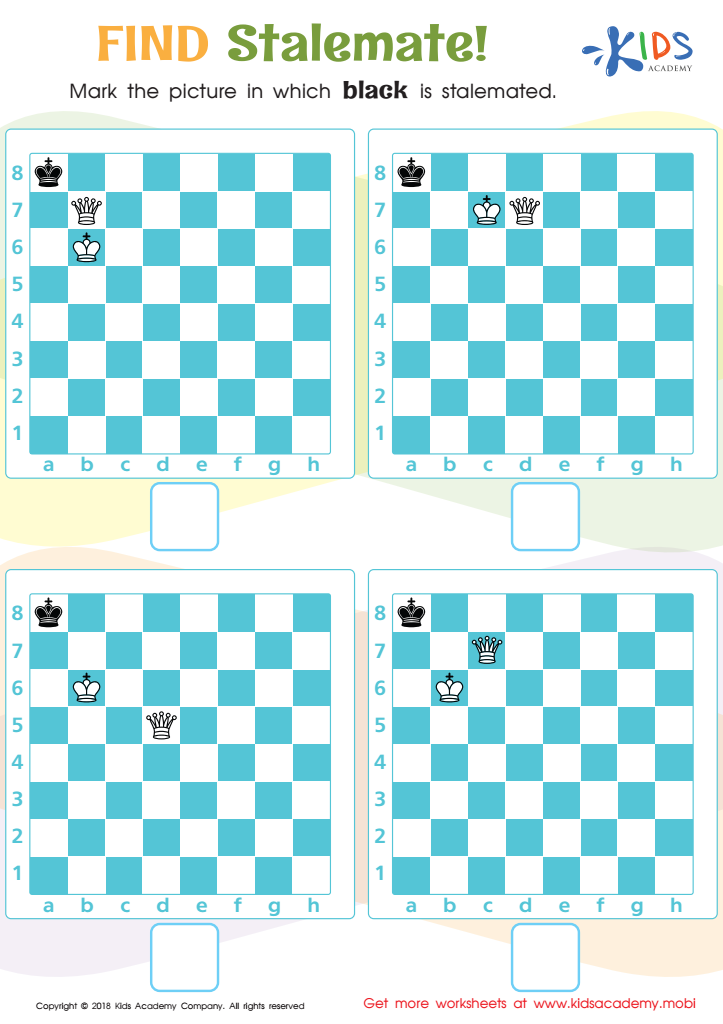
Find Stalemate! Worksheet
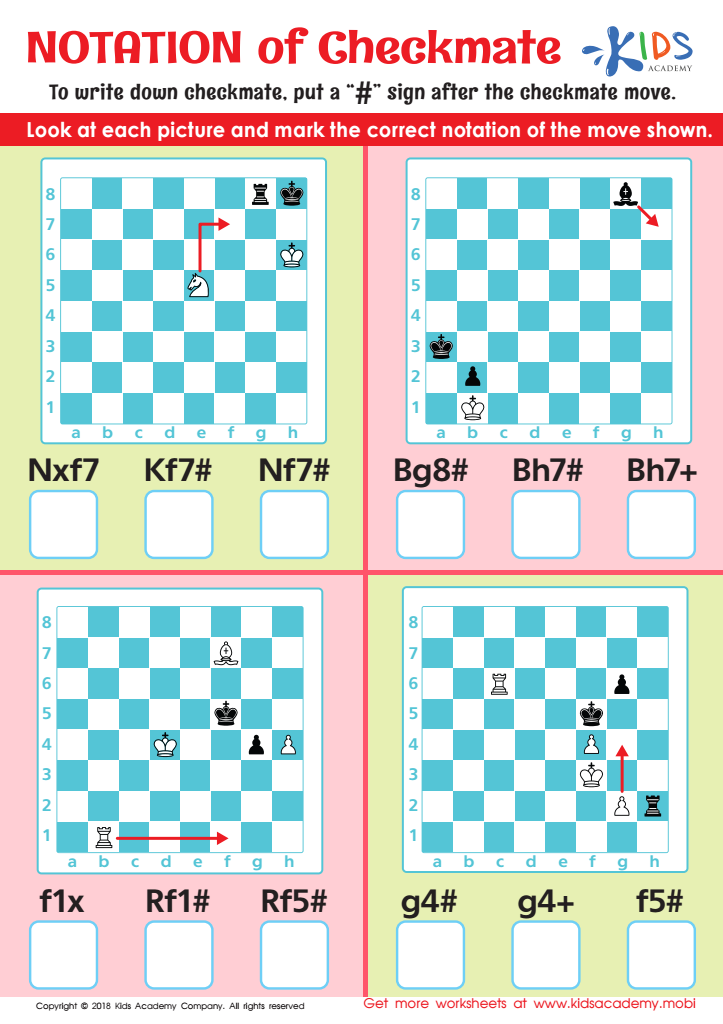
Notation of Checkmate Worksheet







Chess strategy learning for children aged 7-9 offers numerous cognitive and social benefits, making it a valuable pursuit for parents and teachers alike. Firstly, engaging in chess helps develop critical thinking and problem-solving skills. Young players must assess situations, foresee consequences, and devise strategies, promoting analytical skills that apply well beyond the chessboard.
Additionally, chess enhances concentration and patience. As children learn to focus on each move, they cultivate attention span, which is vital for academic success and daily life challenges. This discipline can lead to improved performance in subjects like math and science, where logical reasoning is essential.
Moreover, chess encourages sportsmanship and social interaction. Through playing against peers, children learn to handle wins and losses gracefully, fostering resilience and emotional intelligence. These social skills enhance communication and collaboration, which are increasingly important in an interconnected world.
Lastly, learning chess in this age group can spark lifelong interest in the game, offering an enriching hobby that promotes continuous learning and enjoyment. All these elements make chess strategy learning an engaging and beneficial component of education, meriting the attention of both parents and teachers for the holistic development of children.








