Number Sequencing Extra Challenge Math Worksheets for Ages 7-9
3 filtered results
Difficulty Level
Grade
Age
-
From - To
Subject
Activity
Standards
Unlock your child's math potential with our "Number Sequencing Extra Challenge Math Worksheets" designed specifically for ages 7-9! These engaging worksheets provide fun and challenging exercises that enhance number sequencing skills through a variety of activities. Kids will enjoy practicing their ability to recognize patterns, fill in missing numbers, and complete sequences both forwards and backwards. As they work through each challenge, they will build confidence and strengthen their understanding of numerical order. Ideal for independent practice, homework, or extra reading, these worksheets make learning math enjoyable. Give your young learners the boost they need for success in math with our extra challenge worksheets!
Favorites
With answer key
Interactive
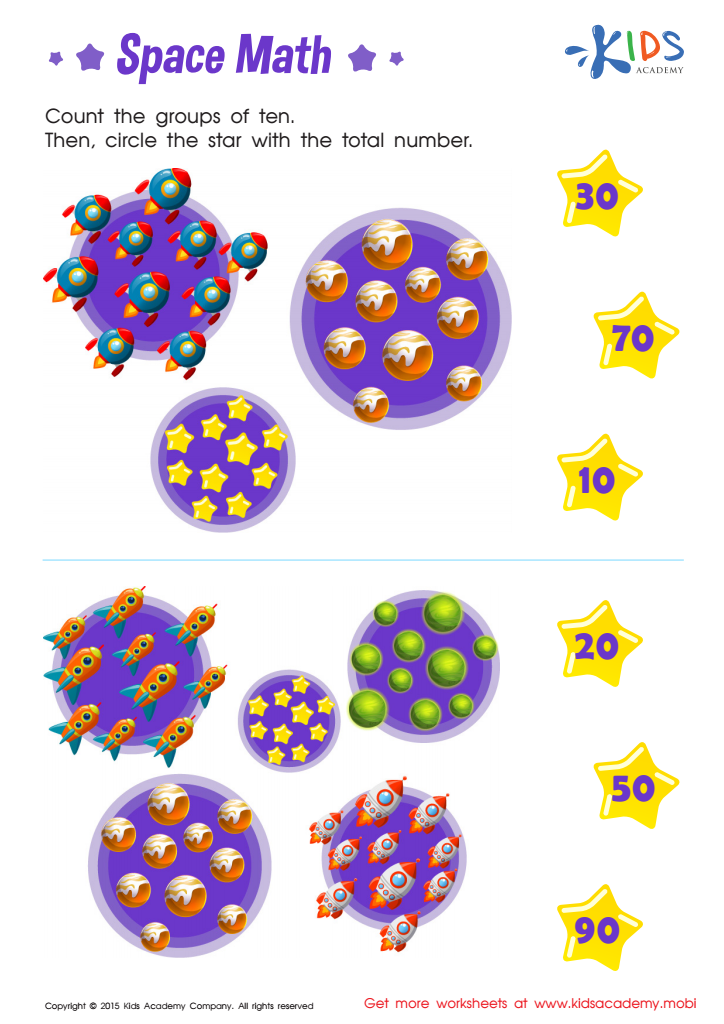
Learn dozens: Space math Worksheet
This worksheet uses Singapore Math's approach to help your child visually understand basic counting and math problems.
 Assign to My Students
Learn dozens: Space math Worksheet
Worksheet
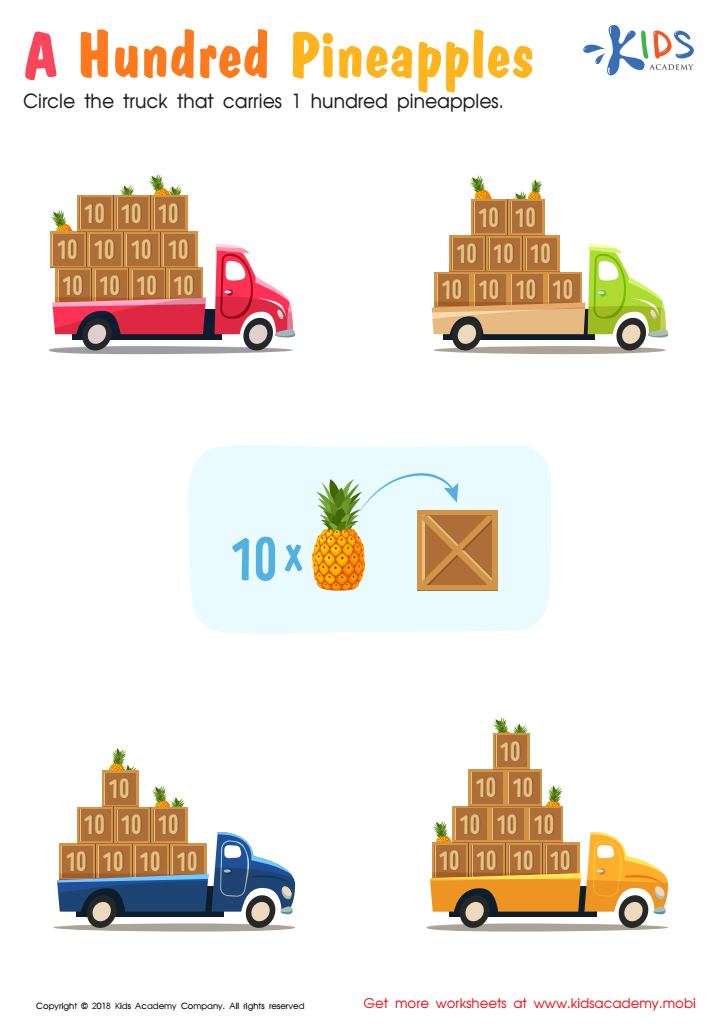
A Hundred Pineapples Worksheet
Can your child count in tens? Show them how to count 100 boxes in stacks of tens. A worksheet can help them understand the concept. Ask them to count boxes of pineapples in stacks of tens and circle the truck with 100 pineapples.
A Hundred Pineapples Worksheet
Worksheet
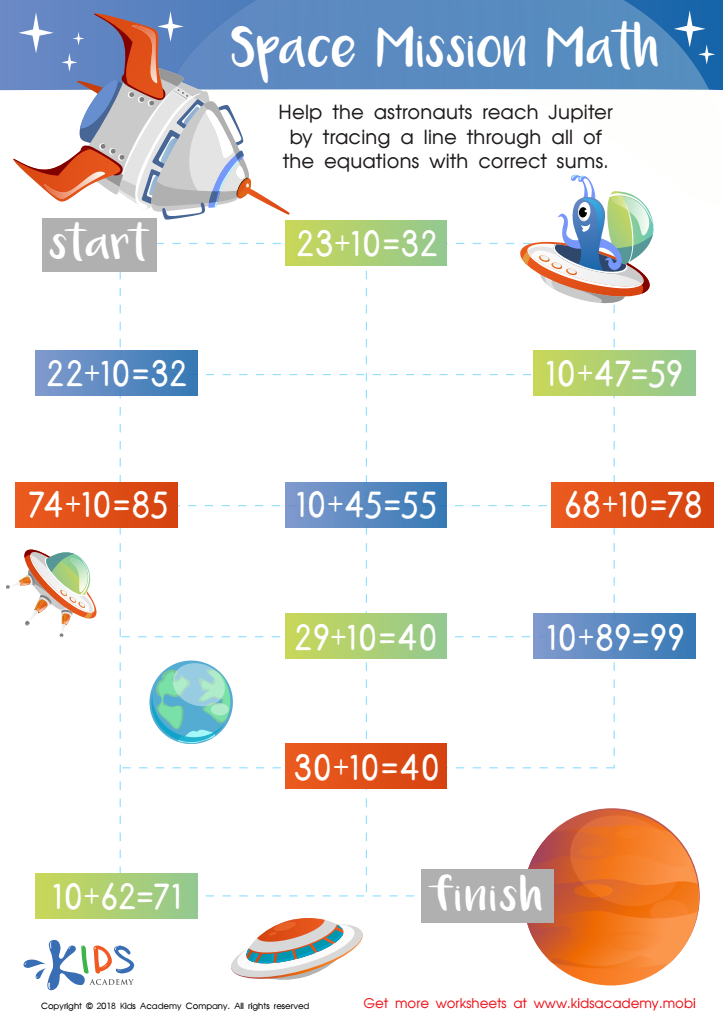
Space Mission Math Worksheet
Your kids will love this worksheet! They can help astronauts reach Jupiter by tracing a line through all the equations and adding them up correctly. Spark their curiosity about space by exploring asteroids, planets, and aliens. Astronauts are professionals who study the complexities of space - let them help your child join in the journey!
Space Mission Math Worksheet
Worksheet
Join Kids Academy for Free
Who is primarily going to use this learning content?







Number sequencing is a crucial skill in mathematics, particularly for children aged 7-9. Engaging with number sequencing not only helps children understand the foundations of mathematical concepts but also enhances their problem-solving skills and critical thinking. For parents and teachers, nurturing this ability is vital because it leads to improved numeracy, which is essential for success in more complex math topics encountered later.
Moreover, number sequencing fosters a deeper comprehension of patterns, which is fundamental in everyday life and various subjects, such as science and logic. A child who masters sequencing can better handle tasks ranging from simple counting to understanding ratios and fractions.
Additionally, sequencing challenges encourage perseverance and resilience in learners. By tackling extra math challenges, children learn how to approach difficult problems and develop a positive attitude toward challenges and mistakes. This growth mindset is invaluable in both academic settings and life in general.
Ultimately, supporting number sequencing in early education helps build a strong mathematical foundation, promotes cognitive development, and equips children with essential skills they will use throughout their educational journey and beyond. By prioritizing these extra math challenges, adults play a key role in shaping a child's academic and personal growth.