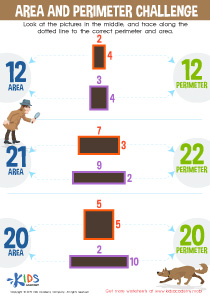
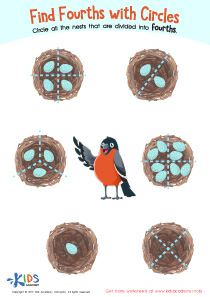
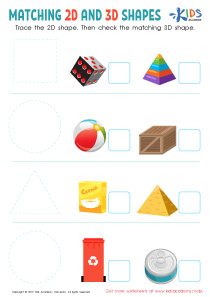
Shape Recognition Extra Challenge 2D Shapes Worksheets for 7-Year-Olds
5 filtered results
-
From - To
Elevate your child's geometry skills with the "Shape Recognition Extra Challenge 2D Shapes Worksheets" designed for 7-year-olds. These engaging worksheets provide a stimulating way to master essential shape identification and classification skills. Each sheet presents fun activities that go beyond basic shapes, incorporating complex polygons and diverse shapes to challenge young learners. Encourage critical thinking and enhance spatial awareness with our creatively designed tasks. Perfect for reinforcing classroom lessons or extending learning at home, these worksheets will inspire a love for math and build a strong foundation for future success in geometry. Download now and unlock your child's potential!
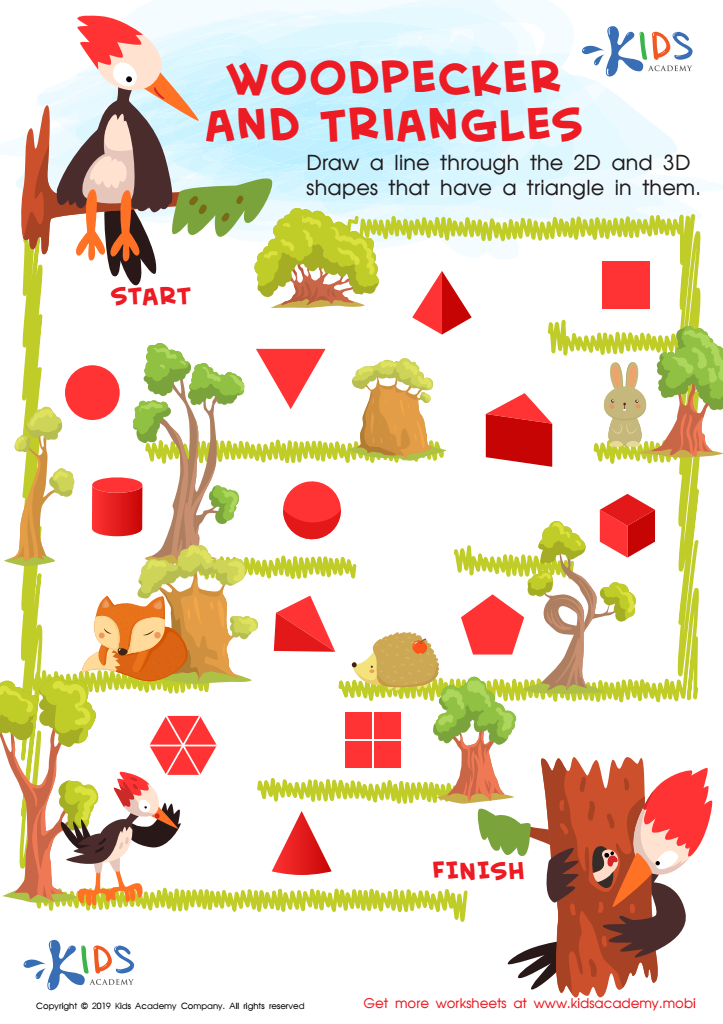
Woodpecker and Triangles Worksheet
 Assign to My Students

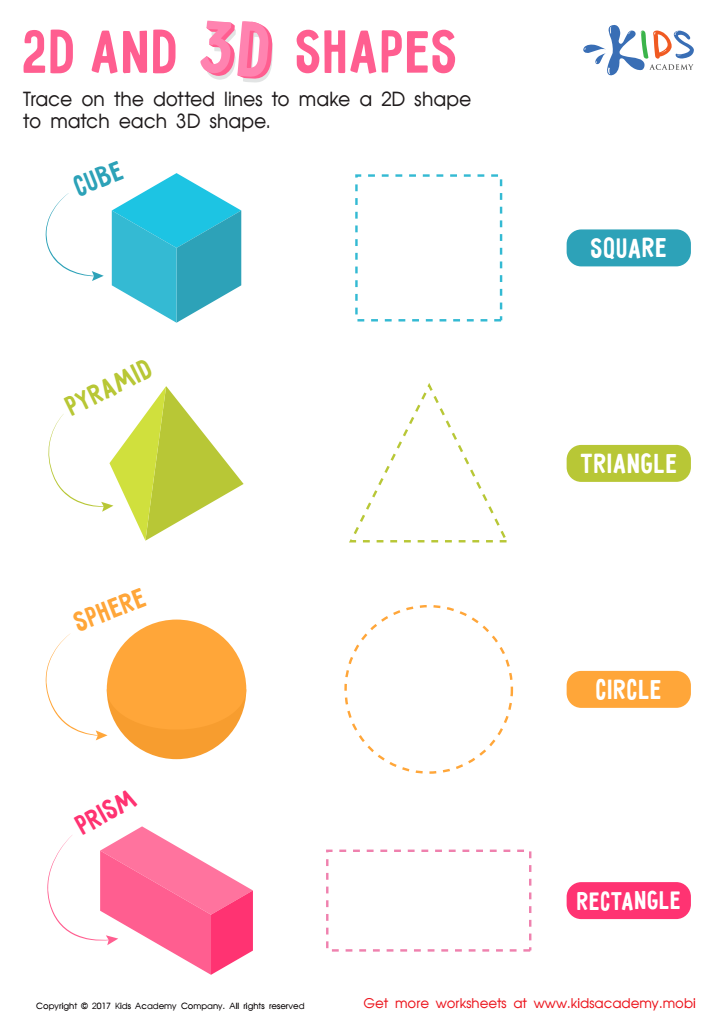
2D and 3D Shapes Worksheet
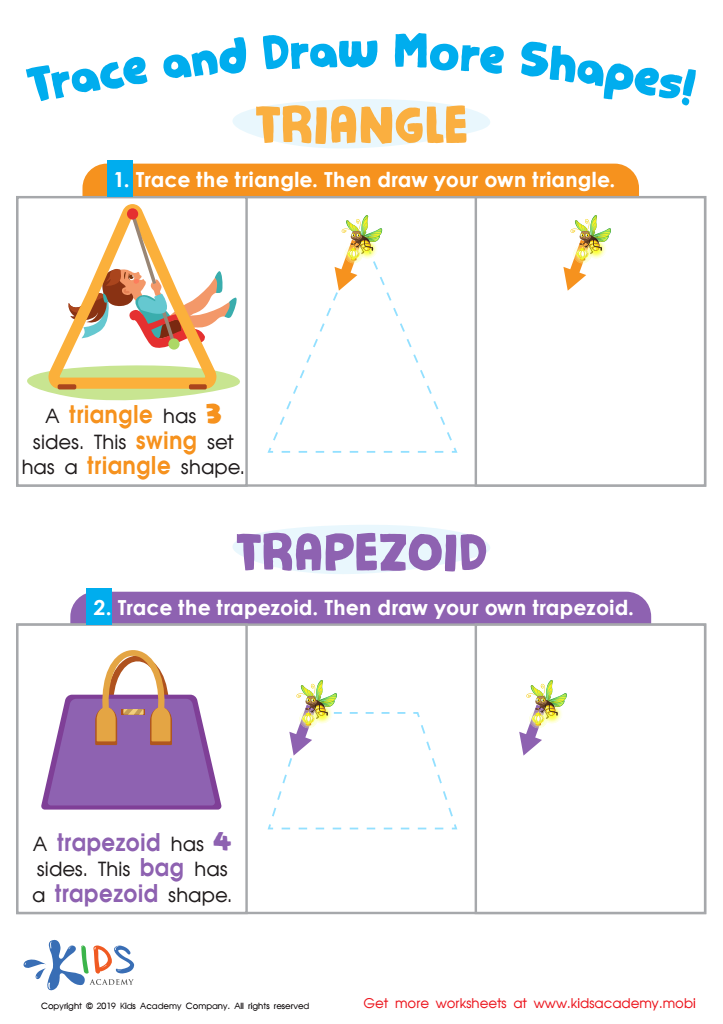
Trace and Draw More Shapes Worksheet
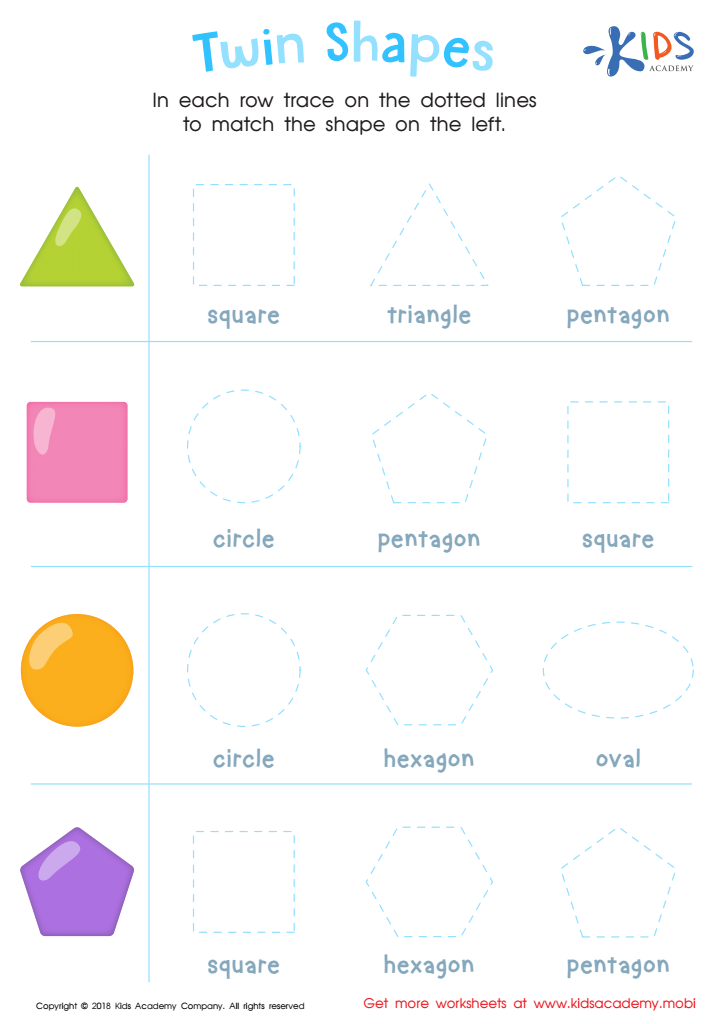
Twin Shapes Dot-to-Dot Worksheet
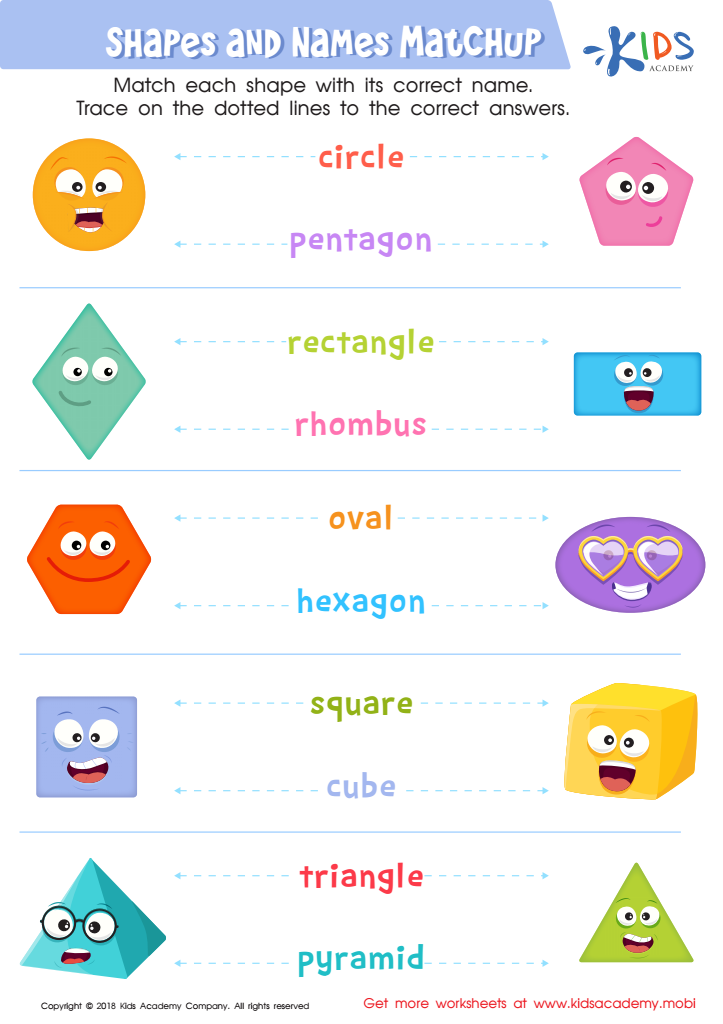
Shapes and Names Matchup Worksheet








Shape recognition is a fundamental skill that lays the groundwork for a child's cognitive, mathematical, and spatial understanding. For 7-year-olds, engaging in extra challenges related to 2D shapes can have far-reaching benefits:
Firstly, identifying and understanding shapes helps children to develop spatial awareness. This is crucial for everyday tasks like navigating environments and grasping how objects fit together. Enhanced spatial skills are linked to better performance in science, technology, engineering, and mathematics (STEM) fields later in life.
Secondly, shape recognition aids in improving a child's ability to classify and organize information. When children learn to differentiate between a multitude of shapes, they enhance their categorization skills, which are pertinent not only in geometry but in various aspects of learning and problem-solving.
In addition, engaging with 2D shapes can foster creativity and artistic skills. As children recognize shapes, they begin to see the geometry in art and design, encouraging them to explore these areas with confidence.
Moreover, extra challenges in shape recognition contribute to better visual processing skills. These are vital for reading and writing, where distinguishing between different letter shapes and sequences is essential.
Lastly, developing solid shape recognition from an early age builds a child's confidence in tackling more complex mathematical concepts. Therefore, teachers and parents should emphasize such challenges to nurture well-rounded, confident, and capable learners.