Understanding fractions Extra Challenge Fractions of Shapes Worksheets for 7-Year-Olds
7 filtered results
-
From - To
Explore our "Understanding Fractions: Extra Challenge Fractions of Shapes Worksheets" designed specifically for 7-year-olds! These engaging worksheets provide an interactive way for young learners to deepen their comprehension of fractions by identifying and working with fractions of various shapes. Students will enhance critical thinking and problem-solving skills as they tackle fun challenges that require them to visualize and manipulate shapes. Perfect for reinforcing classroom instruction or providing additional practice at home, these worksheets help children grasp essential fraction concepts in an enjoyable manner. Spark curiosity and foster confidence in math with our thoughtfully crafted fraction resources today!
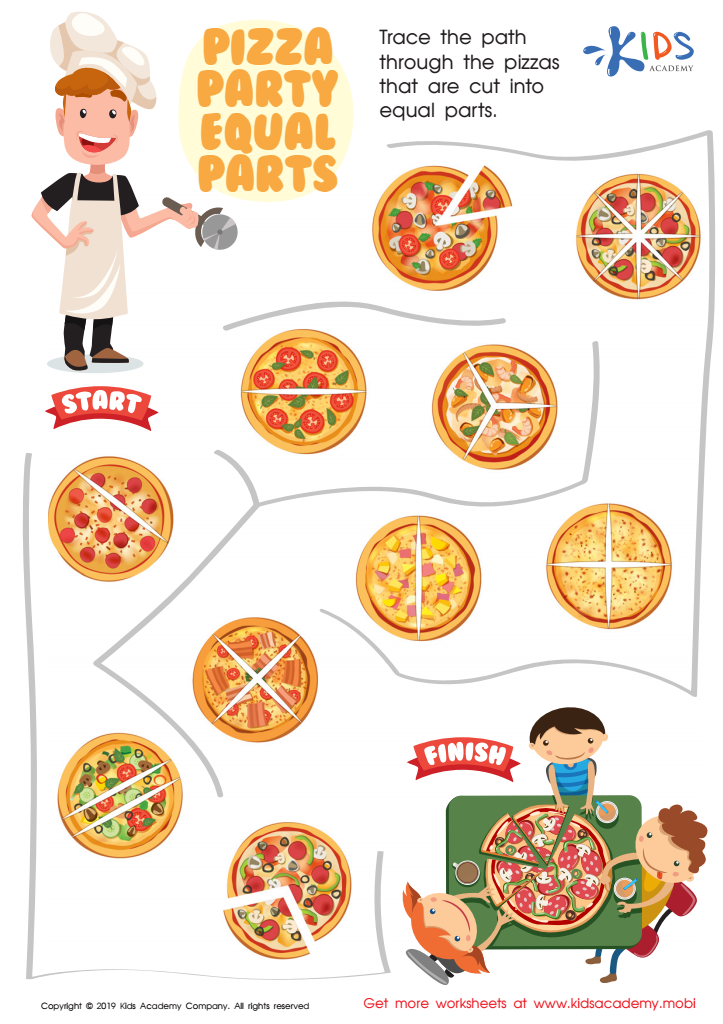
Pizza Party Equal Parts Worksheet
 Assign to My Students
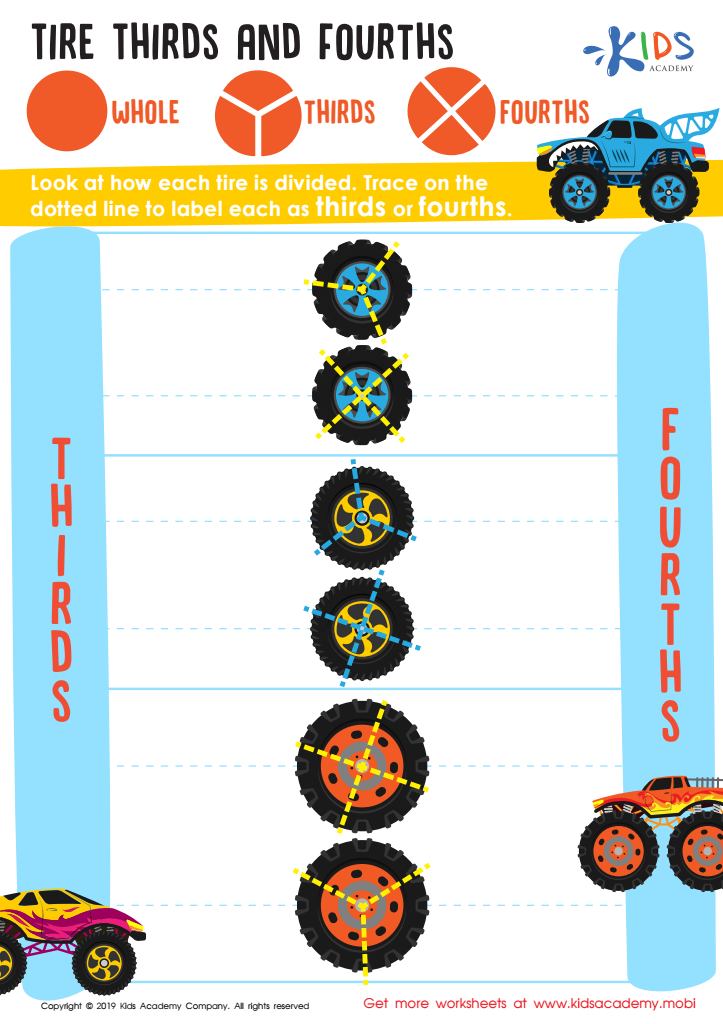
Tire Thirds and Fourths Worksheet
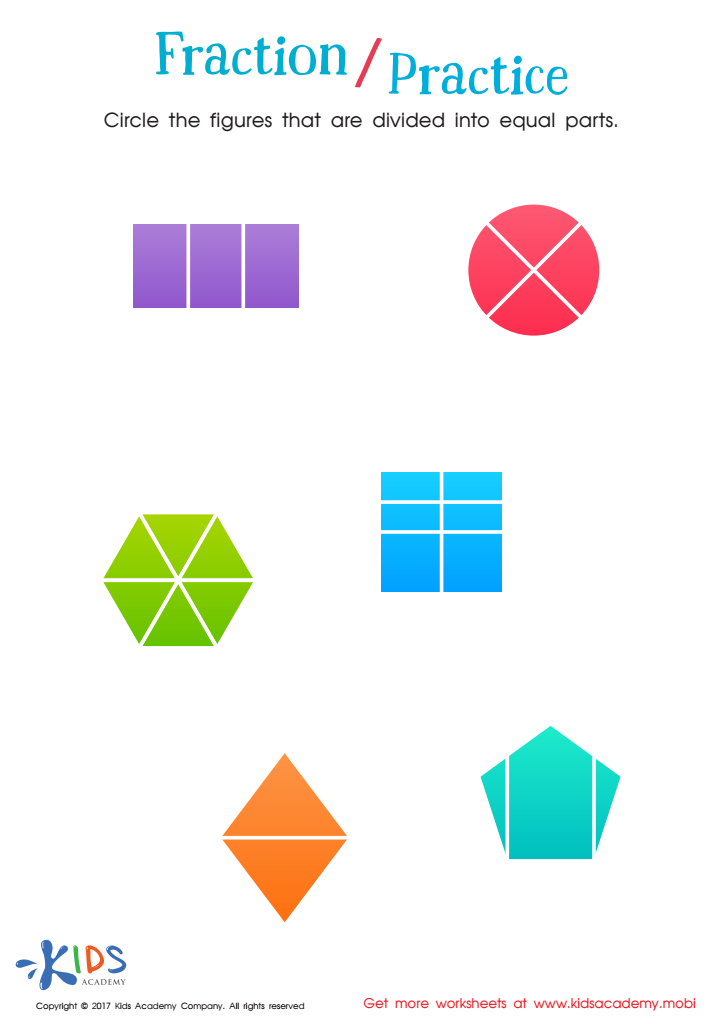
Fractions: Shapes Worksheet
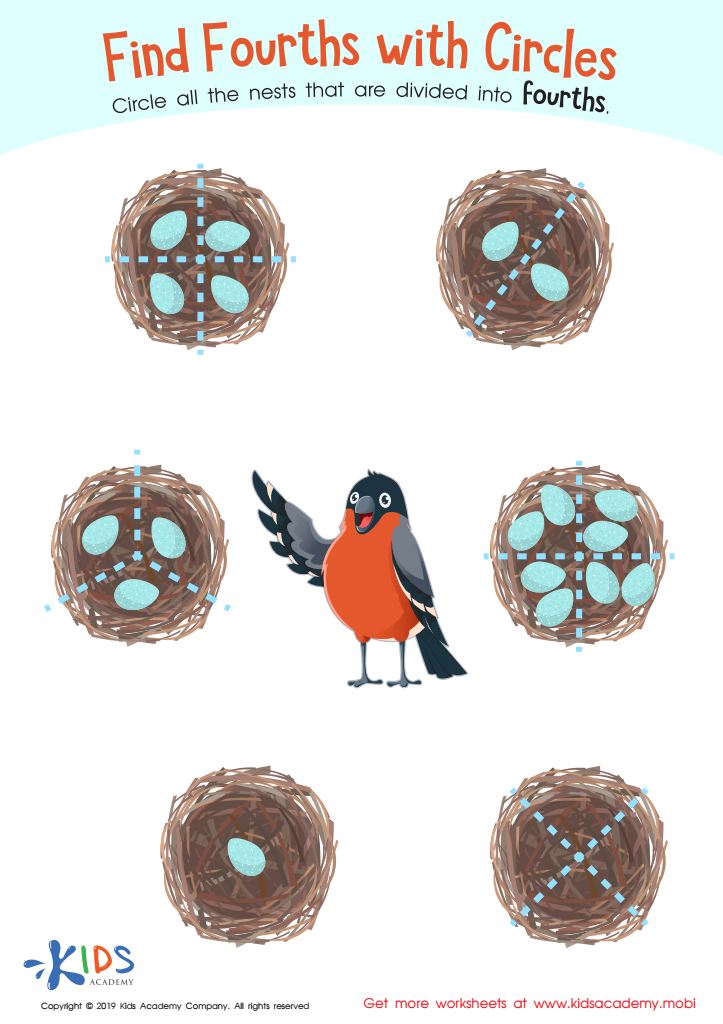
Find Fourths Circles Worksheet
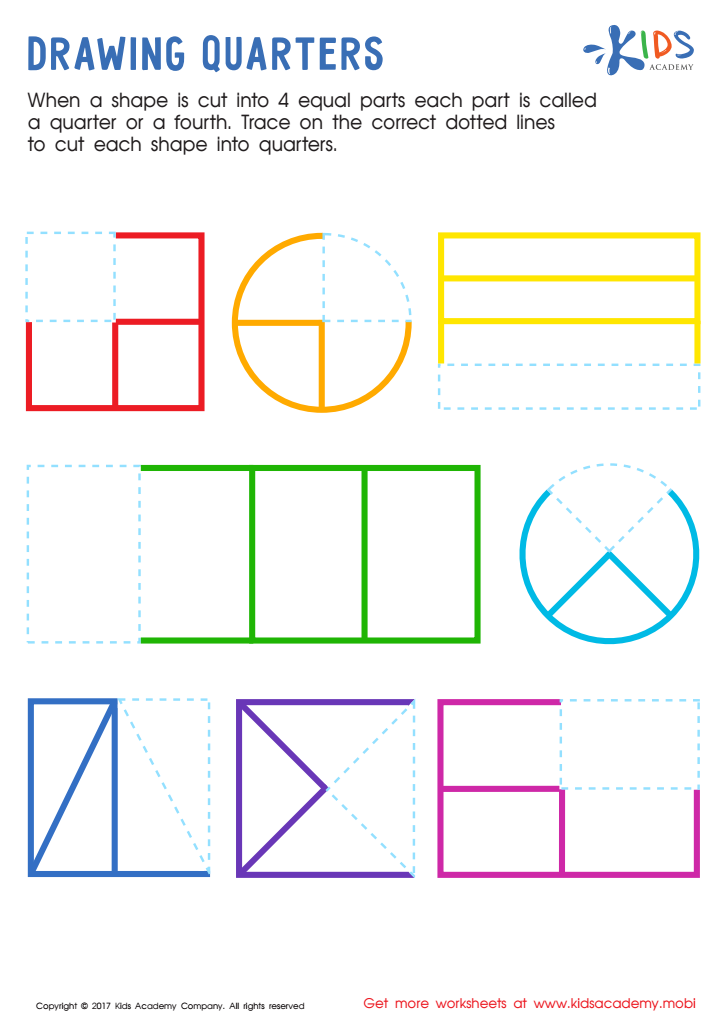
Drawing Quarters Worksheet
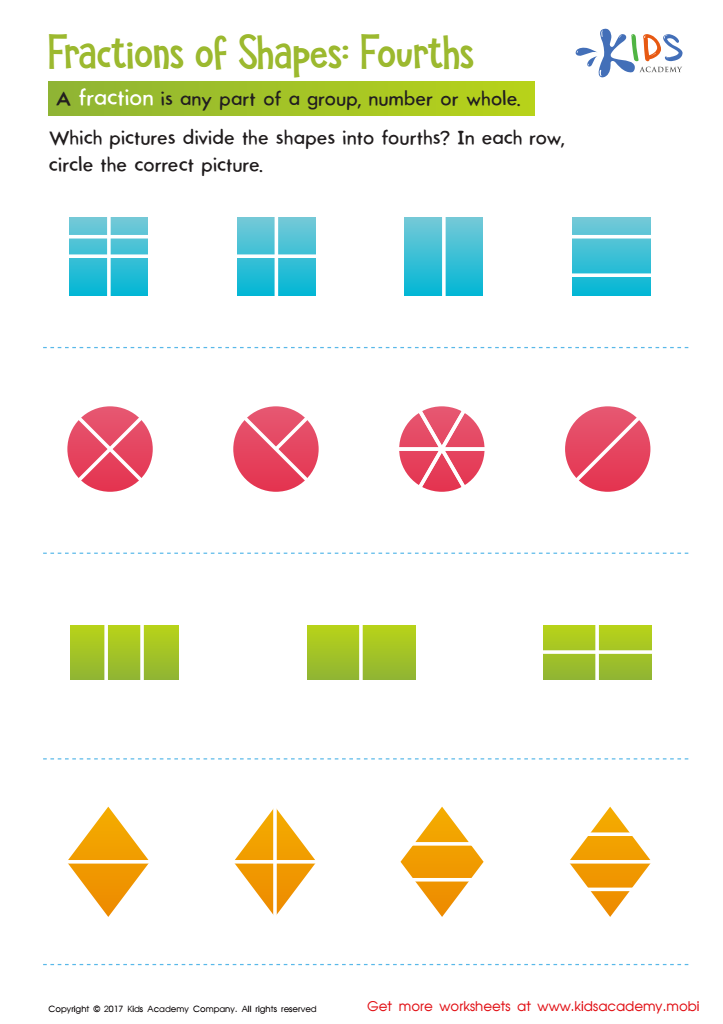
Fractions of Shapes Worksheet
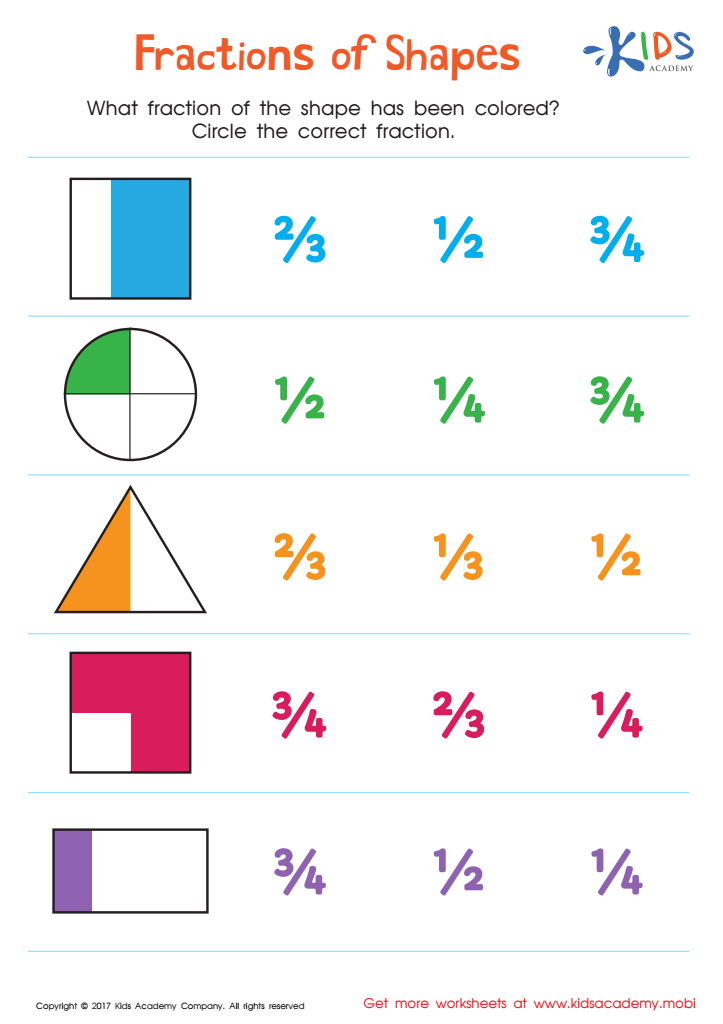
Fractions of Shapes: Math Concept Worksheet








Understanding fractions is crucial for young learners, especially for 7-year-olds, as they form the foundation for many mathematical concepts, enhancing essential cognitive skills. Parents and teachers should prioritize recognizing fractions of shapes because this practice deepens students' comprehension of division, proportion, and part-whole relationships, which are essential for everyday life.
When children engage with fractions involving shapes, they effectively visualize and manipulate concepts. This hands-on experience enhances critical thinking and problem-solving abilities, empowering them to tackle more complex problems in the future. Moreover, grasping fractions prepares students for more advanced topics in mathematics, such as ratios, percentages, and algebra.
Furthermore, learning about fractions promotes spatial awareness and geometric reasoning, skills often overlooked in early mathematics learning. Parents and teachers can help by incorporating fun, interactive activities involving shapes, like measuring and slicing pizzas or dividing cakes, making the learning process enjoyable and relatable.
Overall, nurturing a strong understanding of fractions includes fostering a supportive environment that celebrates mathematical exploration, thus laying a profound foundation for successful learning and developing a positive relationship with math as students progress through their education.