Subtraction practice Extra Challenge Word Problems Worksheets for 7-Year-Olds
4 filtered results
Difficulty Level
Grade
Age
-
From - To
Subject
Activity
Standards
Boost your child’s math skills with our Subtraction Practice Extra Challenge Word Problems Worksheets for 7-Year-Olds. Designed to provide a fun, engaging way to enhance their subtraction abilities, these worksheets present challenging word problems tailored for second graders. Each page is crafted to stimulate critical thinking and improve problem-solving skills, ensuring students grasp subtraction concepts thoroughly. Perfect for both classroom and home use, these worksheets make subtraction practice enjoyable and effective. Dive into learning with activities suited to young minds, building confidence and mathematical proficiency in a supportive and challenging environment. Start the journey to mastering subtraction today!
Favorites
With answer key
Interactive
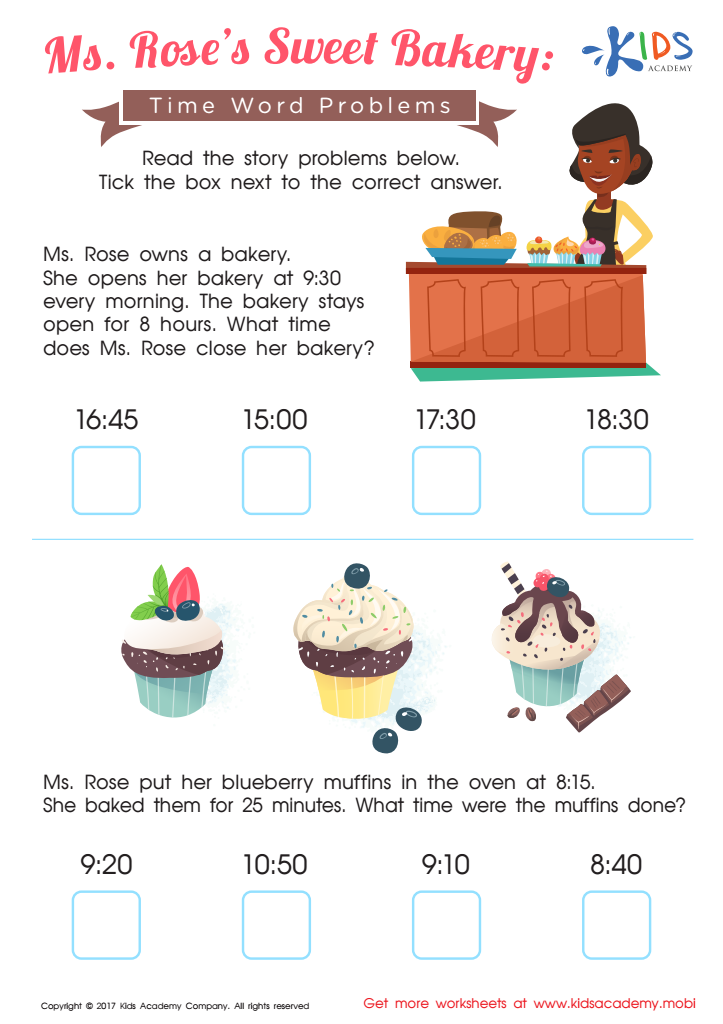
Ms. Roseв's Sweet Bakery Time Worksheet
Help your child understand the 24-hour clock using this fascinating telling time word problems worksheet: Sweet Bakery! Widely known as "military time", this skill isn't taught in school but is important for your kid to master.
 Assign to My Students
Ms. Roseв's Sweet Bakery Time Worksheet
Worksheet
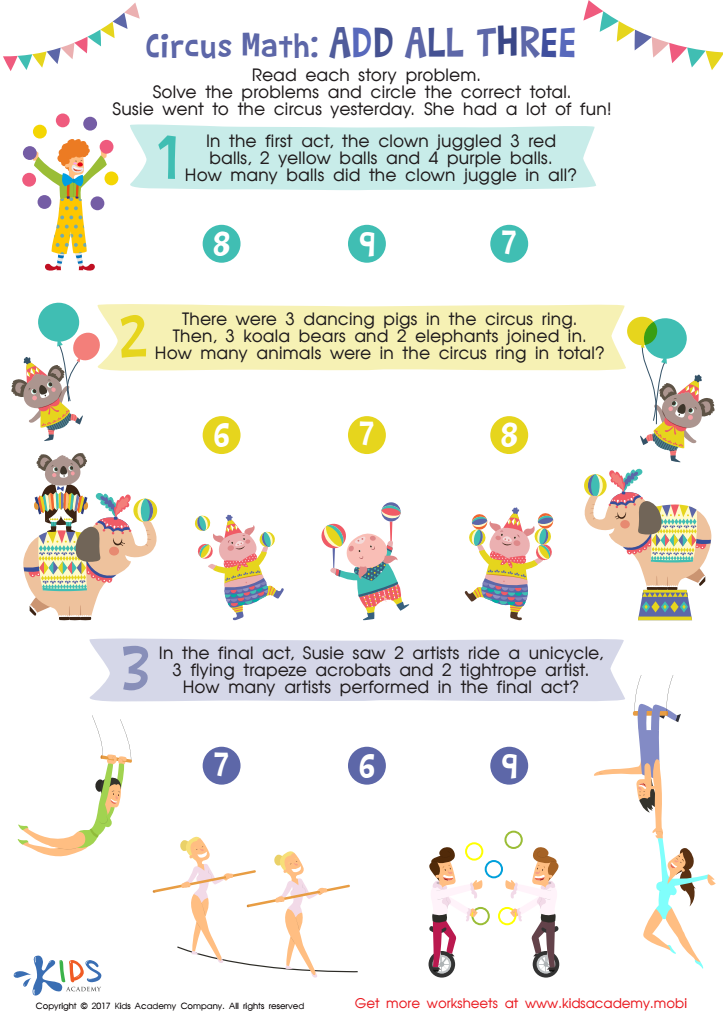
Circus Math Printable
Let's take the kids to the circus and combine literacy and numeracy skills! Our circus math printable worksheet will encourage creativity and higher-order thinking by connecting addition to real-life examples. Kids will learn to love math while they explore the fun, real-life applications of math. Ignite their passion today!
Circus Math Printable
Worksheet
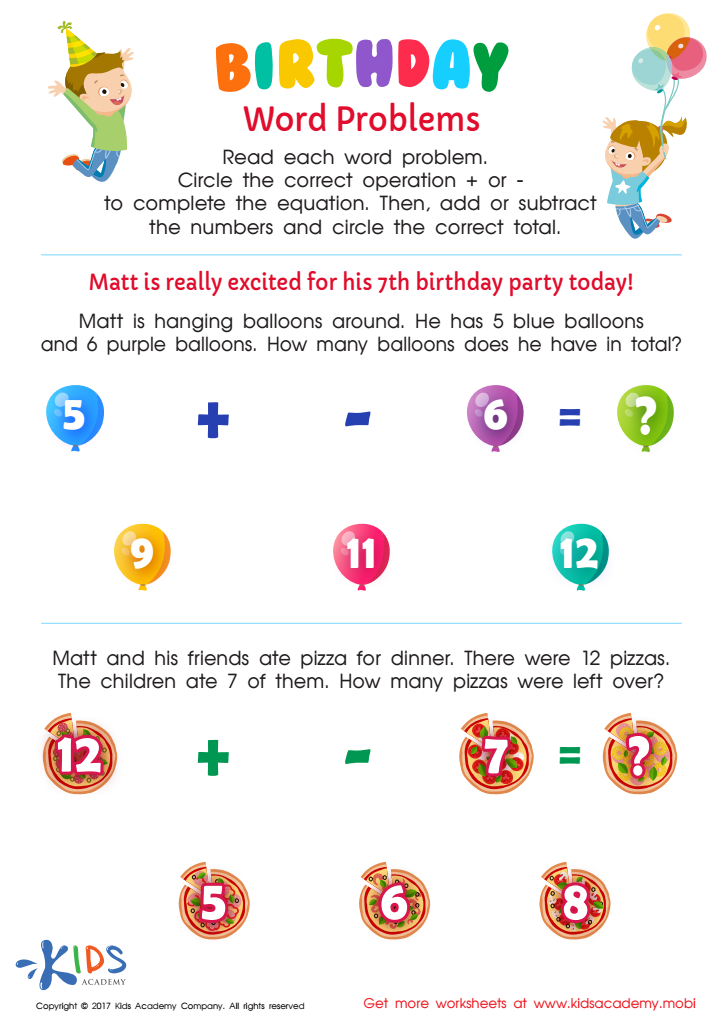
Birthday Word Problems Substraction Worksheet
This worksheet, Birthday Word Problems, is a great way to improve your child's math and literacy skills. It features tricky subtraction equations based on a birthday celebration - perfect for kids who love birthdays!
Birthday Word Problems Substraction Worksheet
Worksheet
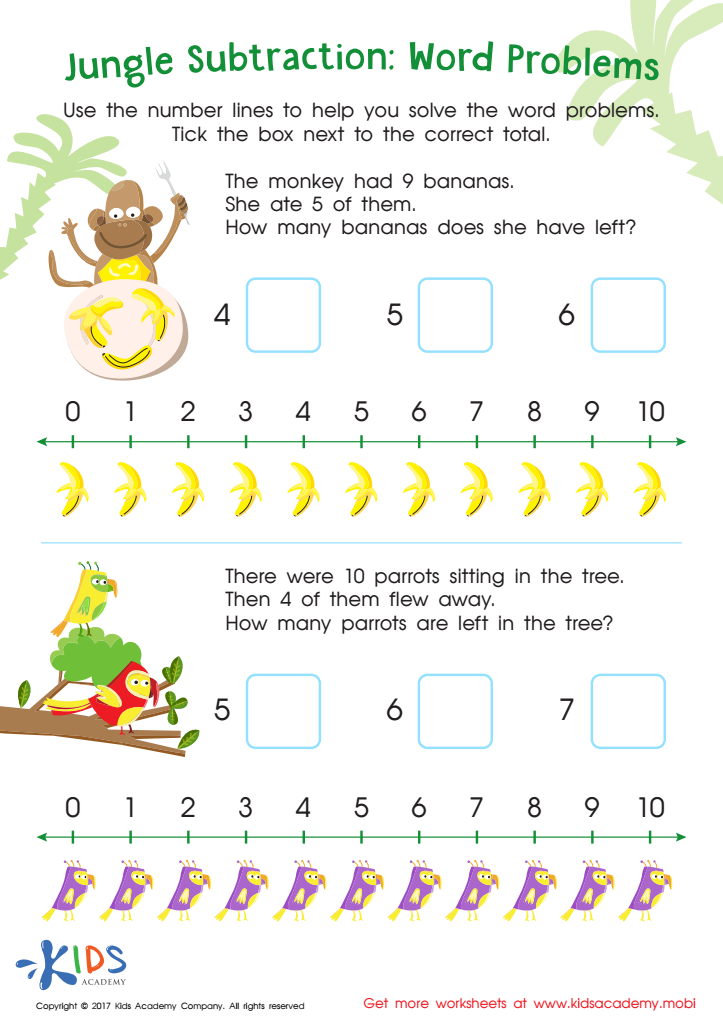
Jungle Subtraction Word Problems Substraction Worksheet
Kids will love this jungle-themed worksheet: subtraction word problems! Help the monkey work out how many bananas he has, using the number line. Encourage your child to use colorful parrots to subtract with ease and make calculations fun!
Jungle Subtraction Word Problems Substraction Worksheet
Worksheet
Join Kids Academy for Free
Who is primarily going to use this learning content?








Parents and teachers ought to place substantial emphasis on subtraction practice extr20a challenge word problems for 7-year-olds because these exercises play a crucial role in a child's foundational math skills. First, tackling word problems enhances a child's ability to comprehend and interpret practical situations, fostering deeper conceptual understanding rather than rote memorization. This approach promotes critical thinking skills, as children must identify relevant information, recognize the operation required, and systematically solve the problem.
Moreover, engaging with more challenging word problems helps build resilience and perseverance. Subtraction, particularly in word problem format, can be complex for young minds as it introduces layers beyond simple numerical operations. By gradually increasing the difficulty, students learn to approach problems step-by-step and develop confidence in their abilities.
Incorporating these word problems also creates opportunities for real-world application. When children understand how subtraction works within everyday contexts—like calculating change, comparing quantities, or measuring differences—they gain practical, lifelong skills.
Lastly, providing extra challenge material prevents talented students from becoming complacent, ensuring that all children are proportionately challenged according to their current proficiency levels. Cultivating these habits early sets the stage for a strong aptitude in math, contributing positively to overall academic success and cognitive development.