Mathematical reasoning Extra Challenge Math Worksheets for Ages 8-9
4 filtered results
-
From - To
Empower your child’s math skills with our Mathematical Reasoning Extra Challenge Math Worksheets for Ages 8-9. These carefully crafted worksheets are designed to enhance critical thinking and problem-solving abilities, making math both fun and engaging. Each sheet presents unique challenges that stimulate logical reasoning and promote a deeper understanding of mathematical concepts. Perfect for honing skills outside of the classroom, our worksheets are an invaluable resource for young learners eager to conquer more advanced topics. Ignite your child's passion for math and watch their confidence soar with our dynamic and effective activities. Make mastering math a thrilling adventure!
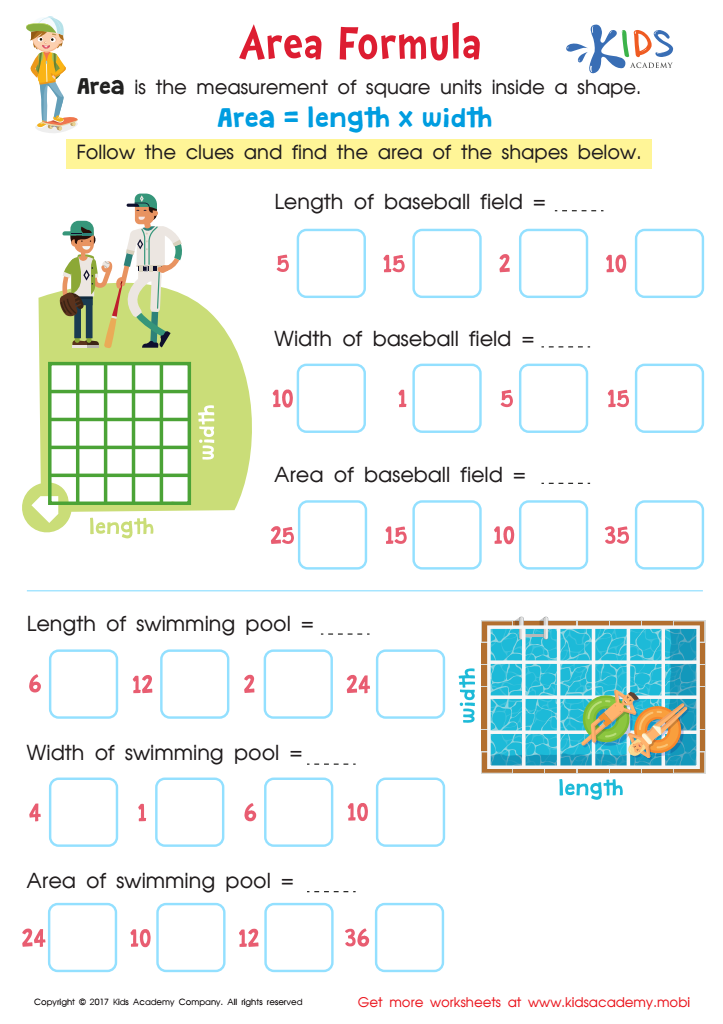
Area Formula Worksheet
 Assign to My Students
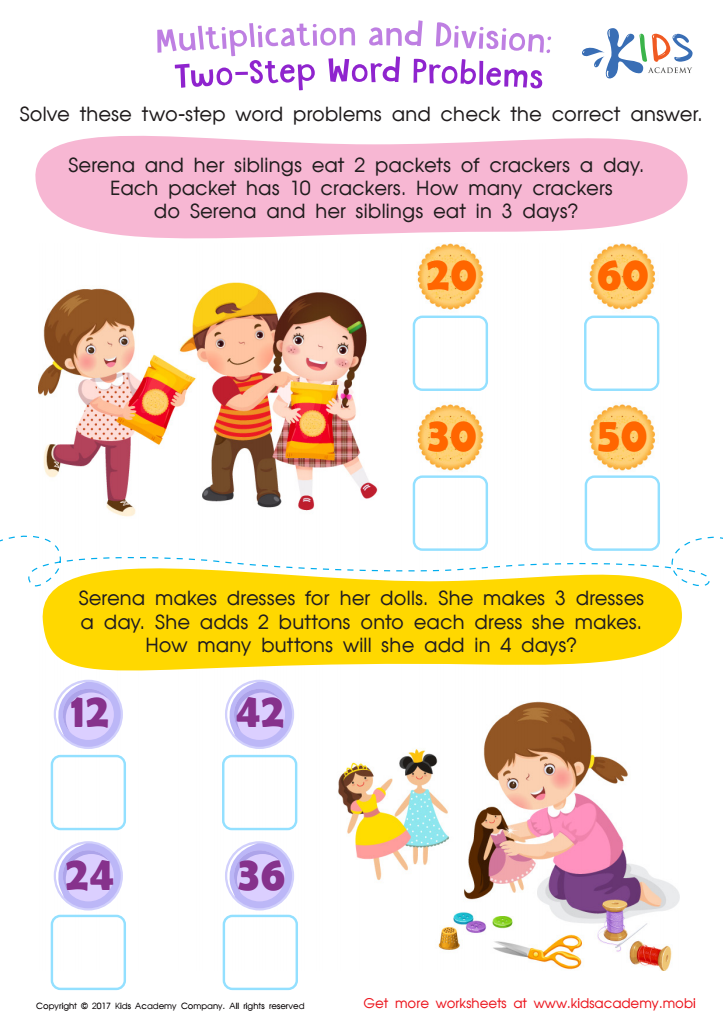
Two Step Word Problems Worksheet
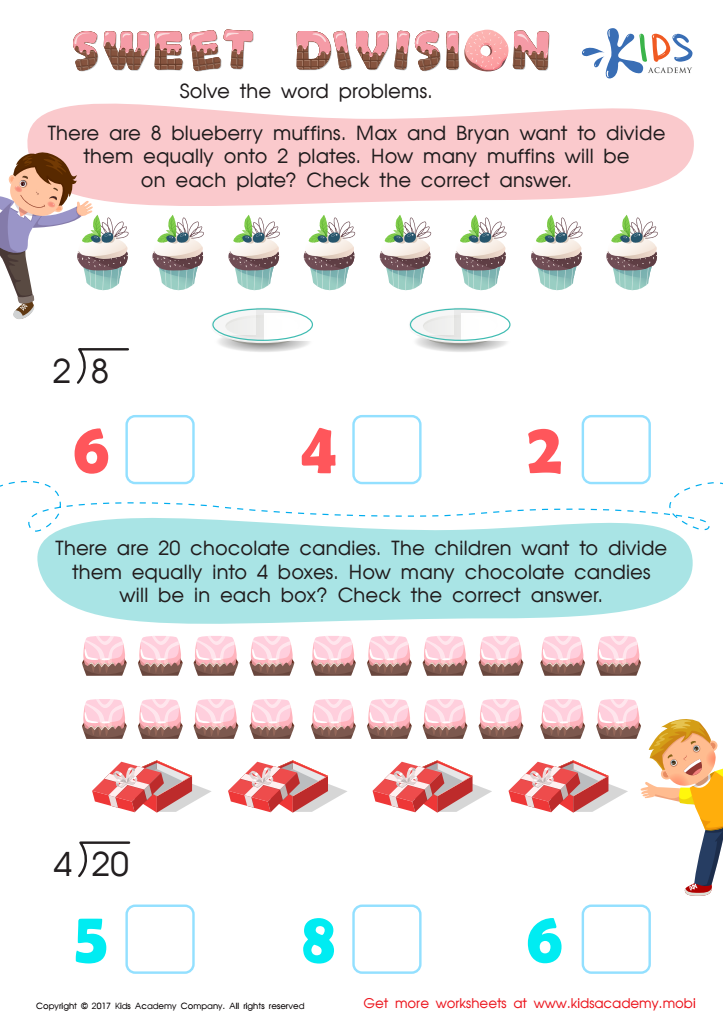
Division Word Problems Worksheet
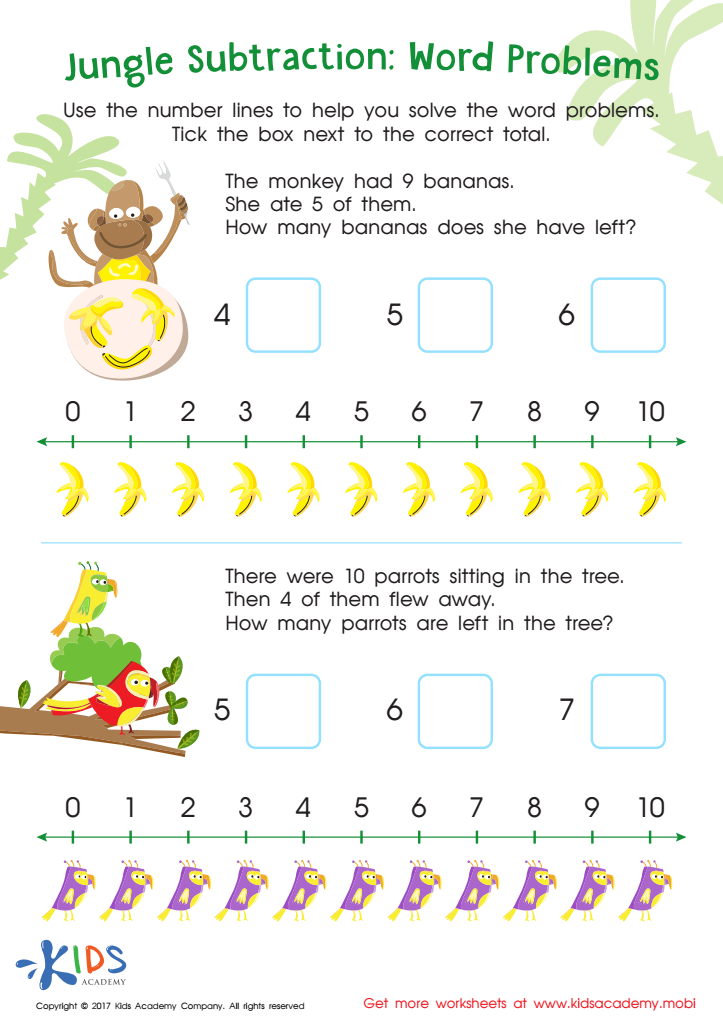
Jungle Subtraction Word Problems Substraction Worksheet








Mathematical reasoning is a fundamental cornerstone in the cognitive development of children, and enhancing these skills through programs like Mathematical Reasoning Extra Challenge Math for ages 8-9 is crucial for several reasons. First, strong mathematical reasoning abilities enable children to understand underlying principles, rather than just memorizing formulas. This deep comprehension fosters critical thinking and problem-solving skills, which are essential not only in mathematics but across all areas of learning.
Also, engaging in extra challenge math at an early age can cultivate a positive attitude towards math. This attitude shift can help alleviate math anxiety, which is common among children, and replace it with confidence and enthusiasm. Fun and stimulating challenges keep students motivated and foster a love for learning.
Moreover, children who develop robust math reasoning skills at a young age often perform better academically. These skills extend to other subjects such as science and technology, laying a strong foundation for future STEM education. For teachers and parents, investing in such programs is an investment in a child's overall intellectual development, fostering independent thinking and resilience.
Importantly, Mathematical Reasoning Extra Challenge Math caters to various learning styles, accommodating individual needs and ensuring that each child can thrive, thus supporting inclusive education practices.








