
Mental math skills Extra Challenge Worksheets for 8-Year-Olds
4 filtered results
Difficulty Level
Grade
Age
-
From - To
Subject
Activity
Standards
Elevate your child's math journey with our "Mental Math Skills Extra Challenge Worksheets" designed specifically for 8-year-olds! These engaging worksheets enhance critical thinking and number sense through a variety of stimulating exercises. Your child will hone their mental math abilities, tackle addition, subtraction, multiplication, and division challenges, and develop faster problem-solving skills, all while having fun. Each worksheet is crafted to encourage independent learning and build confidence in their mathematical abilities. Perfect for reinforcing classroom learning or as additional practice at home, these worksheets empower young learners to excel and embrace the world of numbers. Unlock their potential today!
Favorites
With answer key
Interactive
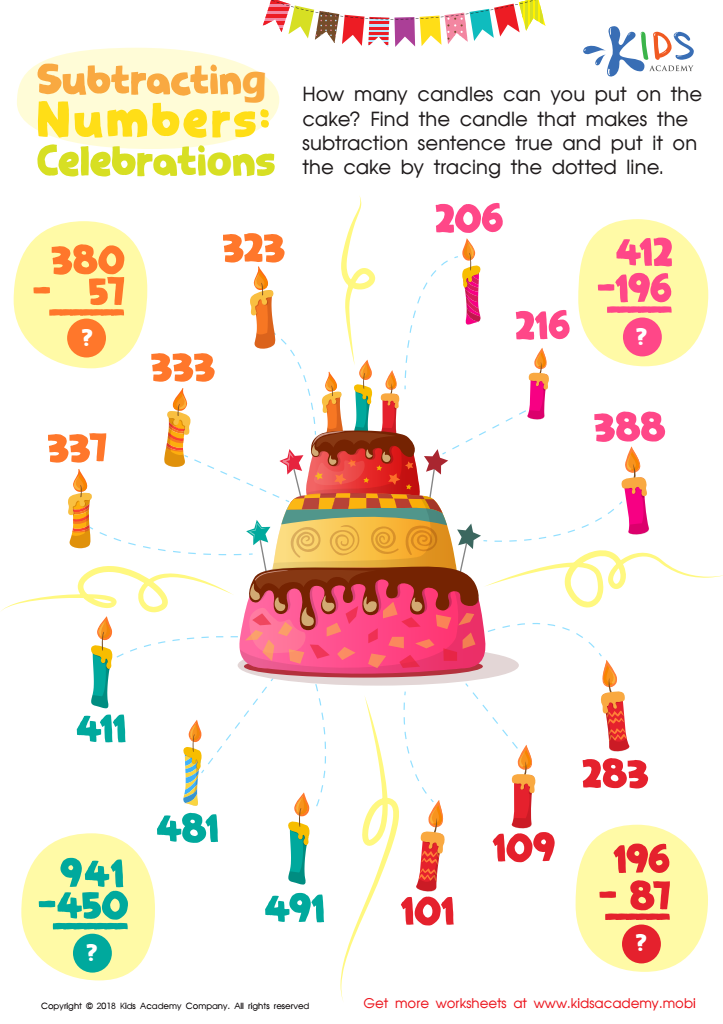
Subtracting Numbers: Celebrations Worksheet
Have your kids list their favorite birthday activities and treats. Then use this worksheet to help them figure out how many candles to put on the cake. Have them find the number that makes the subtraction sentence true, then trace the dotted line to add the candle to the cake. Help them complete the task and celebrate! 80 words
 Assign to My Students
Subtracting Numbers: Celebrations Worksheet
Worksheet
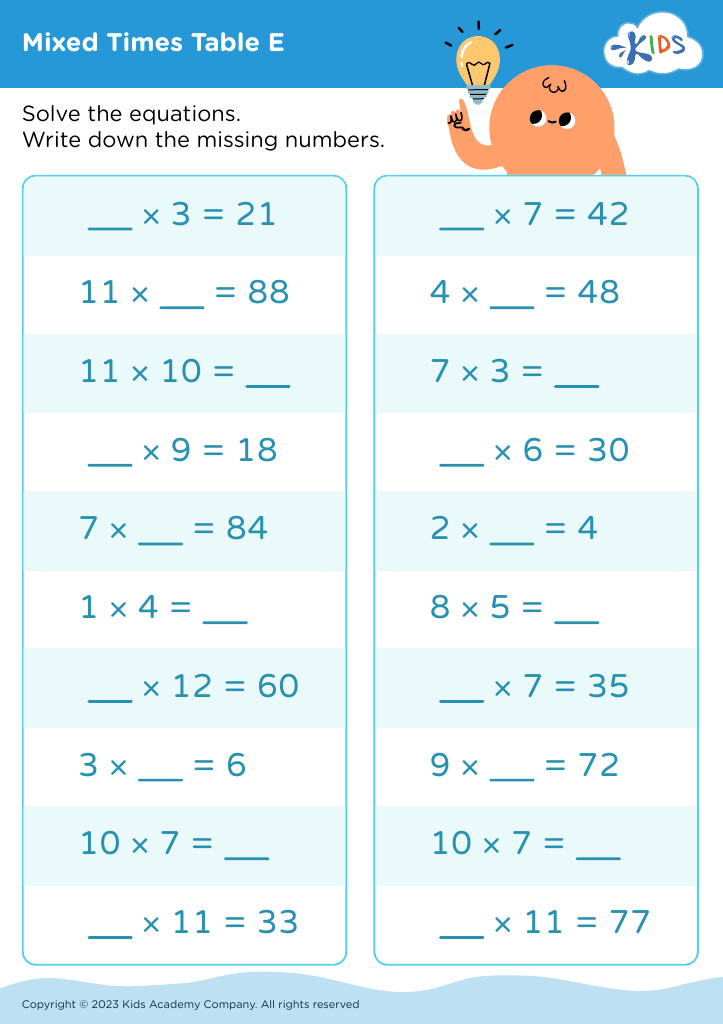
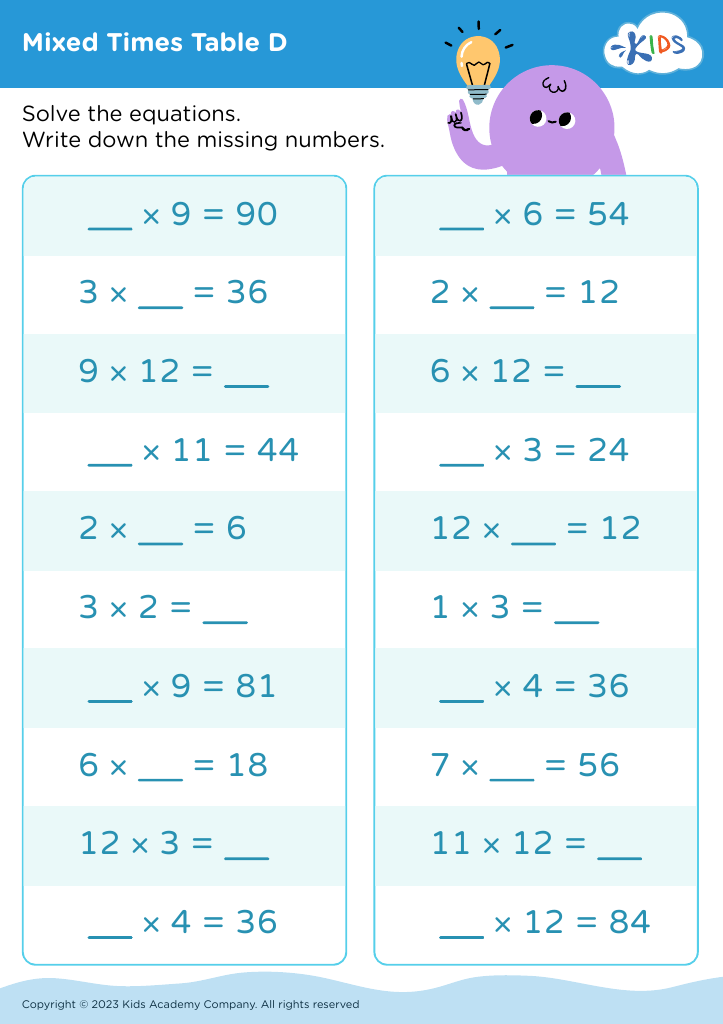
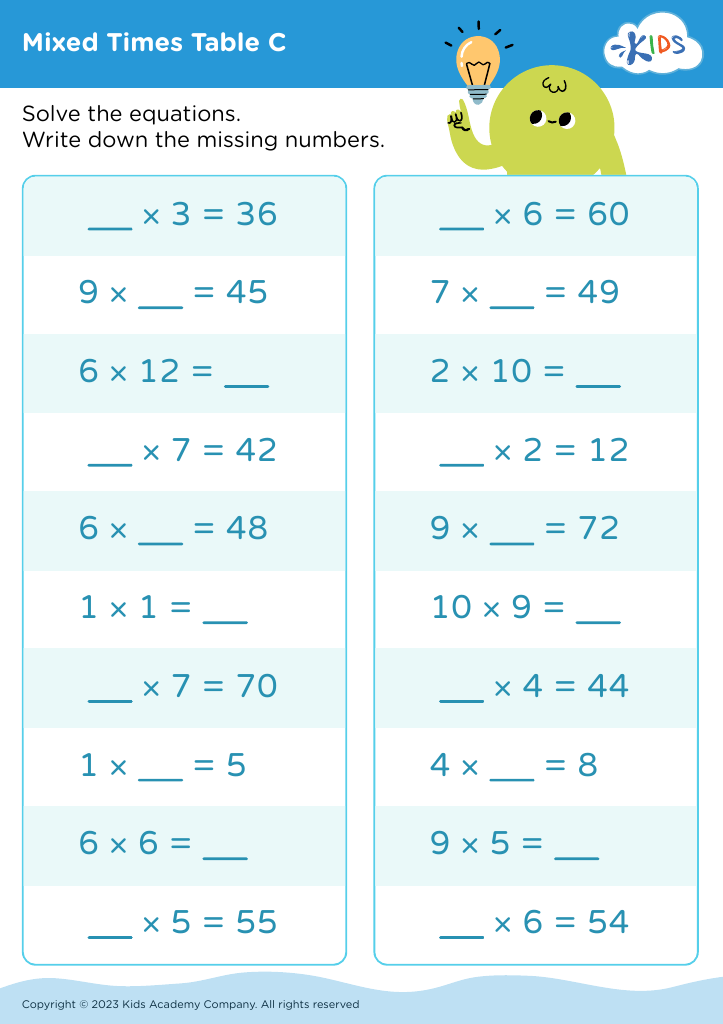
Join Kids Academy for Free
Who is primarily going to use this learning content?








Mental math skills are vital for 8-year-olds as they lay the foundation for future mathematical understanding and problem-solving abilities. First, they promote essential cognitive skills such as memory, concentration, and critical thinking. When children practice mental math, they are not just performing calculations; they are learning to analyze problems, recognize patterns, and apply mathematical concepts effectively.
Furthermore, mental math boosts a child's confidence in their mathematical abilities. When students can solve problems quickly without relying on a calculator or paper, they experience a sense of accomplishment, encouraging them to tackle more complex challenges in the future. This self-assuredness fuels a positive attitude towards mathematics, boosting their overall academic performance.
For teachers and parents, fostering these skills helps children develop independence and resilience. It prepares them for standardized tests and real-life situations where quick calculations are necessary, from budgeting to cooking.
Lastly, incorporating fun challenges or games around mental math keeps children engaged, making learning enjoyable. Promoting these skills reflects a commitment to holistic education, and it can significantly influence a child’s academic journey, instilling a lifelong appreciation for mathematics. Thus, nurturing mental math is an investment in a child’s future success.








