Alphabet Recognition Extra Challenge Grade 1 ABC Order Worksheets
3 filtered results
Difficulty Level
Grade
Age
-
From - To
Subject
Activity
Standards
Welcome to our Alphabet Recognition Extra Challenge for Grade 1! Our ABC Order Worksheets are designed to enrich young learners' understanding of letter sequences. These engaging worksheets help children improve their alphabet recognition while promoting critical thinking skills. Each activity encourages students to arrange letters and words in alphabetical order, enhancing their knowledge and confidence. Perfect for classroom use or home practice, our thoughtfully crafted exercises ensure that every child has fun while mastering their ABCs. Help your first graders excel in their literacy journey with our specialized worksheets that make learning both challenging and enjoyable! Explore and download today!
Favorites
With answer key
Interactive
Letter A Tracing Page
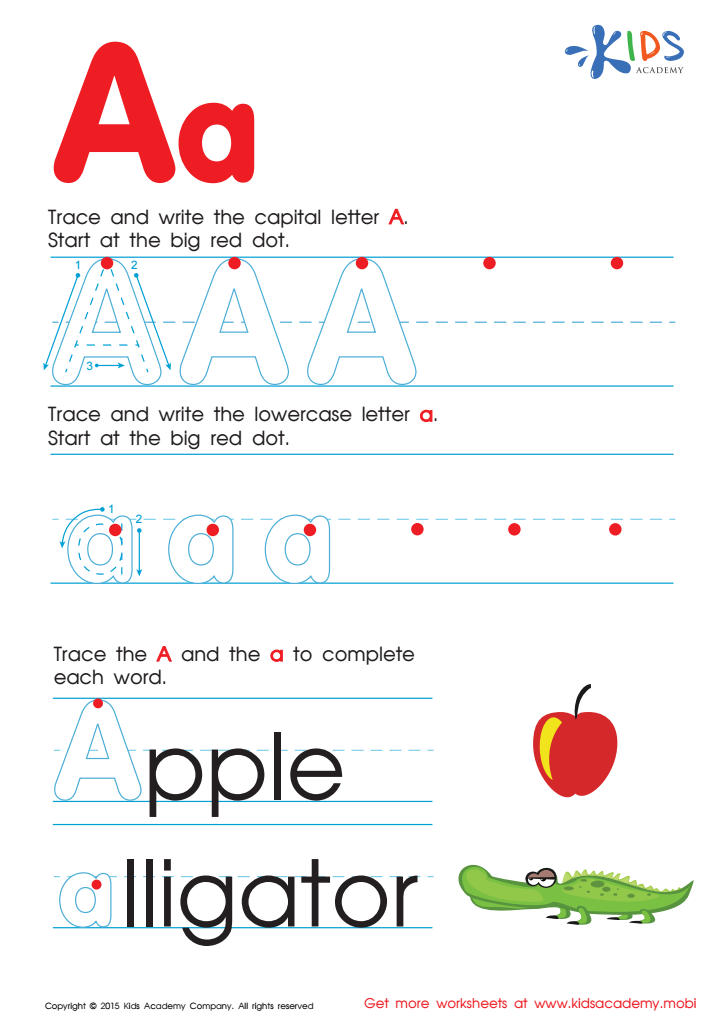
Trace and write the letter "A"! Start with the big red dot, then do the capital and lowercase versions. Then write it again with two words - apple and alligator. Download more tracing worksheets at Kids Academy.
 Assign to My Students
Letter A Tracing Page
Worksheet
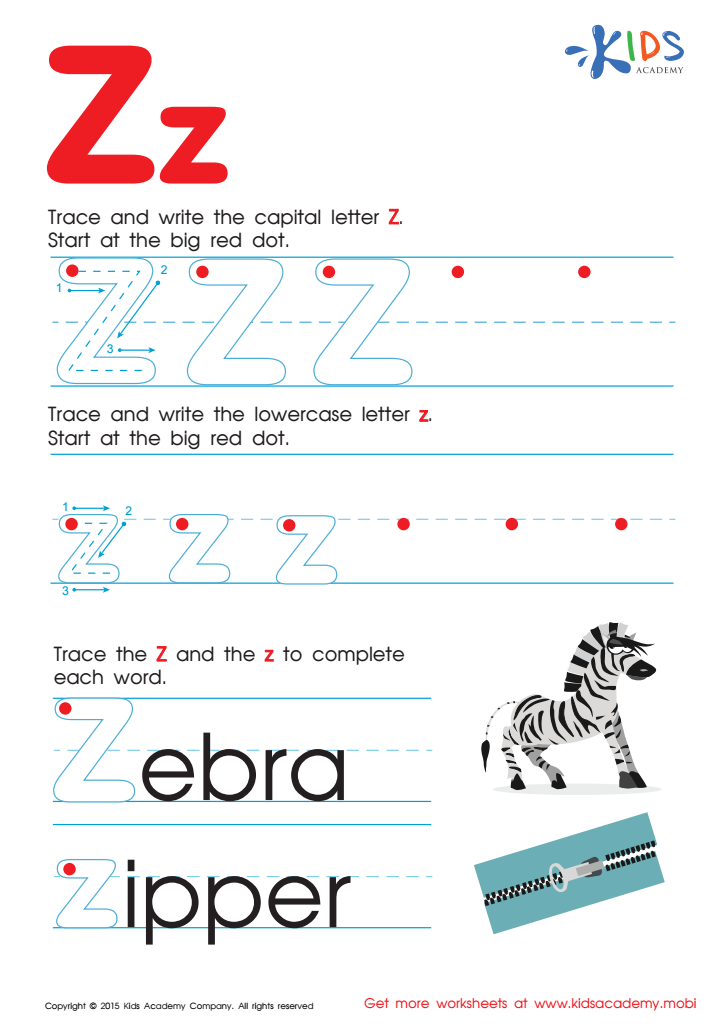
Letter Z Tracing Page
Trace and write capital "Z" and lowercase "z". Complete words "zebra" and "zipper". Be attentive and have fun! (80 words)
Letter Z Tracing Page
Worksheet
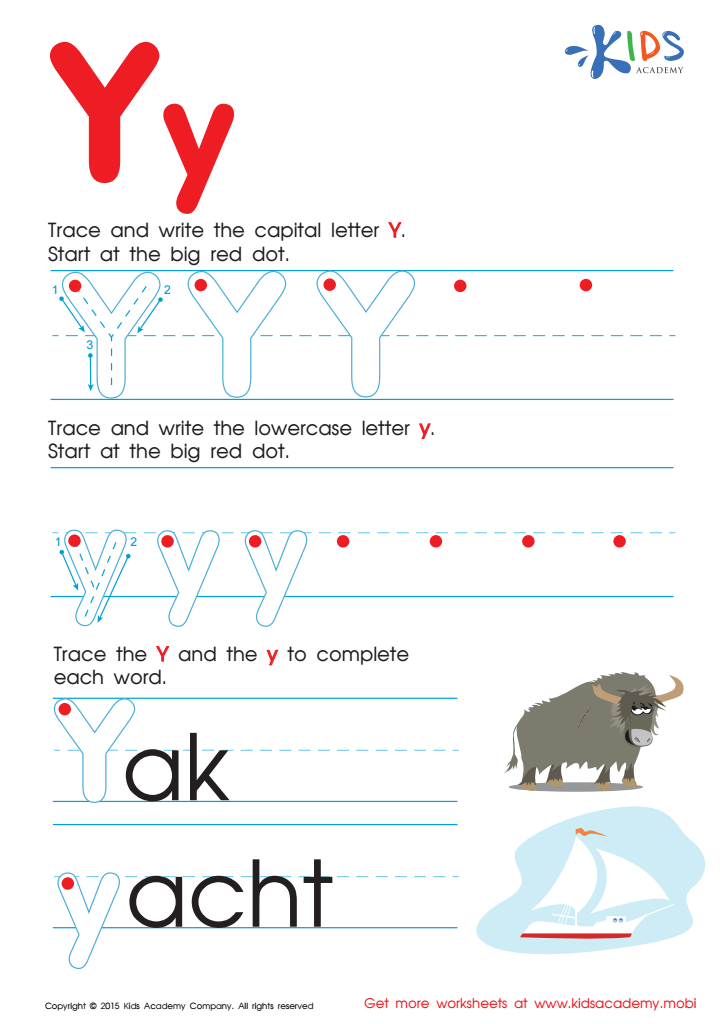
Letter Y Tracing Page
Trace the capital letter "Y" on the red dot, then trace and write the lowercase letter. Complete the words to help the Yak walk and the yacht swim. More worksheets at Kids Academy.
Letter Y Tracing Page
Worksheet
Join Kids Academy for Free
Who is primarily going to use this learning content?


Alphabet recognition is a foundational skill for young learners, particularly in Grade 1. Engaging with activities like the Alphabet Recognition Extra Challenge helps children develop essential literacy skills. It encourages them to identify, differentiate, and make connections between letters and their sounds, which is crucial for reading and writing.
By understanding letters in alphabetical order, students cultivate organizational skills and cognitive strategies that are beneficial in broader educational contexts. Mastering this concept supports phonemic awareness and strengthens vocabulary acquisition, aiding comprehension as children transition to more complex texts.
For parents and teachers, emphasizing alphabet recognition cultivates a love for language and literacy. It encourages interactive learning opportunities—such as games and singing the alphabet song—which can turn a seemingly mundane task into an exciting challenge. Moreover, cultivating this skill prepares students for standardized assessments, reinforcing their self-confidence as learners.
Incorporating extra challenges in alphabet recognition also fosters a growth mindset. Children learn that practice and perseverance lead to improvement, preparing them for future academic challenges. Thus, investing in this early literacy milestone is crucial for building strong reading foundations and lifelong learning habits.