Alphabet Recognition Extra Challenge Grade 1 ABC Letters Worksheets
3 filtered results
Difficulty Level
Grade
Age
-
From - To
Subject
Activity
Standards
Elevate your first grader's alphabet recognition skills with our ABC Letters Worksheets! Designed for young learners, these engaging and interactive worksheets provide extra challenges to help students master the letters of the alphabet. Each worksheet focuses on enhancing letter identification, both uppercase and lowercase, through exciting activities that capture children's interest. From tracing and coloring to fun puzzles, these hands-on exercises foster confidence and reinforce learning. Perfect for supplementing classroom lessons or as at-home practice, our Alphabet Recognition Extra Challenge worksheets create a joyful learning experience that supports your child's educational journey. Watch them thrive as they become alphabet experts!
Favorites
With answer key
Interactive
Letter A Tracing Page
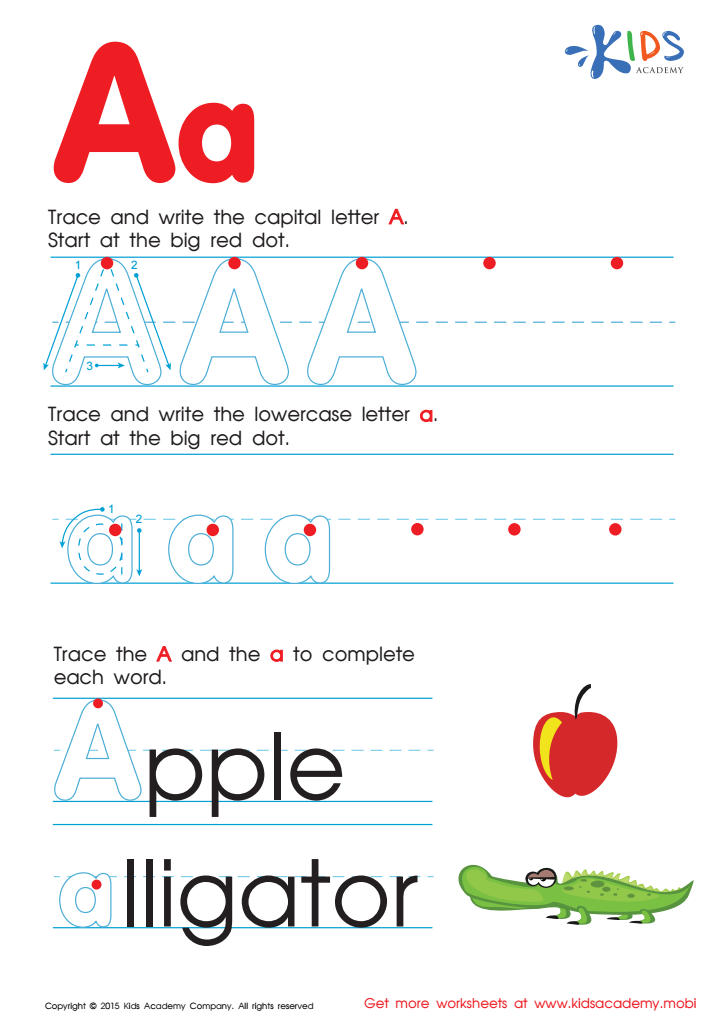
Trace and write the letter "A"! Start with the big red dot, then do the capital and lowercase versions. Then write it again with two words - apple and alligator. Download more tracing worksheets at Kids Academy.
 Assign to My Students
Letter A Tracing Page
Worksheet
Letter Z Tracing Page
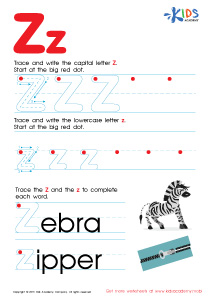
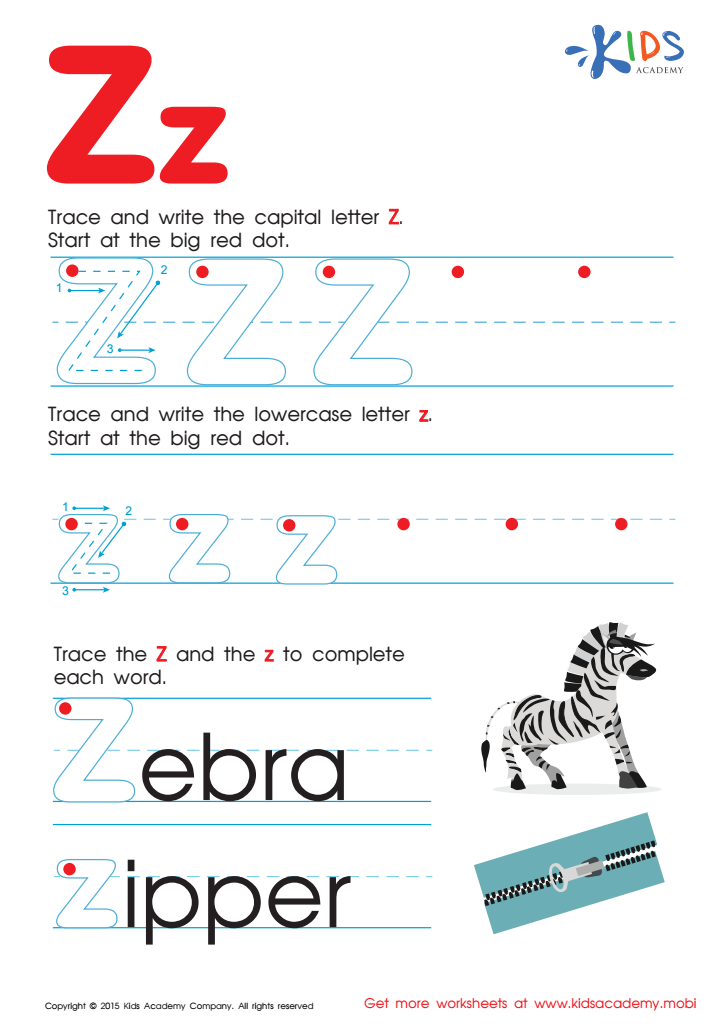
Trace and write capital "Z" and lowercase "z". Complete words "zebra" and "zipper". Be attentive and have fun! (80 words)
Letter Z Tracing Page
Worksheet
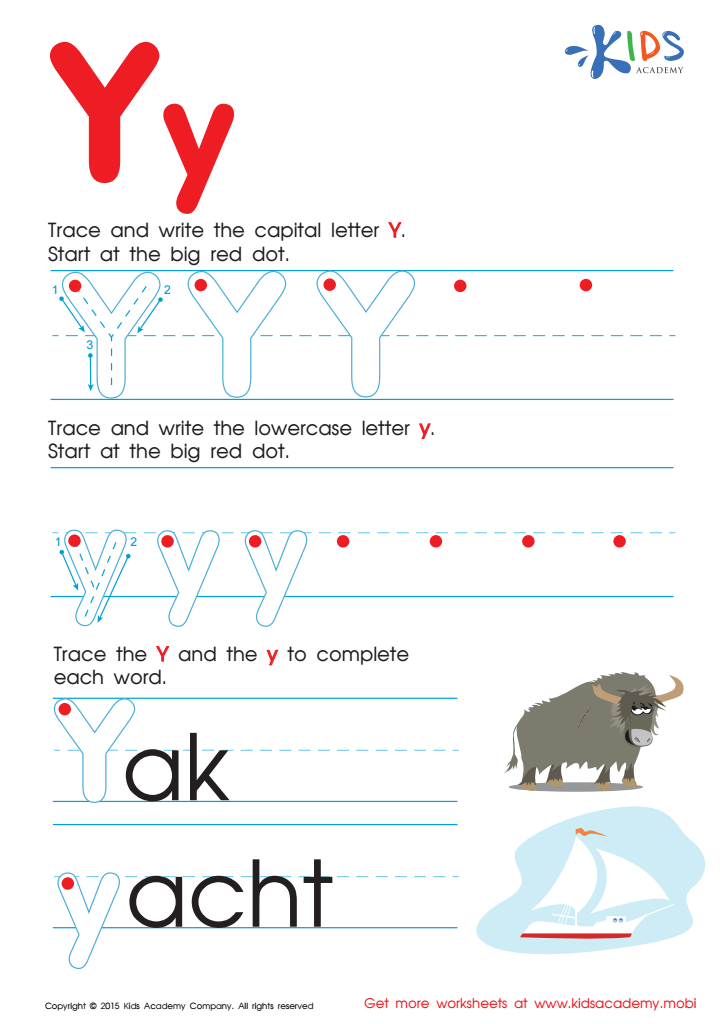
Letter Y Tracing Page
Trace the capital letter "Y" on the red dot, then trace and write the lowercase letter. Complete the words to help the Yak walk and the yacht swim. More worksheets at Kids Academy.
Letter Y Tracing Page
Worksheet
Join Kids Academy for Free
Who is primarily going to use this learning content?



Alphabet recognition is a foundational skill critical for early literacy and overall academic success. In Grade 1, students are transitioning from learning letters to using them in reading and writing, making this phase vital for their development. Parents and teachers should care about implementing extra challenges in alphabet recognition, as they can enrich students’ understanding of letter sounds, formation, and their connection to words.
Engaging activities that reinforce alphabet recognition can instill a love for reading and encourage confidence in students. The extra challenge pushes children to interact with letters in various contexts, promoting retention and deeper comprehension. This approach can also cater to different learning styles, ensuring that kinesthetic, visual, and auditory learners can find success.
Moreover, strong alphabet recognition skills form the basis for more complex literacy tasks, including spelling and reading fluency. For many students, particularly those struggling with basic letter recognition, additional challenges can bridge gaps in learning and enhance individual progress. Encouraging this recognition fosters an environment of support, where students feel empowered to take risks in their reading and writing journeys. Ultimately, invested parents and teachers are instrumental in nurturing informed, capable readers who will thrive academically for years to come.