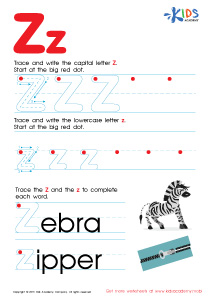
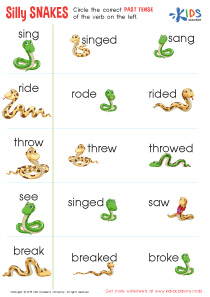
Fine Motor Skills Extra Challenge Grade 1 Letter Recognition Worksheets
7 filtered results
-
From - To
Enhance your first grader's fine motor skills and letter recognition with our challenging Grade 1 Letter Recognition Worksheets. These engaging activities are meticulously designed to support young learners in mastering the alphabet while simultaneously developing hand-eye coordination and precise control. Ideal for advanced students or those seeking an extra challenge, our worksheets incorporate a variety of exercises, including tracing, matching, and writing letters. Each task is crafted to make learning fun and interactive, ensuring children build foundational skills essential for reading and writing success. Provide your child with the tools they need to excel academically and creatively!

Letter A Tracing Page
 Assign to My Students
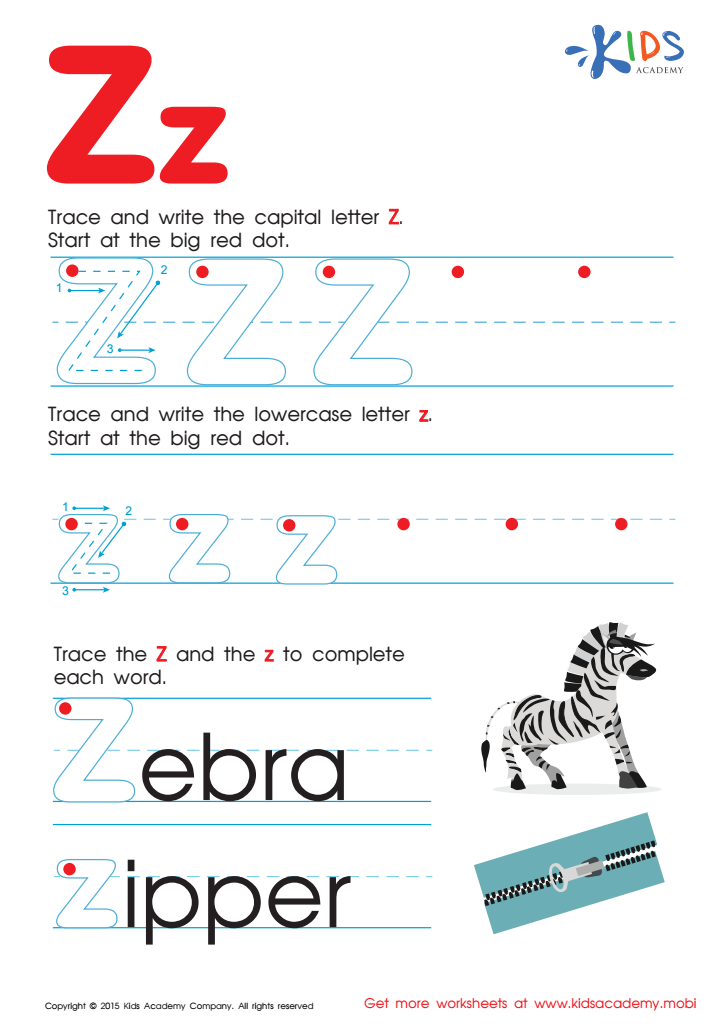
Letter Z Tracing Page
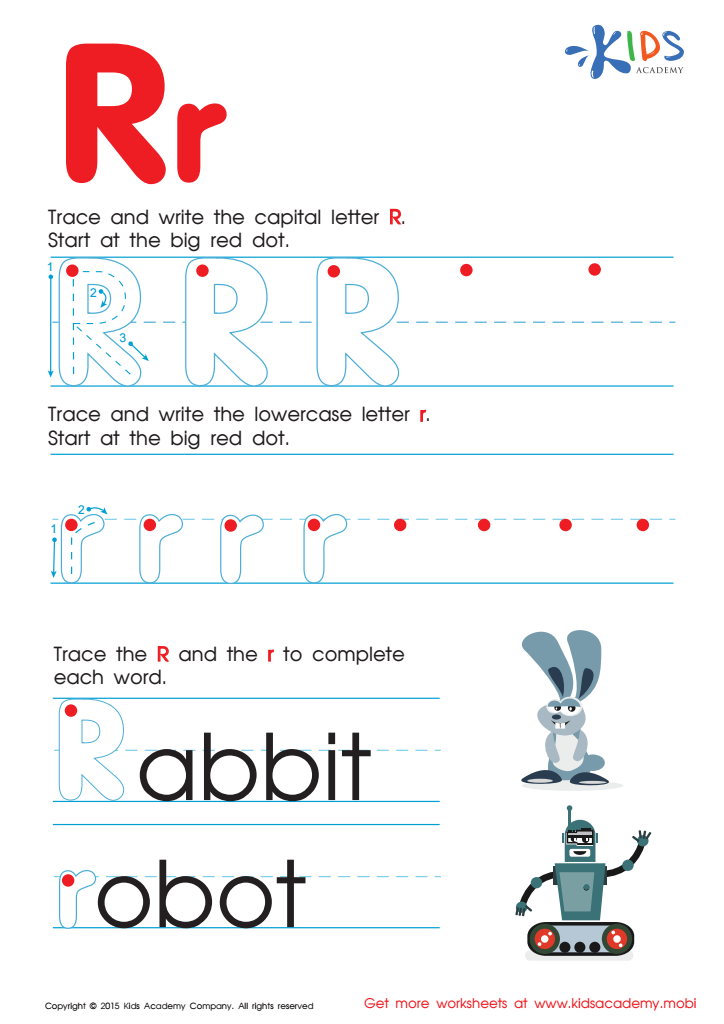
Letter R Tracing Page
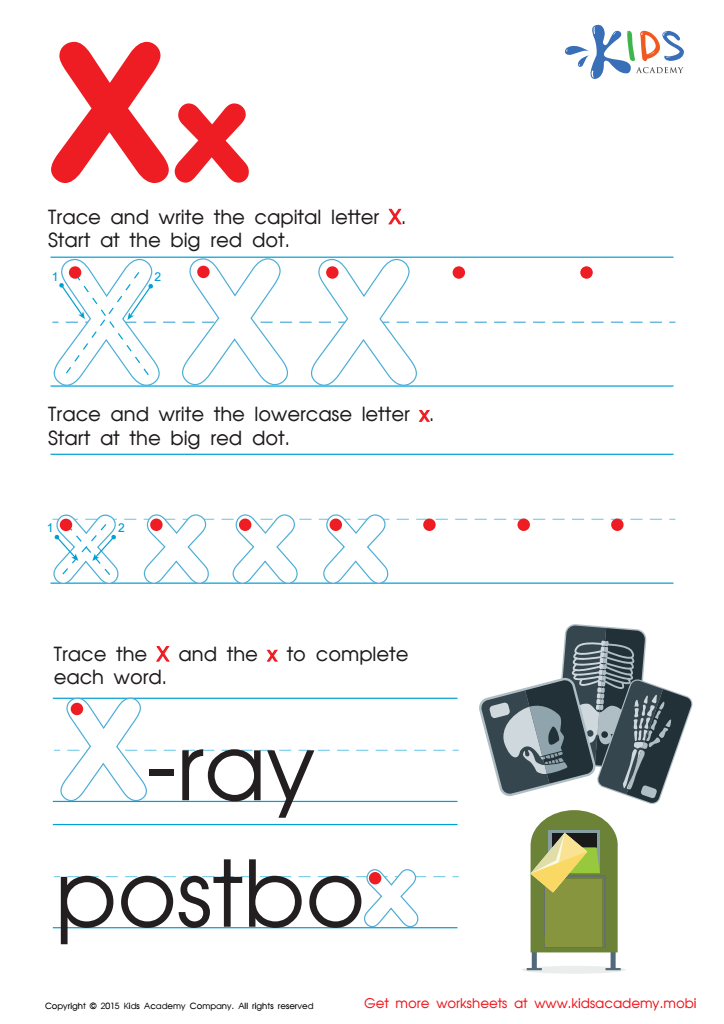
Letter X Tracing Page
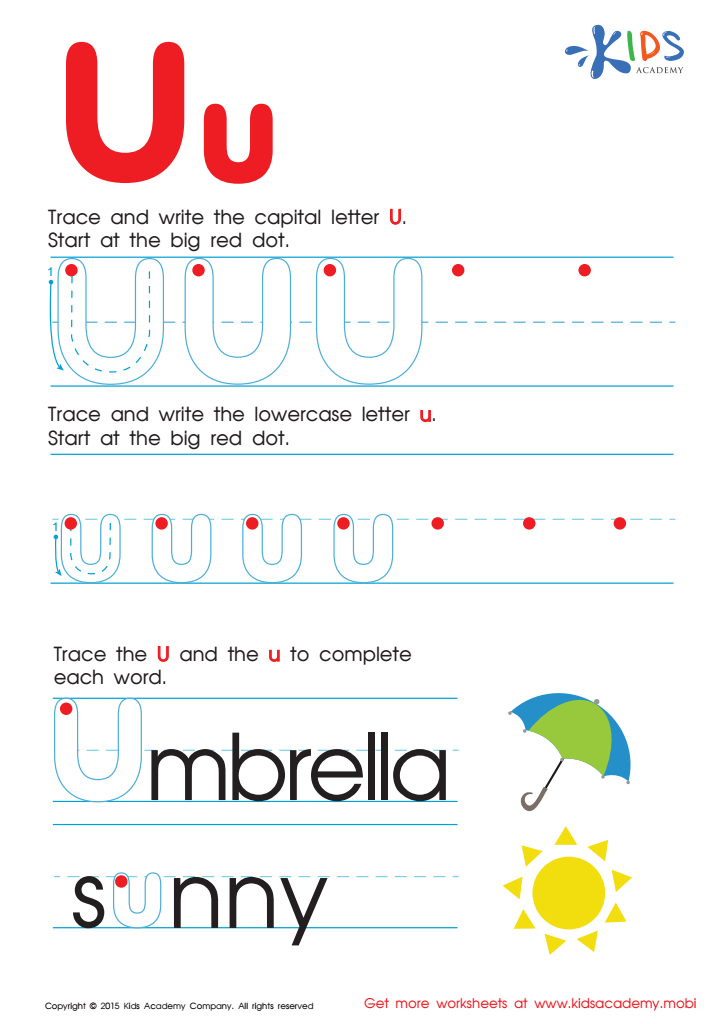
Letter U Tracing Page
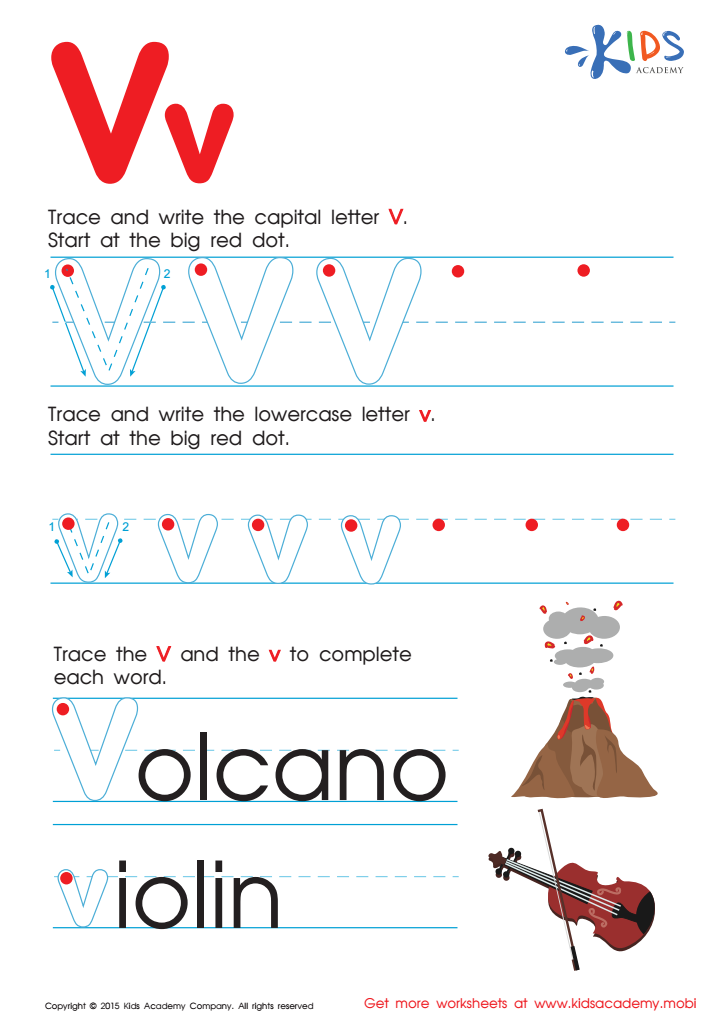
Letter V Tracing Page
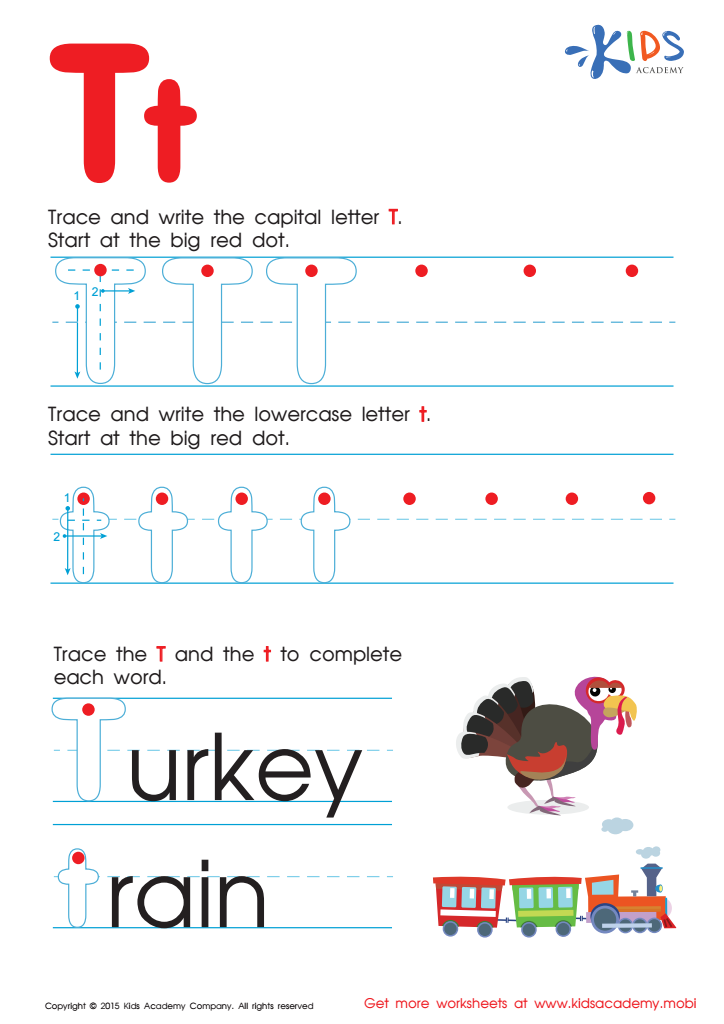
Letter T Tracing Page



Fine motor skills, essential for daily activities, significantly impact a child's overall development and academic success. In Grade 1, students are at a pivotal stage where these skills need to be refined, and letter recognition is a foundational literacy component.
Parents and teachers should care about fine motor skills because they influence a child's ability to perform tasks such as writing, cutting, and buttoning clothing. Mastery of these skills boosts a child's confidence and independence. Early intervention in developing fine motor skills can forestall future academic difficulties. Engaging in activities that challenge these skills helps strengthen the small muscles in the hands and fingers, essential for tasks that involve delicate hand control.
Letter recognition serves as the cornerstone of reading and writing. When children can easily recognize letters, they're better positioned to learn and enjoy reading. Challenges in letter recognition can hint at additional educational needs that, if addressed early, can prevent long-term learning struggles.
A focus on activities that promote both fine motor skills and letter recognition ensures a child’s smoother transition into advanced academic tasks. Active parental or teacher involvement in these areas cultivates a strong, supportive learning environment, ultimately contributing to the child's academic journey and personal growth.