Alphabet Recognition Extra Challenge Grade 1 Tracing Letters Worksheets
3 filtered results
-
From - To
Enhance your child’s alphabet mastery with our Alphabet Recognition Extra Challenge Grade 1 Tracing Letters Worksheets. Designed to boost letter recognition and fine motor skills, these worksheets cater to first graders ready to excel. Featuring diverse tracing exercises, our worksheets provide an engaging way for children to reinforce their understanding of each letter's shape and sound. Perfect for advancing literacy, these tools support classroom learning and at-home practice. Help your first grader achieve alphabet proficiency while enjoying the process of learning to read and write with Kids Academy's expertly crafted tracing letters worksheets.
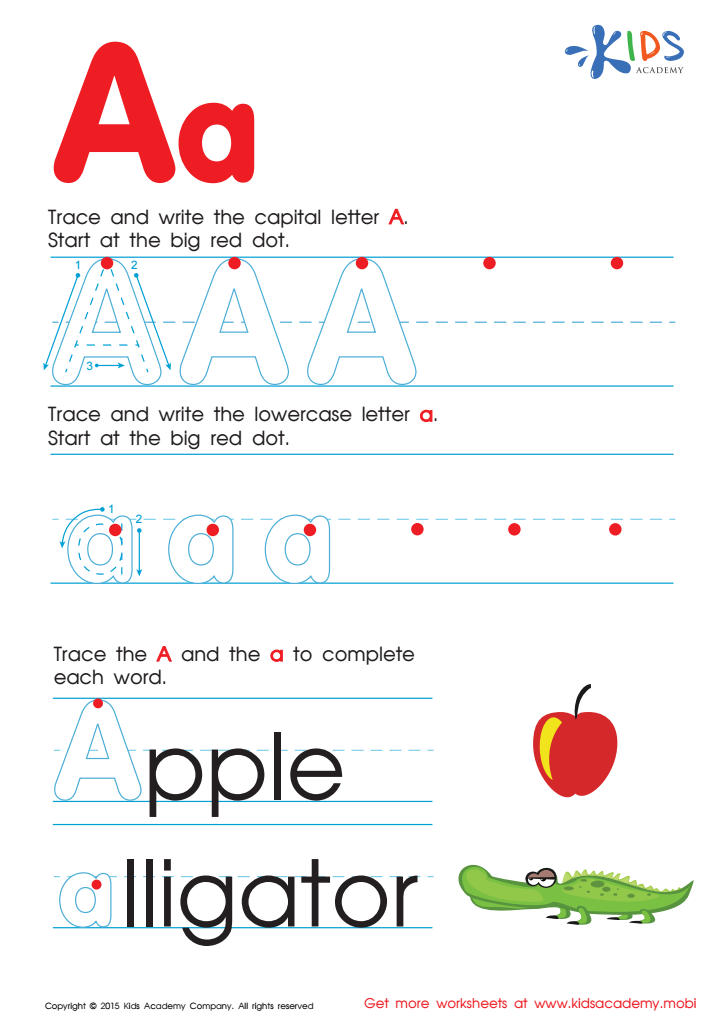
Letter A Tracing Page
 Assign to My Students
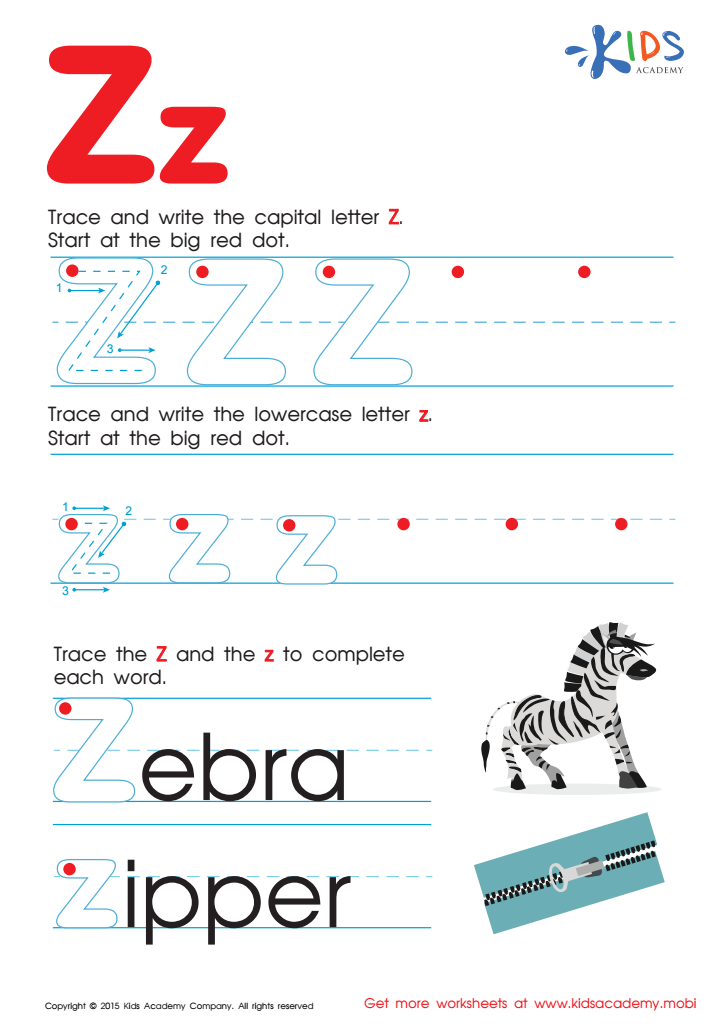
Letter Z Tracing Page
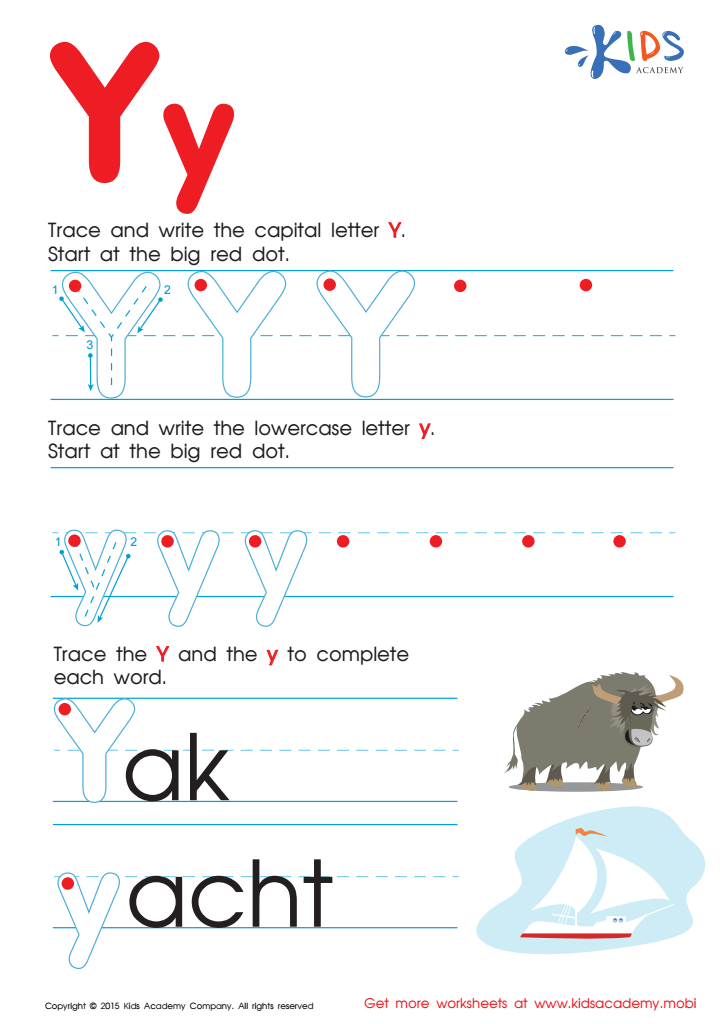
Letter Y Tracing Page




Alphabet Recognition Extra Challenge Grade 1 Tracing Letters is incredibly important for the foundational education of children. This activity goes beyond just identifying letters; it enhances several key learning areas critical for academic success.
Firstly, alphabet recognition forms the cornerstone of reading and writing skills. When children become familiar with letters, they start to understand that these symbols are related to sounds. This phonemic awareness is essential for decoding words in reading and constructing them through writing. A solid grasp of the alphabet makes the transition to more complex literacy skills smoother and more intuitive.
Additionally, tracing letters helps in developing fine motor skills. Writing involves precise hand movements and control, which tracing exercises effectively nurture. As children engage in tracing, they refine their hand-eye coordination and dexterity, setting a strong base for future handwriting tasks.
Moreover, these activities boost cognitive development. Recognizing and tracing letters requires attention to detail and memory skills, fostering a young child's ability to concentrate and think critically.
For parents and teachers, ensuring that children engage in Alphabet Recognition Extra Challenge Grade 1 Tracing Letters aligns with broader educational goals, setting the stage for spectacular advancements in students' academic capabilities and confidence. Consequently, it’s a vital component of early childhood education that cannot be overlooked.