Alphabet Recognition Extra Challenge Grade 1 English for Beginners Worksheets
3 filtered results
-
From - To
Enhance your Grade 1 students' early literacy skills with our "Alphabet Recognition Extra Challenge" worksheets, designed specifically for beginners in English! These engaging activities help children solidify their understanding of the alphabet through fun exercises that promote recognition of both uppercase and lowercase letters. Perfect for ESL learners, our worksheets include a variety of challenges such as letter matching, tracing, and identification games. By incorporating these worksheets into your lessons, you'll support your students in building a strong foundation in reading and writing while fostering their confidence. Explore our diverse selection and watch your young learners thrive in their alphabet mastery!

Letter A Tracing Page
 Assign to My Students
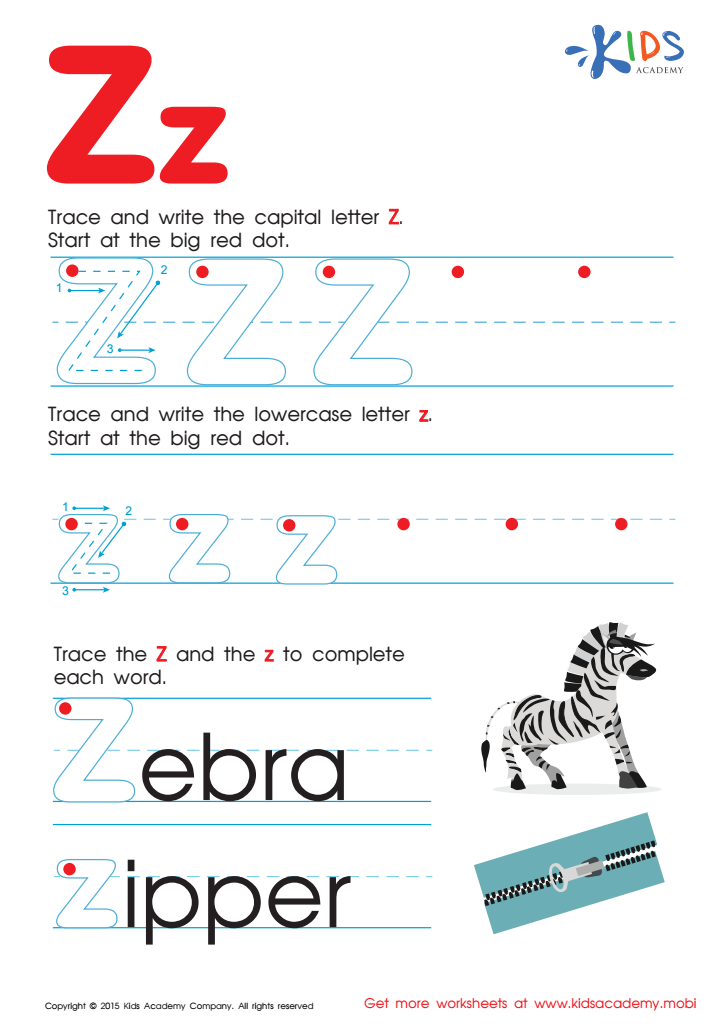
Letter Z Tracing Page
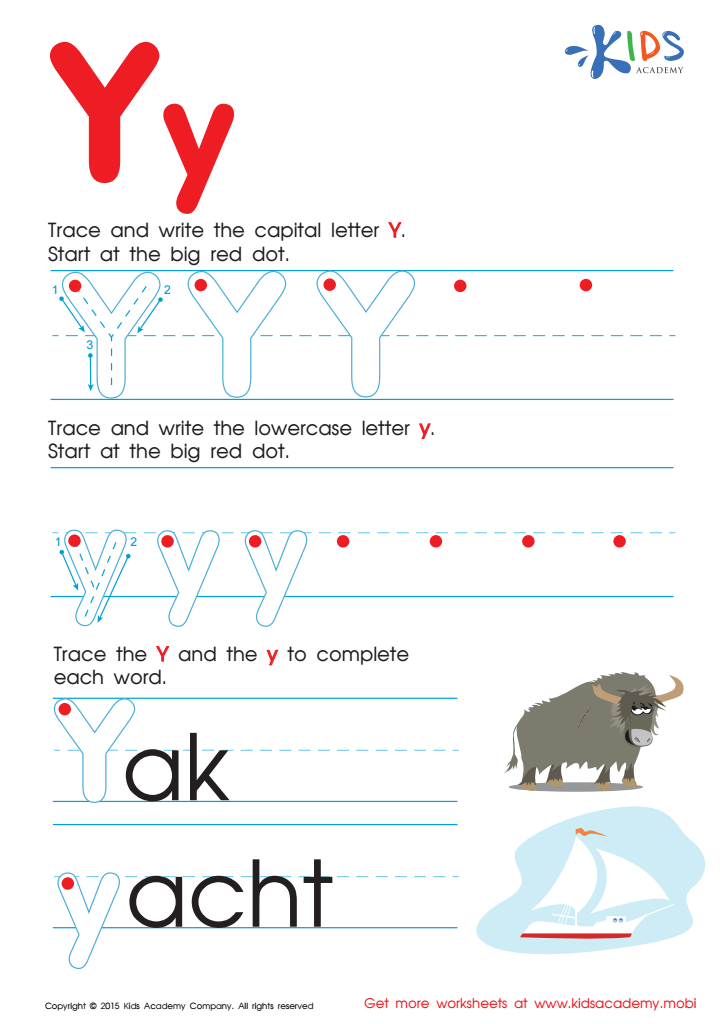
Letter Y Tracing Page


Alphabet Recognition is crucial for Grade 1 students, serving as the foundational skill for reading and writing. For parents and teachers, supporting children in mastering this aspect offers significant benefits. First, recognizing letters and their associated sounds directly impacts literacy development, enabling students to decode words, which is essential for reading fluently.
Moreover, strong alphabet recognition fosters confidence in early learners. When children can identify letters, they feel empowered to participate in school activities and confidently express themselves. This not only enhances their academic self-esteem but also encourages a love for reading, which is instrumental in lifelong learning.
Additionally, the Extra Challenge in Alphabet Recognition caters to diverse learning styles and paces, ensuring that all children, including those who excel, remain engaged and motivated. It provides enriched activities that stimulate critical thinking and problem-solving skills, setting the stage for more complex literacy skills in the future.
By prioritizing alphabet recognition, parents and teachers contribute significantly to every child's literacy journey. They foster an environment where students feel valued and motivated, ultimately shaping confident, capable readers ready to take on the challenges of advanced education.