Counting skills Extra Challenge Kindergarten Worksheets
40 filtered results
Difficulty Level
Grade
Age
-
From - To
Subject
Activity
Standards
Unlock your child's potential with our "Counting Skills Extra Challenge Kindergarten Worksheets!" Designed specifically for young learners, these engaging worksheets enhance counting abilities through fun and interactive activities. Perfect for extracurricular practice, they provide enriching opportunities that challenge kids to think critically while mastering essential math skills. Our worksheets cover a variety of topics, including number recognition, counting objects, and simple addition, all tailored to develop confidence and proficiency in early mathematics. Ideal for parents and teachers alike, these resources make learning to count enjoyable and effective. Discover how our extra challenge worksheets can elevate your child's counting skills today!
Favorites
With answer key
Interactive
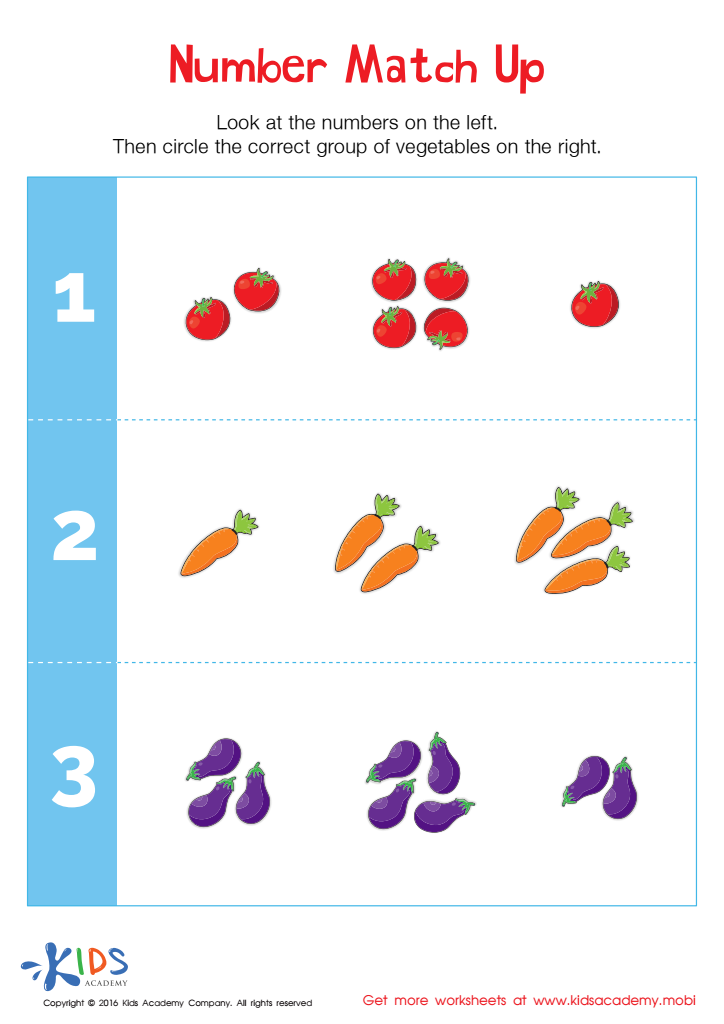
Number Match Up Worksheet
Help your child learn early math skills with this cute number match-up worksheet! Through this exercise, your preschooler can practice following directions, recognizing numbers, counting and understanding the difference between left and right. Bright and catchy pictures such as veggies make the worksheet fun and engaging. Print it out and let your child enjoy counting and matching the veggies!
 Assign to My Students
Number Match Up Worksheet
Worksheet
Count Winter Things Worksheet
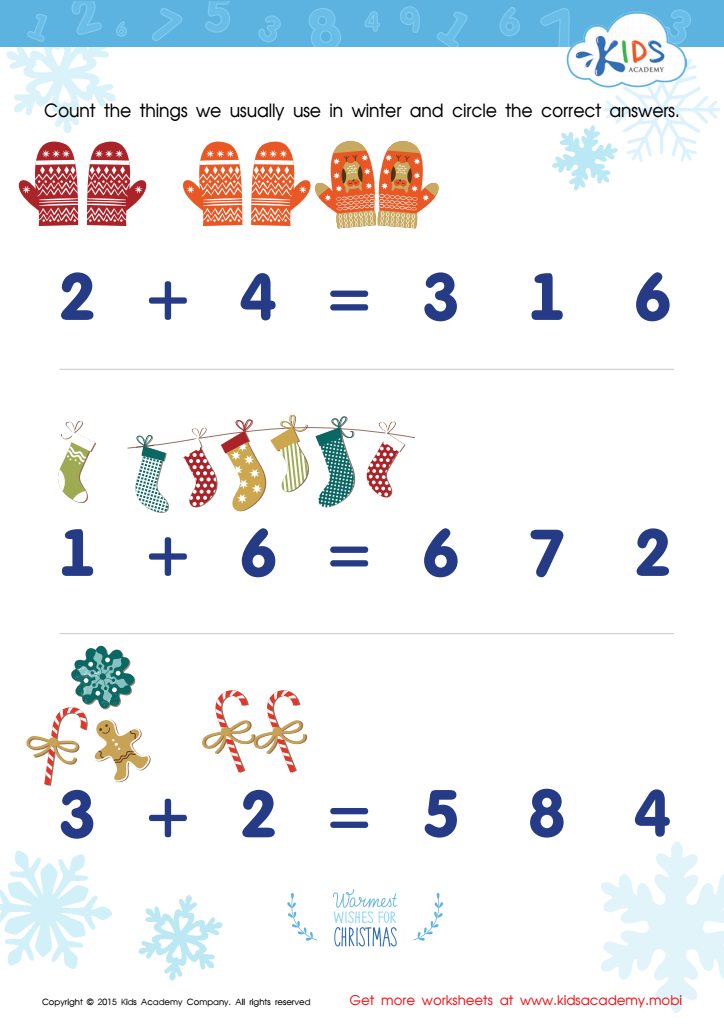
This chilly winter afternoon, help your kid warm up with Kids Academy's free math worksheet - full of bright pictures and addition practice. Let them count the things and write in the numbers for a great brain training and math head start. Get more free math worksheets here. (80 words)
Count Winter Things Worksheet
Worksheet
Counting Floors Worksheet
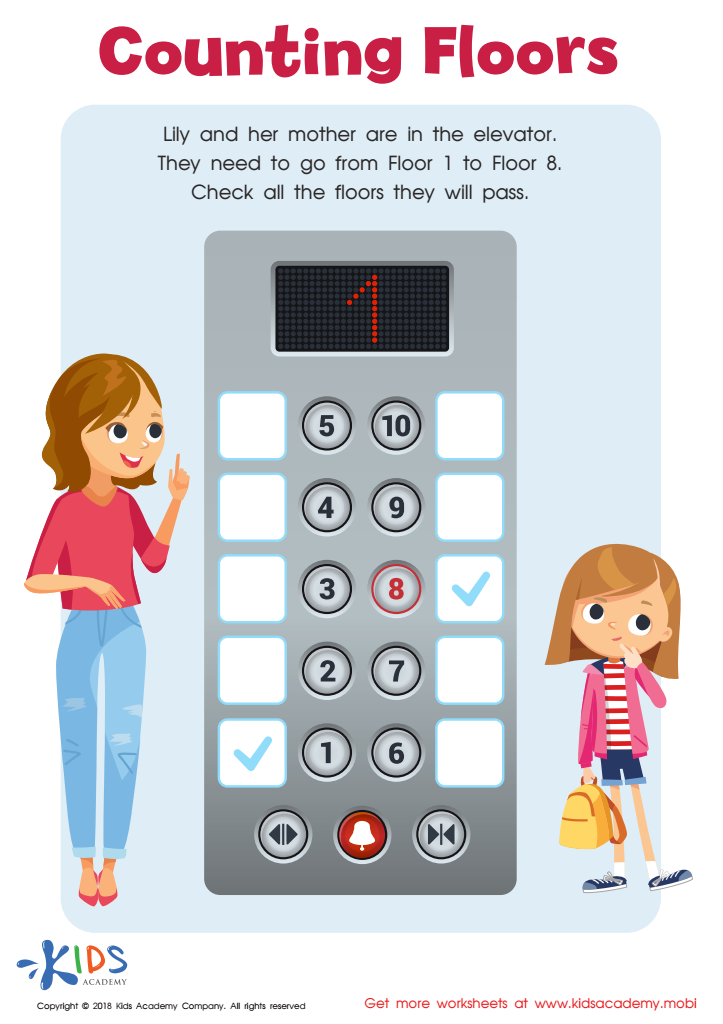
Take your kids on an elevator ride and have them help you. With this worksheet, little ones meet Lily and her mom. They're taking an elevator from Floor 1 to Floor 8. Ask them to check the floors they pass and help the two reach their destination.
Counting Floors Worksheet
Worksheet
Robot Printable
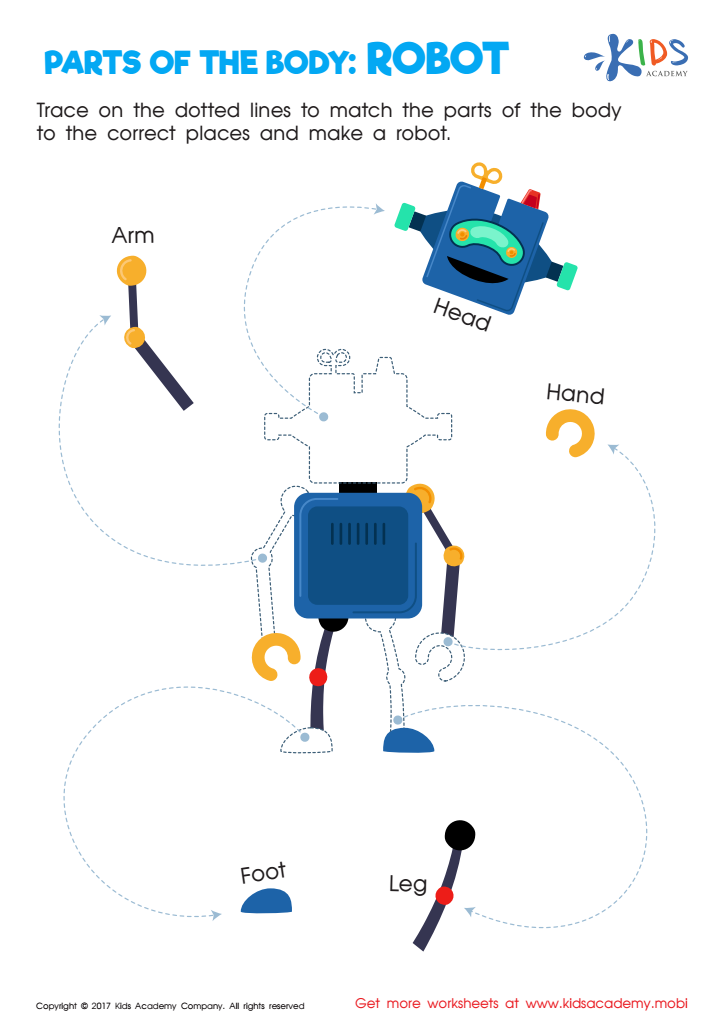
Introduce your child to a fun robot and help her hone her matching skills with this parts of the body worksheet! Your child will trace dotted lines to match the robot's body parts to the right place, helping her focus, use abstract thinking and reason better. This worksheet is sure to get your child excited and help her build essential skills for future success!
Robot Printable
Worksheet
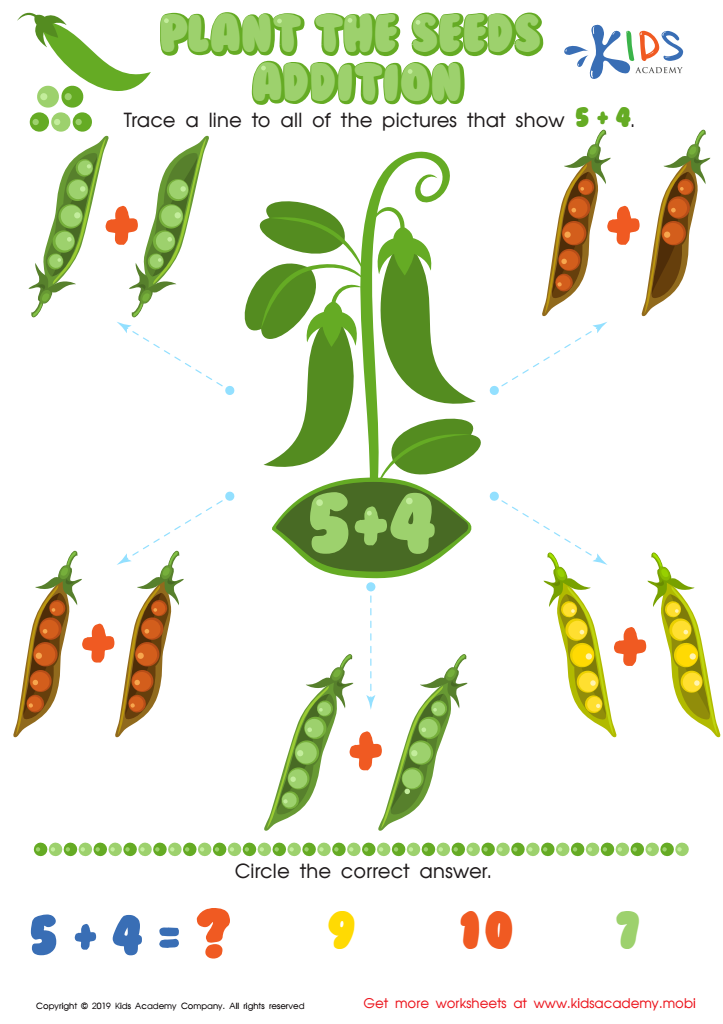
Plant the Seeds Addition Worksheet
This worksheet combines math and learning about plants. Ask kids to name their favorite plants and which ones they see the most. Have them trace a line to all pictures in the middle which show the equation 5+4. Enjoy the beauty of plants while introducing math skills!
Plant the Seeds Addition Worksheet
Worksheet
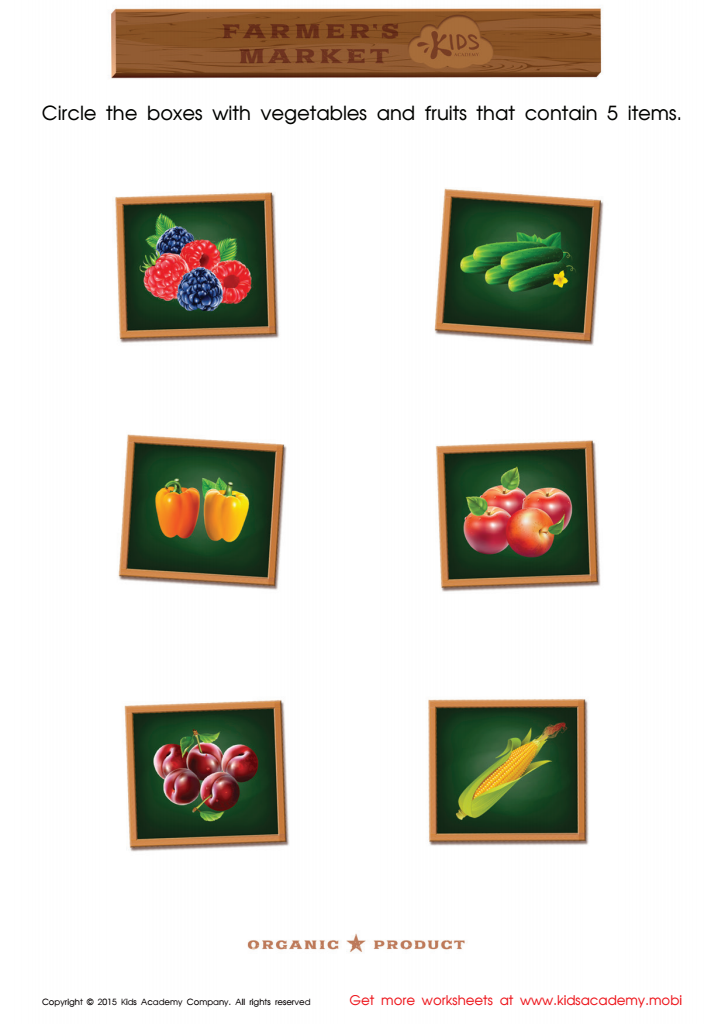
Count and Match Vegetables 1 – 7 Math Worksheet
Print this bright math worksheet from Kids Academy and give your child a fun way to enhance their counting skills. Based on Singapore Math, the colourful pictures make it easy for children to comprehend math. Get additional free worksheets here!
Count and Match Vegetables 1 – 7 Math Worksheet
Worksheet
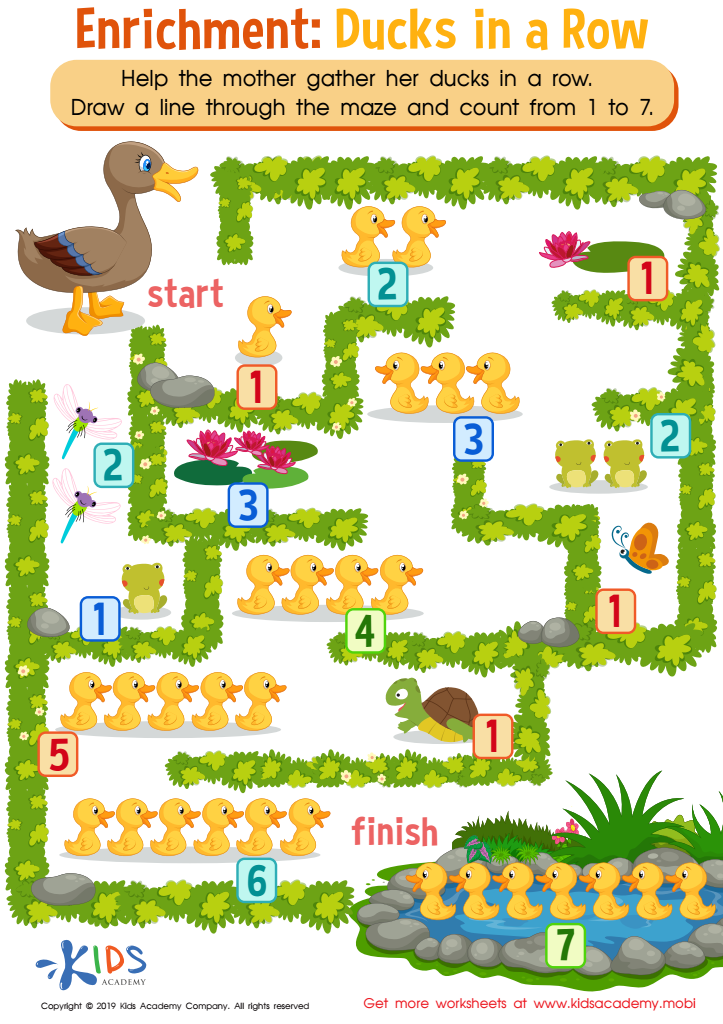
Ducks in a Row Worksheet
Are you looking for a fun and free math enrichment activity for your young one? Get Sweet Mama Duck and her ducks to the pond by helping your child navigate through this colorful maze! They'll use their fine motor skills and hone their number sense as they count ducks, turtles and frogs. Plus, they'll learn one-to-one representation. A great educational way to have fun!
Ducks in a Row Worksheet
Worksheet
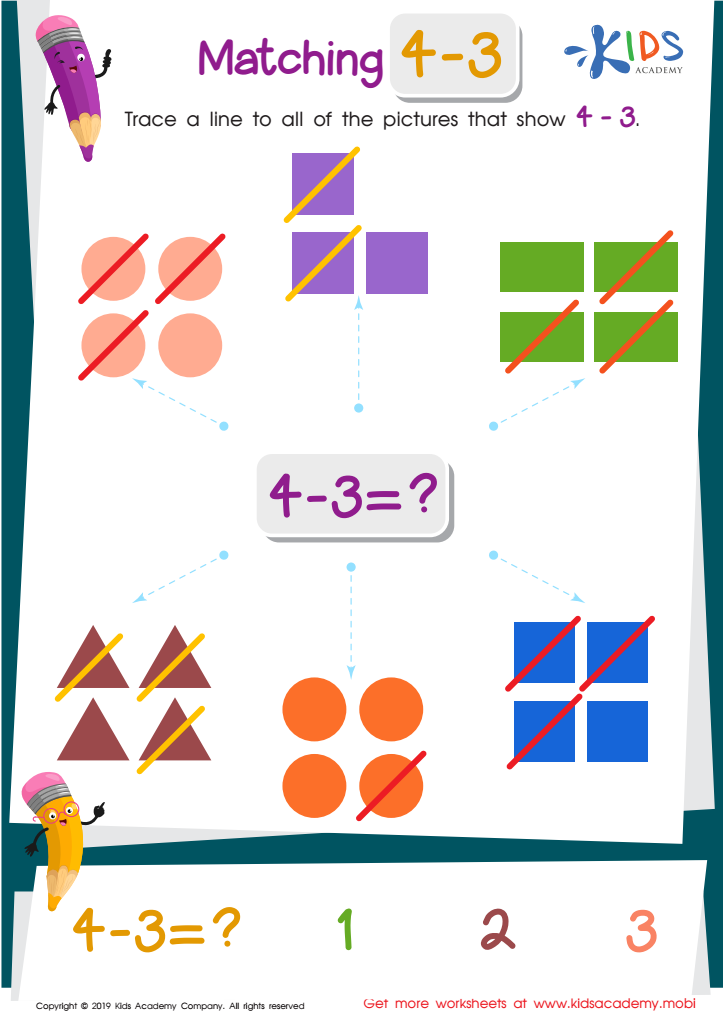
Matching 4 – 3 Worksheet
Help your kids master basic math concepts like addition and subtraction with fun exercises. Test their understanding with simple problems. For example, in this worksheet, ask them to count the objects in each picture and draw a line to the pictures that show 4 - 3 = 1. This will help them get better at solving equations.
Matching 4 – 3 Worksheet
Worksheet
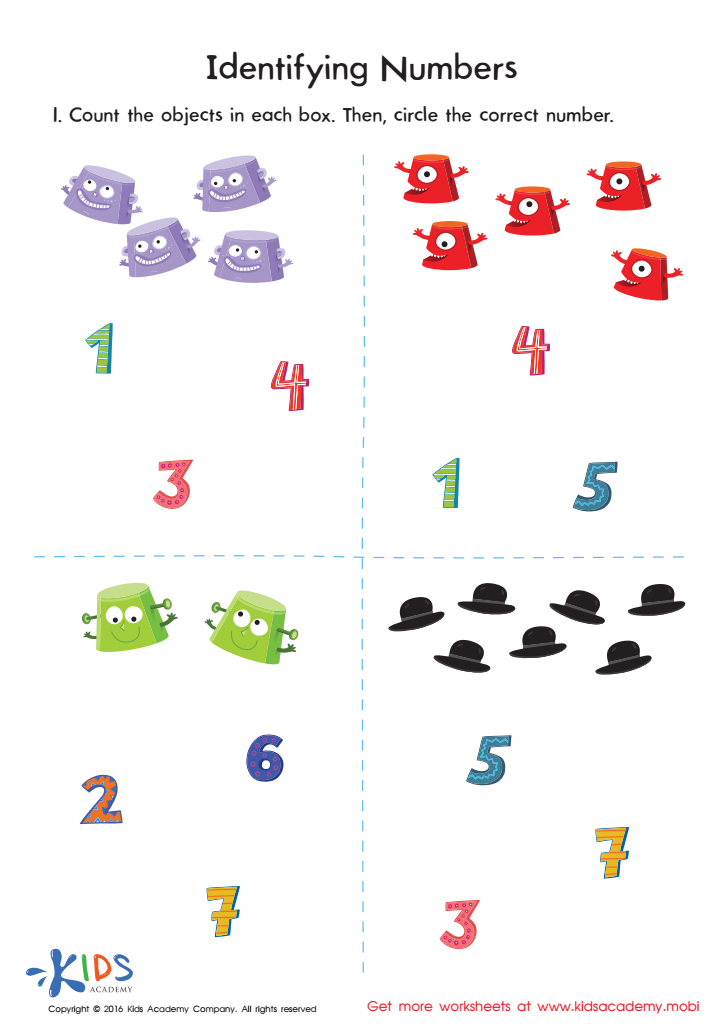
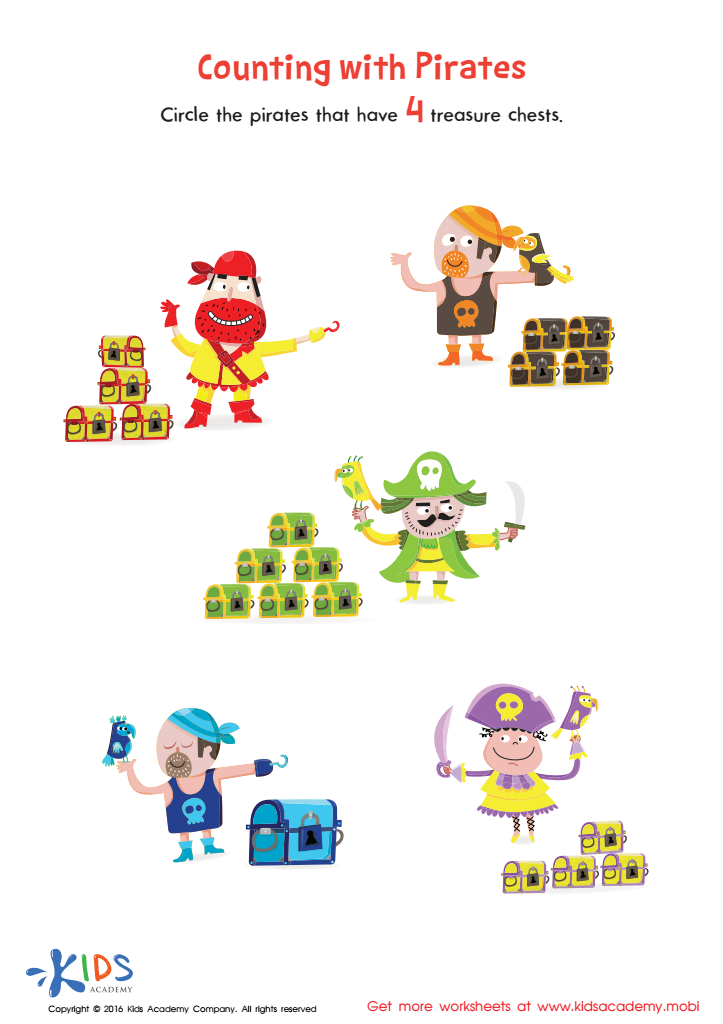
Counting With Pirates Worksheet
Ahoy, mateys! Join us on the hunt for the pirate with four treasure chests! They’re hidden in this counting worksheet, full of swashbuckling fun! Your little one will be excited to search for gold and at the same time develop key counting skills - a great start to early math!
Counting With Pirates Worksheet
Worksheet
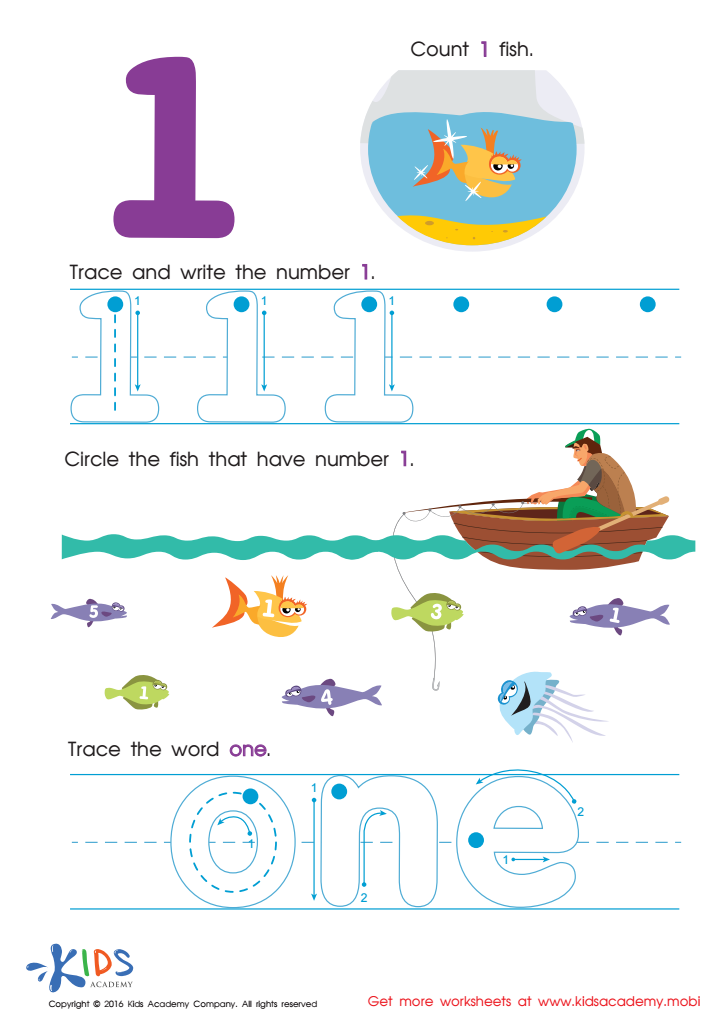
Learning to Write 1 Worksheet
Learning to write numbers can be easy and fun! Get this new number worksheet to help your child excel. Practice counting, tracing and writing the number “one”, then circle the fish with “1” on them. Revise spelling and have fun! Get more tracing numbers worksheets at Kids Academy and enjoy the learning process.
Learning to Write 1 Worksheet
Worksheet
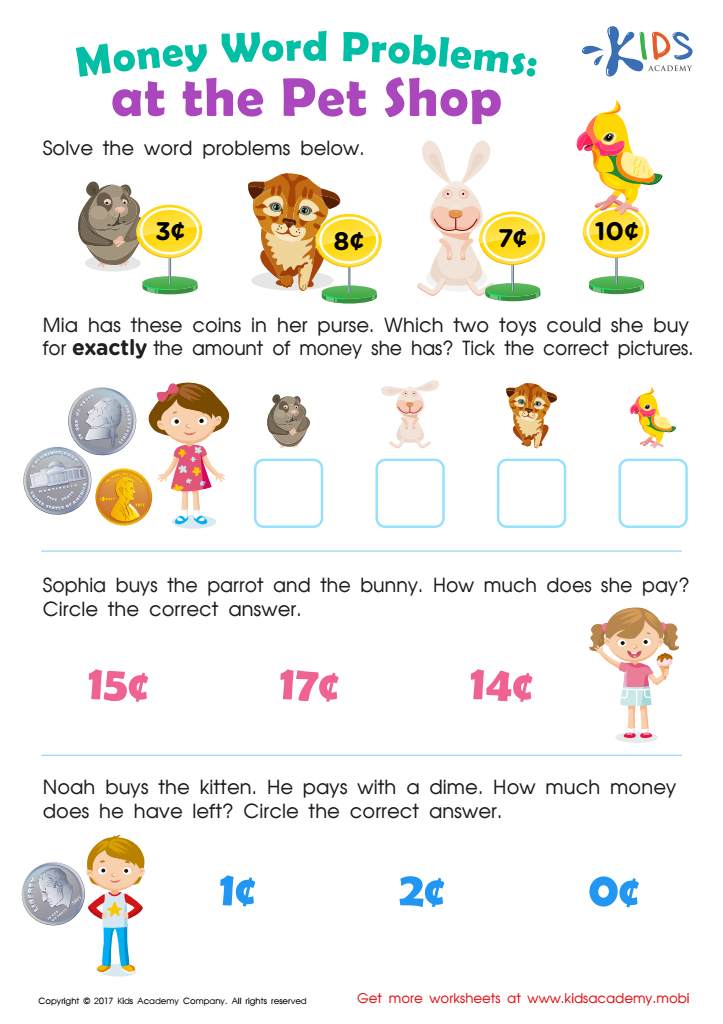
Pet Shop Worksheet
Teach your child a key life skill: counting and managing money. With this worksheet, they'll learn to count coins and calculate purchases at the pet shop. Give them colorful, fun math practice!
Pet Shop Worksheet
Worksheet
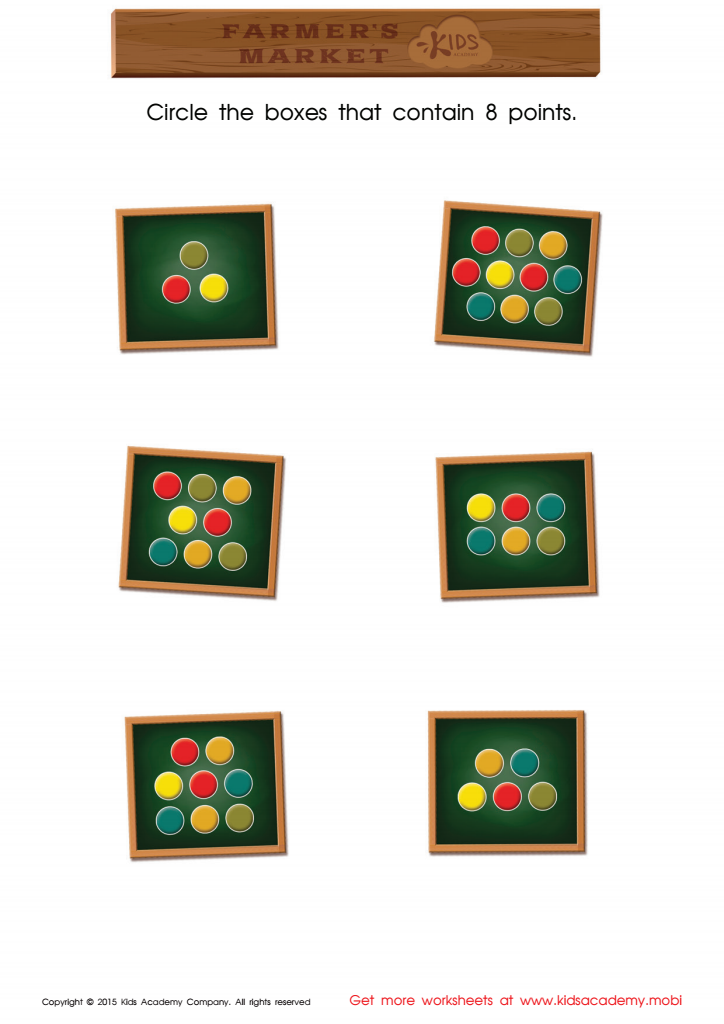
Count and Match Points 8 Math Worksheet
This free PDF helps children develop their number skills by counting the points in the boxes. Each box contains a total of 9 points, making it a fun and colorful activity. Parents can encourage their young ones by guiding them if they need help counting. By the end of the worksheet, children should have a better understanding of numbers.
Count and Match Points 8 Math Worksheet
Worksheet
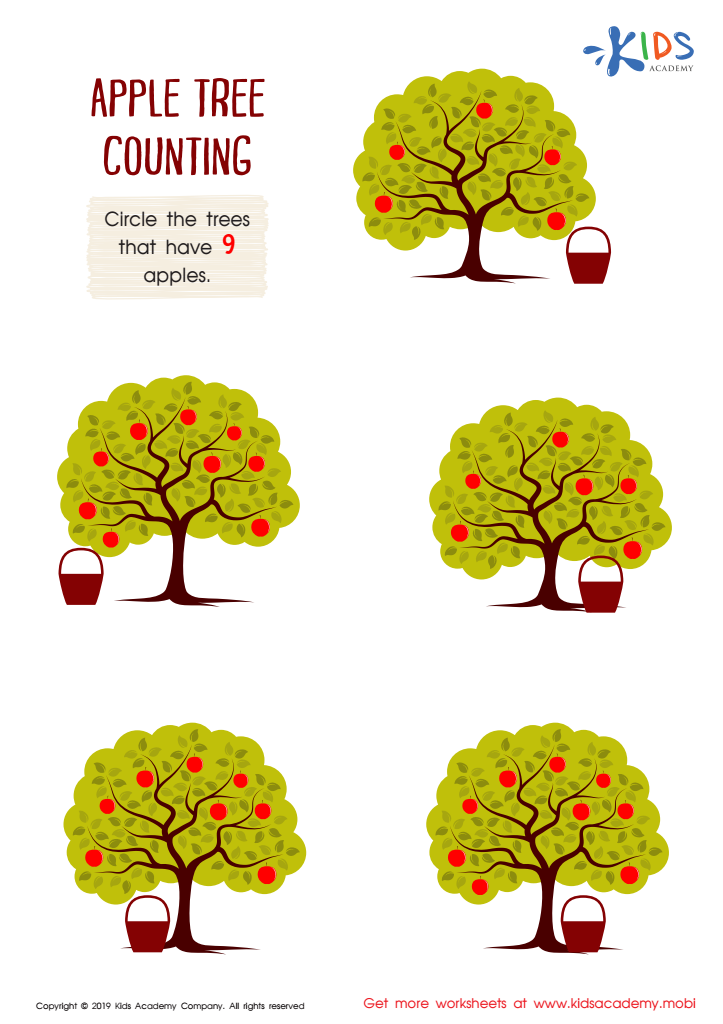
Apple Tree Counting Worksheet
Help your kids perfect their counting skills with this fun exercise. Get them to count the apples on the 5 trees and circle the ones with 9. It's great that they are learning to count at school and you can keep the excitement going at home. This colorful worksheet will help your children practice and perfect their counting.
Apple Tree Counting Worksheet
Worksheet
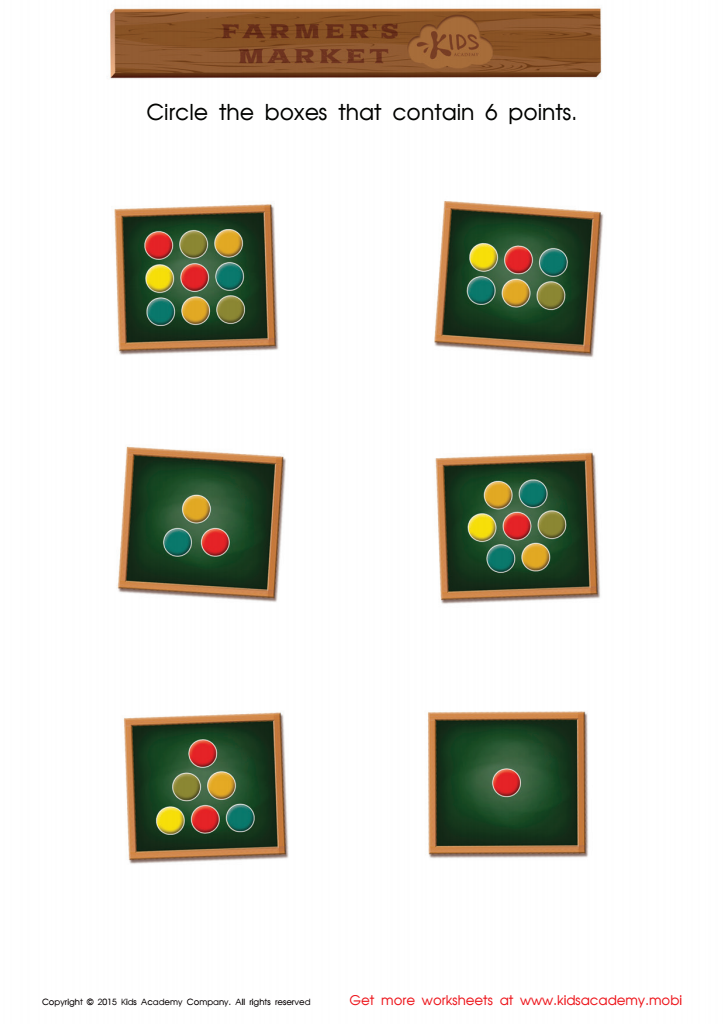
Count and Match Points 6 Math Worksheet
Help your child with mathematics by guiding them with this fun printable worksheet. They will practice counting numbers by looking at all the boxes and circling the ones containing 6 dots. Together you will gain a better understanding of mathematics.
Count and Match Points 6 Math Worksheet
Worksheet
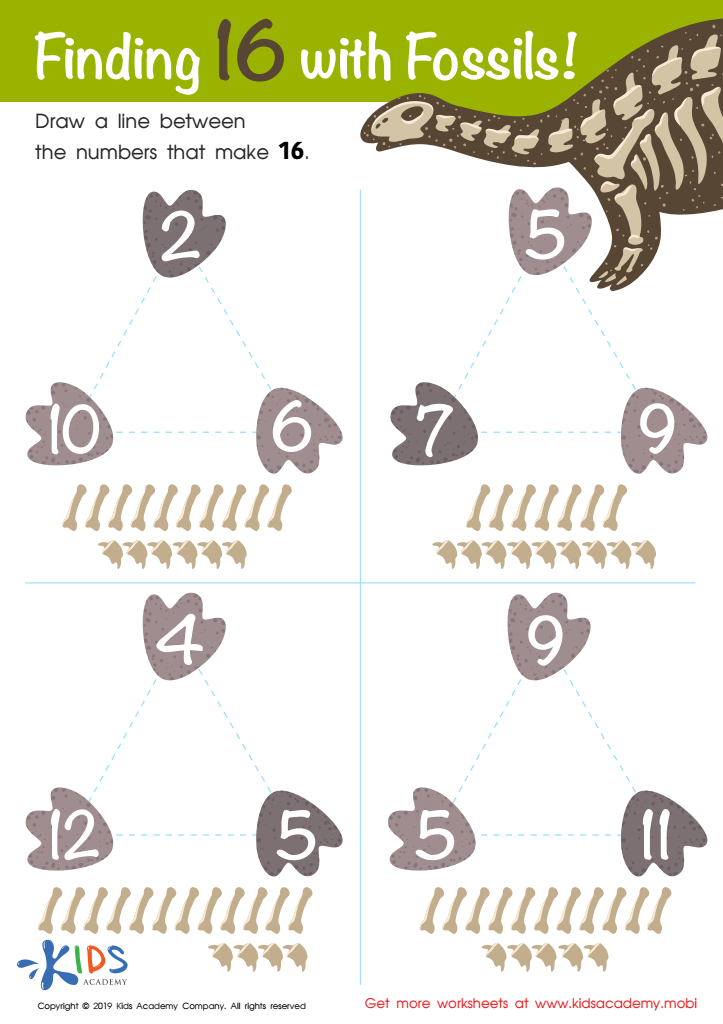
Finding 16 With Fossils Worksheet
Experts hunt for fossils, dig them up, and study them to learn more about past life forms - how they lived, what they looked like, and when they lived. Show kids the picture in this worksheet and point out the fossils. Help them count the bones and draw a line between the numbers that add up to 16 in each triangle.
Finding 16 With Fossils Worksheet
Worksheet
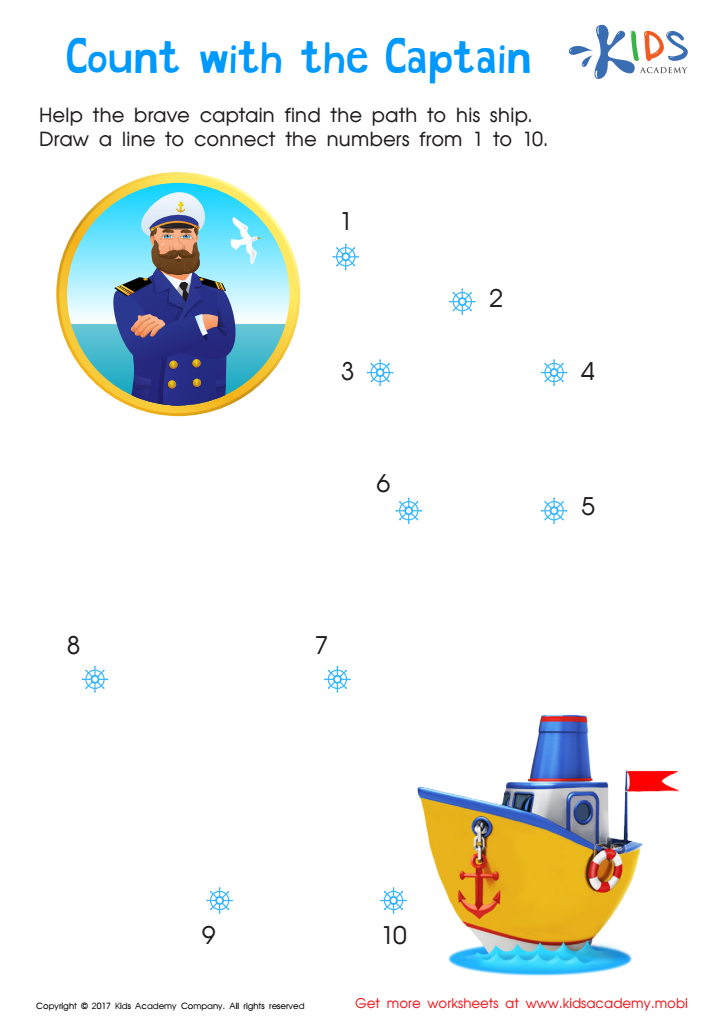
Count with the Captain Connect Dots Worksheet
All aboard! Help the captain set sail with this fun connect the dots numbers 1-10 PDF! Motivate your child to practice counting and numeracy, as they help the captain find his way to his ship. Problem solving skills and recognition of numbers in print are also developed. Reward your child after completion and they'll be unaware of the skills honed.
Count with the Captain Connect Dots Worksheet
Worksheet
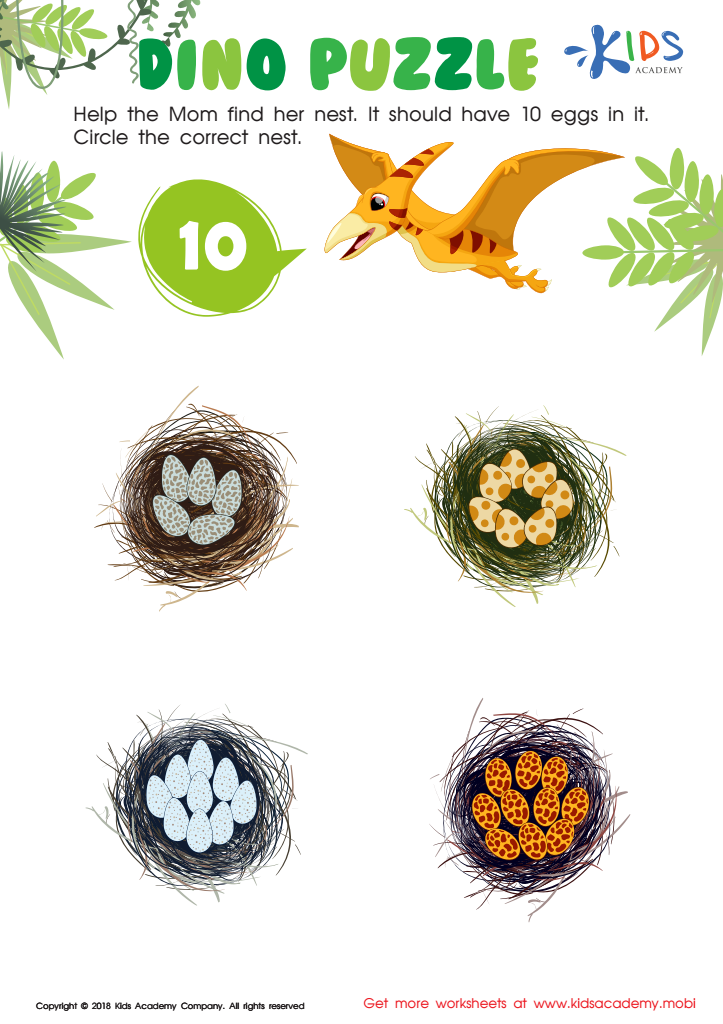
Learn Number For Kindergarten Worksheet
Let your kid have fun helping dino mom find her nest! This learn numbers worksheet for kindergarteners helps them practice counting skills. Count the eggs in each nest to find the one with 10 eggs! A great way to make early counting enjoyable!
Learn Number For Kindergarten Worksheet
Worksheet
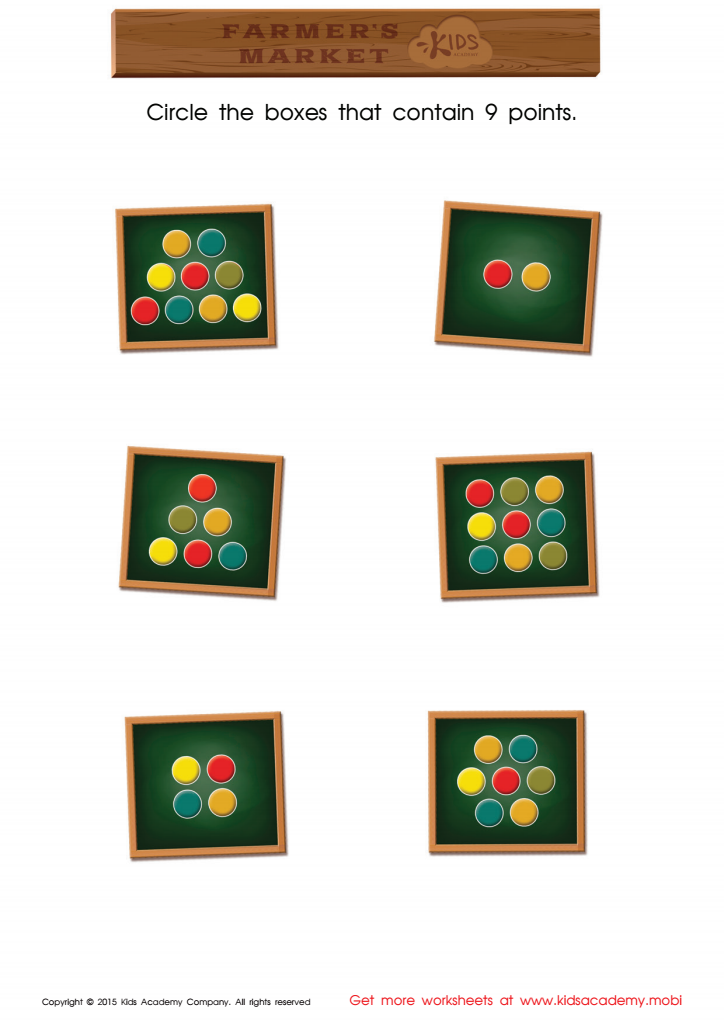
Count and Match Points 9 Math Worksheet
Circle the boxes with 9 points. Examine and count the colorful points in each of the 6 boxes. It's not easy as points are not arranged similarly, so have your child think hard and count carefully.
Count and Match Points 9 Math Worksheet
Worksheet
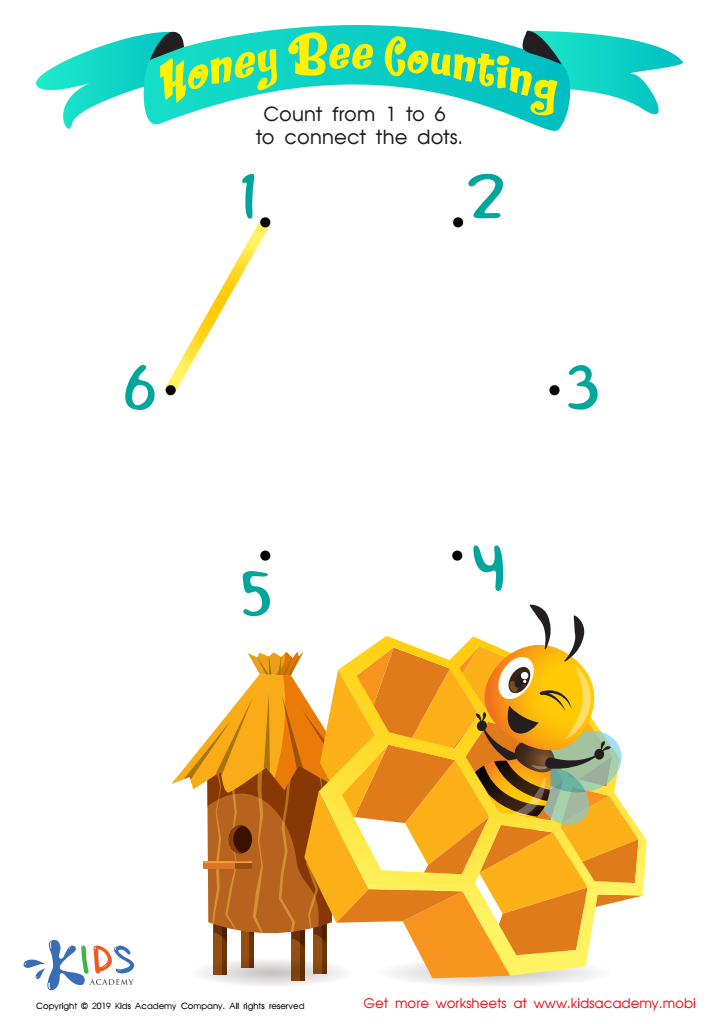
Honey Bee Counting Worksheet
Help your kids learn about honey bees while practising their counting skills! Show them the picture and ask them to point out the bee. Then, give them this worksheet and have them count up to 6, connecting the dots as they go. Numbers are provided for guidance - it's a great way to have fun and learn!
Honey Bee Counting Worksheet
Worksheet
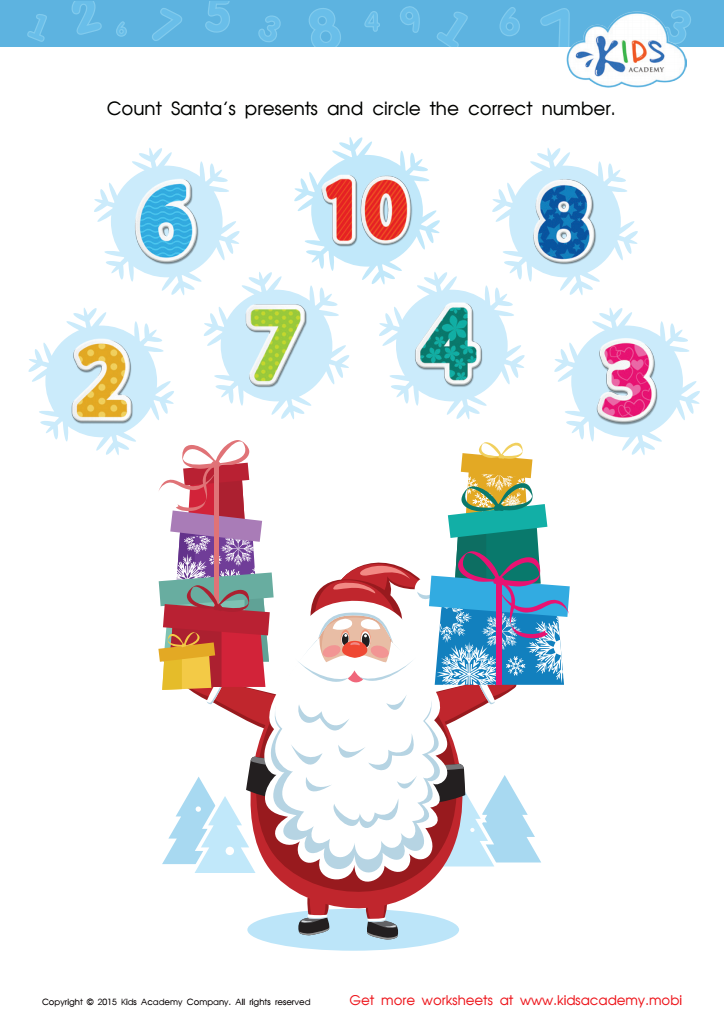
Count Santa's Presents Worksheet
With Kids Academy's free Christmas math worksheet, your kindergartener can help Santa count presents. The worksheet encourages recognizing and counting numbers, fostering the Christmas spirit. Print it out, have fun, and get ready to circle the right number! Get more math printables to learn numbers in a fun way.
Count Santa's Presents Worksheet
Worksheet
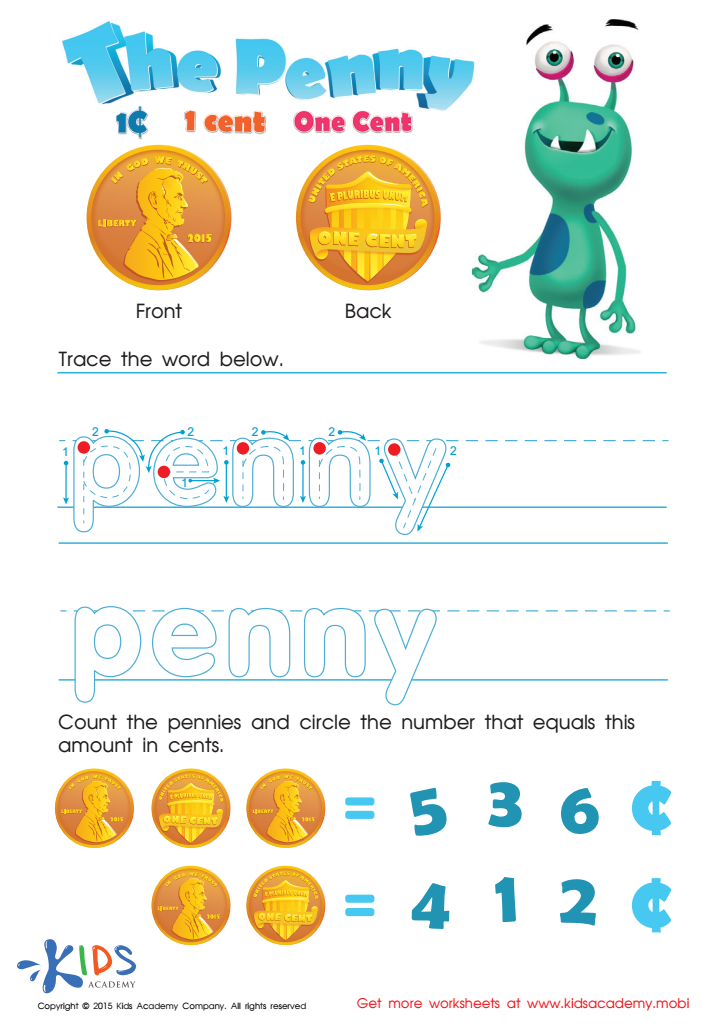
One Cent or the Penny Money Worksheet
Counting money made easy with Kids Academy's new collection of worksheets! Start with the one cent coin, or "Penny": trace it and count the pennies to work out the total. Visit our site for more free, printable money worksheets.
One Cent or the Penny Money Worksheet
Worksheet
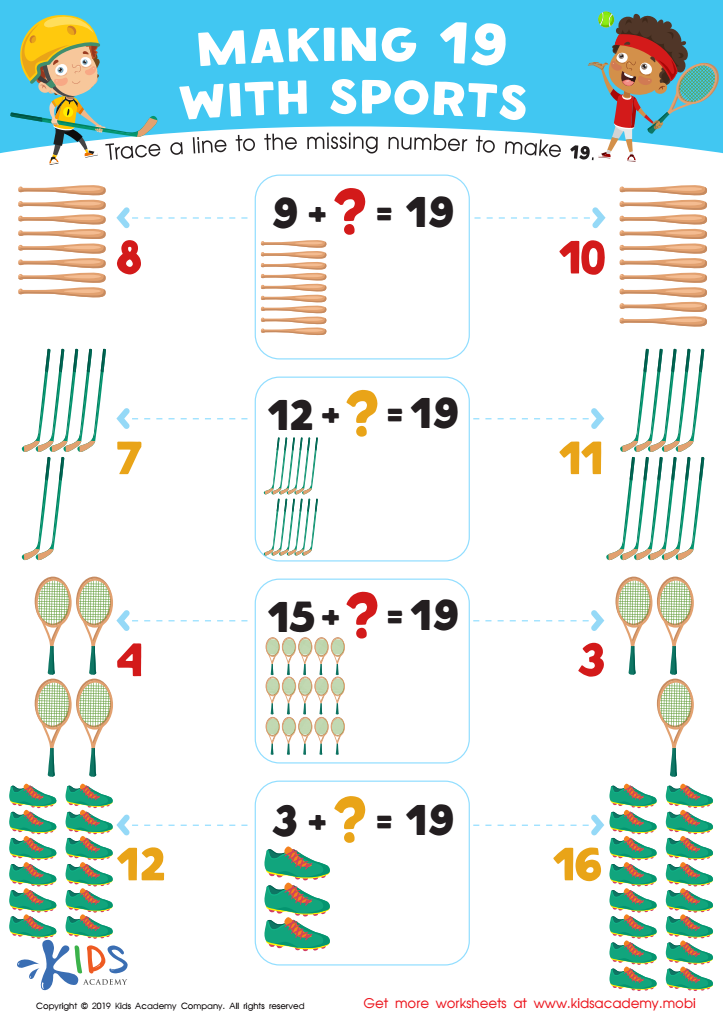
Making 19 with Sports Worksheet
As kids grow, so does their learning. Help them master simple addition with four equations in the worksheet. By finding the missing numbers to make 19, and tracing a line to the answer, your kids will improve their math skills.
Making 19 with Sports Worksheet
Worksheet
Join Kids Academy for Free
Who is primarily going to use this learning content?




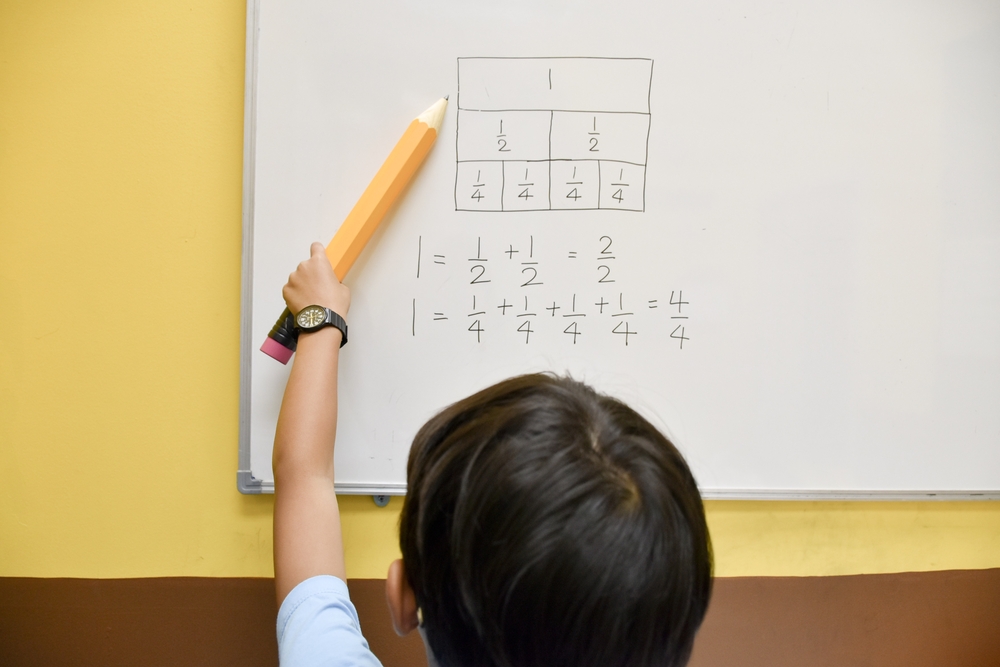


Counting skills are a fundamental component of early childhood mathematics education, and focusing on them in kindergarten is crucial for several reasons. First, counting lays the foundation for all future mathematical learning. It develops number sense, which is essential for understanding quantities, comparisons, and patterns. By engaging students with extra challenges, teachers can enhance their counting capabilities beyond rote learning, fostering critical thinking and problem-solving skills.
Moreover, strong counting skills bolster a child's confidence and enthusiasm for math. When students tackle extra challenges, they learn to persevere and celebrate incremental successes, which can lead to a positive attitude toward learning. This is particularly significant as children often carry their feelings about math throughout their academic careers.
Parents should also be involved, as their encouragement can reinforce the skills learned at school. Practicing counting in everyday situations, like counting objects or taking turns, helps solidify these skills in real-world contexts, enhancing their relevance.
In summary, prioritizing counting skills with additional challenges in kindergarten not only equips students with essential mathematical tools but also fosters positive learning attitudes, critical thinking, and real-life application of skills—all vital for their future academic success.