Number Sequencing Extra Challenge Kindergarten Numbers Worksheets
5 filtered results
-
From - To
Explore our "Number Sequencing Extra Challenge Kindergarten Numbers Worksheets" designed to enhance your child's mathematical skills! These engaging worksheets are perfect for young learners looking to strengthen their understanding of number sequences. Children will enjoy a variety of activities that promote critical thinking while working with different counting patterns and number sequences. Ideal for kindergarten kids, our worksheets encourage independent learning and help solidify foundational numeracy concepts. With colorful images and fun exercises, these resources make learning enjoyable and effective. Visit our site today to download these worksheets and give your child the extra challenge they need to excel in math!
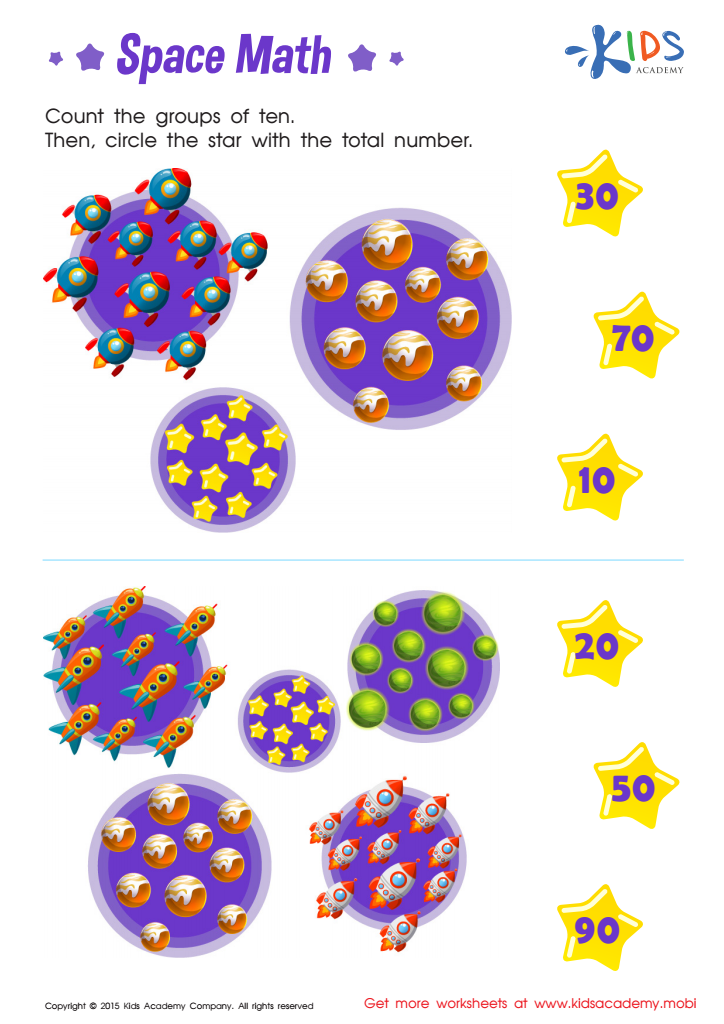
Learn dozens: Space math Worksheet
 Assign to My Students
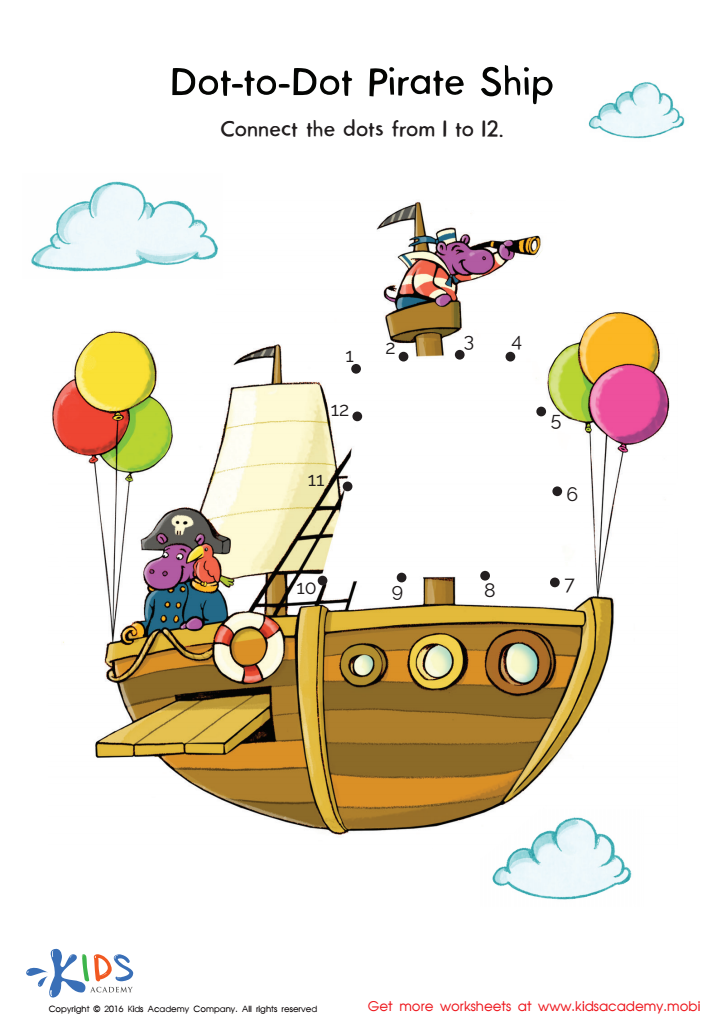
Pirate Ship Connect Dots Worksheet
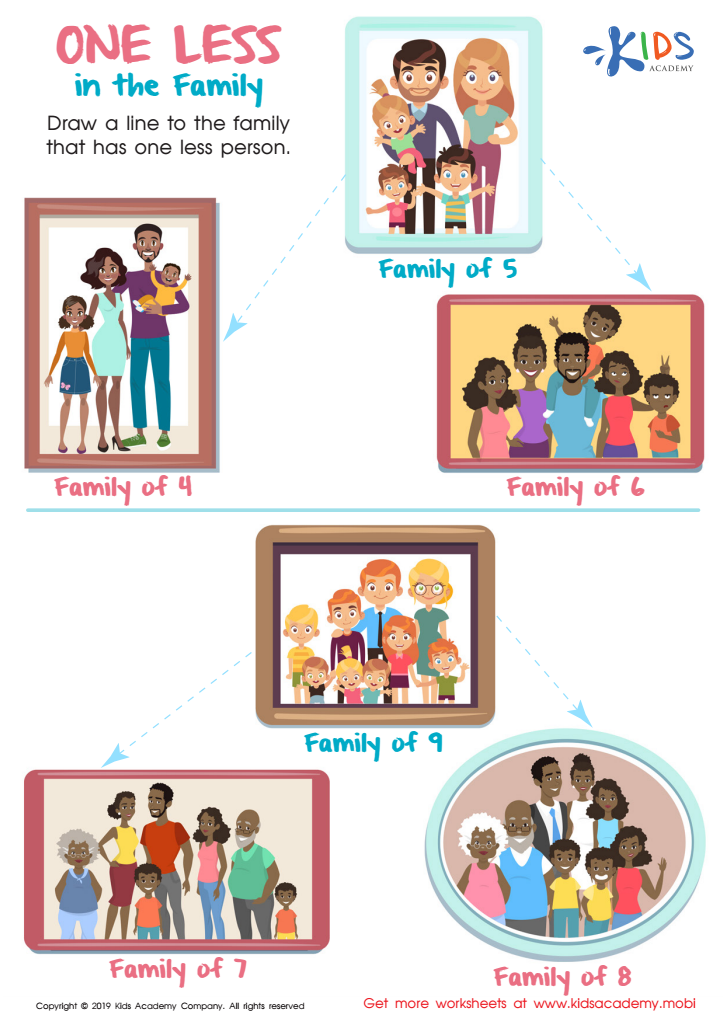
One Less in the Family Worksheet
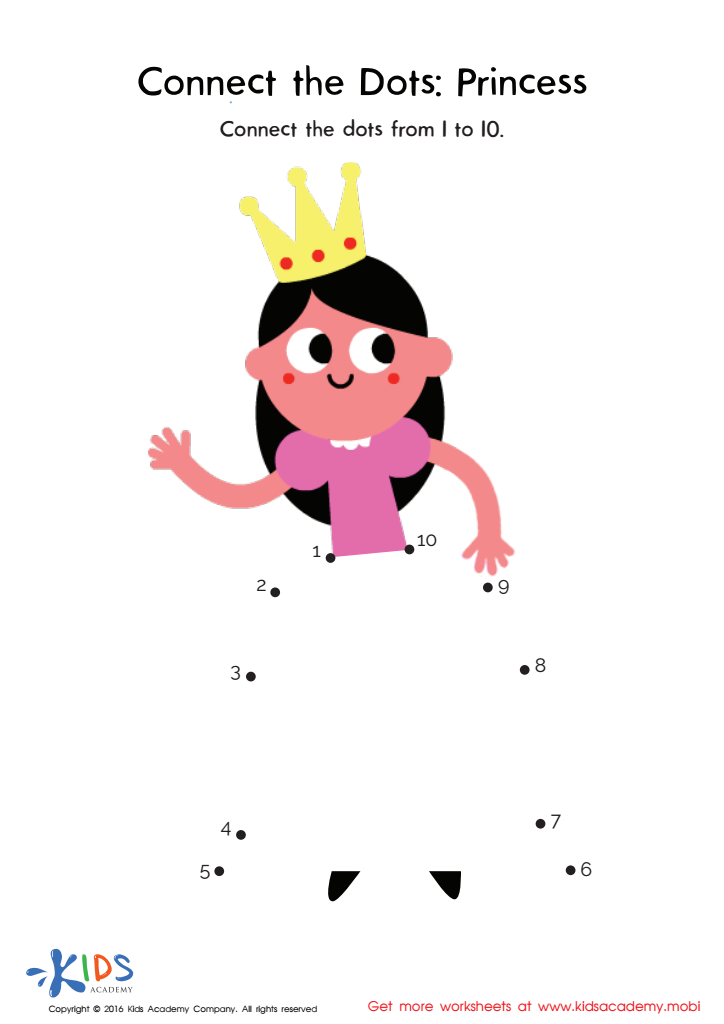
Princess Connect Dots Worksheet








Number sequencing is a fundamental skill that lays the groundwork for mathematical understanding in early childhood. For parents and teachers, fostering this skill in kindergarteners through Extra Challenge Activities can have lasting benefits. Firstly, understanding number sequences helps children grasp the concept of quantity, enabling them to compare numbers, perform simple addition and subtraction, and recognize patterns. Such understanding is crucial not only for math proficiency but also for problem-solving skills that can be applied in various contexts.
Additionally, number sequencing aids in developing critical cognitive abilities like memory and attention, as children learn to recall the order of numbers. This focus also encourages perseverance and resilience when they encounter challenging tasks. By engaging in Extra Challenge Activities, children are motivated to explore math in a fun and stimulating manner, thus fostering a positive attitude towards the subject.
Moreover, parents and teachers can use these activities to assess a child's understanding and identify areas that may need reinforcement. Thus, prioritizing number sequencing in early education sets the stage for academic success and a lifelong appreciation for learning. By making this skill a focus, we equip young learners to tackle more complex mathematical concepts in the future, ensuring their preparedness for school challenges ahead.