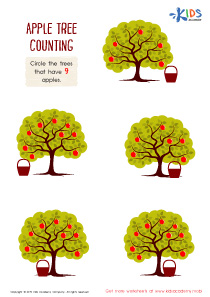
Comparing objects Extra Challenge Kindergarten Math Worksheets
3 filtered results
Difficulty Level
Grade
Age
-
From - To
Subject
Activity
Standards
Elevate your kindergartner's understanding of comparing objects with our "Comparing Objects Extra Challenge" math worksheets. Tailored for young learners, these engaging activities introduce advanced concepts in comparing sizes, lengths, weights, and quantities. Each worksheet is designed to challenge children while providing a fun, interactive experience that reinforces fundamental math skills. Ideal for classroom and home use, these printable worksheets support the development of critical thinking and observational abilities. By integrating real-world objects and scenarios, they help kids connect math concepts to their everyday lives. Perfect for parents and teachers aiming to advance children's early math proficiency.
Favorites
With answer key
Interactive
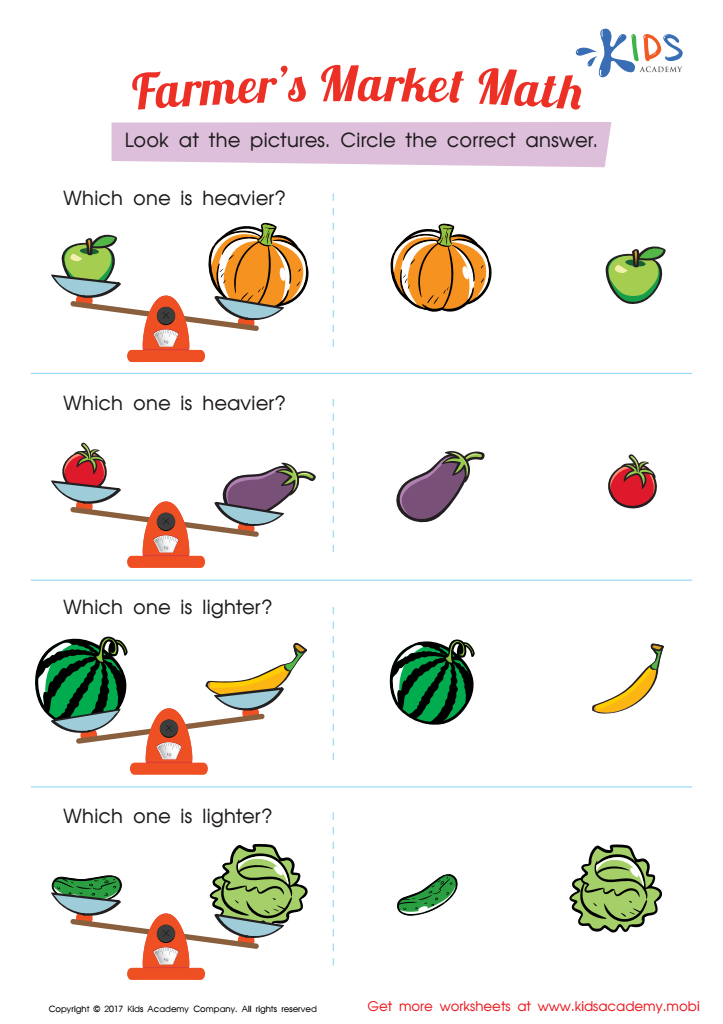
Which One Is Heavier Worksheet
Kindergartners can learn weight easily with this worksheet, featuring images of familiar fruits and veggies. Comparing which one is heavier helps them understand the concept better.
 Assign to My Students
Which One Is Heavier Worksheet
Worksheet
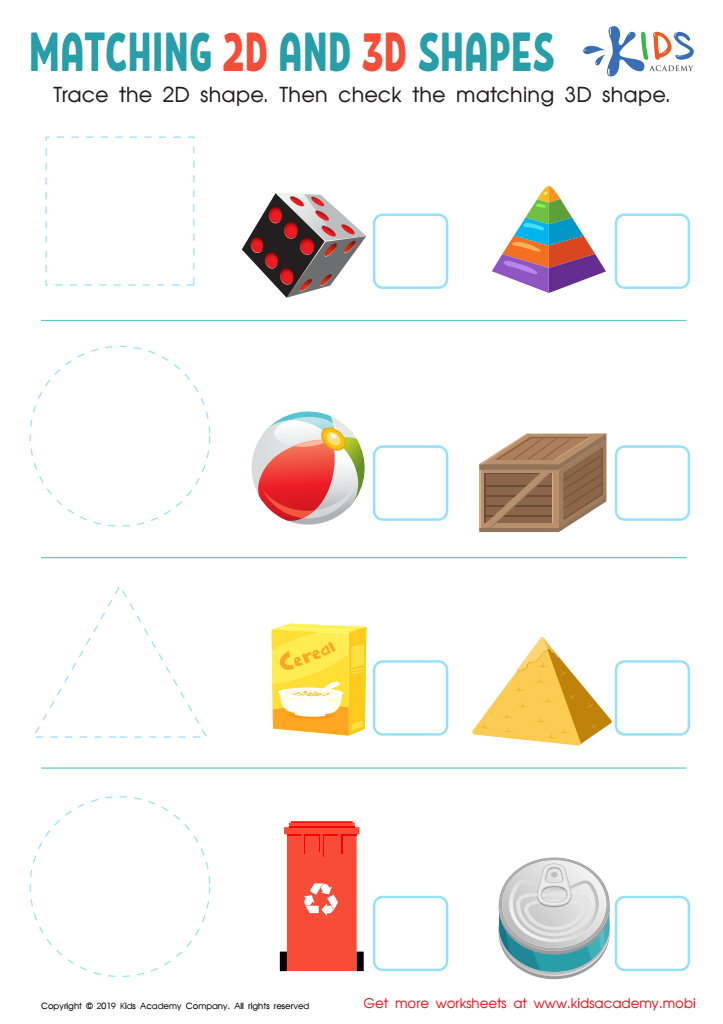
Matching 2D and 3D Shapes Worksheet
Before starting this worksheet, ask your kids what shapes they know and point out the 2D and 3D shapes on it. Help your kids trace the 2D shapes and then match them to the 3D versions. It'll be a fun new world for your kids to explore!
Matching 2D and 3D Shapes Worksheet
Worksheet
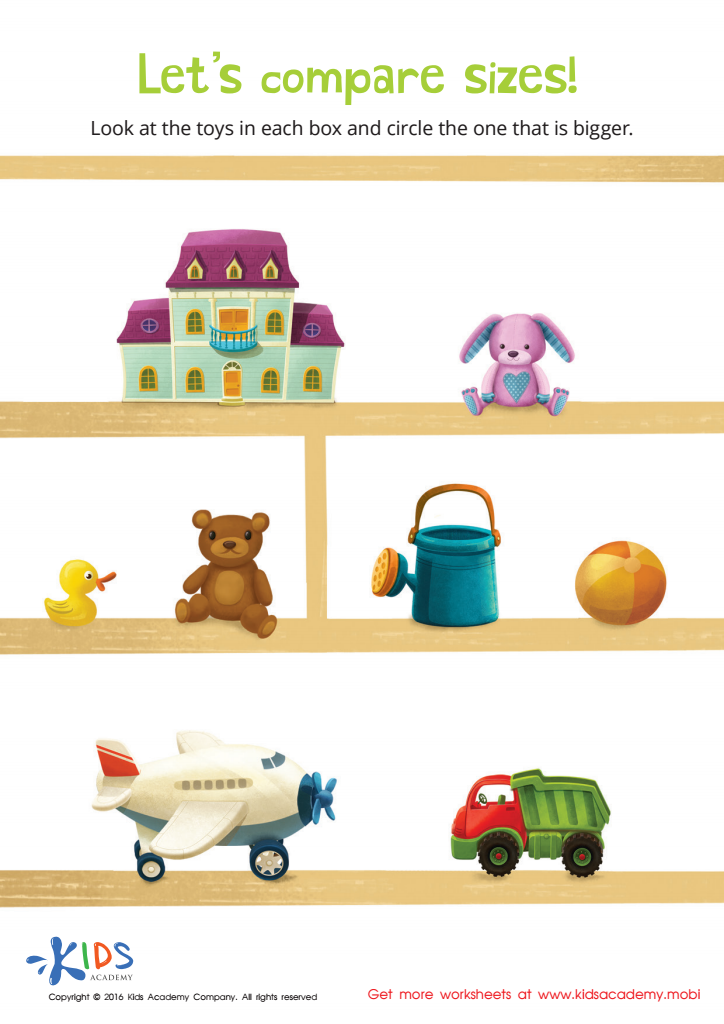
Classifying by Size Sorting Worksheet
Help your preschooler recognize differences in size using this fun worksheet! Your child will engage in important spatial recognition and problem-solving skills while talking with you about objects that can be small or large. Enjoy the vibrant pictures together!
Classifying by Size Sorting Worksheet
Worksheet
Join Kids Academy for Free
Who is primarily going to use this learning content?




.jpg)


Comparing objects extra challenge in Kindergarten math plays a pivotal role in the foundational development of a child's cognitive and problem-solving skills. Firstly, it cultivates critical thinking abilities. By comparing objects, children begin to understand concepts such as size, length, height, and weight. This process helps them make observations, recognize patterns, and draw conclusions based on their comparisons.
Secondly, mastering comparison skills in early years lays the groundwork for future mathematical concepts. These activities inherently introduce basic principles of measurement and algebra, making the transition to more complex math topics smoother. It creates a strong basis for numerical understanding, as children start associating quantities with everyday objects.
Moreover, engaging in these comparisons encourages the development of language skills. Vocabulary related to quantity, such as "more than," "less than," "equal to," inherently expands during such exercises, enhancing their verbal and cognitive communication abilities.
Finally, hands-on comparing objects fosters a love for learning and builds confidence. When children successfully engage in such challenges, their sense of accomplishment boosts self-esteem and fosters a positive attitude towards learning. Thus, parents and teachers should prioritize and value comparing objects as early as Kindergarten to nurture well-rounded and confident problem-solvers.