Pattern recognition Extra Challenge Kindergarten Math Worksheets
4 filtered results
Difficulty Level
Grade
Age
-
From - To
Subject
Activity
Standards
Discover the "Pattern Recognition Extra Challenge Kindergarten Math Worksheets" designed to enhance young learners' understanding of patterns through engaging and interactive activities. These worksheets provide additional practice opportunities for children to identify, create, and extend various patterns, from shapes to colors. Perfect for reinforcing classroom learning, each worksheet encourages critical thinking and problem-solving skills in a fun and visually appealing way. With clear instructions and vibrant graphics, these extra challenges ensure that kindergartners build a solid foundation in math while enjoying the learning process. Explore our collection and help your little ones master pattern recognition with excitement and confidence!
Favorites
With answer key
Interactive
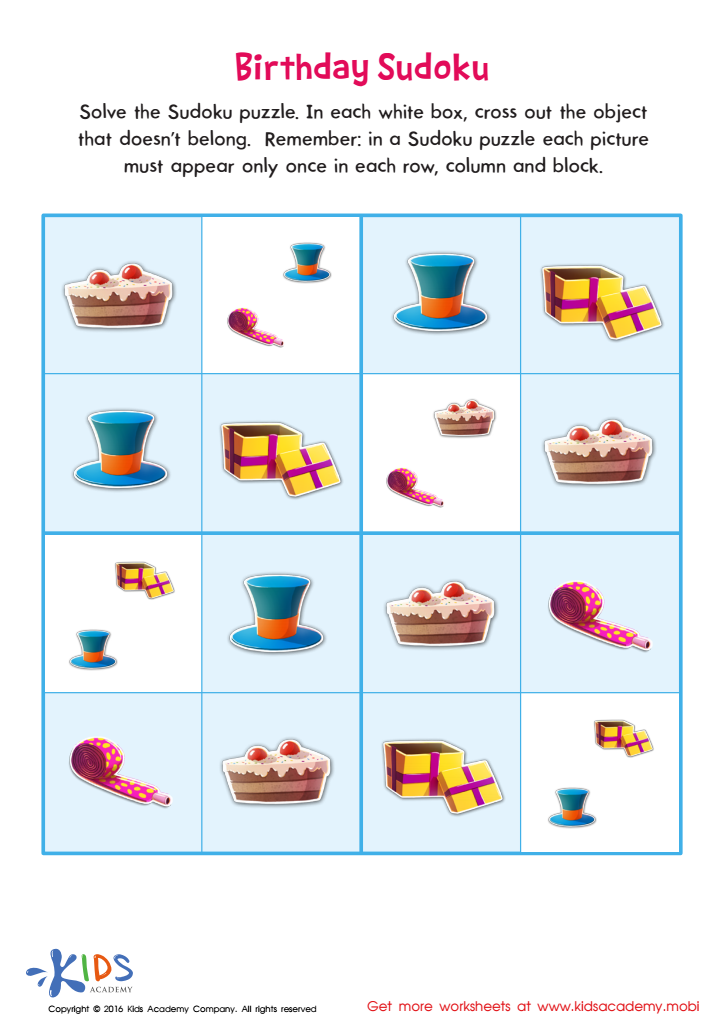
Birthday Sudoku Sorting Worksheet
With this Sudoku printable, your child will have fun and strengthen their problem-solving skills.
 Assign to My Students
Birthday Sudoku Sorting Worksheet
Worksheet
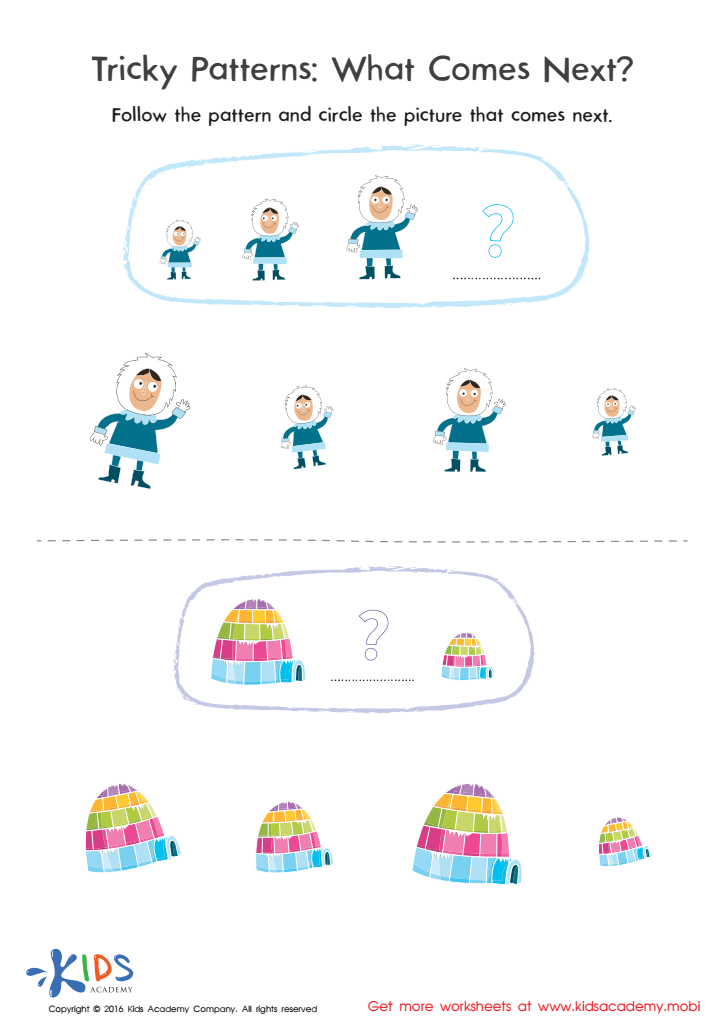
Tricky Patterns Size Worksheet
Give your child a head start on critical thinking with this picture pattern worksheet! It's an intriguingly fun way to help them master important skills like spatial reasoning, critical thinking, and logical reasoning. They'll differentiate between shapes, complete the pattern with a logical answer, and look for and understand patterns. It's the perfect foundation for future math skills, setting them up for future success!
Tricky Patterns Size Worksheet
Worksheet
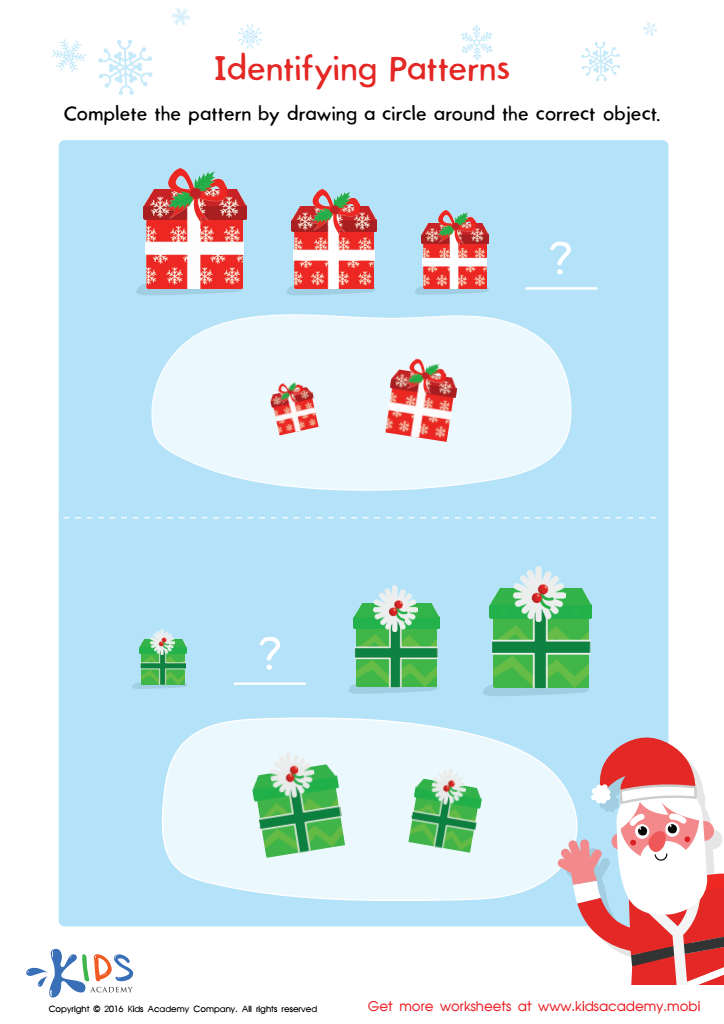
Identifying Patterns Worksheet
Kids can have fun as they learn with this festive worksheet! They'll practice early math skills while identifying patterns with colorful Christmas presents. Have your child get ready for the holidays by finding out which box comes next in the pattern!
Identifying Patterns Worksheet
Worksheet
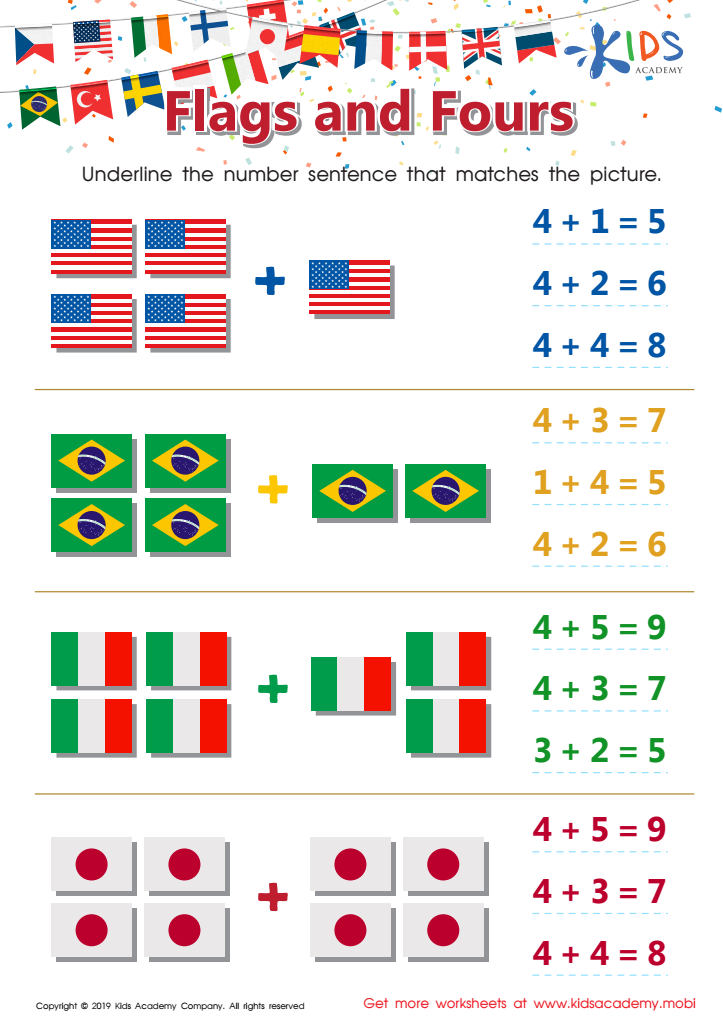
Flags and Fours Worksheet
Have your kids identify country flags from this colorful printout. Then, ask them to underline the number sentence that goes with each flag. Combining math with national flag recognition strengthens kids' knowledge of both, promoting an understanding of identity and numbers.
Flags and Fours Worksheet
Worksheet
Join Kids Academy for Free
Who is primarily going to use this learning content?



.jpg)



Pattern recognition is a fundamental skill that serves as a cornerstone for early mathematics learning. For kindergarten-aged children, engaging in pattern recognition activities fosters critical thinking and problem-solving abilities. Parents and teachers should care about these challenges for several reasons.
Firstly, recognizing patterns helps children develop logical reasoning. By identifying patterns in numbers, shapes, or colors, children learn to predict what comes next, which is essential for understanding sequences and relationships in math. This foundational skill enhances their ability to tackle more complex mathematical concepts in later grades.
Secondly, pattern recognition plays a vital role in cognitive development. It encourages children to look for connections and make sense of the world around them, enriching their observational skills and boosting creativity.
Additionally, extra challenges provide opportunities for parents and teachers to foster a love for learning early on. Engaging kids in fun pattern activities can also enhance their enthusiasm for math, reducing anxiety around the subject.
Finally, these skills not only support mathematical learning but transfer to other disciplines, such as science and art, and are valuable for everyday problem-solving in life. Emphasizing pattern recognition in early education sets children on a path toward academic success and critical thinking skills for the future.