Counting skills Extra Challenge Kindergarten Matching Worksheets
5 filtered results
-
From - To
Boost your kindergarten students' counting skills with our engaging Counting Skills Extra Challenge Matching Worksheets! Designed to ignite young minds, these interactive worksheets encourage children to match numbers with corresponding quantities, promoting vital skills in early math education. Each worksheet offers a variety of colorful illustrations and exciting activities, making learning fun and captivating for young learners. Perfect for enhancing classroom lessons or supporting at-home practice, these extra challenges ensure your students build a strong foundation in numeracy. Explore our collection today and watch your kindergarteners embark on their journey to counting mastery, fostering confidence and enthusiasm in math!
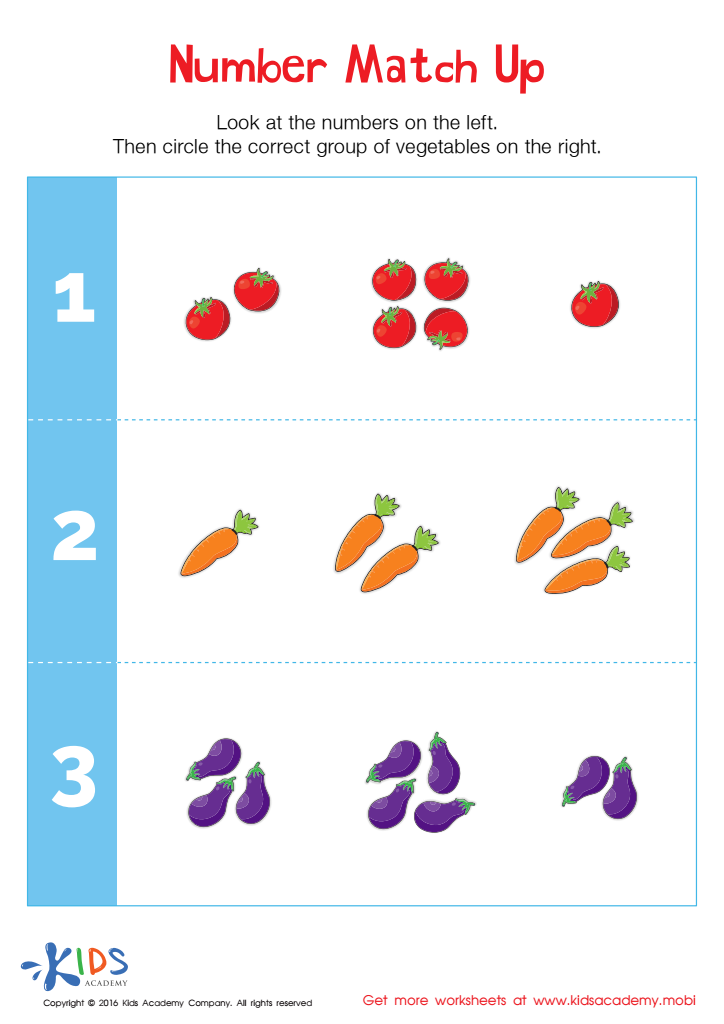
Number Match Up Worksheet
 Assign to My Students
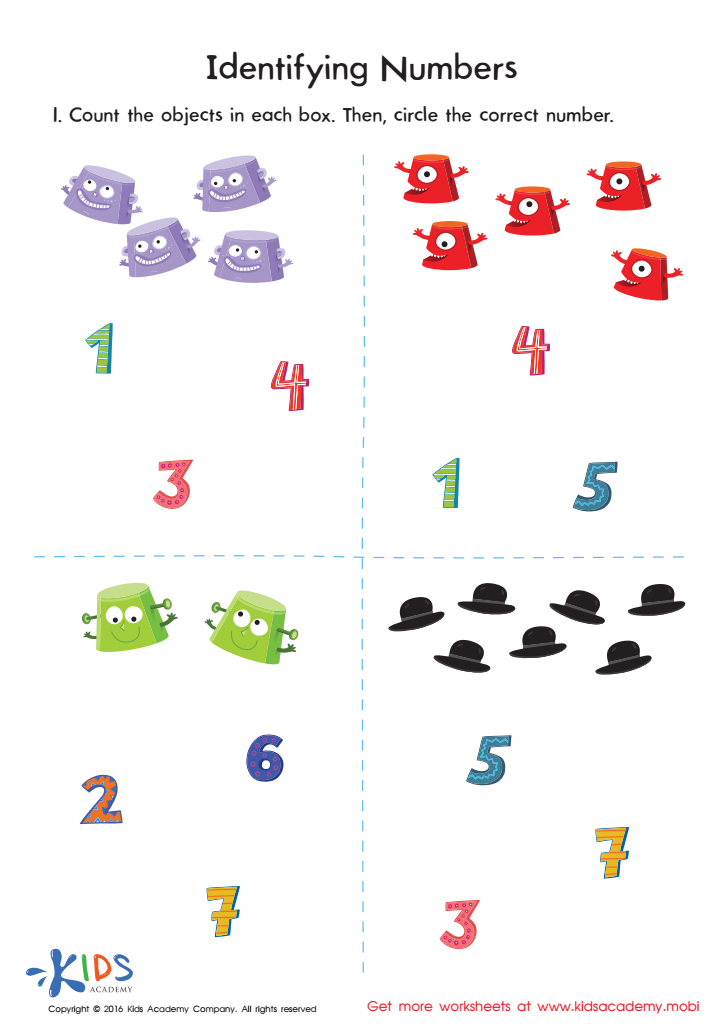
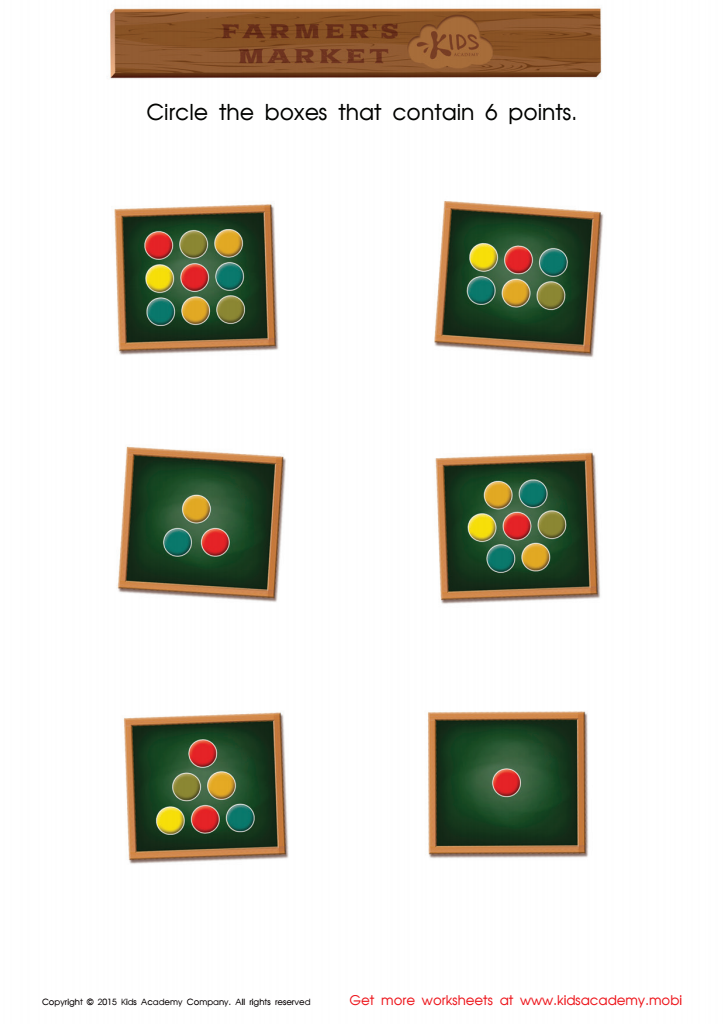
Count and Match Points 6 Math Worksheet

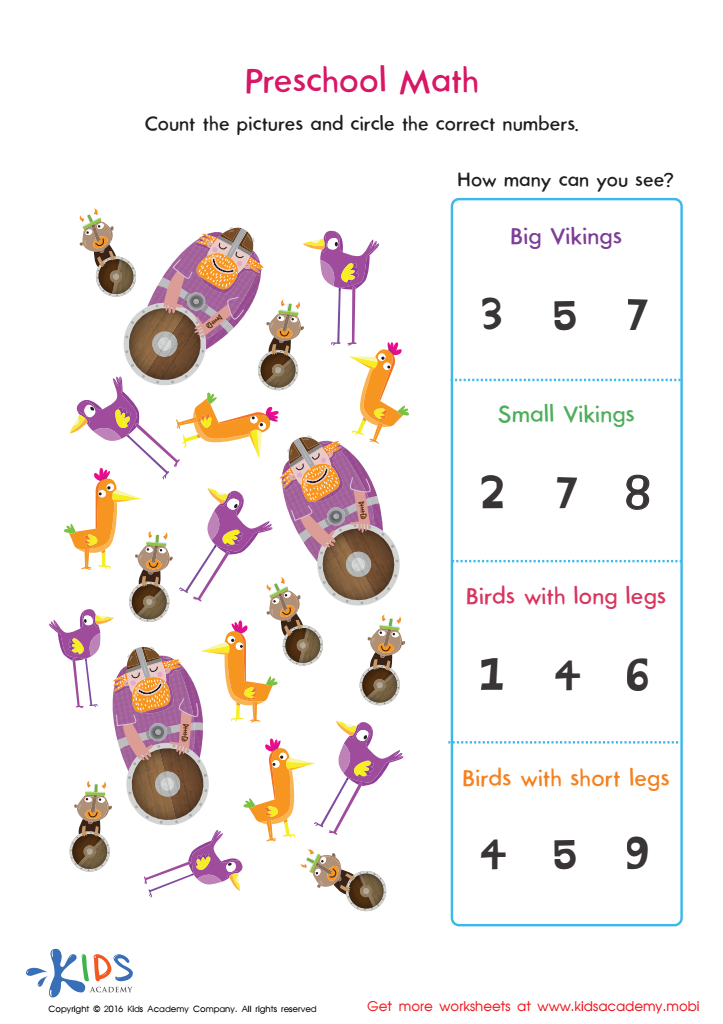
Counting Worksheet: Let's Practice Counting








Counting skills are foundational for young children and serve as the building blocks for future mathematical understanding. For parents and teachers, fostering these skills through activities like the "Extra Challenge Kindergarten Matching" is essential for several reasons.
Firstly, counting helps develop a child's cognitive abilities and enhances their problem-solving skills. Engaging them in matching and counting activities creates an interactive learning environment, making abstract concepts more tangible. This hands-on approach boosts their confidence and encourages a positive attitude towards math.
Moreover, counting skills are not only crucial for academic success but also for daily life. Children who master these skills early are better equipped to handle everyday tasks such as shopping, cooking, or time management. This sets the foundation for numeracy in real situations, ensuring they can apply their knowledge practically.
Furthermore, collaborative activities like "Matching" promote social interaction, allowing children to learn from peers while developing communication and teamwork skills. This holistic approach supports emotional and social growth alongside cognitive development.
Overall, nurturing counting skills through engaging challenges prepares children for future learning stages and equips them with the necessary tools to succeed academically and personally. As educators and parents, prioritizing these skills is key to fostering well-rounded, capable learners.