Comparing objects Extra Challenge Worksheets
3 filtered results
-
From - To
Enhance your students' analytical skills with our Comparing Objects Extra Challenge Worksheets. Designed for early learners, these engaging worksheets help children practice comparing the sizes, lengths, weights, and capacities of various objects. Each activity encourages critical thinking and observational skills, allowing kids to sharpen their abilities through fun and interactive tasks. Perfect for classroom use or at-home practice, these printable worksheets make learning enjoyable and effective. Tailored to challenge young minds, our Comparing Objects Extra Challenge Worksheets are essential educational tools that provide a strong foundation in fundamental math and reasoning skills.
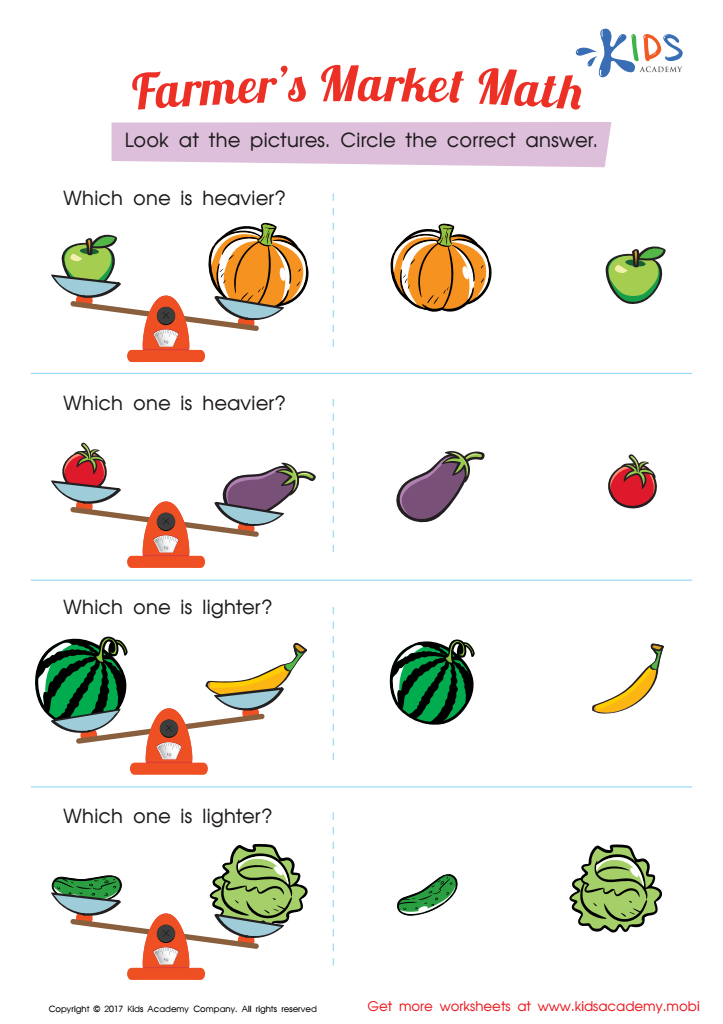
Which One Is Heavier Worksheet
 Assign to My Students
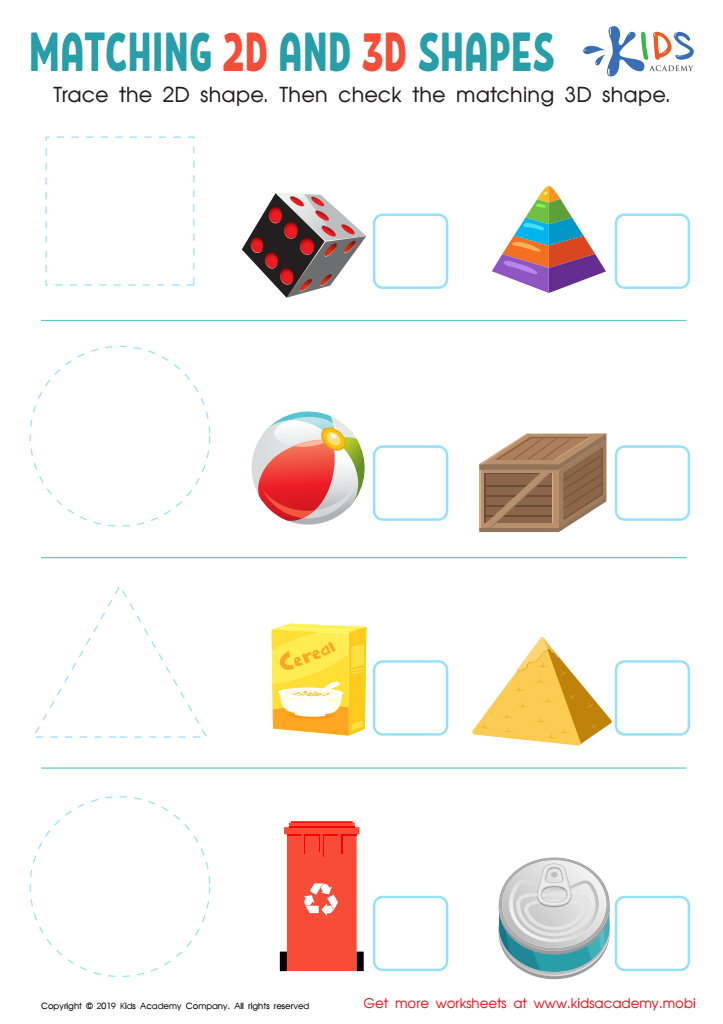
Matching 2D and 3D Shapes Worksheet
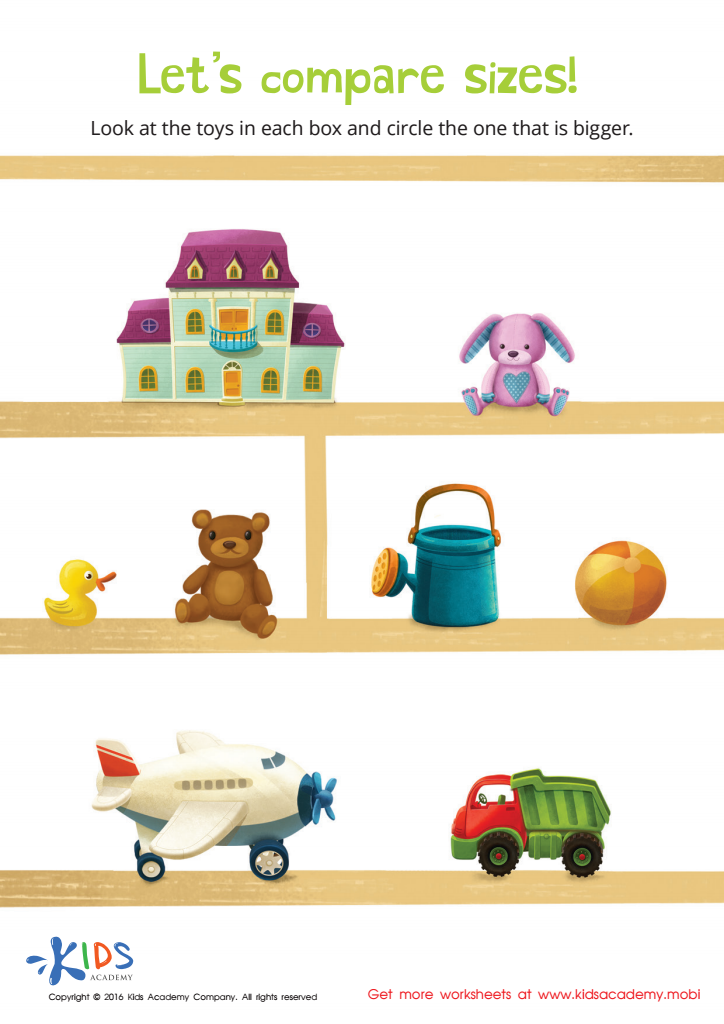
Classifying by Size Sorting Worksheet


.jpg)



Comparing objects in an extra challenge fosters critical thinking and observational skills crucial for early childhood development. When children engage in comparing activities, such as identifying differences and similarities between objects, they are practicing logical reasoning, which is foundational for subjects like math and science. It aids them in understanding concepts of size, shape, color, quantity, and measurement—core components of cognitive development and spatial awareness.
For parents and teachers, guiding children through these activities can reveal a child’s thought process and ability to articulate their reasoning, promoting both language development and effective communication skills. By encouraging comparisons, adults help children make connections between abstract concepts and the tangible world around them, laying the groundwork for complex problem-solving abilities.
Moreover, such challenges motivate children to focus, practice patience, and develop perseverance when solutions are not immediately obvious. This not only builds academic readiness but also fosters important life skills like attention to detail and resilience. Parental or teacher involvement provides a support system, showing children that learning is a collaborative and rewarding experience. Thus, comparing objects as an extra challenge is essential in nurturing a child's holistic intellectual and personal growth.








