
Emotional identification Extra Challenge Worksheets
3 filtered results
Difficulty Level
Grade
Age
-
From - To
Subject
Activity
Standards
Introducing our Emotional Identification Extra Challenge Worksheets – the perfect resource for young learners ready to advance their social and emotional skills. Designed specifically for early grade students, these engaging worksheets help children recognize, understand, and express emotions effectively. Through a variety of interactive exercises like matching emotions to scenarios and drawing facial expressions, students develop empathy and self-awareness. Ideal for use in both classroom settings and at home, our worksheets offer additional challenges to deepen emotional intelligence in an enjoyable way. Unlock a world of emotional understanding and enhanced learning with these expertly crafted resources.
Favorites
With answer key
Interactive
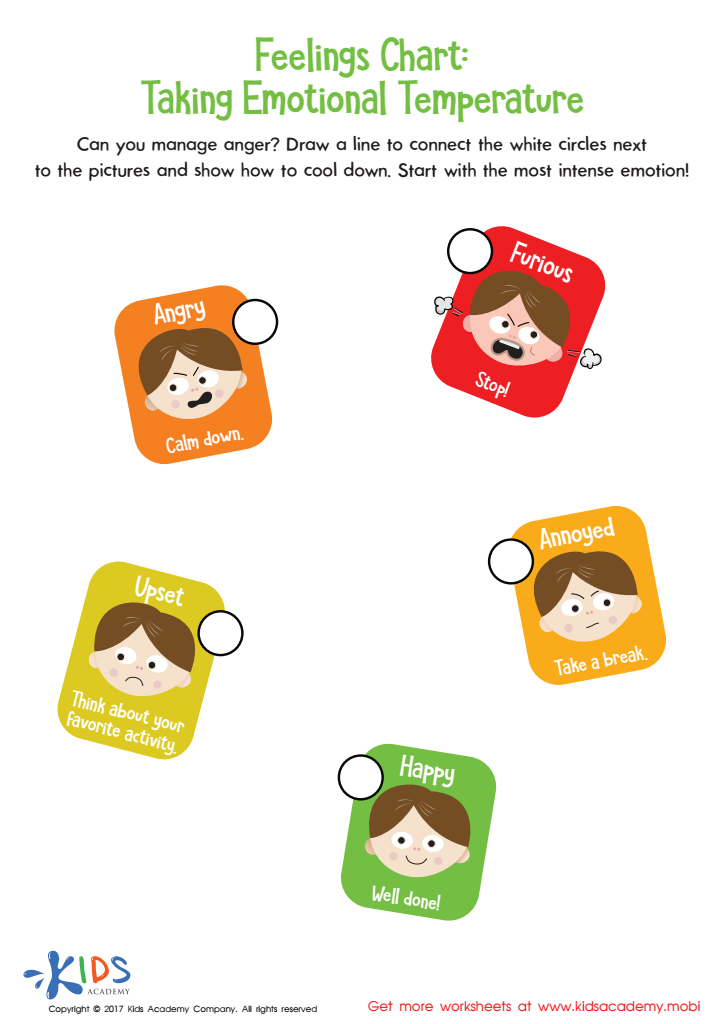
Feelings Chart Worksheet
Anger can be tricky to manage, so help your child learn techniques for coping. Use this feelings chart worksheet which leads them through identifying the most intense face and connecting the dots to help them calm down.
 Assign to My Students
Feelings Chart Worksheet
Worksheet
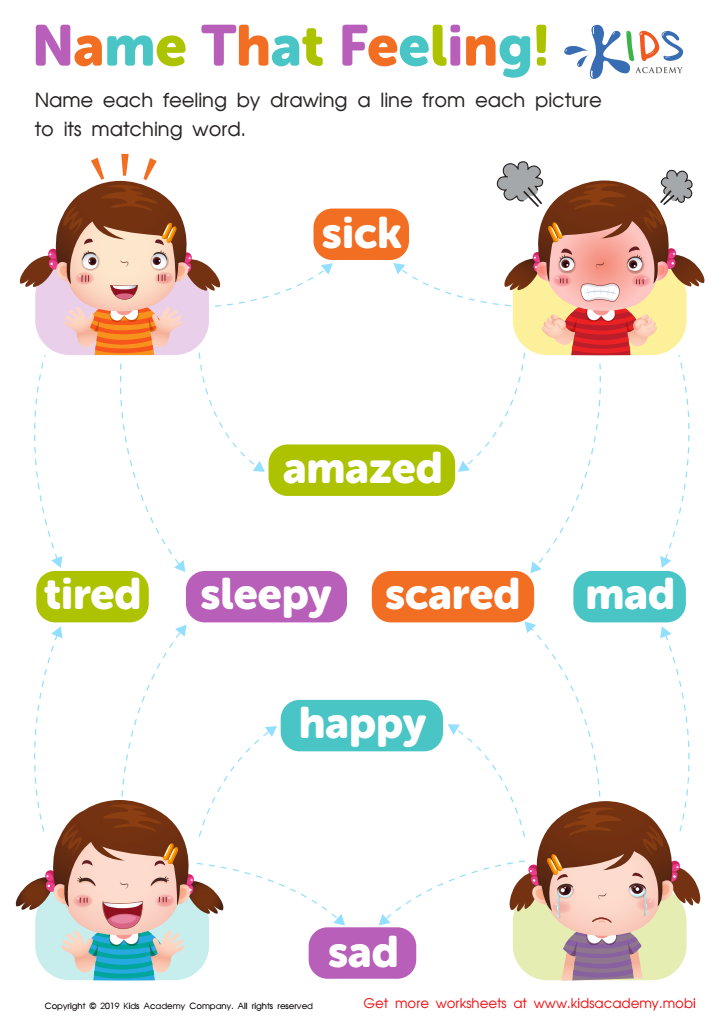
Name that Feeling Worksheet
Fostering your child's emotional intelligence is essential for their development. This worksheet helps them associate feelings with words, improving their social skills and fine motor coordination. They'll trace pictures and words to learn the feeling vocabulary.
Name that Feeling Worksheet
Worksheet
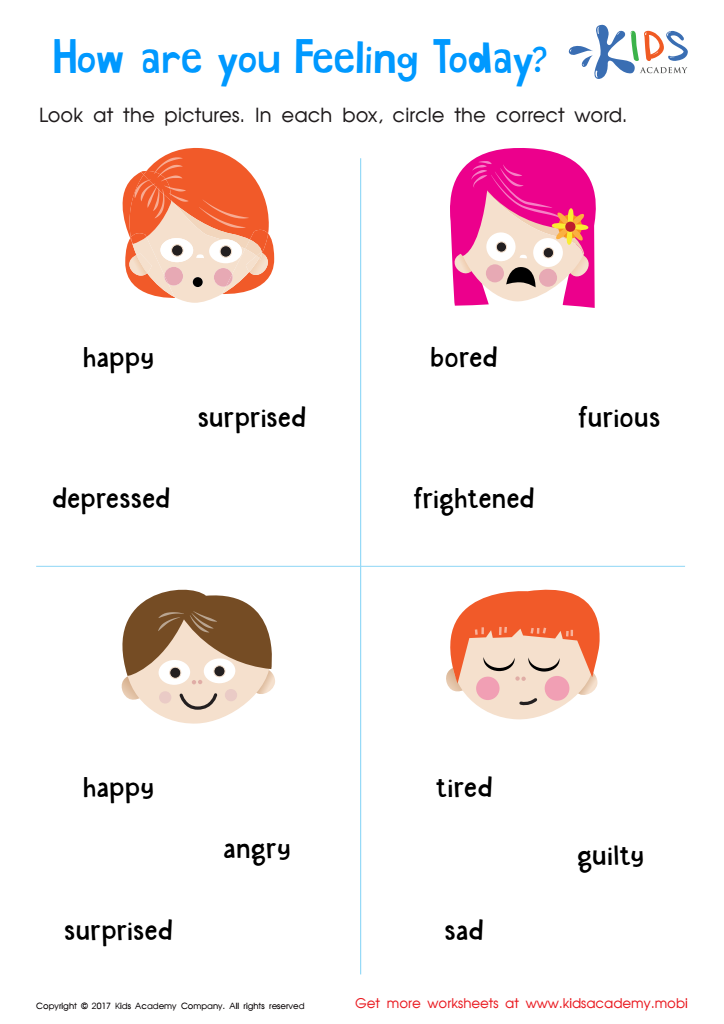
Understanding Feelings Worksheet
It helps them learn to empathize with others and regulate their own emotions. Try it today!
Develop your child's understanding of empathy and emotional regulation with this worksheet! It is a great way to help them acquire important life skills beyond academic knowledge. Print it and start using it to take their social and emotional skills to the next level. Try it now!
Understanding Feelings Worksheet
Worksheet
Join Kids Academy for Free
Who is primarily going to use this learning content?






Emotional identification is a foundational skill that significantly impacts a child's social, academic, and future life success. The Emotional Identification Extra Challenge is crucial for several compelling reasons. First and foremost, it helps children develop self-awareness, enabling them to recognize and articulate their feelings. This self-awareness is the cornerstone of emotional intelligence, which is essential for managing stress, making decisions, and navigating social complexities.
Parents and teachers who prioritize this skill help children build robust coping mechanisms for emotional distress, which translates into better mental health and fewer behavioral issues. Emotional identification also enhances empathy, allowing children to understand and respond to others' feelings appropriately. This empathetic behavior is critical for forming positive relationships and creating a supportive classroom environment.
Moreover, emotional identification has a direct impact on academic performance. Children who can manage their emotions are better equipped to concentrate, engage, and problem-solve, leading to higher academic achievement. Additionally, teaching emotional skills early helps develop resilient individuals who can handle setbacks and challenges effectively.
In summary, focusing on emotional identification is an investment in a child's overall well-being, social adaptability, and academic success. Parents and teachers who engage in this extra challenge are setting up children for a lifetime of healthy, productive, and fulfilling experiences.








