Recognizing numbers Extra Challenge Worksheets
4 filtered results
-
From - To
Enhance your child’s number recognition skills with our "Recognizing Numbers Extra Challenge Worksheets." Designed for early learners, these printable worksheets provide a fun and engaging way to practice recognizing numbers beyond the basics. Each worksheet features challenging exercises that promote critical thinking, enabling students to identify numbers in various forms and contexts. From count-and-match activities to number scavenger hunts, your young learner will enjoy these stimulating challenges that foster confidence and mastery in number recognition. Perfect for homeschooling or classroom enrichment, these worksheets make learning exciting. Download now to support your child's mathematical journey and watch their skills flourish!
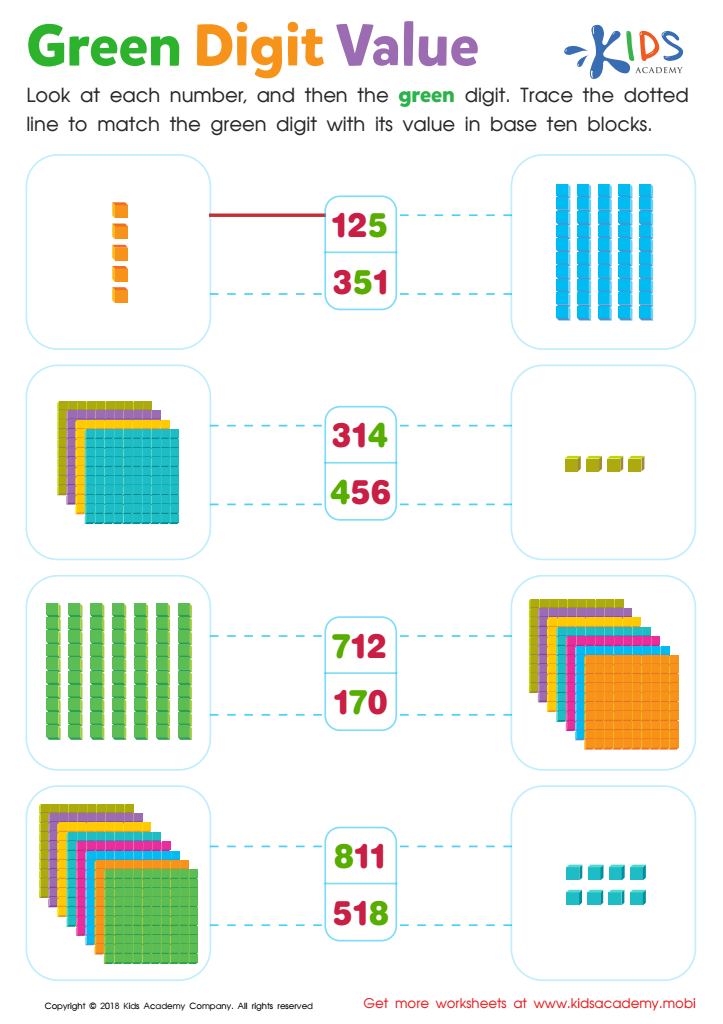
Green Digit Value Worksheet
 Assign to My Students
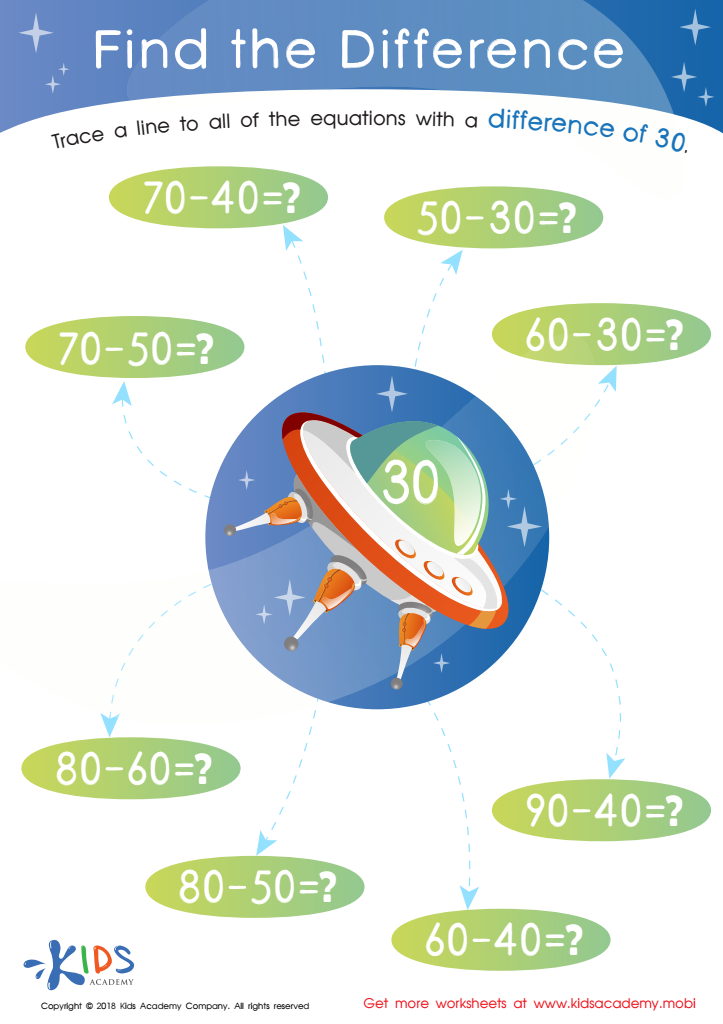
Find The Difference Worksheet
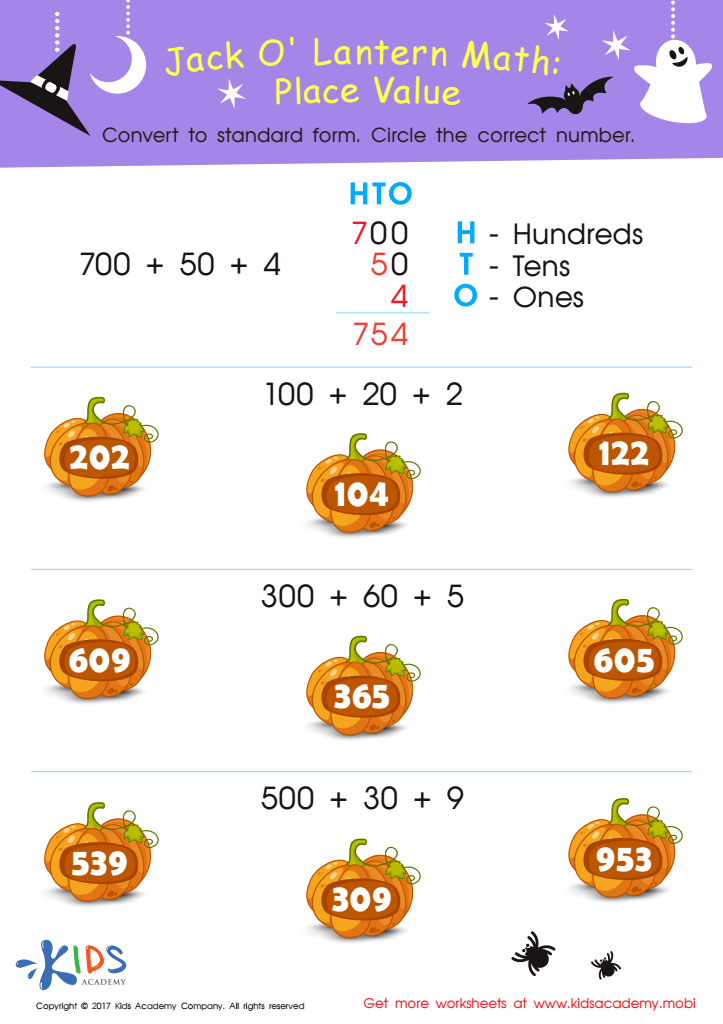
Free Place Value Worksheet
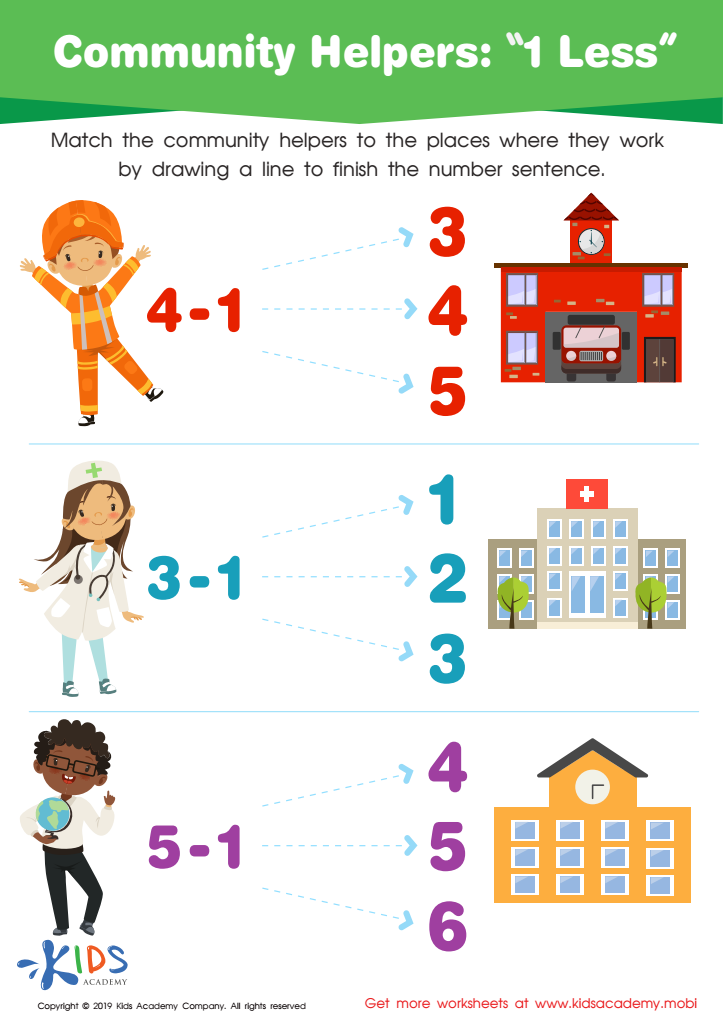
Community Helpers: 1 less Worksheet






Recognizing numbers is a foundational skill necessary for children’s cognitive development, and both parents and teachers play a crucial role in this process. Understanding numbers develops essential mathematical skills that children will build upon throughout their education. When children can recognize and understand numbers, they can engage more effectively in classroom activities, leading to better academic performance.
Moreover, the importance of recognizing numbers extends beyond academics. It equips children with the skills needed to navigate daily life—whether it’s telling time, managing money, or understanding measurements. Early number recognition fosters critical thinking, problem-solving abilities, and boosts confidence, enabling students to tackle more complex mathematics later on.
Furthermore, in today’s technology-driven world, many learning apps and games leverage numerical understanding in creative ways. By recognizing numbers, children can fully participate in these enriching activities, making learning both fun and effective. Therefore, parents and teachers should prioritize number recognition, as it is not only pivotal for mathematic competency but also essential for holistic child development. Investing time and resources into nurturing this skill can lead to lifelong benefits for children, making it a critical focus in early education settings.








