Subtraction practice Extra Challenge Worksheets - Page 2
29 filtered results
-
From - To
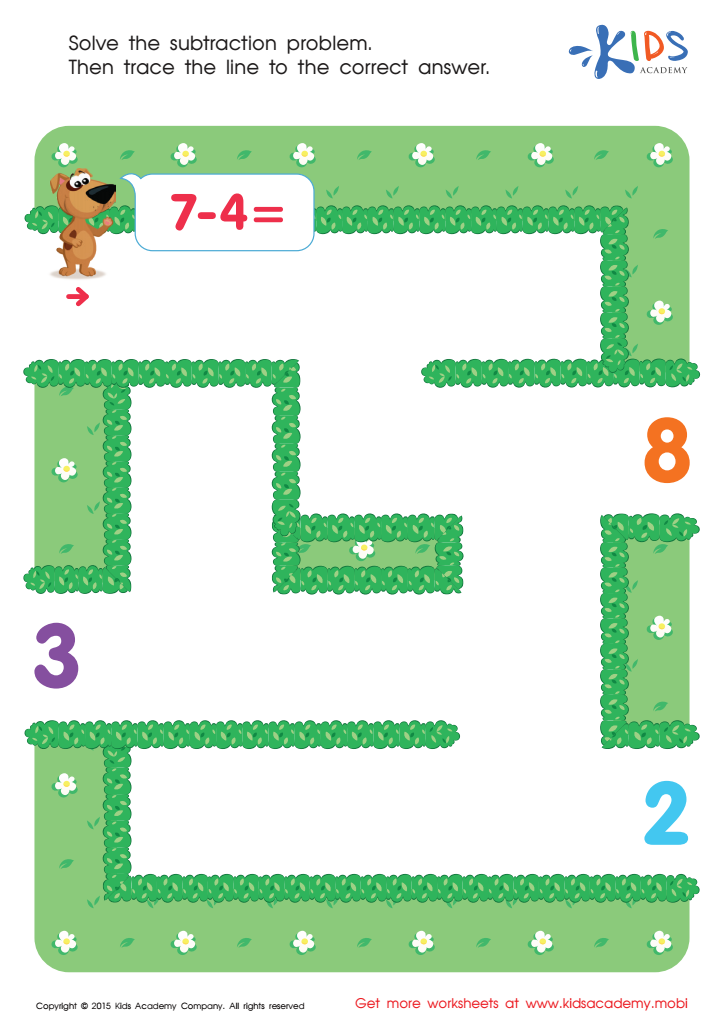
Subtraction Seven Minus Four Worksheet
 Assign to My Students
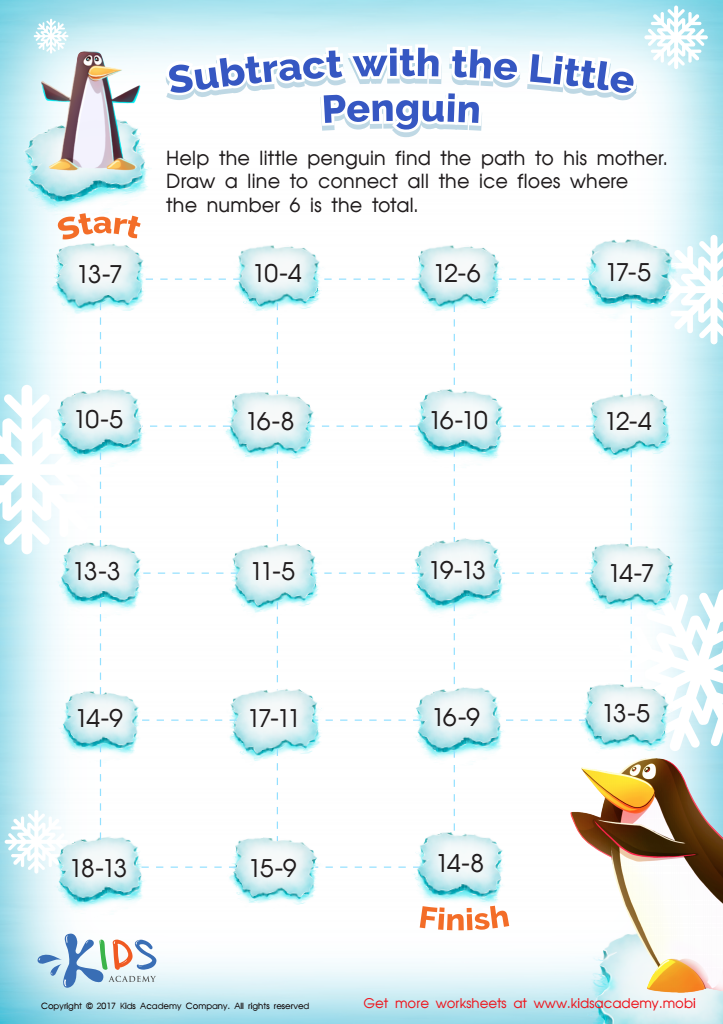
Subtract With The Little Penguin Substraction Worksheet
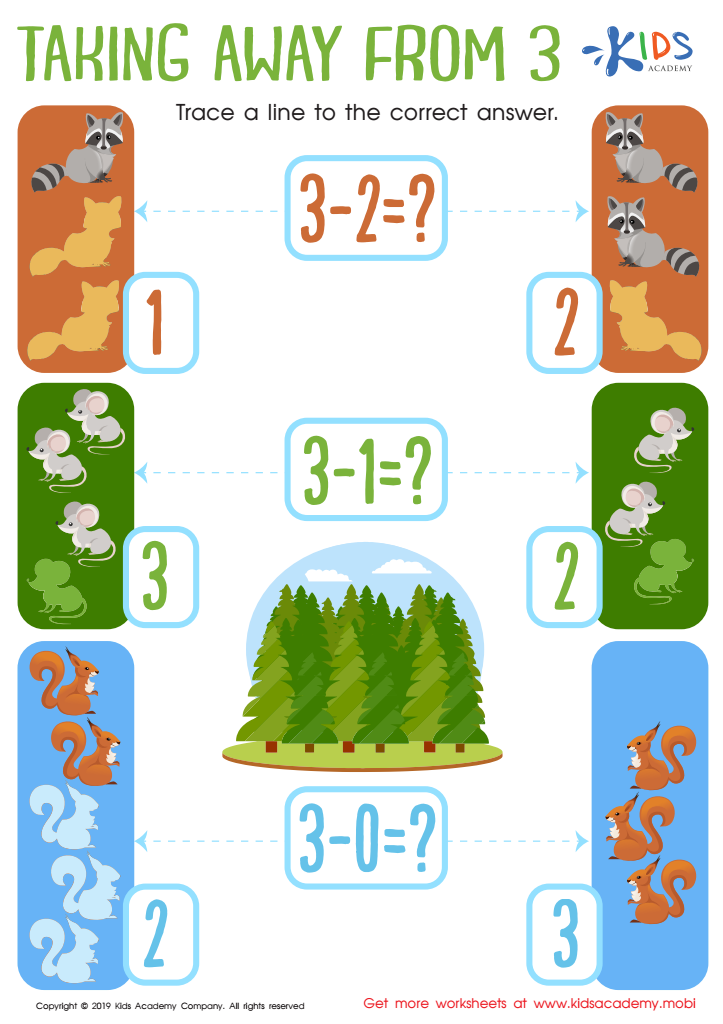
Taking Away From 3 Worksheet
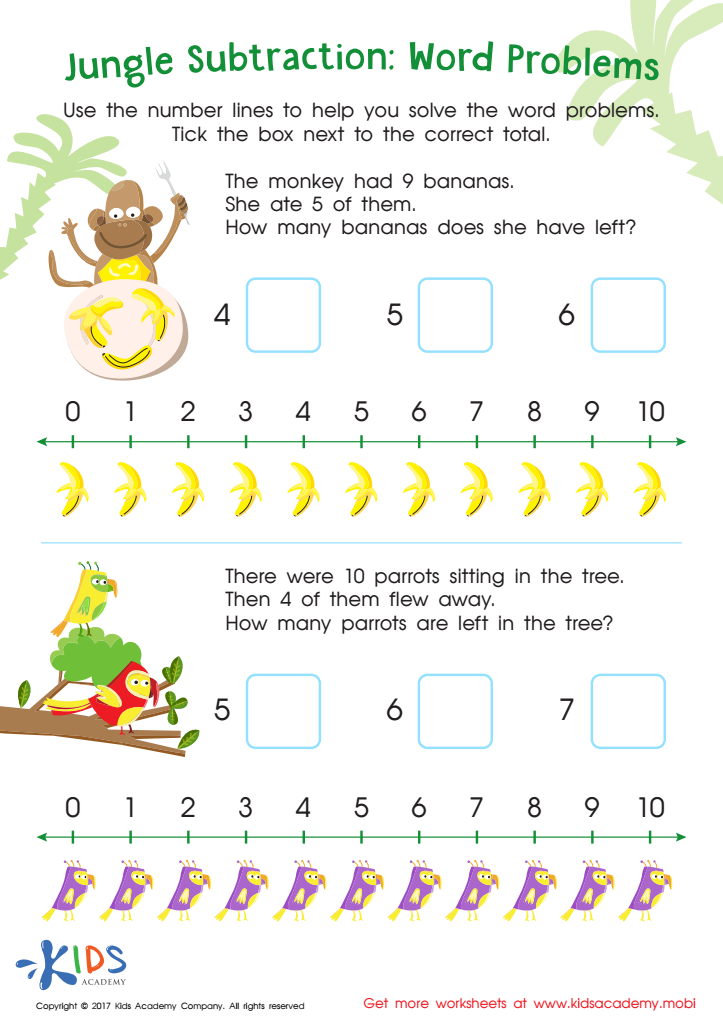
Jungle Subtraction Word Problems Substraction Worksheet
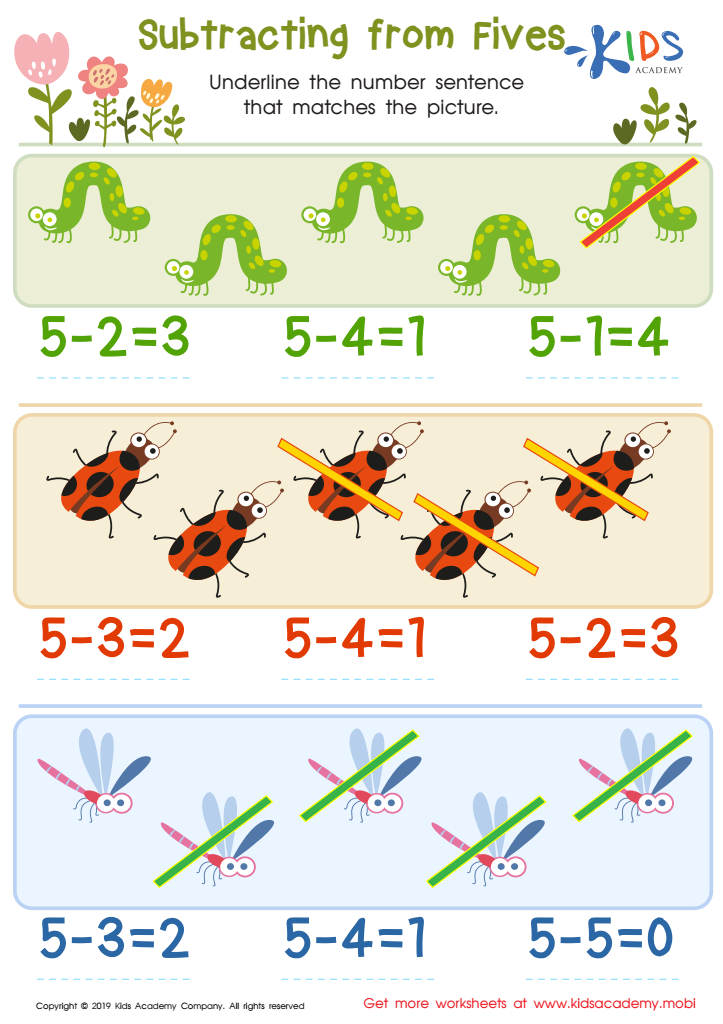
Subtracting From Fives Worksheet








Parents and teachers should prioritize subtraction practice extra challenges because they play a critical role in foundational math proficiency and overall cognitive development in young learners. Mastery of subtraction is more than just a math skill; it's essential for developing problem-solving abilities and logical reasoning. Extra challenges can prevent monotony, keeping students engaged and making learning fun, which fosters a positive attitude toward mathematics.
Moreover, subtraction is integral to understanding more advanced math concepts like algebra, division, and fractions. Practice that includes extra challenges ensures children are not merely performing mechanical tasks but also applying their skills to complex problem scenarios. This deeper engagement fortifies their grasp of concepts, encourages creativity, and promotes resilience in facing difficult problems.
Additionally, extra challenges individualize learning, accommodating various learning styles and paces. For struggling learners, iterative practice helps bridge gaps, allowing them to catch up and gain confidence. For advanced learners, more challenging problems prevent complacency and stimulate intellectual growth, keeping them invested in their studies.
Lastly, consistent practice in subtraction nurtures critical thinking, a skill invaluable inside and outside the classroom. It prepares children for real-life situations requiring numerical literacy, making them more adept at handling practical tasks like budgeting and planning. Thus, subtraction practice extra challenges are essential for fostering a well-rounded, capable, and confident learner.








