Understanding plurals Extra Challenge Worksheets
5 filtered results
-
From - To
Enhance your students' mastery of plurals with our "Understanding Plurals Extra Challenge Worksheets." Designed for early grade learners, these engaging worksheets offer exciting exercises that go beyond basic pluralization. Students will strategically tackle various challenges, reinforcing their understanding of singular and plural forms in diverse contexts. From identifying patterns to transforming words, each activity promotes critical thinking and solidifies language skills. Perfect for classroom use or at-home practice, these worksheets will motivate young learners and support differentiated instruction. Dive deeper into the world of language as your students grow more confident in their grammar abilities with these extra challenges!
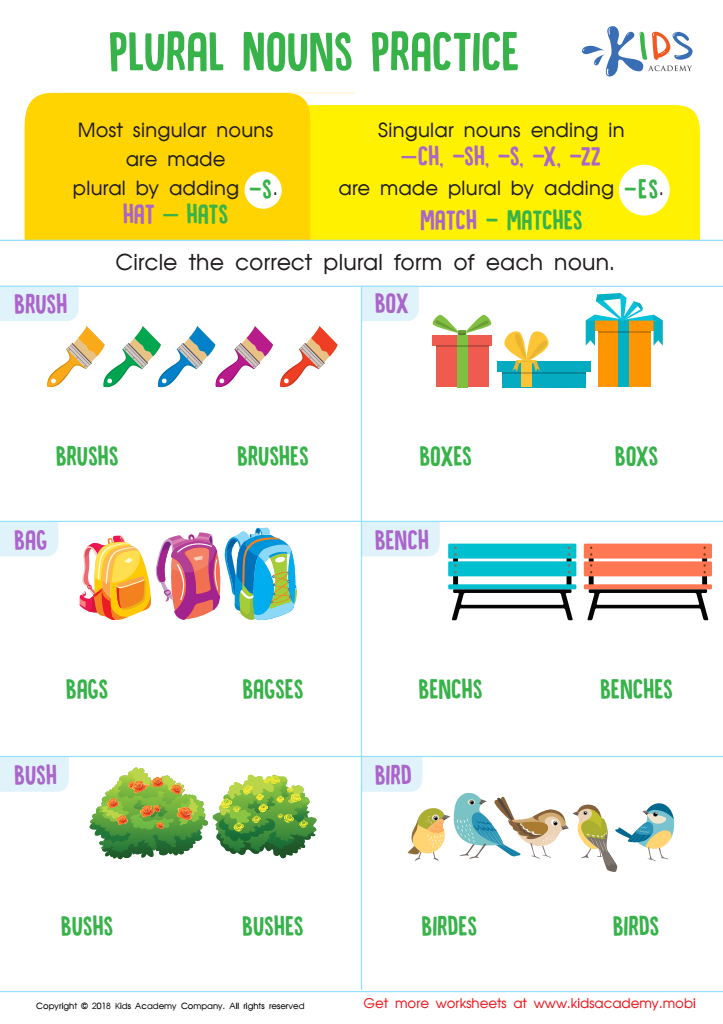
Plural Nouns Practice Worksheet
 Assign to My Students
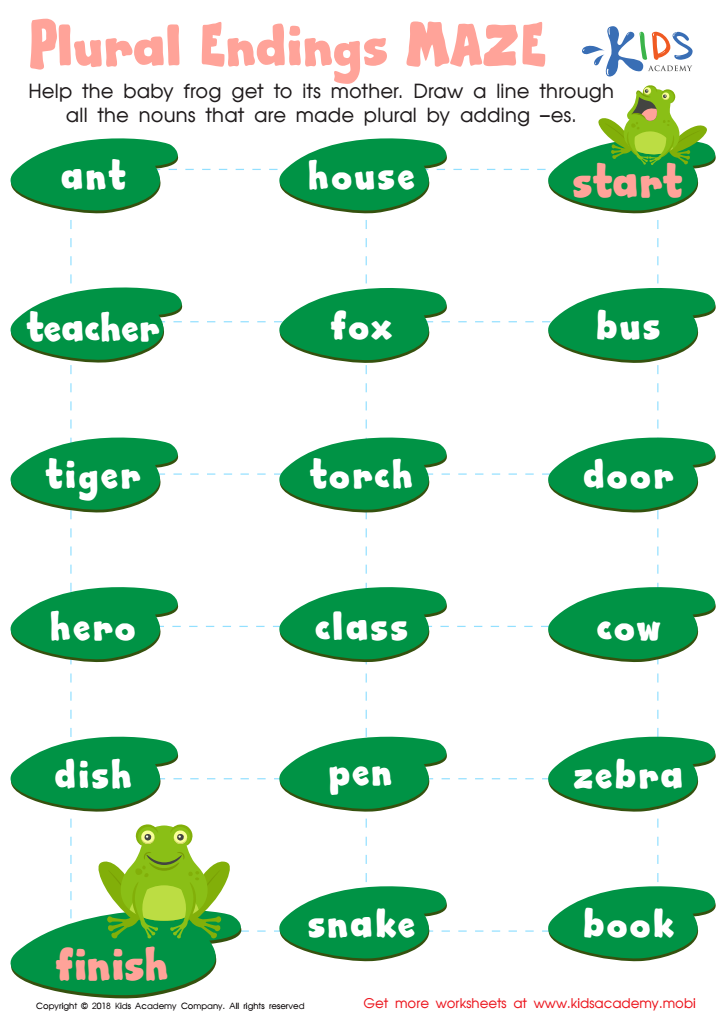
Plural Endings Maze Worksheet
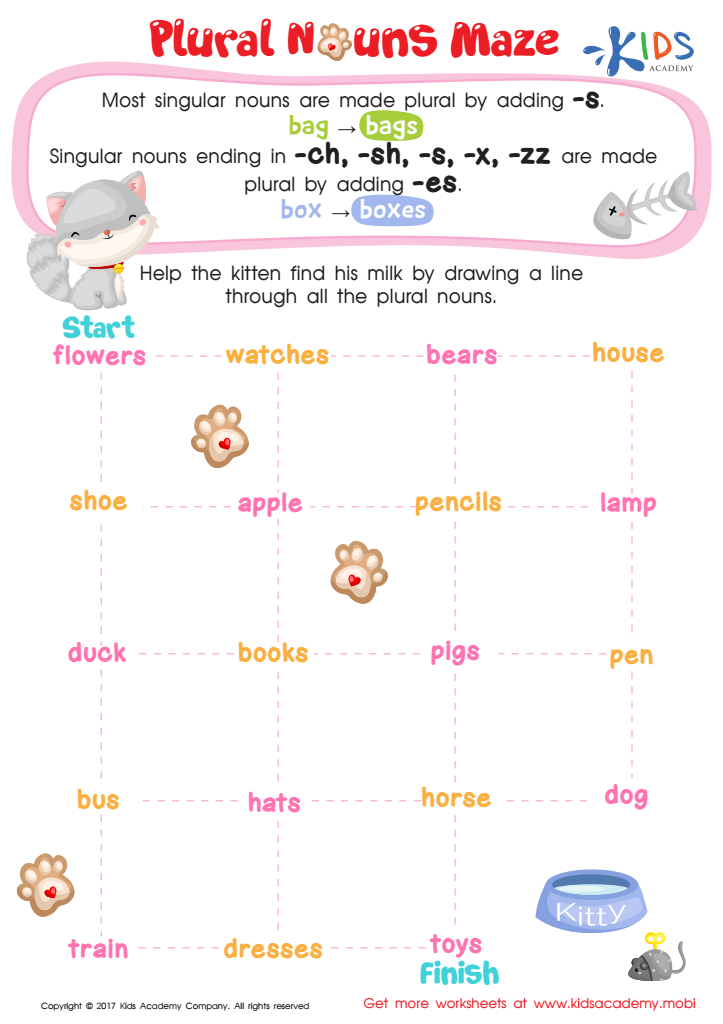
Plural Nouns Maze Worksheet
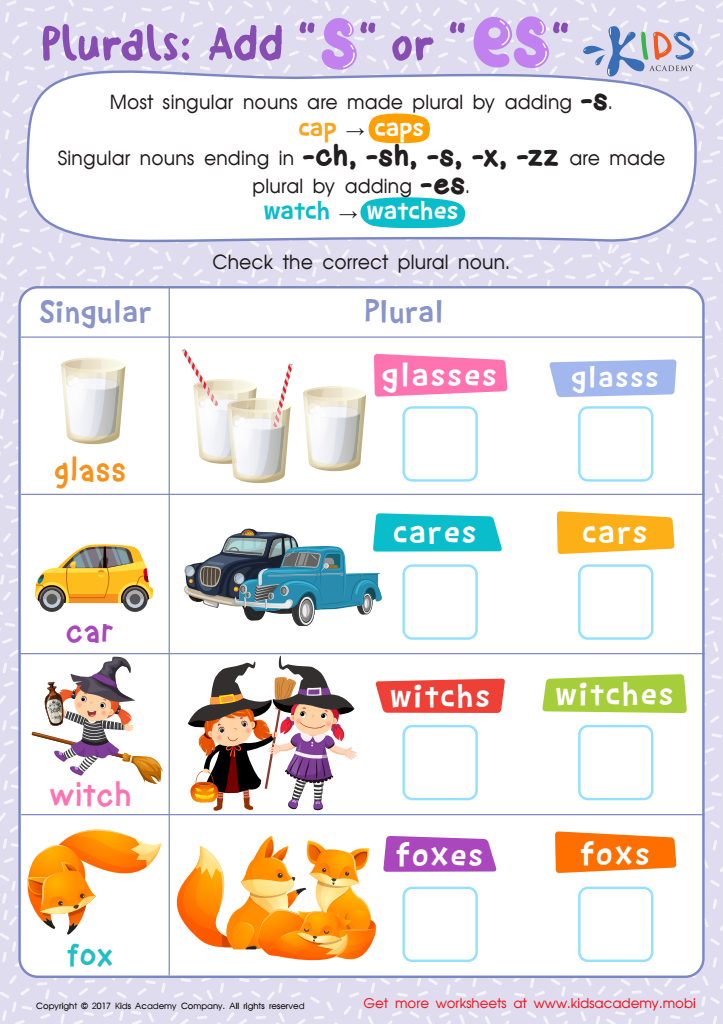
Plurals: "–es" or "–es"? Worksheet
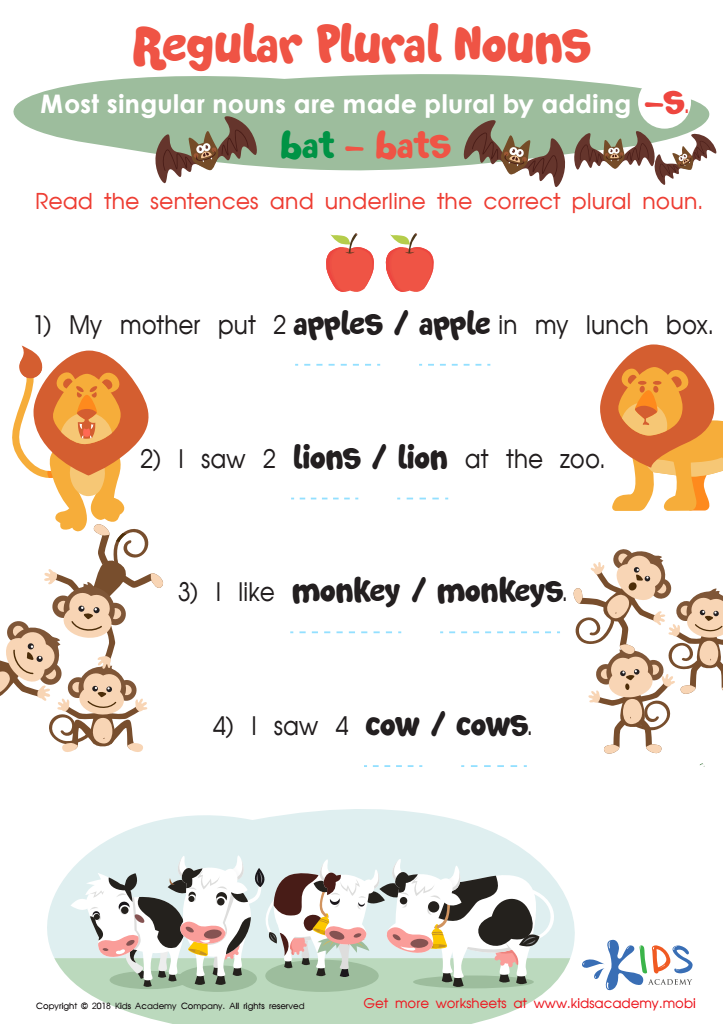
Regular Plural Nouns Worksheet







Understanding plurals is crucial for both parents and teachers, as it lays the foundation for effective communication and comprehension in early education. Mastering plural forms helps children grasp the concept of quantity and differentiate between singular and plural nouns, enhancing their overall language skills. This understanding supports their ability to construct clear and coherent sentences, which is essential for both writing and verbal expression.
Moreover, teaching plurals fosters children's cognitive development by encouraging them to recognize patterns in language, improving their critical thinking skills. As students advance through their education, strong foundational knowledge of plurals will contribute to their reading comprehension, ensuring they can interpret text correctly and engage meaningfully with content.
For parents, equipping children with a good grasp of plural forms can instill confidence in their communication abilities, paving the way for effective relationships with peers and educators.
In addition, understanding plurals can enrich everyday interactions, making language learning enjoyable and relevant. By actively engaging in plural activities, parents and teachers can create a supportive environment that promotes curiosity and a love for learning, ultimately empowering children in their academic journey.








