Fraction visualization Extra Challenge Math Worksheets
3 filtered results
-
From - To
Enhance your students' understanding of fractions with our "Fraction Visualization Extra Challenge Math Worksheets." Designed for early learners, these worksheets provide a unique approach to mastering fractional concepts through engaging visual aids and problem-solving tasks. Each worksheet presents a variety of challenging scenarios that encourage critical thinking and application of fraction knowledge. By focusing on visualization techniques, students will improve their ability to recognize and work with fractions in real-life contexts. Perfect for classroom use or at-home practice, these worksheets will help young mathematicians develop confidence and proficiency in fraction comparison, addition, and subtraction. Boost your teaching toolkit today!
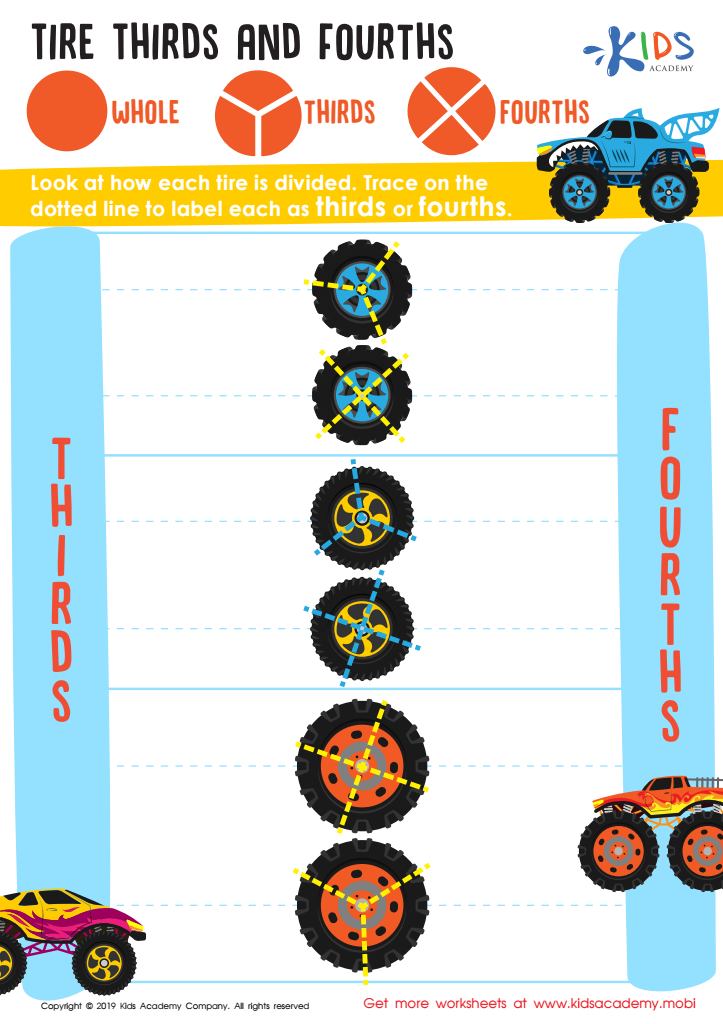
Tire Thirds and Fourths Worksheet
 Assign to My Students
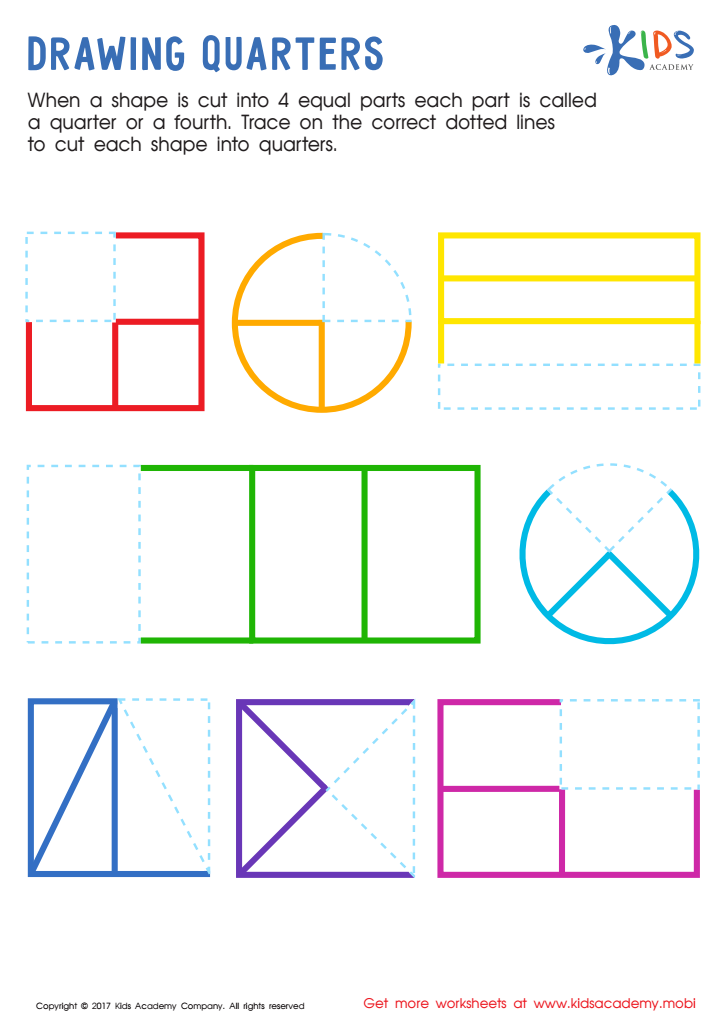
Drawing Quarters Worksheet
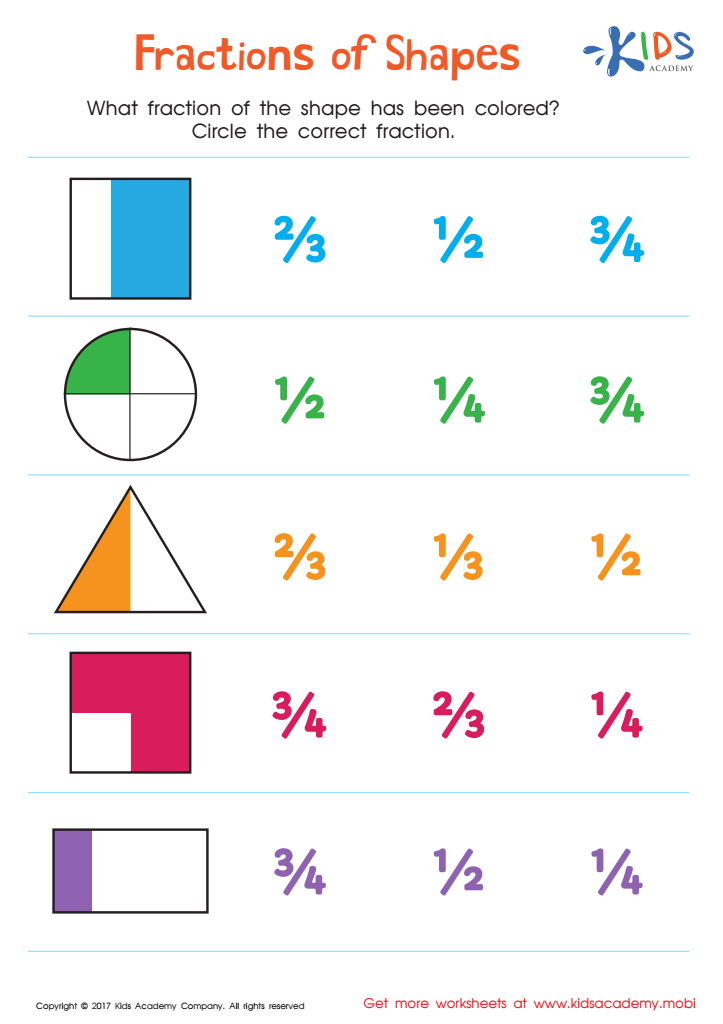
Fractions of Shapes: Math Concept Worksheet








Fraction visualization is a crucial component in developing a strong mathematical foundation for young learners. Parents and teachers should care about promoting Fraction visualization Extra Challenge Math because it helps students to understand the concept of fractions beyond rote memorization of procedures. This deep comprehension allows children to visualize and manipulate fractions, fostering critical thinking and problem-solving skills.
When students can “see” fractions—such as through pie charts, number lines, or area models—they can grasp how fractions represent parts of a whole, compare sizes, and perform operations involving fractions more effectively. Moreover, this skills translates to real-life situations, such as dividing food, understanding measurements, or dealing with money.
Engaging in Fraction visualization Extra Challenge Math encourages curiosity and often attracts students who might struggle with traditional methods. It promotes resilience in problem-solving and provides a solid groundwork as students advance in their math education. As they develop these visualization skills, children build confidence and a positive attitude towards mathematics. Thus, investing time in understanding fractions through visualization can yield lifelong benefits, ensuring that students are better equipped for future mathematical challenges. Parents and teachers who emphasize this approach can cultivate a deeper appreciation for math among their learners.








