Basic Math Skills Extra Challenge Preschool Measurement Worksheets
4 filtered results
-
From - To
Enhance your preschooler’s understanding of measurement with our "Basic Math Skills Extra Challenge" worksheets! Designed specifically for young learners, these engaging worksheets provide a fun way for children to explore essential measurement concepts. Through playful activities, your child will measure length, height, and weight, helping to build foundational math skills and boost confidence. Each worksheet features colorful illustrations and easy-to-follow instructions, ensuring that learning is both enjoyable and effective. Perfect for home or classroom use, these worksheets are a great way to support early math education and prepare your child for future academic success! Download now and watch their skills grow!
 Assign to My Students
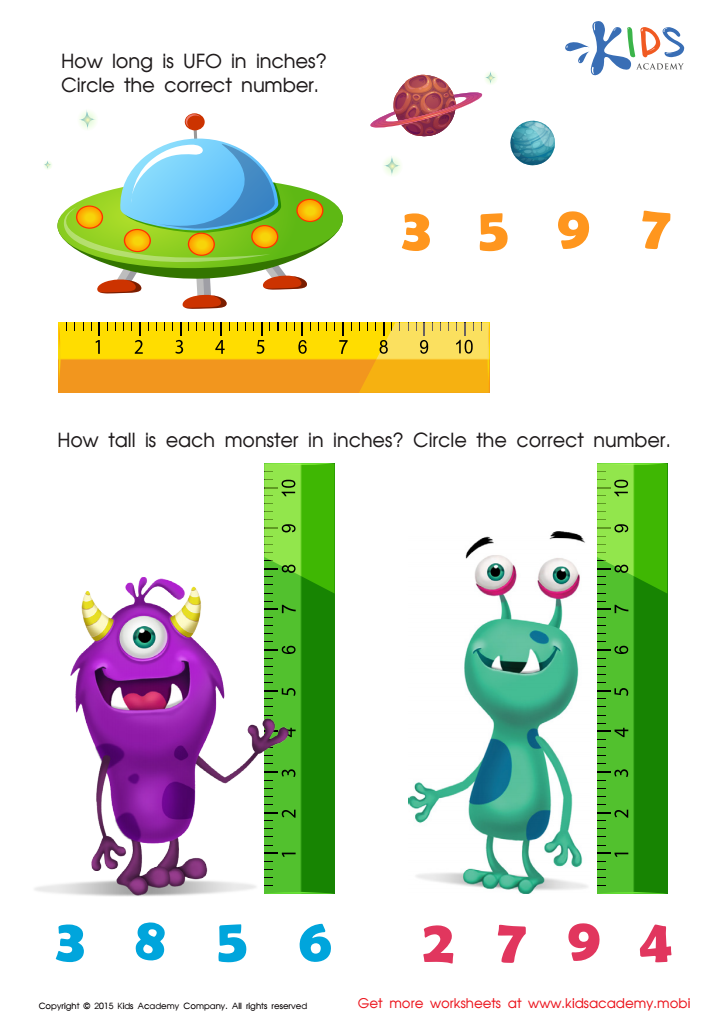
Measuring in Inches Worksheet
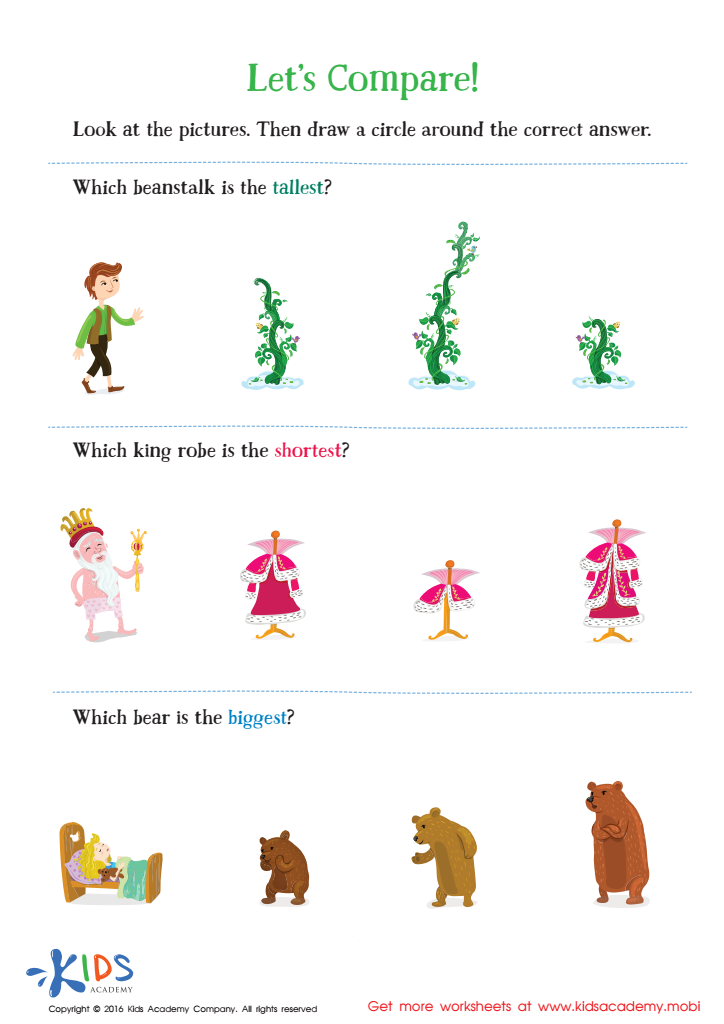
Fairy Tale Worksheet: Let's Compare
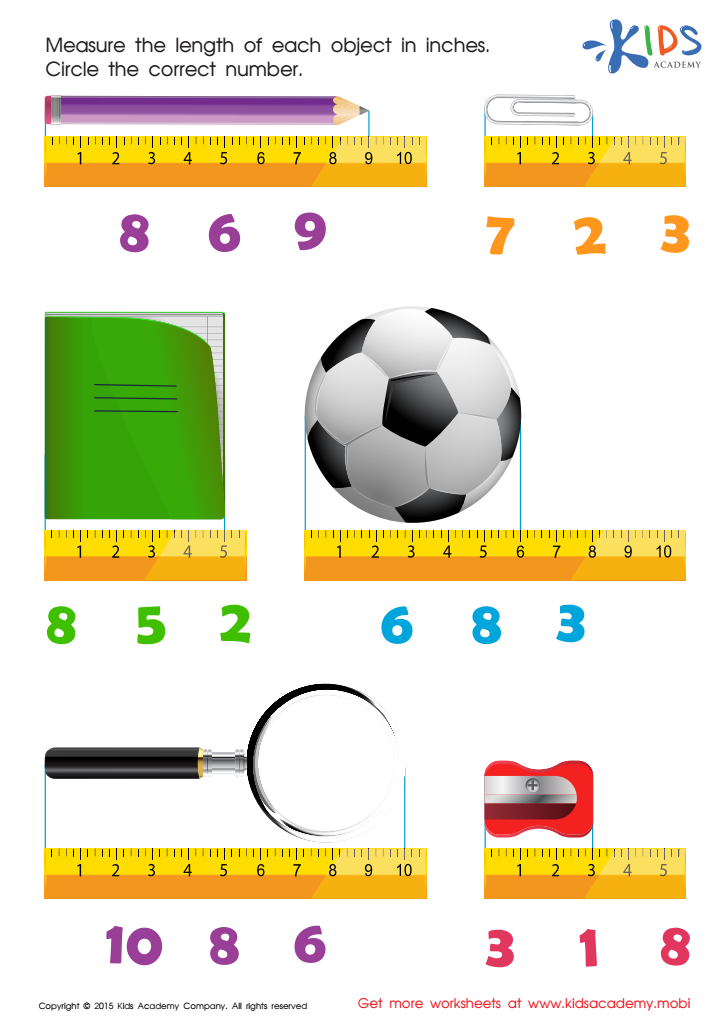
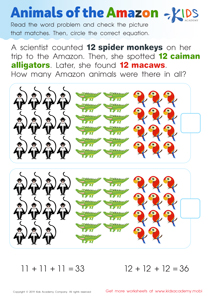
Learning measuring objects in inches Worksheet





Parents and teachers should prioritize Basic Math Skills Extra Challenge in preschool measurement because early engagement with mathematics sets the foundation for a child's future academic success. Measurement, a critical aspect of math, helps children understand concepts such as size, quantity, and comparison, promoting their numeracy skills.
By participating in measurement challenges, children develop their ability to estimate, compare, quantify, and understand the relationships between different objects. These skills translate to essential everyday applications, from cooking to building, and foster logical reasoning. Furthermore, incorporating measurement activities enhances fine motor skills through hands-on experiences, thereby aiding overall cognitive development.
Such challenges rethink traditional learning, making math engaging and enjoyable. They encourage critical thinking and problem-solving abilities, essential in today’s rapidly evolving world. For parents, witnessing their child engaging with math promotes positive attitudes towards the subject, fostering a healthy lifelong relationship with learning.
Moreover, these skills enhance language development as children learn to describe and communicate their measurements effectively. In collaboration, parents and educators can create a rich learning environment, nurturing young mathematicians and preparing them for future academic challenges. Investing time in these foundational skills not only benefits individual children but helps cultivate a society that values mathematical understanding.