Time reading skills Extra Challenge Preschool Time Worksheets
3 filtered results
-
From - To
Expand your preschooler's time-telling abilities with our "Time Reading Skills Extra Challenge Preschool Time Worksheets"! Designed to provide that extra challenge for young learners, these worksheets build on basic time reading concepts, focusing on enhancing accuracy and confidence. Each worksheet is crafted to engage children through fun, educational activities that teach them how to correctly read different times on both analog and digital clocks. Perfect for curious minds needing an advanced edge, these printable worksheets support the development of critical time reading skills. Download today and watch your child master the art of telling time in no time!
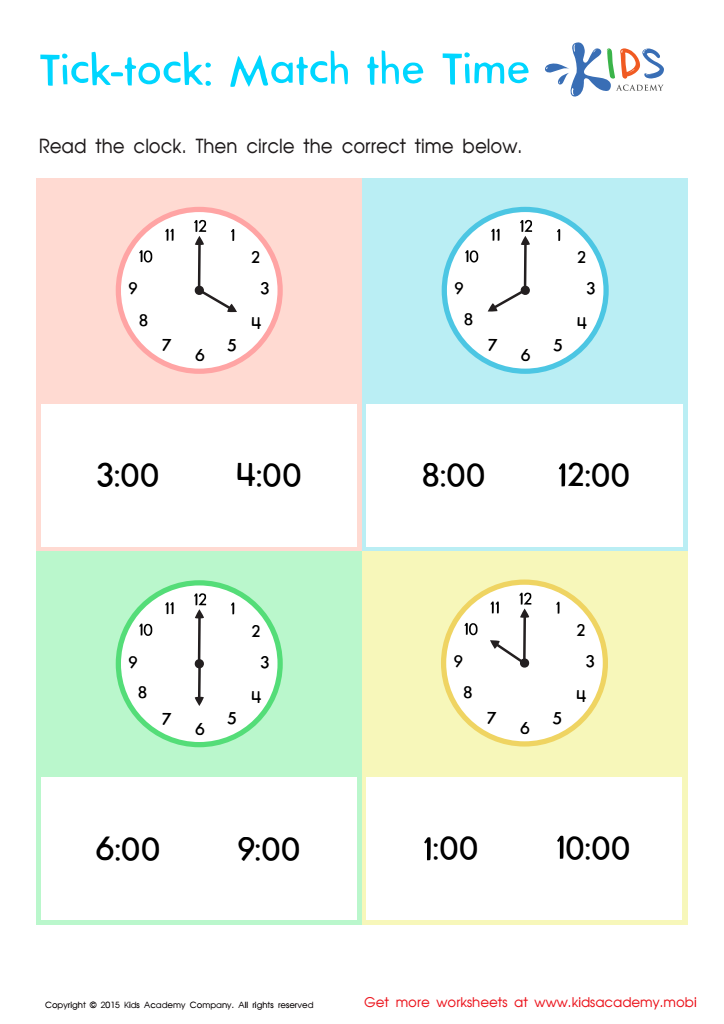
Telling The Time Worksheet: Part 4
 Assign to My Students
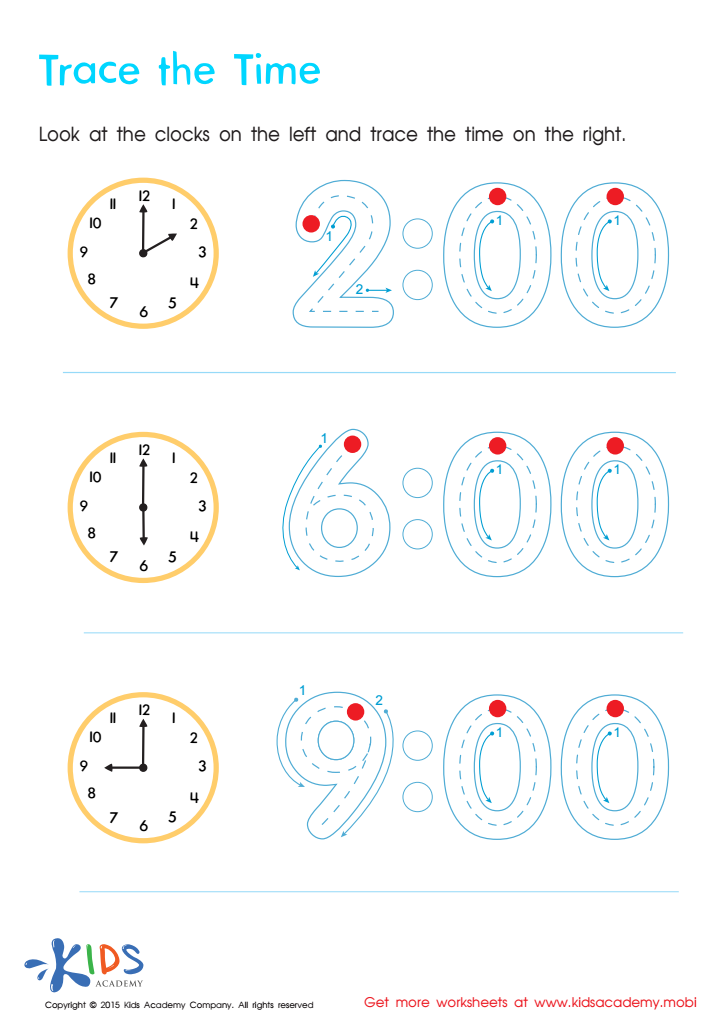
Telling The Time Worksheet: Part 2
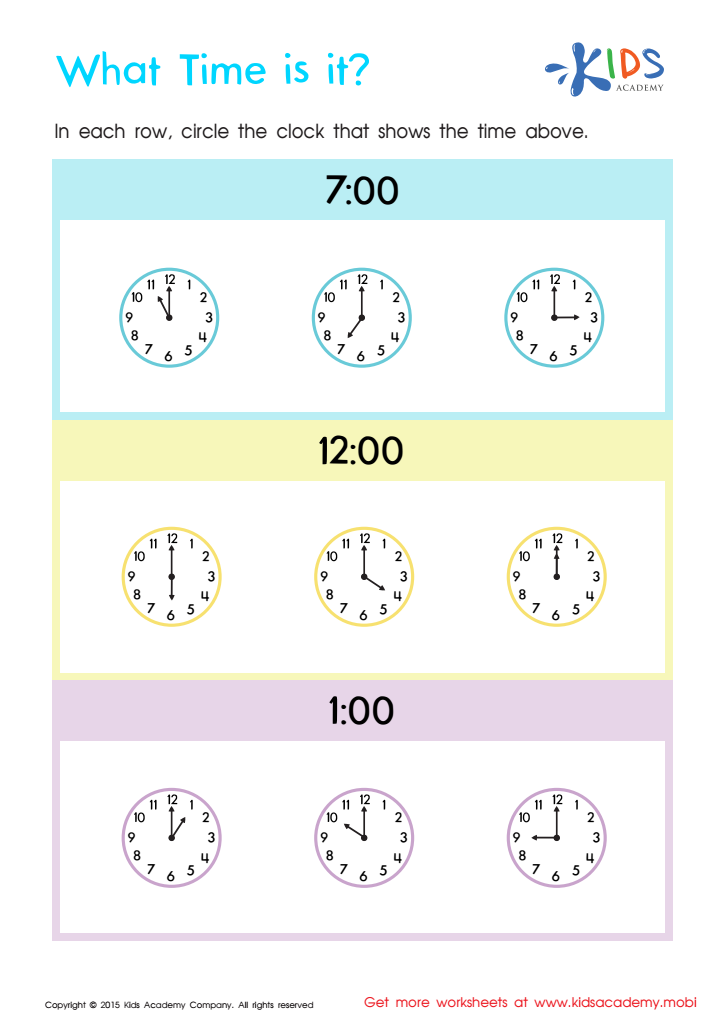
Telling The Time Worksheet: Part 3








Fostering time-reading skills in preschool might seem advanced, but it provides fundamental benefits for a child's overall cognitive and practical development. By introducing children to the basics of time, parents and teachers lay the groundwork for essential mathematical skills, such as understanding sequences, duration, and intervals. These are not just abstract concepts but translate into real-world applications, such as following a daily schedule, understanding community routines, and grasping punctuality—critical life skills that promote independence and responsibility.
Additionally, developing time-reading skills early can enhance a child's ability to perceive cause and effect, improve their memory, and contribute to better language skills as they learn terms associated with time (like "morning," "afternoon," and "evening"). These concepts feed into other academic subjects too, enriching their future learning across various disciplines.
By making this an 'Extra Challenge,' educators and parents can make the learning process exciting and rewarding. Activities that involve storytelling, clock games, and interactive learning can capture children’s natural curiosity and eagerness to explore new concepts. Moreover, these fun practices foster a positive attitude toward learning, making them look forward to school. Hence, investing effort in time-reading skills at the preschool level sets the stage for a well-rounded, academically prepared, and self-assured student.