Money recognition Extra Challenge Grade 2 Worksheets
4 filtered results
-
From - To
Enhance your second graders' financial skills with our “Money Recognition Extra Challenge Grade 2 Worksheets”! These engaging printables are designed to help students identify, count, and differentiate various coins and bills. Perfect for boosting math proficiency and real-world application, these worksheets elevate your child's money recognition abilities to the next level. Colorful designs and playful exercises captivate young minds, while progressively challenging tasks ensure a thorough understanding. Ideal for both classroom and home use, these worksheets provide a fun, educational way to prepare kids for future financial literacy. Empower your child with confidence in money matters today!
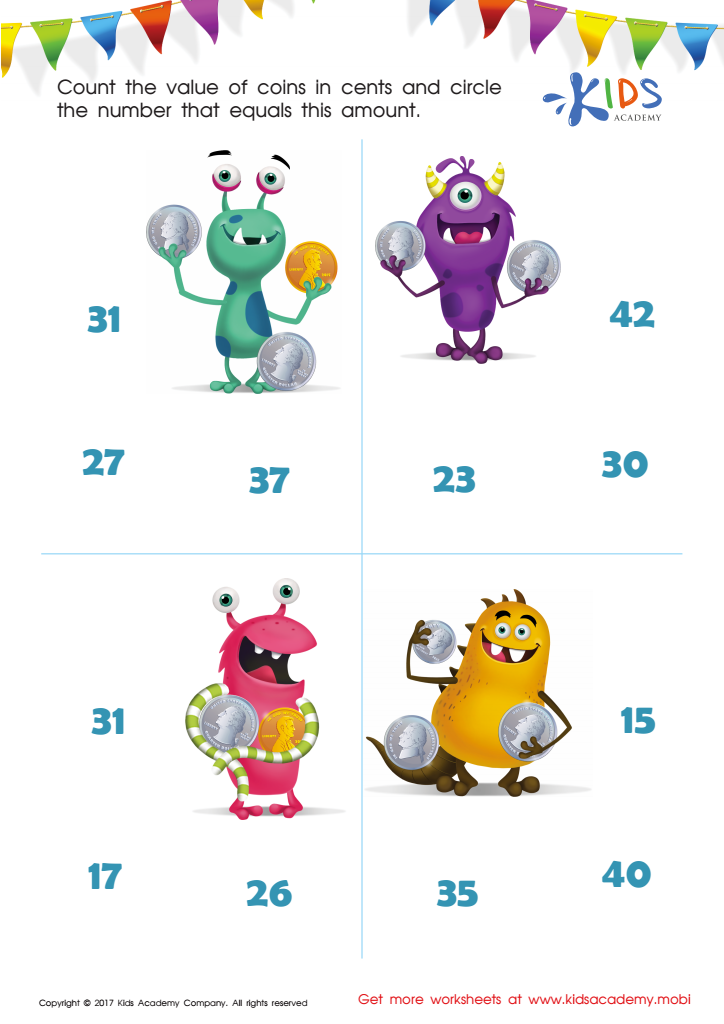
How Many Coins Money Worksheet
 Assign to My Students
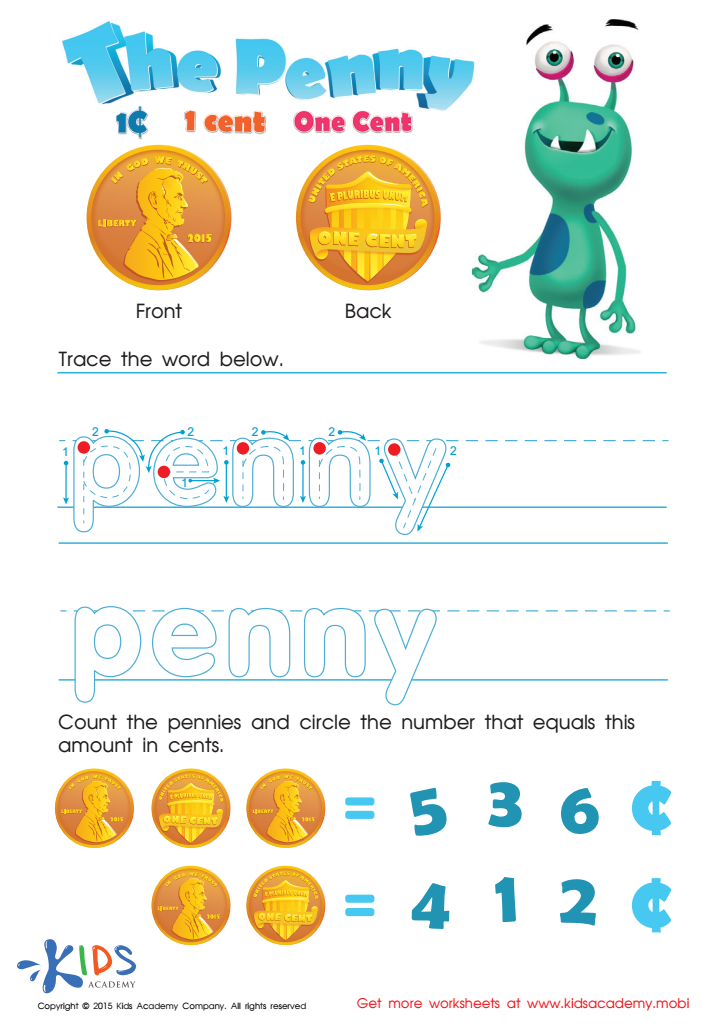
One Cent or the Penny Money Worksheet
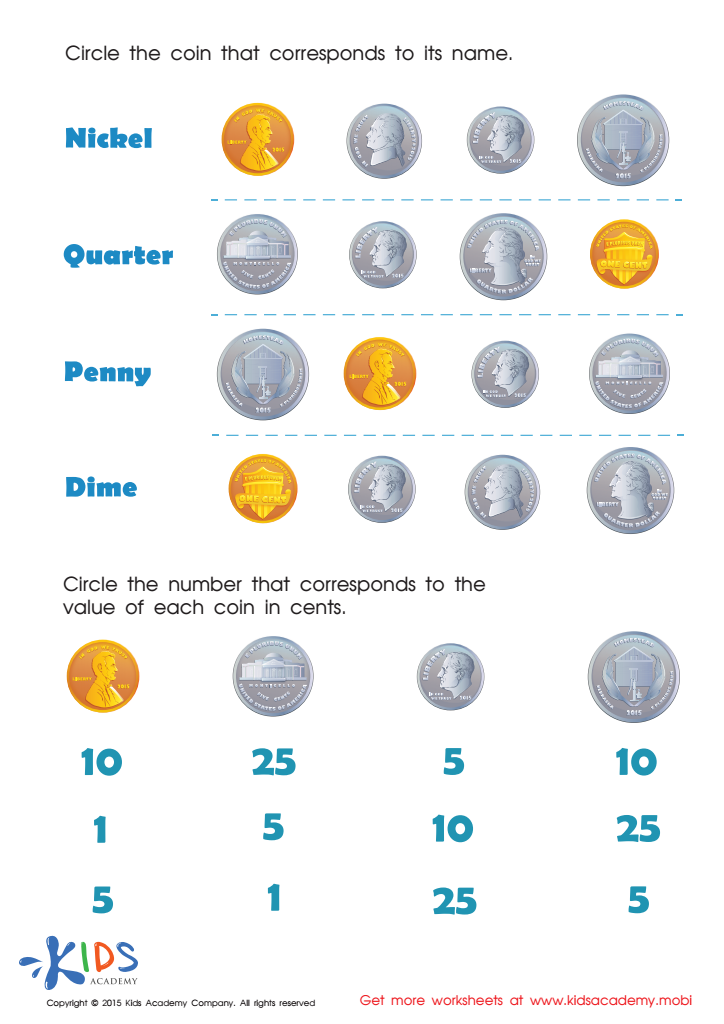
Coin Names and Values Money Worksheet
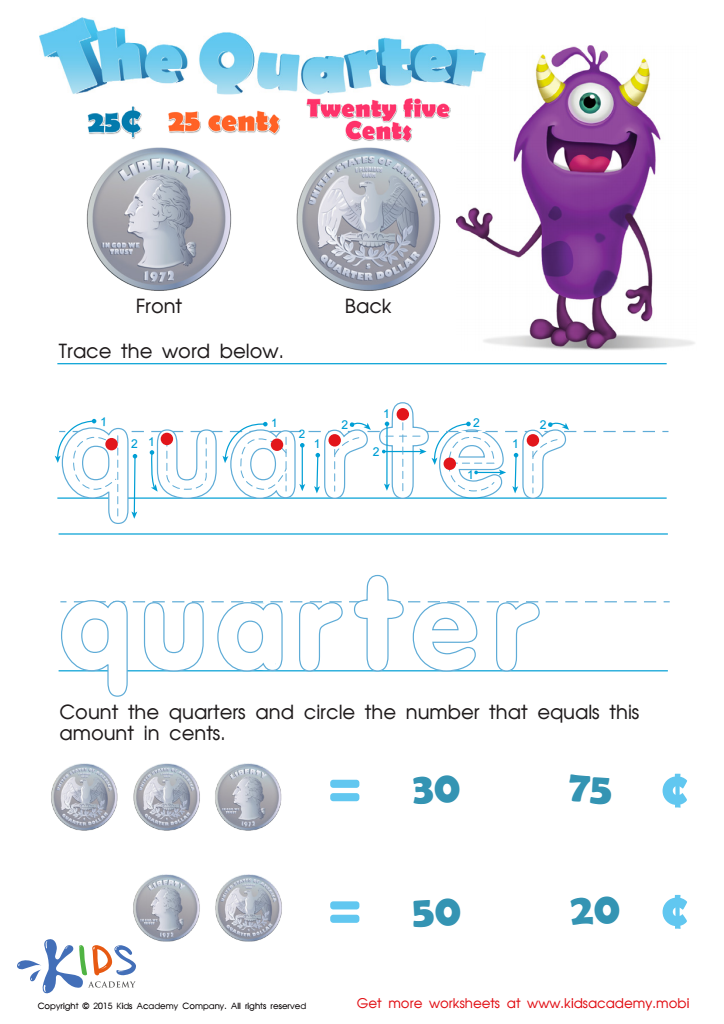
Twenty Five Cents or the Quarter Money Worksheet








Parents and teachers should care about the Money Recognition Extra Challenge for Grade 2 because it plays a crucial role in building foundational financial literacy early in a child's education. At this age, children are developing important cognitive skills, such as counting, addition, and subtraction, which are directly applicable to money recognition and handling.
Understanding different denominations and recognizing coins and bills help children grasp the value of money. It cultivates practical math skills and introduces them to concepts of saving, spending, and budgeting. This early exposure is crucial because it sets the groundwork for responsible money management as they grow older. Without these basic skills, children may face difficulties when confronted with real-world financial decisions, potentially leading to poor financial habits.
Additionally, integrating money recognition challenges in second grade makes learning fun and engaging. Activities involving tangible money, like play money games or role-playing store transactions, can boost students' enthusiasm for learning and applying math in real-life scenarios. They improve not only their mathematical abilities but also their critical thinking and problem-solving skills.
In essence, investing time in these challenges not only augments a child's immediate academic skills but also equips them with essential life skills. Parents and teachers, by encouraging these activities, prepare children for future financial stability and independence.