Problem-Solving Skills Extra Challenge Grade 2 Addition and Subtraction Word Problems Worksheets
7 filtered results
-
From - To
Enhance your child's mathematical prowess with our "Problem-Solving Skills Extra Challenge Grade 2 Addition and Subtraction Word Problems Worksheets." These worksheets are designed to bolster second graders' ability to tackle real-life math scenarios efficiently. Each sheet presents engaging and challenging word problems that require students to apply addition and subtraction operations. This focused practice aims to strengthen critical thinking and problem-solving skills, setting a strong foundation for future math success. Ideal for extra practice at home or as a supplementary classroom resource, these worksheets ensure students stay ahead in their math journey.
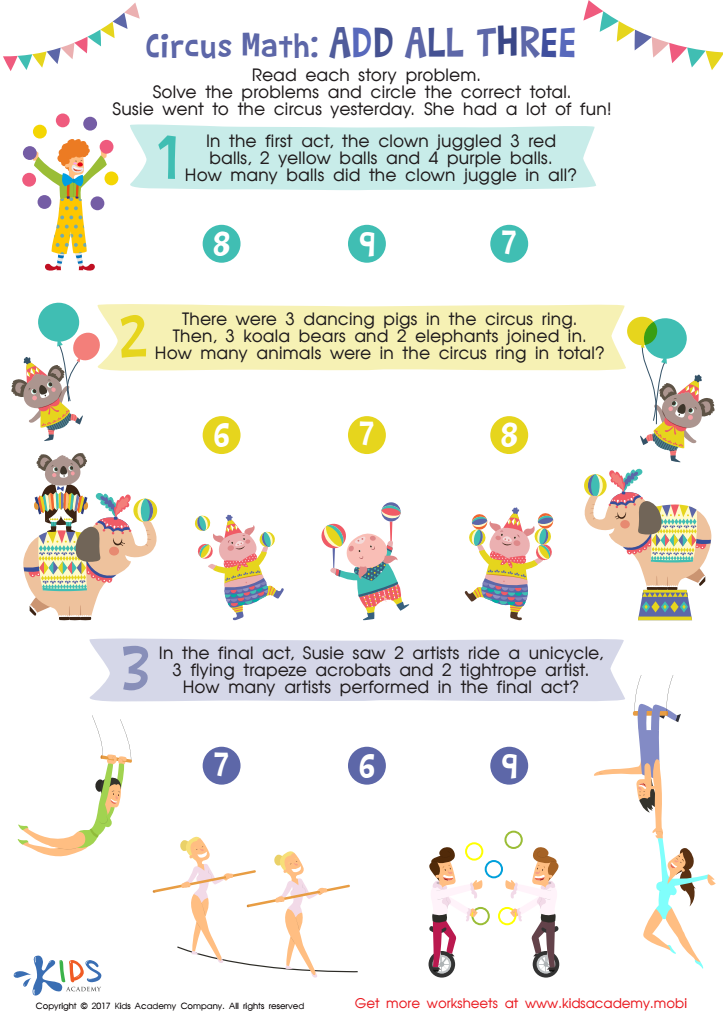
Circus Math Printable
 Assign to My Students
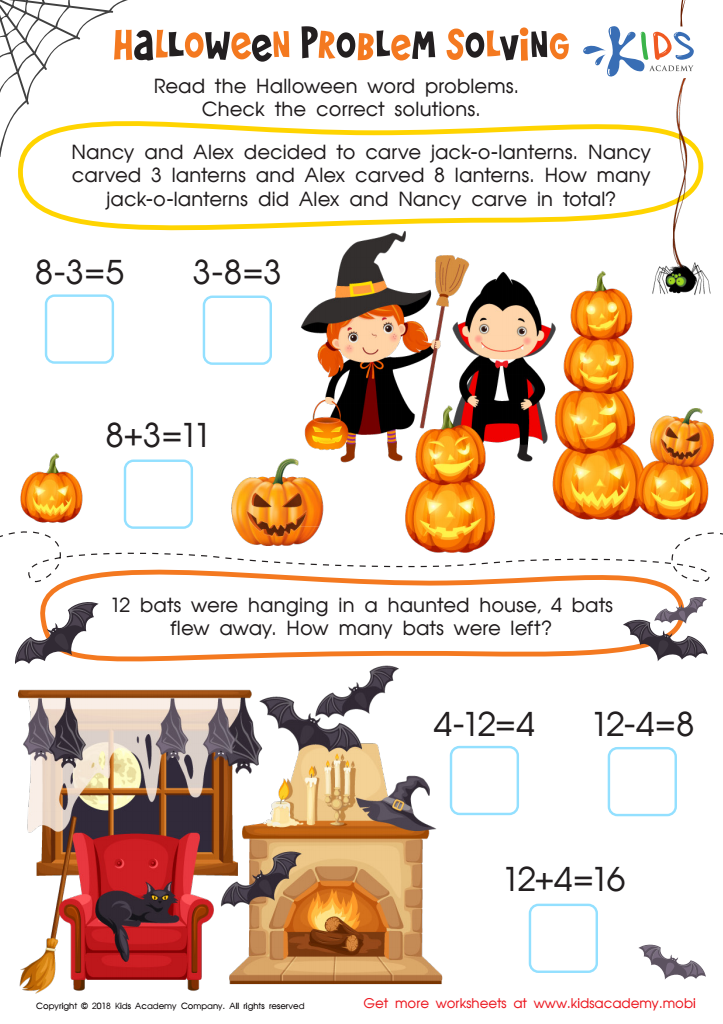
Halloween Problem Solving Worksheet
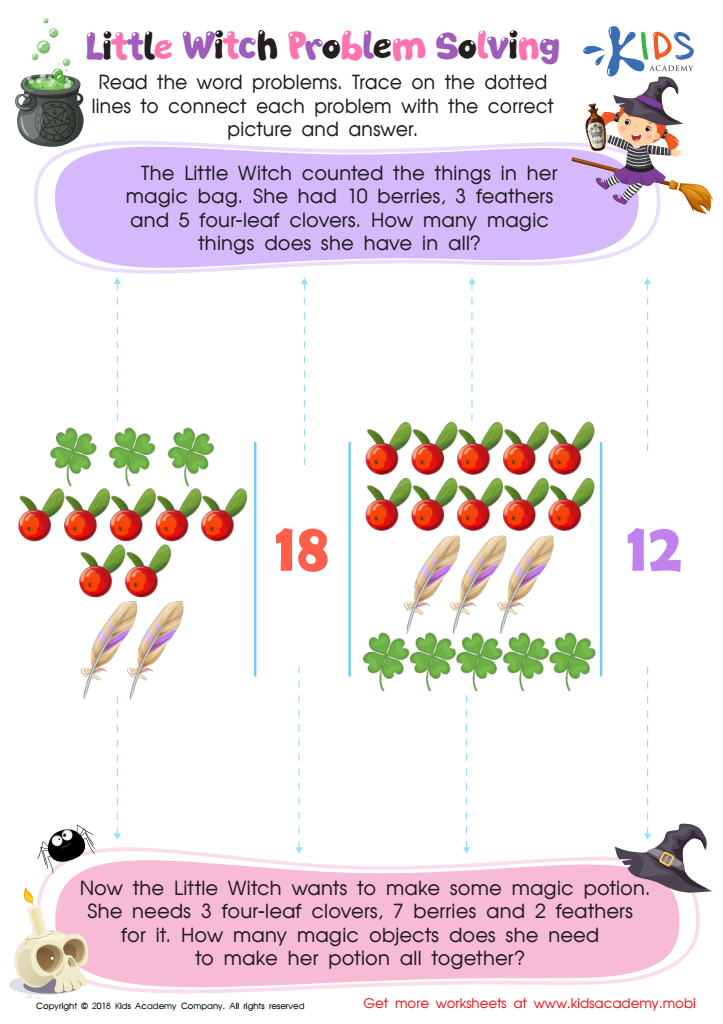
Little Witch Problem Solving Worksheet
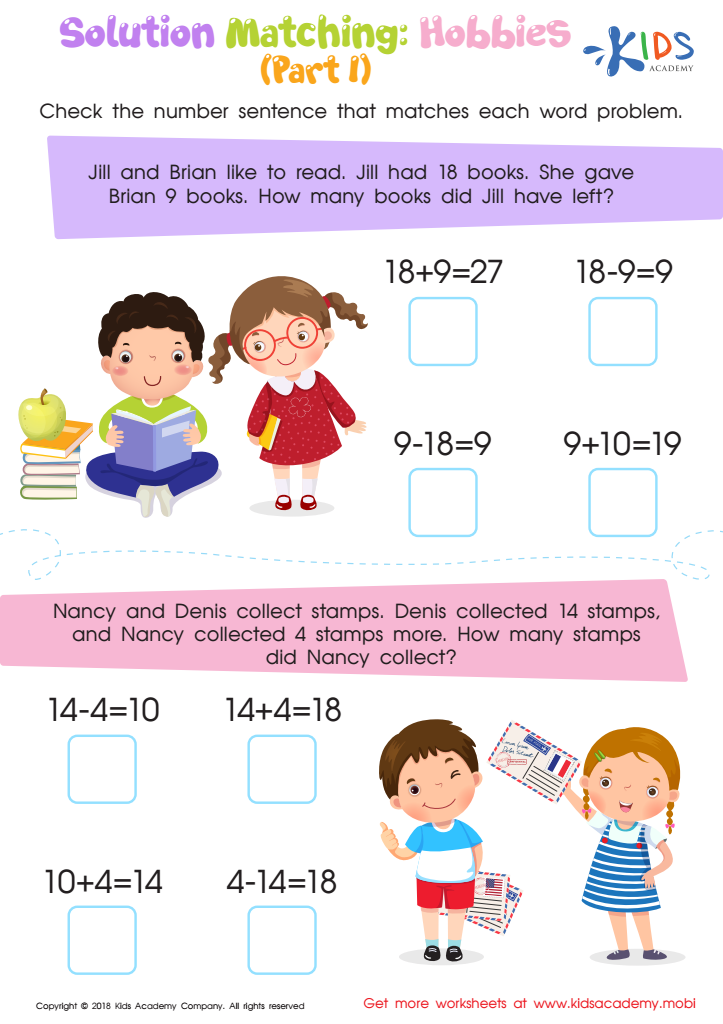
Solution Matching: Hobbies. Part 1 Worksheet
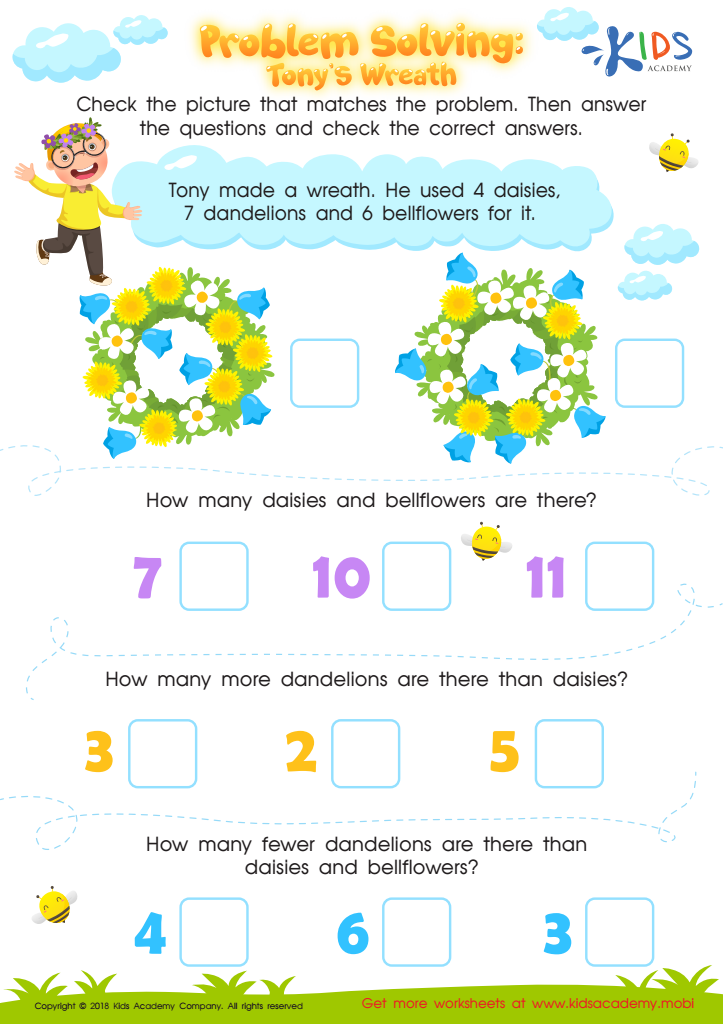
Problem Solving: Tony's Wreath Worksheet
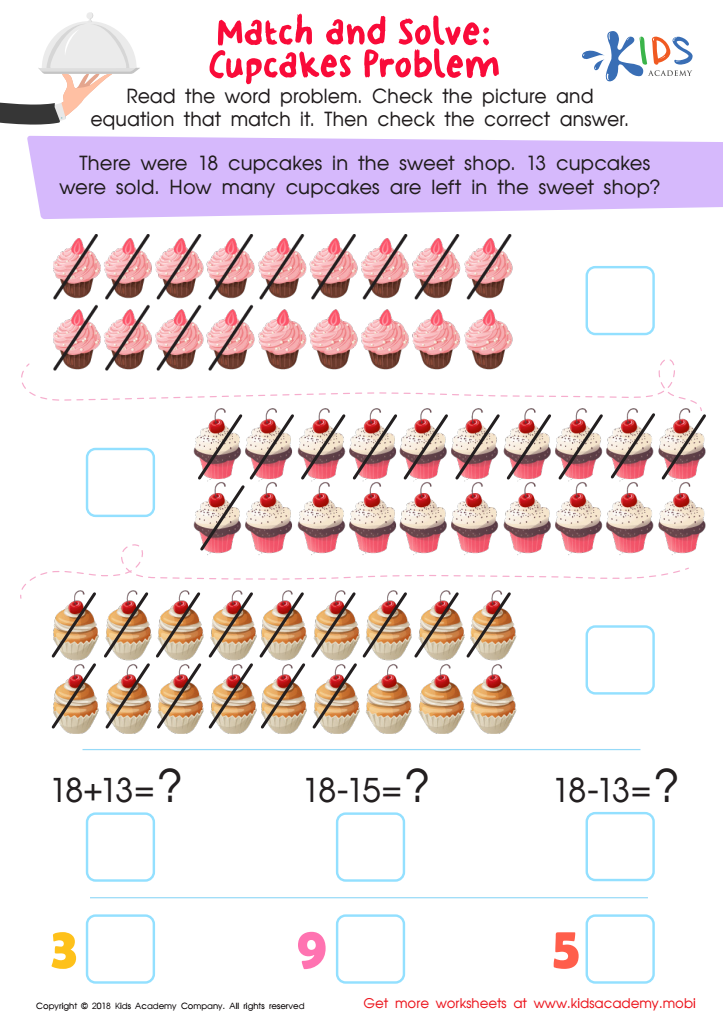
Match and Solve: Cupcakes Problem Worksheet
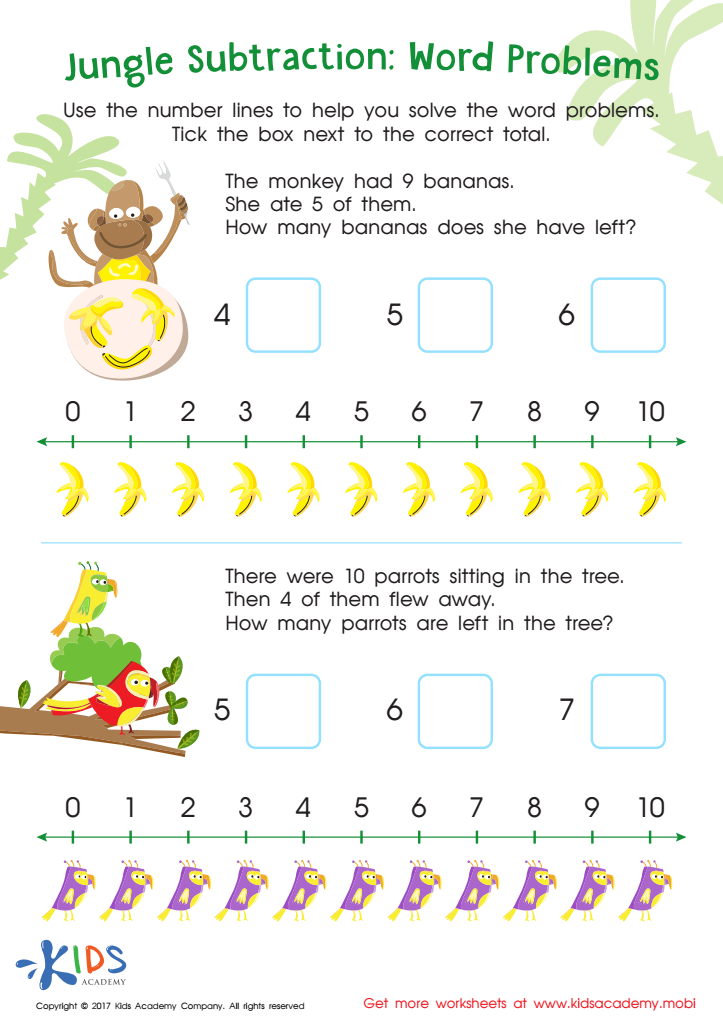
Jungle Subtraction Word Problems Substraction Worksheet








Fostering problem-solving skills in second graders through extra challenges, such as Grade 2 Addition and Subtraction Word Problems, is essential for children's cognitive and academic advancement. First, these exercises build critical thinking skills. Word problems require students not just to calculate sums or differences, but to comprehend the scenario, identify the relevant information, and apply the correct mathematical operations. This helps in enhancing their logic and reasoning abilities.
Second, these challenges support the development of literacy skills. Students must read and understand the problem, enhancing their reading comprehension and vocabulary. This dual engagement with mathematics and language arts reinforces integrated learning, making them more versatile learners.
Third, real-world application is another significant benefit. Word problems often simulate practical situations, helping children understand the relevance of math in everyday life. This contextual learning makes math more interesting and engaging for young learners.
Moreover, engaging with word problems encourages persistence and resilience. Facing a challenging task and logically working through it teaches valuable life skills like patience and perseverance.
Lastly, these skills are foundational. Proficiency in solving word problems in early grades sets the stage for more complex mathematical concepts and higher-order problem-solving tasks in later education.
Thus, parents and teachers should prioritize these exercises to cultivate well-rounded, confident, and capable learners.