Understanding fractions Extra Challenge Grade 2 Geometry Worksheets
5 filtered results
-
From - To
Discover our "Understanding Fractions Extra Challenge" worksheets designed specifically for Grade 2 students. These engaging geometry worksheets provide an excellent opportunity for young learners to deepen their understanding of fractions through fun and challenging activities. Each worksheet features colorful illustrations and hands-on problems that encourage critical thinking while reinforcing essential math skills. Ideal for both classroom instruction and at-home practice, our extra challenge sheets help students grasp fraction concepts such as equal parts, part-to-whole relationships, and visual representation. Empower your child’s math journey with these dynamic resources, promoting confidence and competency in understanding fractions!
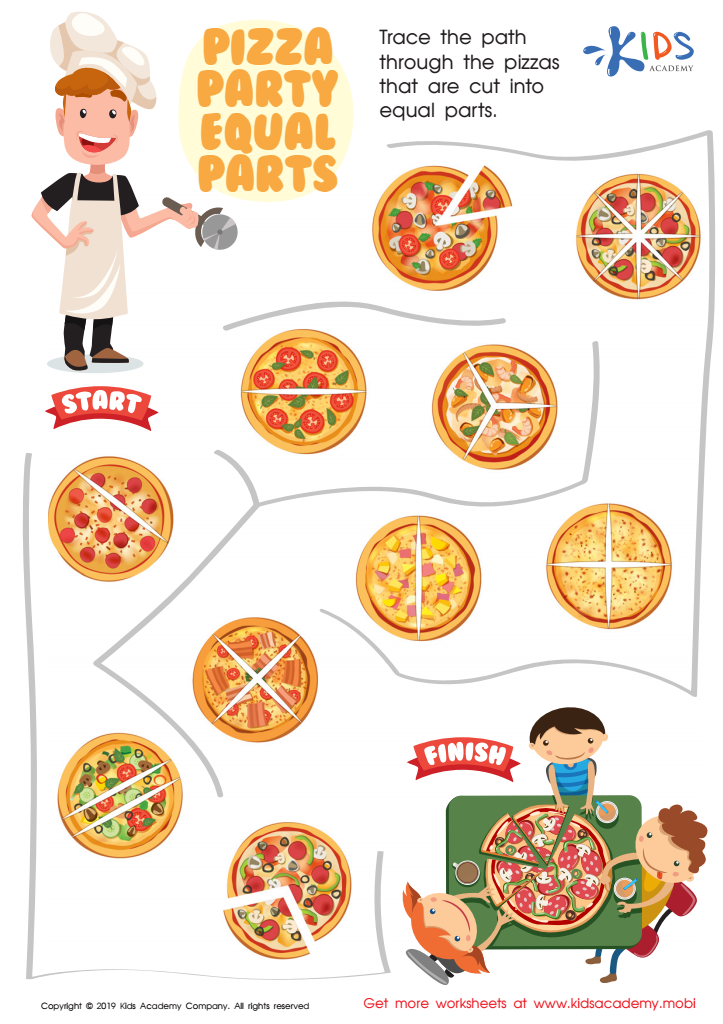
Pizza Party Equal Parts Worksheet
 Assign to My Students
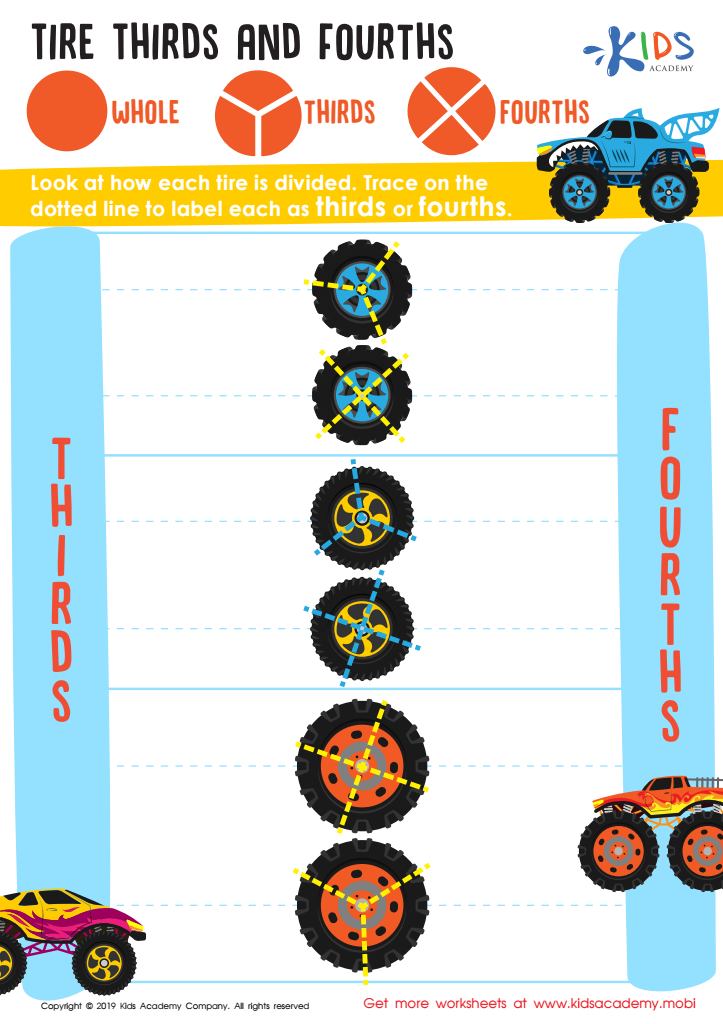
Tire Thirds and Fourths Worksheet
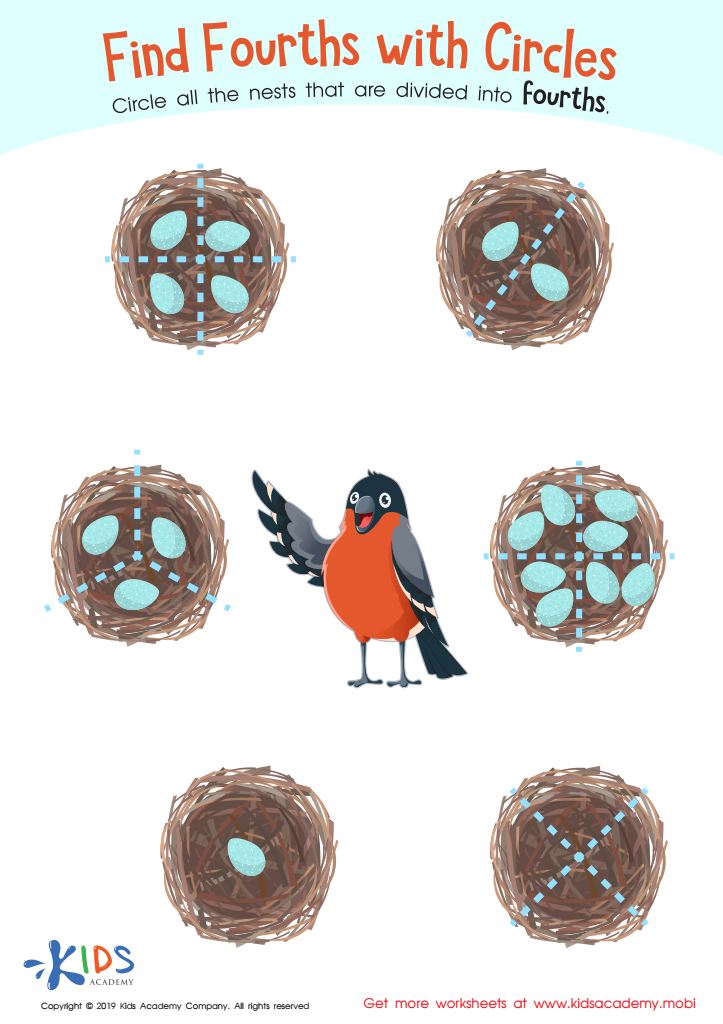
Find Fourths Circles Worksheet
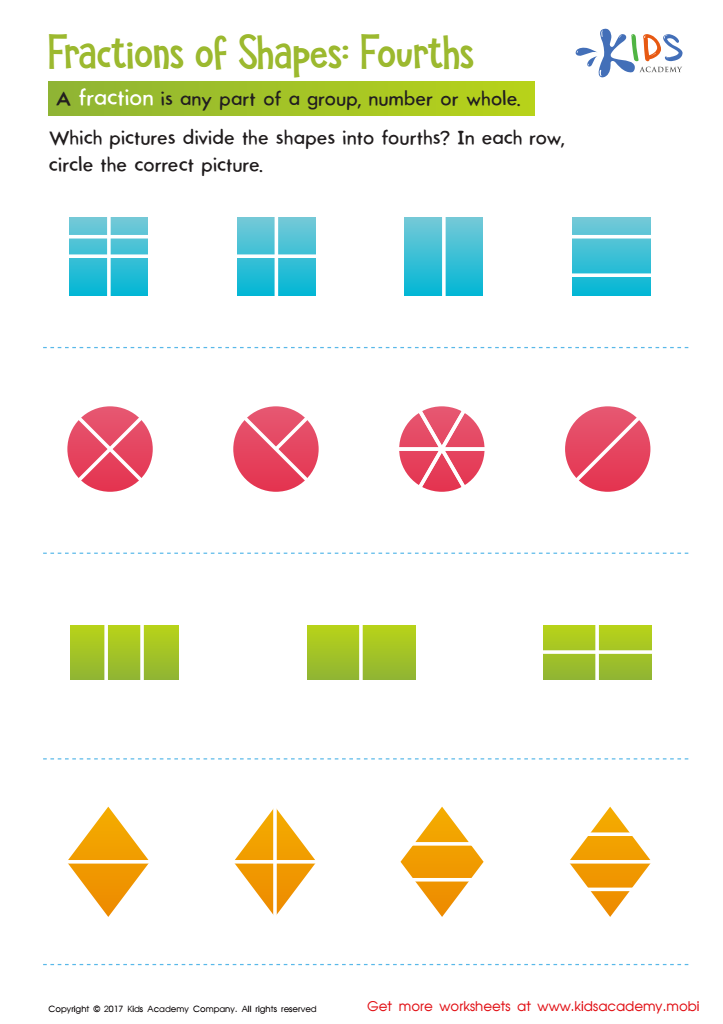
Fractions of Shapes Worksheet
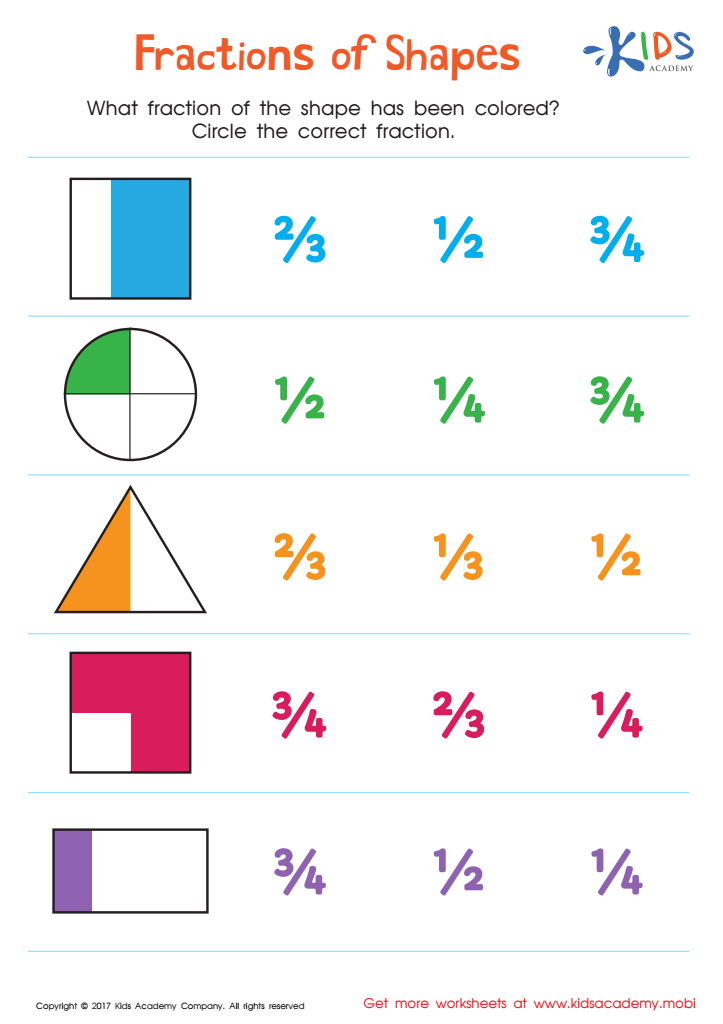
Fractions of Shapes: Math Concept Worksheet








Understanding fractions is essential for Grade 2 students as it lays the groundwork for future mathematical concepts and everyday decision-making. At this age, children begin to explore shapes and their properties in geometry, connecting to fractions when discussing parts of a whole. For instance, when learning about circles, they can relate the concept of a half (1/2) or a quarter (1/4) to slicing a pizza or dividing a cake. This hands-on experience makes learning more meaningful and tangible.
For parents and teachers, grasping the concept of fractions fosters critical thinking and problem-solving skills. By introducing basic fraction concepts, children learn to compare sizes, recognize equal parts, and understand relationships between numbers. These foundational skills not only enhance their mathematical reasoning but also build their confidence in tackling more advanced math topics in higher grades.
Additionally, understanding fractions encourages collaboration and communication. Group activities that involve dividing objects or sharing resources create valuable opportunities for students to articulate their thought processes and engage with their peers. Overall, when parents and teachers prioritize the understanding of fractions in Grade 2 geometry, they ensure a robust mathematical foundation that benefits students throughout their educational journey.