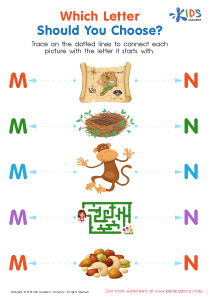
Alphabet sequencing Kindergarten Lowercase/Small Letters Worksheets
3 filtered results
Difficulty Level
Grade
Age
-
From - To
Subject
Activity
Standards
Enhance your child's alphabet skills with our Alphabet Sequencing Kindergarten Lowercase/Small Letters Worksheets! Tailored for young learners, these engaging worksheets help kids recognize, sequence, and write lowercase letters from a to z. Each page is designed to provide fun and effective practice, reinforcing vital reading and writing foundations. Perfect for classroom or at-home activities, these worksheets foster letter familiarity, cognitive development, and fine motor skills. Download and print now to support your kindergarteners' journey towards literacy and boost their confidence in mastering the alphabet! Ideal for parents, teachers, and caregivers alike.
Favorites
With answer key
Interactive
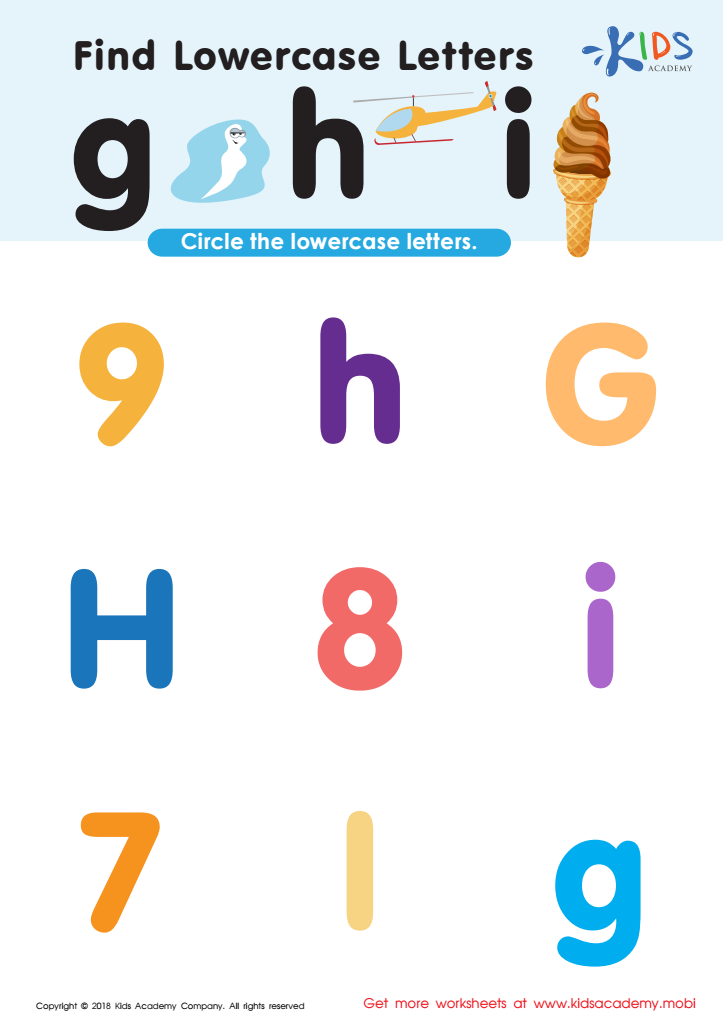
Find Lowercase Letters g h i Worksheet
Turn learning into a fun journey with your child! Use this free worksheet to find and circle the lowercase letters hidden amongst uppercase letters and numbers. Your child will understand what you're teaching them as they enjoy the search.
 Assign to My Students
Find Lowercase Letters g h i Worksheet
Worksheet
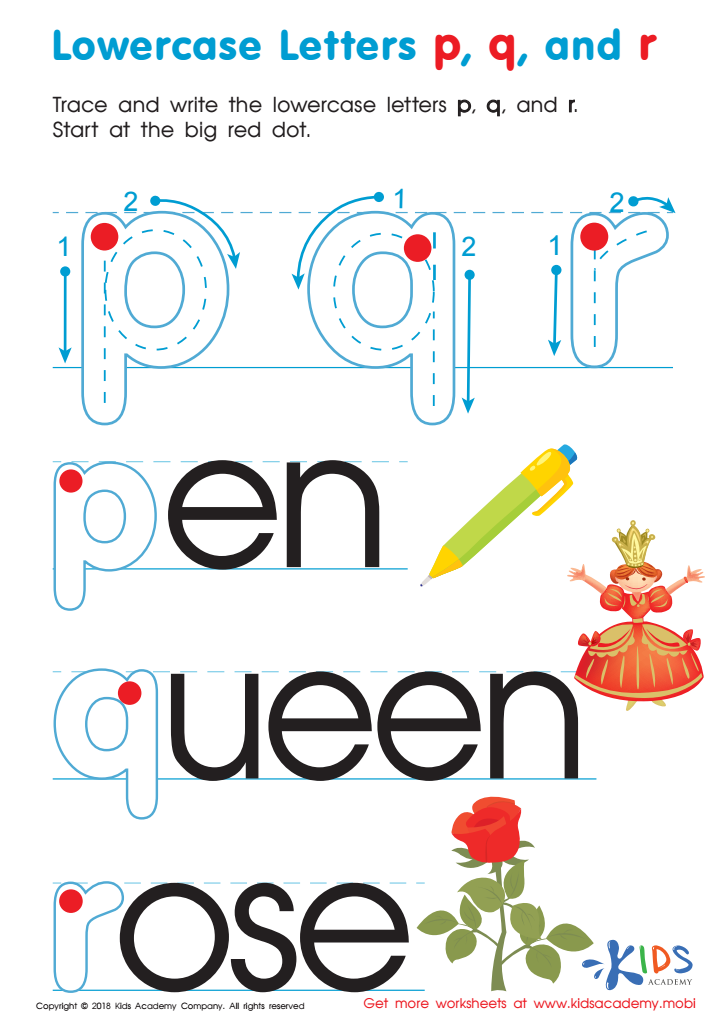
Lowercase Letters p q r Worksheet
Trace and write lowercase letters p, q and r with this fun worksheet. Each letter has a large red dot to mark the start, and dotted lines to follow with a pencil. Colorful images and text make it an enjoyable way to learn.
Lowercase Letters p q r Worksheet
Worksheet
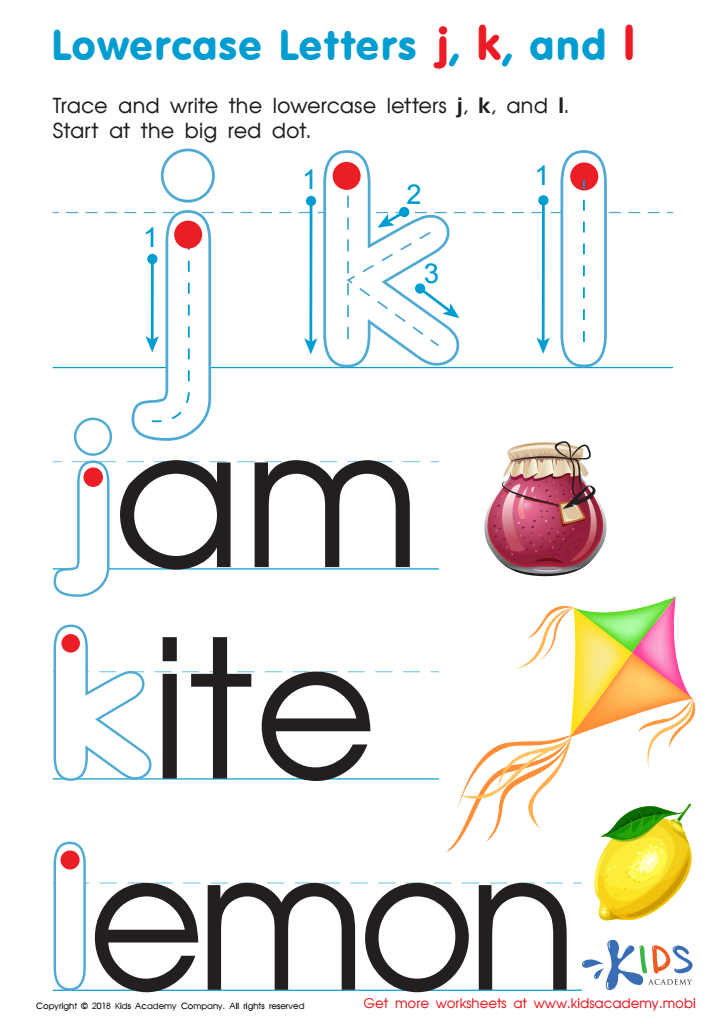
Lowercase Letters j k l Worksheet
Teach your child the difference between uppercase and lowercase letters. Have them trace and write the lowercase letters j, k, and l, starting at the red dot. Guide your child's hand to form the letters correctly.
Lowercase Letters j k l Worksheet
Worksheet
Join Kids Academy for Free
Who is primarily going to use this learning content?


Alphabet sequencing in lowercase letters is fundamental to early literacy development and offers many benefits for young learners. First, mastering the sequence of the alphabet helps children recognize and recall letters efficiently, which is crucial for reading and writing. Lowercase letters are used more frequently in text, so familiarity with them accelerates visual recognition when reading stories and books.
Second, understanding the alphabet sequence reinforces phonemic awareness—the ability to hear and manipulate sounds in words—which is key to decoding new words. This skill forms the basis for effective spelling and helps students link sounds to corresponding letters.
Practicing alphabet sequencing also fosters cognitive skills like memory and attention to detail. When children understand that ‘m’ comes after ‘l’ and ‘n’ follows, they develop a sense of order and sequence, skills that are vital for broader learning processes.
Additionally, embedding alphabet practice in engaging activities—such as songs, puzzles, or interactive games—makes learning enjoyable and supports social skills as children often work together in these exercises. By caring about alphabet sequencing, parents and teachers lay a strong literacy foundation, boosting a child's confidence and enthusiasm for learning—a gift that lasts a lifetime.