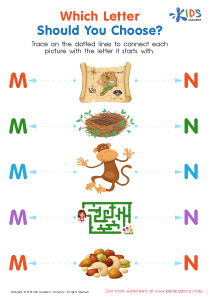
Handwriting practice Kindergarten Lowercase/Small Letters Worksheets
8 filtered results
Difficulty Level
Grade
Age
-
From - To
Subject
Activity
Standards
Discover our engaging "Handwriting Practice Kindergarten: Lowercase/Small Letters Worksheets," designed to help young learners master the art of writing. These imaginative, easy-to-follow worksheets guide children in practicing each lowercase letter of the alphabet, sharpening their fine motor skills, and ensuring correct letter formation. Combining fun activities with valuable learning experiences, our worksheets make handwriting enjoyable for kindergartners. Perfect for classrooms and home practice, these resources provide structured support to ensure children build a strong foundation in writing from the start. Encourage your child's handwriting journey today with our high-quality, educational worksheets tailored for young minds.
Favorites
With answer key
Interactive
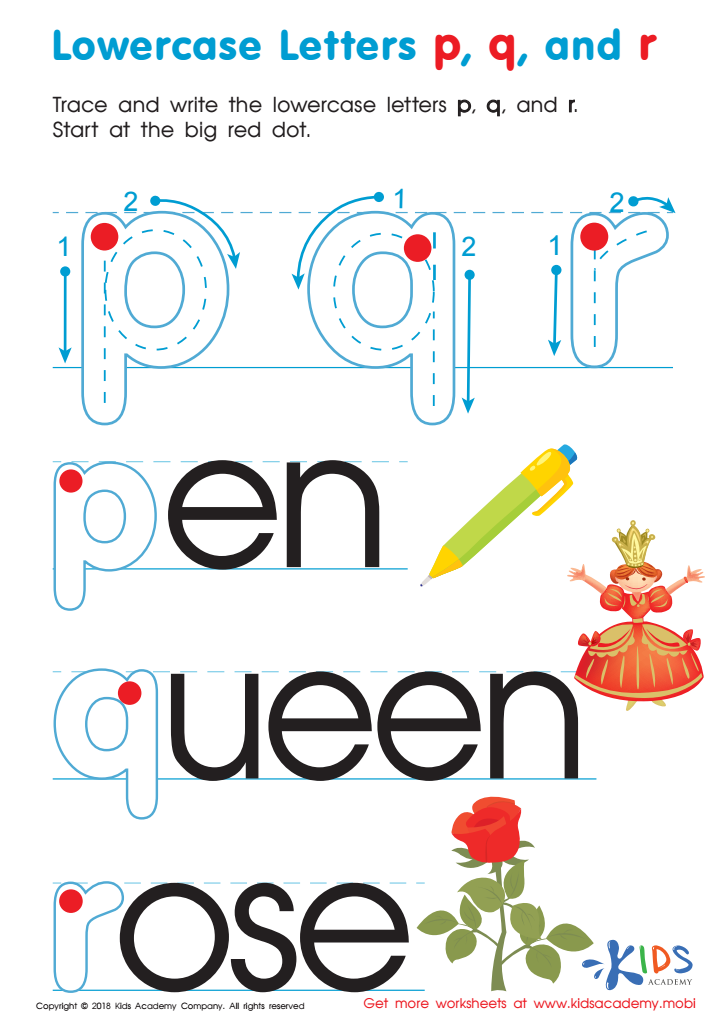
Lowercase Letters p q r Worksheet
Trace and write lowercase letters p, q and r with this fun worksheet. Each letter has a large red dot to mark the start, and dotted lines to follow with a pencil. Colorful images and text make it an enjoyable way to learn.
 Assign to My Students
Lowercase Letters p q r Worksheet
Worksheet
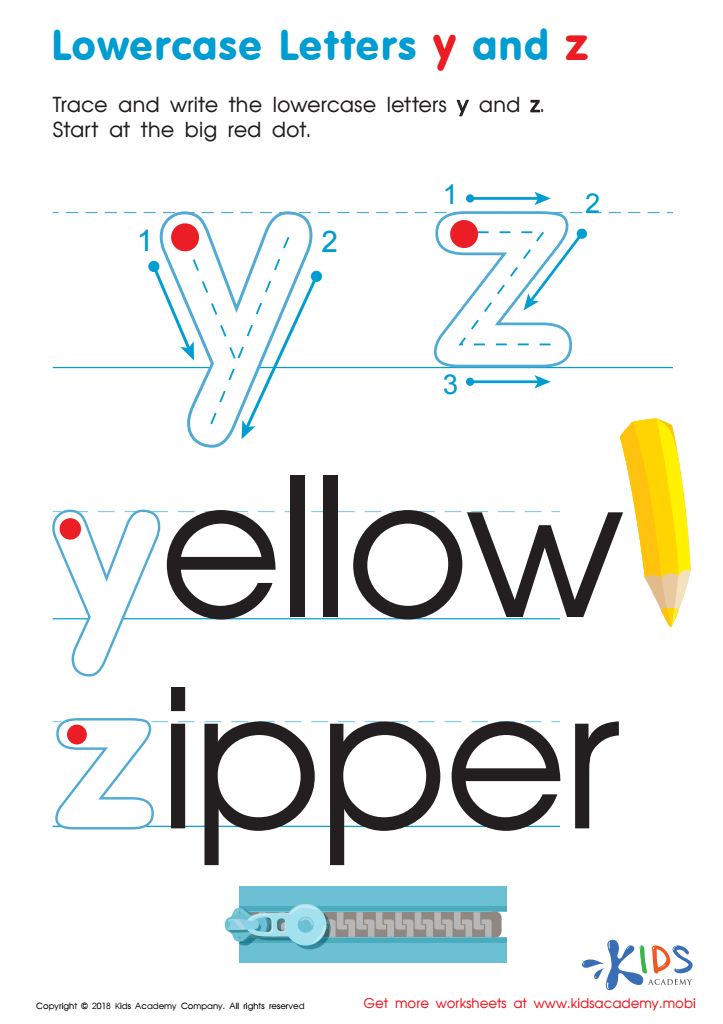
Lowercase Letters y z Worksheet
Help your child get a good start in writing and reading by tracing and writing the lowercase letters y and z. With this activity, they will learn the alphabet, which is essential for literacy success. Guide them through the worksheet and make sure they form the letters correctly. This will help them learn the basics needed to write and read fluently.
Lowercase Letters y z Worksheet
Worksheet
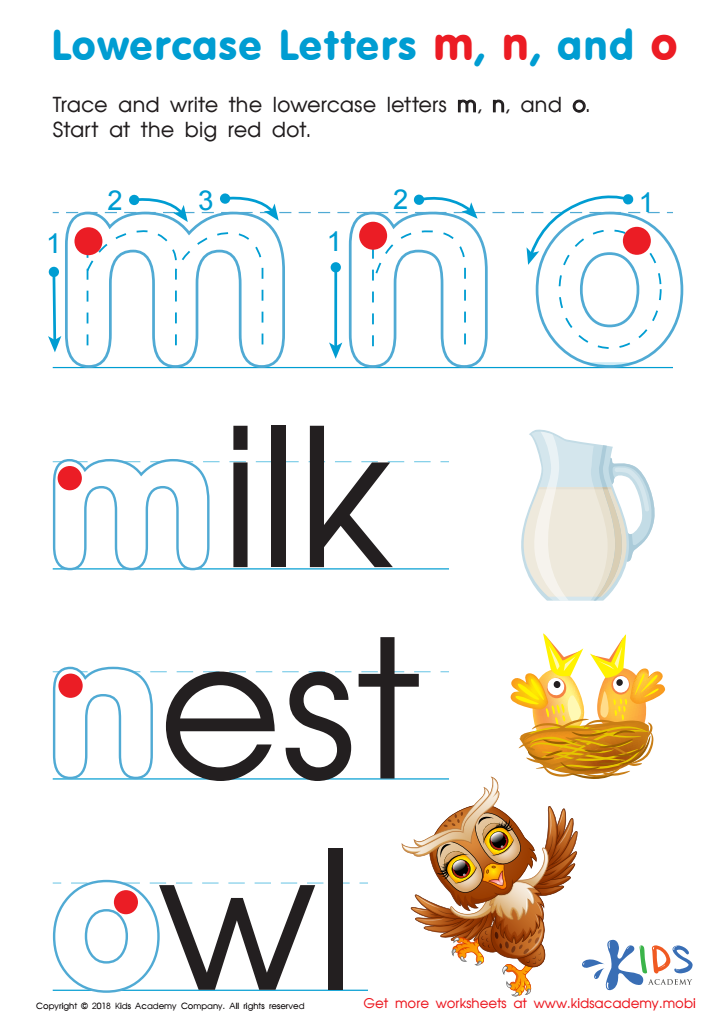
Lowercase Letters m n o Worksheet
Help your child learn the alphabet with letter tracing. Show them the difference between uppercase and lowercase letters by working through this free worksheet, tracing and writing lowercase m, n and o.
Lowercase Letters m n o Worksheet
Worksheet
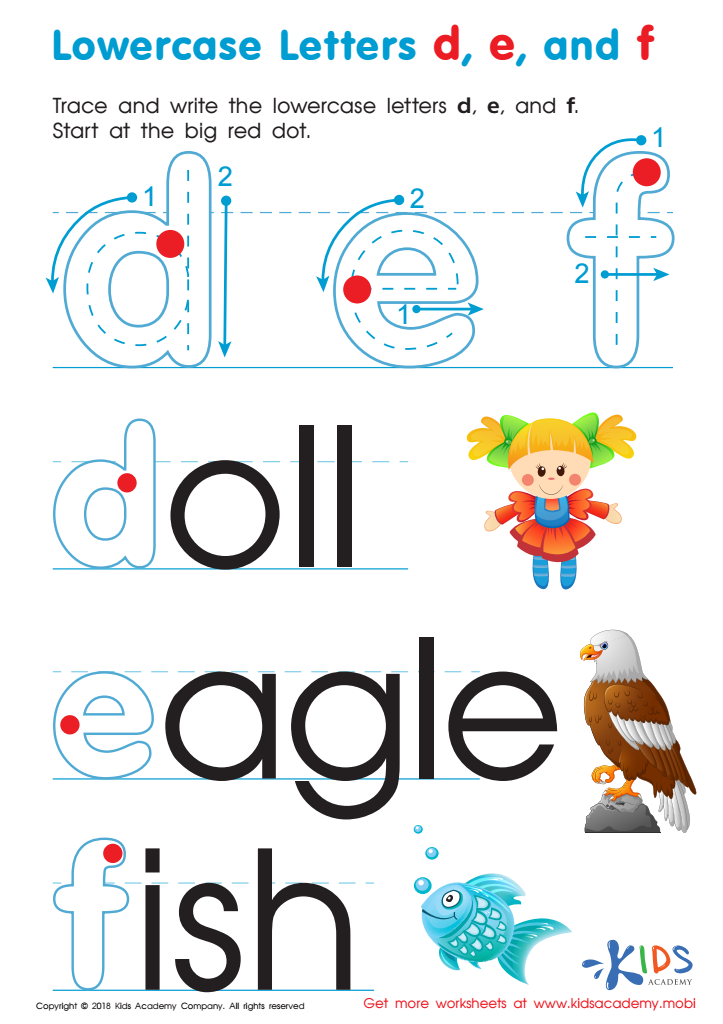
Lowercase Letters d e f Worksheet
Help your child learn the alphabet letters by tracing and writing the lowercase letters d, e, and f. Begin at the big red dot and follow the dots. This worksheet will help your little one gain a better understanding of the letters.
Lowercase Letters d e f Worksheet
Worksheet
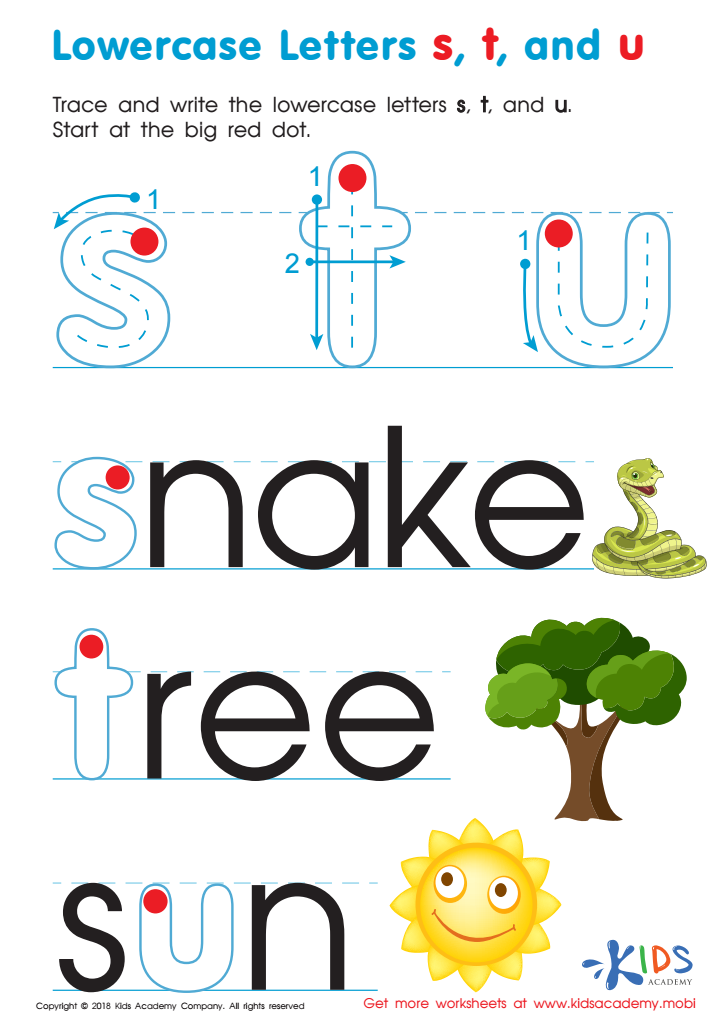
Lowercase Letters s t u Worksheet
Help your child trace lowercase letters s, t and u. Ask questions like: "What word starts with 's'? What about 't' and 'u'? Point out the snake, tree and sun pictures. Start tracing from the big red dot.
Lowercase Letters s t u Worksheet
Worksheet
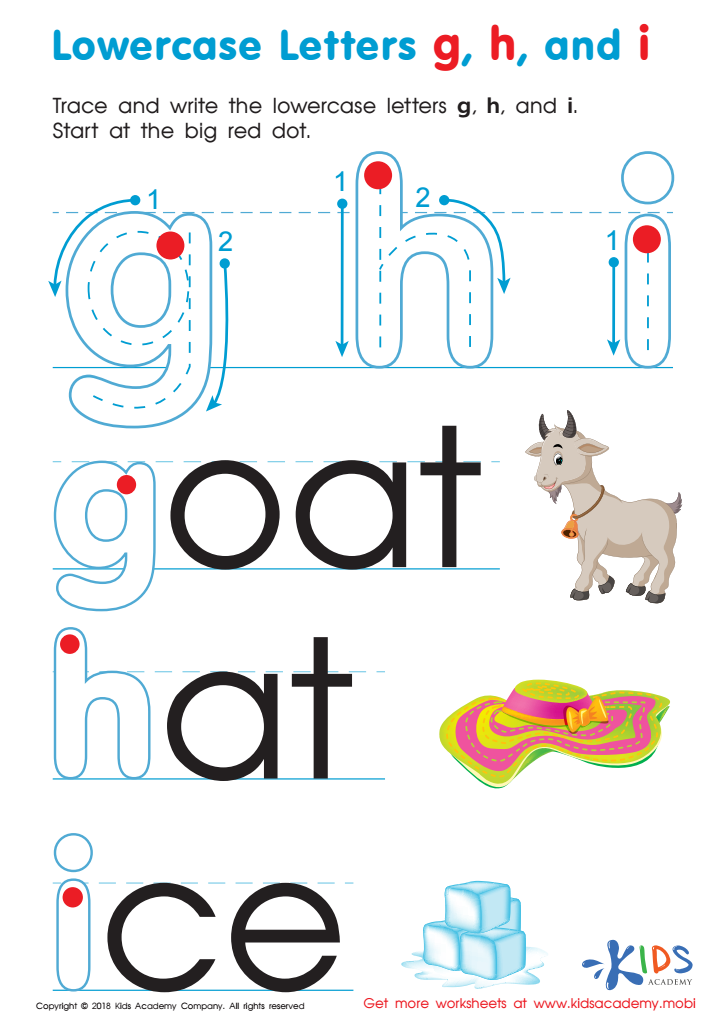
Lowercase Letters g h i Worksheet
Learning is fun for your youngster with color and an enjoyable exercise. Help them build their understanding of the alphabet by starting at the big red dot drawn on each letter and carefully following the dotted lines to draw g, h, and i.
Lowercase Letters g h i Worksheet
Worksheet
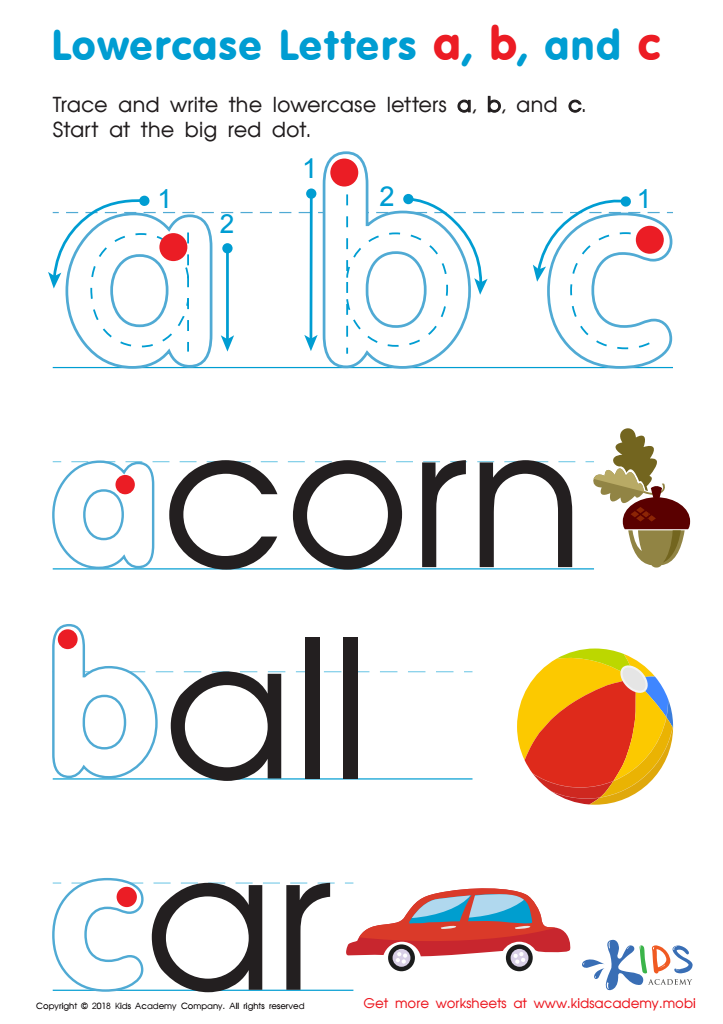
Lowercase Letters a b c Worksheet
Help your child trace and write the lowercase letters of the alphabet with this fun worksheet. Start by following the arrows and directions from the red dot, and watch them improve their writing skills! Vibrant illustrations make it easy and enjoyable.
Lowercase Letters a b c Worksheet
Worksheet
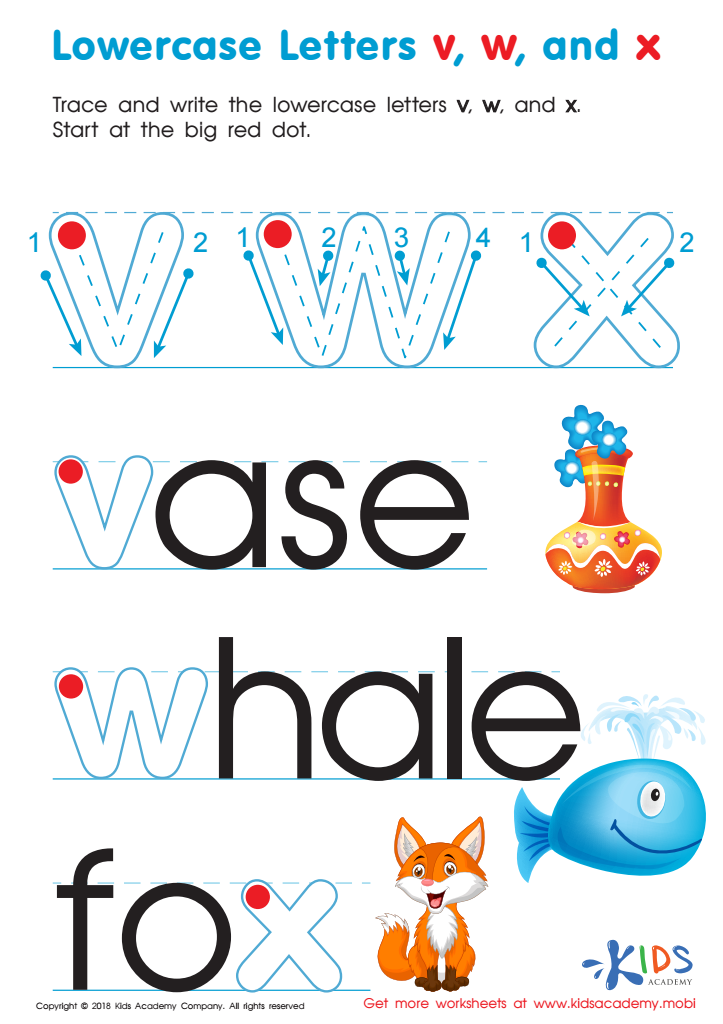
Lowercase Letters v w x Worksheet
Help your child learn to write lowercase letters v, w, and x, starting at the big red dot. This activity will help them develop writing skills and correctly identify the letters. Guide them as they trace the letters and enjoy watching them improve!
Lowercase Letters v w x Worksheet
Worksheet
Join Kids Academy for Free
Who is primarily going to use this learning content?


Parents and teachers should prioritize handwriting practice in kindergarten, especially for lowercase letters, to build a foundation for children's overall literacy and fine motor skills. At this formative stage, mastering the art of writing lowercase letters is crucial for several reasons.
First, proper handwriting practice helps in developing fine motor skills. These involve coordinated hand and finger movements essential for tasks such as buttoning clothes or using utensils. As children practice forming letters, they enhance their dexterity and hand-eye coordination.
Secondly, familiarity with lowercase letters is vital because most written text is composed predominantly of these letters. Recognizing and writing them fluently can lead to better reading skills, as children can quickly match sounds with corresponding letters, enhancing their decoding and fluency abilities.
Additionally, quality handwriting practice encourages good writing habits. Early intervention ensures children learn the correct way to form each letter, fostering a legible and comfortable writing style. This paves the way for efficient writing in the future, reducing potentially stressful corrections needed later.
Lastly, consistent practice promotes concentration and patience. Completing writing tasks helps children focus on detailed work, wetting the ground for academic disciplines and fostering a sense of achievement and self-confidence.
Therefore, prioritizing handwriting practice in kindergarten builds the early literacy and skill set necessary for children's continued academic success.