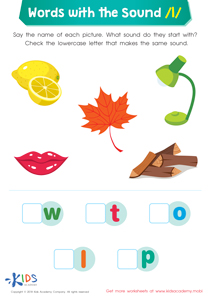
Alphabet familiarity Kindergarten Uppercase Letters Worksheets
4 filtered results
-
From - To
Enhance your child's learning with our engaging Alphabet Familiarity Kindergarten Uppercase Letters Worksheets! Specifically designed for young learners, these worksheets focus on recognizing and mastering uppercase letters through fun activities. Each worksheet offers a variety of exercises, including tracing, matching, and coloring, all aimed at reinforcing letter recognition fundamental to early literacy skills. These engaging and interactive activities not only make learning enjoyable but also foster confidence as children become familiar with the alphabet. Perfect for classroom or home use, these worksheets provide an effective way for preschoolers and kindergartners to dive into the exciting world of letters. Start your learning journey today!
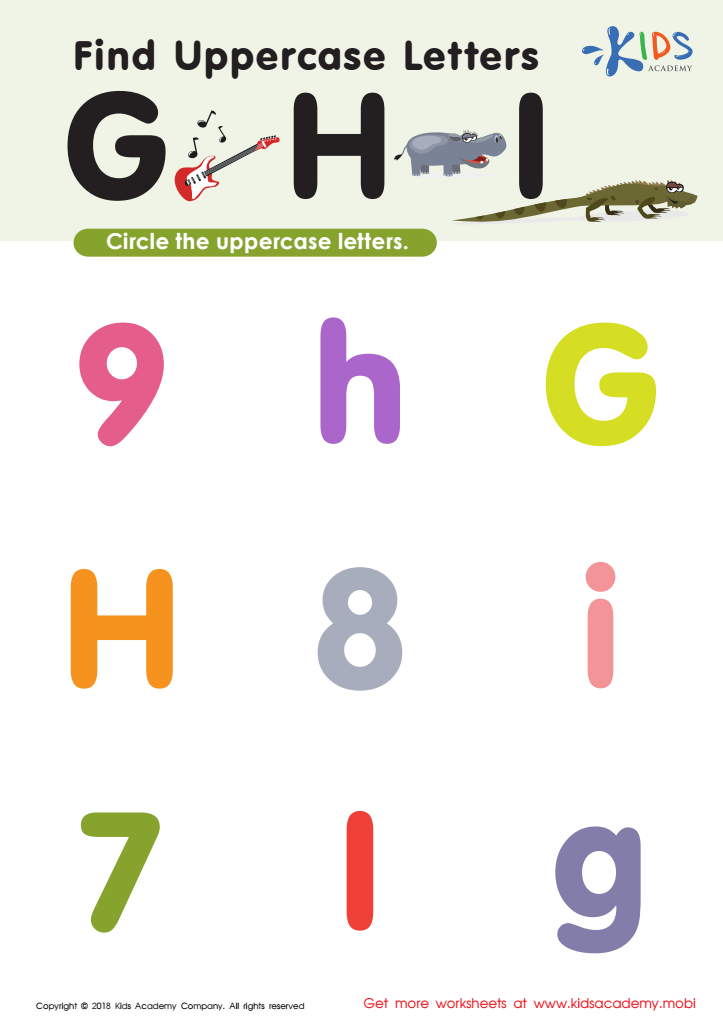
Find Uppercase Letters G, H, and I Worksheet
 Assign to My Students
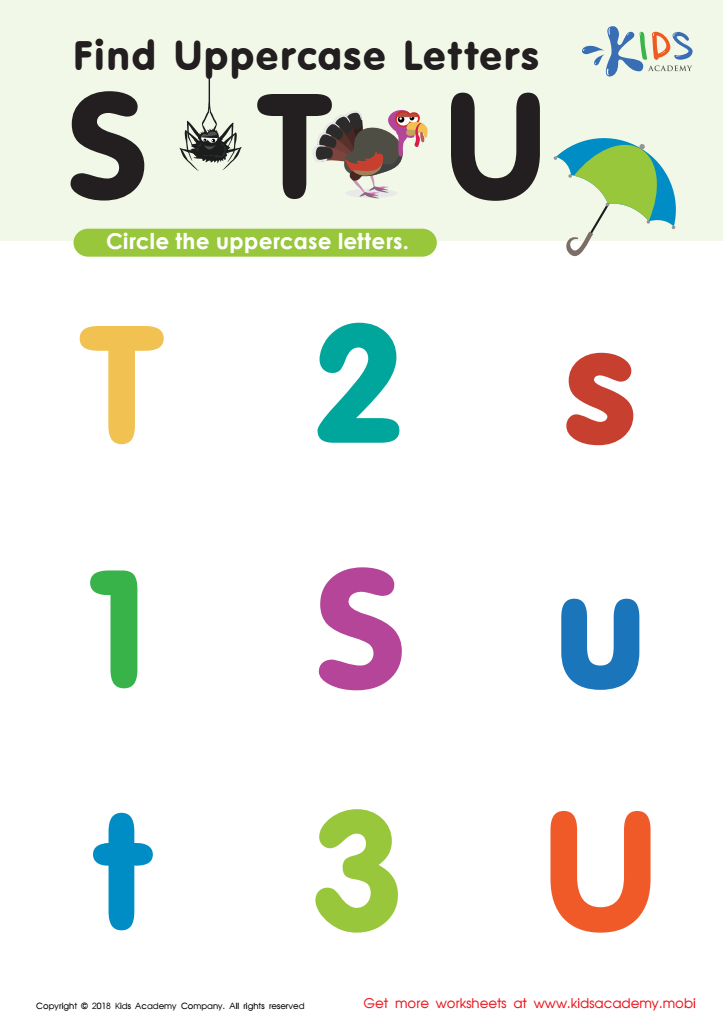
Find Uppercase Letters Worksheet
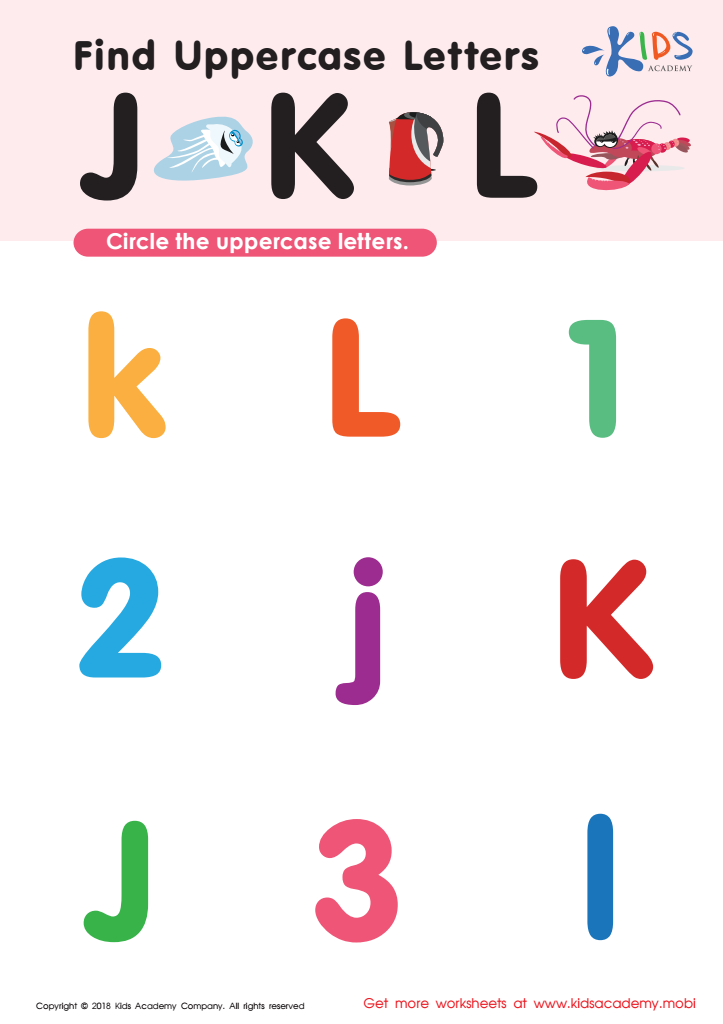
Find Uppercase Letters J, K, and L Worksheet

Find Uppercase Letters A, B, and C Worksheet






Familiarity with uppercase letters is crucial for kindergarten children as it lays the foundation for essential literacy skills. Recognizing and distinguishing uppercase letters helps children in their initial reading and writing endeavors. These letters are often the first they encounter in print, as many books, signs, and digital content prominently feature uppercase forms.
When parents and teachers prioritize alphabet familiarity, they enhance children's phonemic awareness, enabling them to connect sounds with letters. This skill is vital for developing strong reading abilities as it leads to better decoding skills; children learn to sound out words and recognize them in their entirety.
Additionally, learning uppercase letters fosters academic confidence. When children can easily identify and write these letters, they feel more at ease in learning environments. This familiarity contributes to their overall cognitive development and prepares them for future academic challenges.
Moreover, consistent practice with uppercase letters in engaging ways—through games, songs, or creative activities—encourages a love of learning. Ultimately, well-grounded literacy skills not only benefit children academically but also enrich their communication abilities, paving the way for lifelong learning and successful social interaction. Thus, prioritizing uppercase letter familiarity is a vital step in supporting early childhood education.