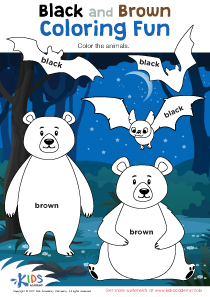
Sound Association Kindergarten English for Beginners Worksheets
5 filtered results
Difficulty Level
Grade
Age
-
From - To
Subject
Activity
Standards
Sound Association Kindergarten English for Beginners Worksheets are designed to help young learners build phonetic skills through fun and engaging activities. These printable worksheets focus on connecting sounds to letters, enhancing early reading abilities. Perfect for ESL students, the materials encourage sound recognition and word association, fostering a solid foundation in English. Brightly illustrated and thoughtfully curated, these exercises aim to make learning exciting and effective. Whether at home or in the classroom, these worksheets are an essential resource for developing auditory discrimination and phonemic awareness, setting kids on the path to successful language acquisition.
Favorites
With answer key
Interactive
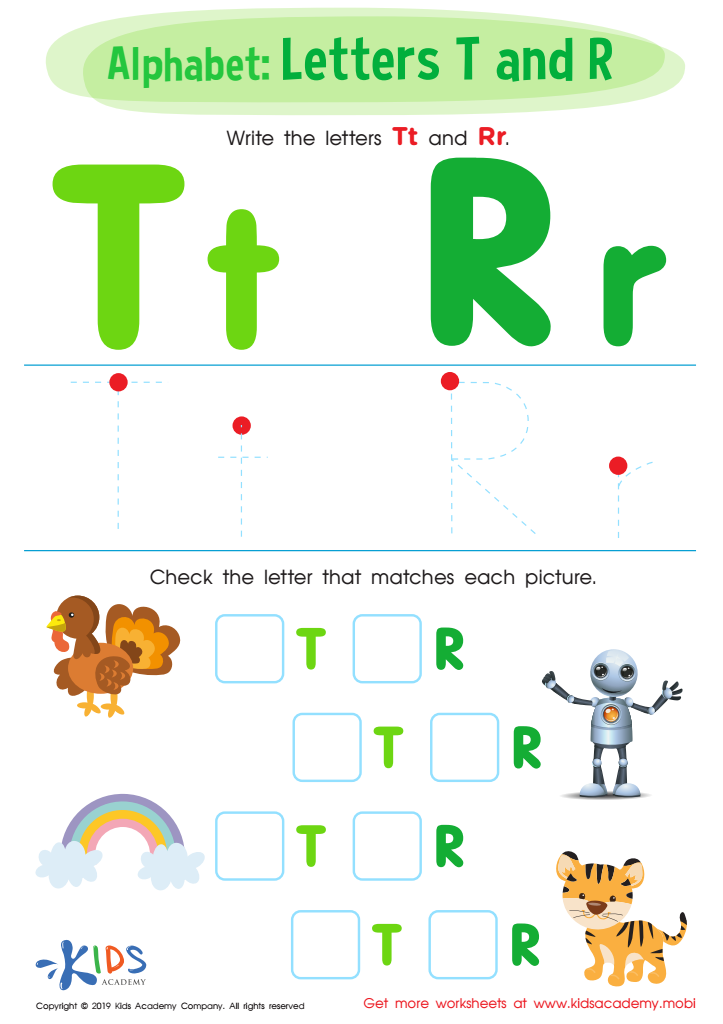
Letters T and R Worksheet
Is your kid bored with basic letter learning? Try this Letters T & R traceable sheet! It combines tracing and picture matching to help solidify fundamental skills. Your child will gain a better understanding and have fun at the same time.
Letters T and R Worksheet
Worksheet
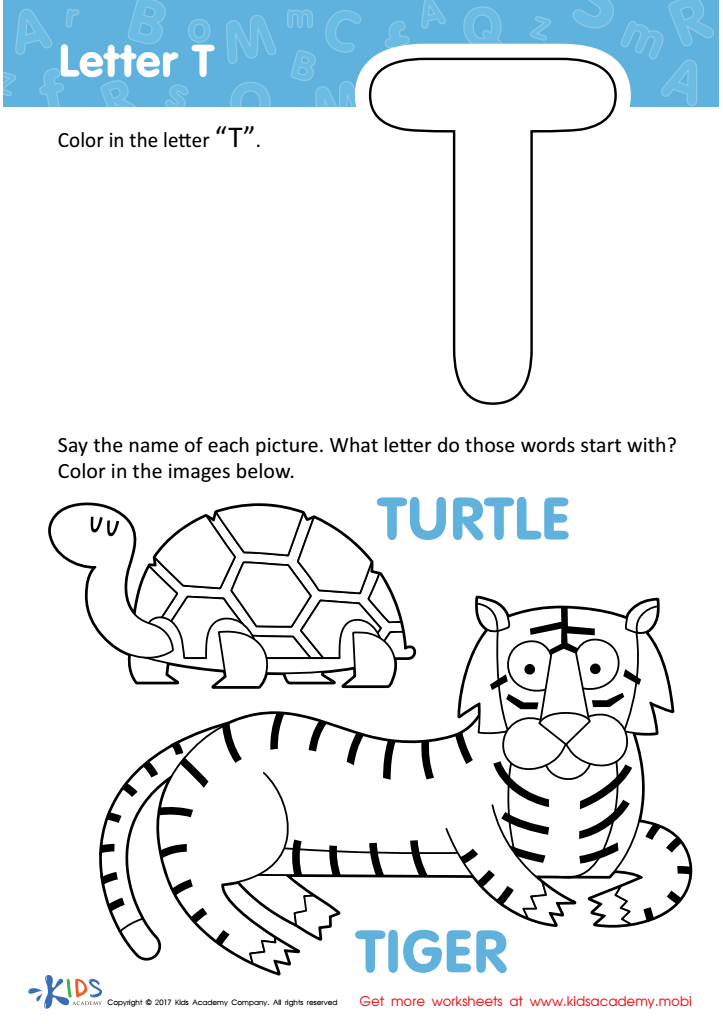
Letter T Coloring Sheet
Introduce your child to the letter "T" and its animals – turtles and tigers! With this coloring page, you can stimulate your child's imagination and creativity, while helping them recognize the letter "T". Have fun with your child and get coloring!
Download (PDF)
 Assign to My Students
Assign to My Students
Letter T Coloring Sheet
Worksheet
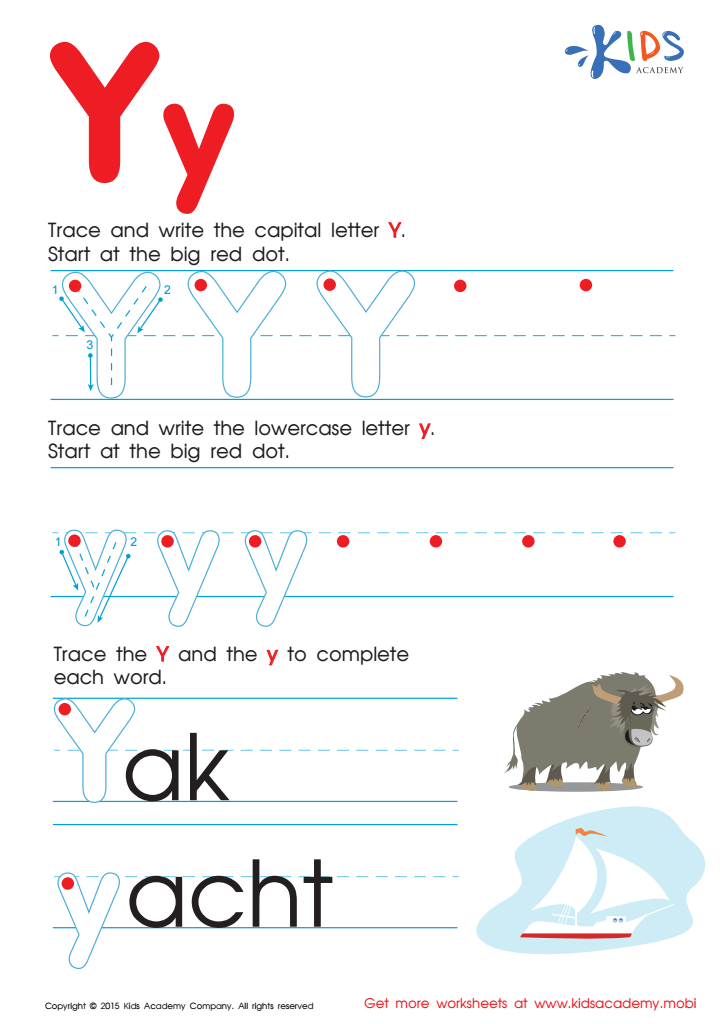
Letter Y Tracing Page
Trace the capital letter "Y" on the red dot, then trace and write the lowercase letter. Complete the words to help the Yak walk and the yacht swim. More worksheets at Kids Academy.
Letter Y Tracing Page
Worksheet
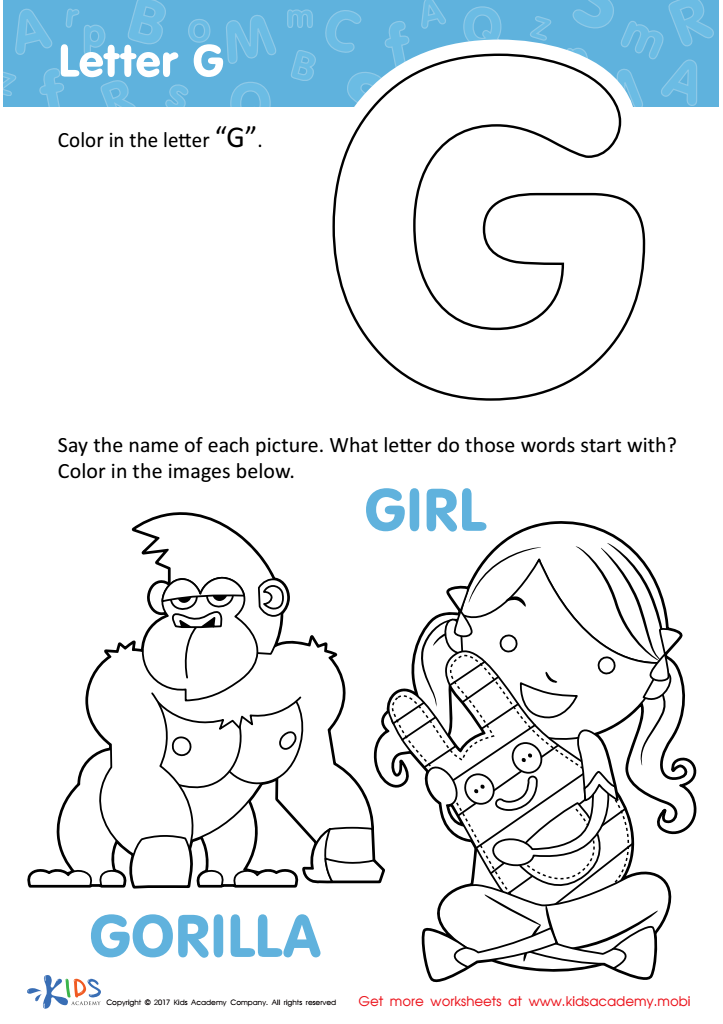
Letter G Coloring Sheet
This "G" coloring page encourages creativity and teaches kids the letter "G" sound. With its fun visuals and familiar words, it's sure to excite your child. Plus, you can talk about the letter’s sound with the pictures given.
Download (PDF)
Assign to My Students
Assign to My Students
Letter G Coloring Sheet
Worksheet
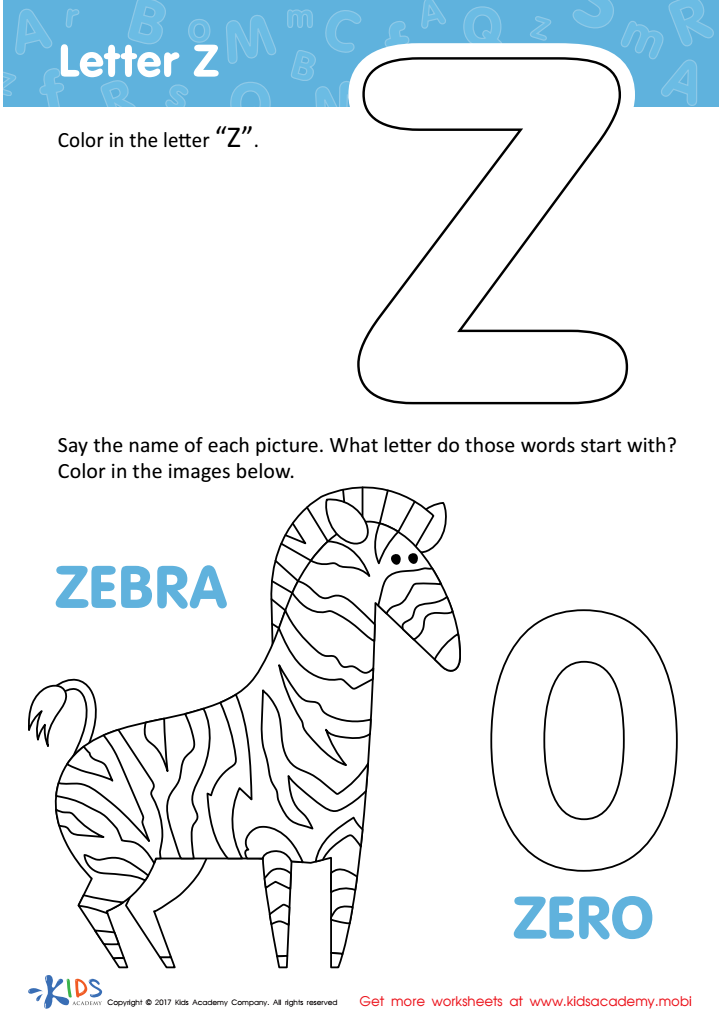
Letter Z Coloring Sheet
This coloring page featuring the letter "Z" is perfect for your child to practice letter recognition! Help them learn the unique sound it makes as they color. It'll be a fun and easy activity they won't have trouble with!
Download (PDF)
Assign to My Students
Assign to My Students
Letter Z Coloring Sheet
Worksheet
Join Kids Academy for Free
Who is primarily going to use this learning content?



Sound association in kindergarten English is crucial for young learners' linguistic and cognitive development. As parents and teachers, fostering this foundation ensures that children grasp the basic principles of language, which is vital for their academic success and effective communication.
Firstly, associating sounds with letters enables children to decode words, enhancing their reading skills significantly. When children understand that letters represent specific sounds, they can blend these to form and recognize words, boosting their reading confidence and fluency.
Secondly, sound association aids in spelling and writing development. By comprehending the relationship between sounds and letters, children can better predict how words are constructed, improving both their spelling accuracy and ability to write phonetically.
Moreover, these skills are directly linked to social development. Effective communication abilities foster smoother interactions with peers and adults, aiding in building relationships and reducing misunderstandings.
Additionally, early exposure to sound association influences future academic performance positively. A strong groundwork in phonics is commonly linked to proficiency in more complex language arts skills and other subjects where reading comprehension is essential, including math and science.
In essence, prioritizing sound association in kindergarten sets the stage for lifelong literacy, making it a fundamental concern for both parents and teachers dedicated to their children’s holistic development.