Addition skills Kindergarten Worksheets - Page 2
29 filtered results
-
From - To
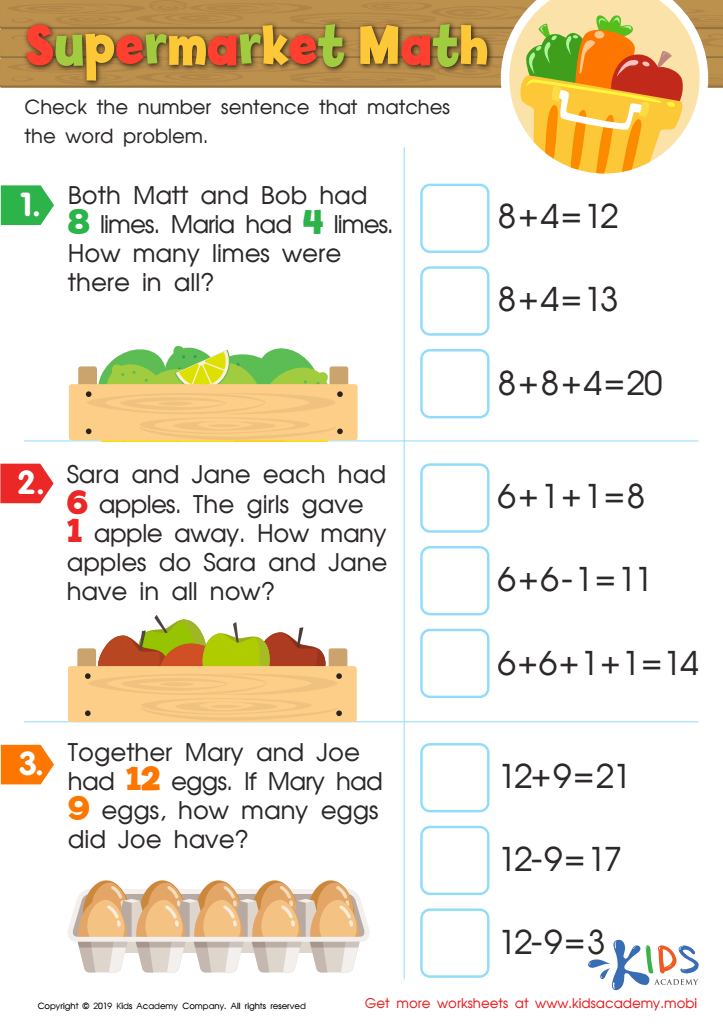
Supermarket Math Worksheet
 Assign to My Students
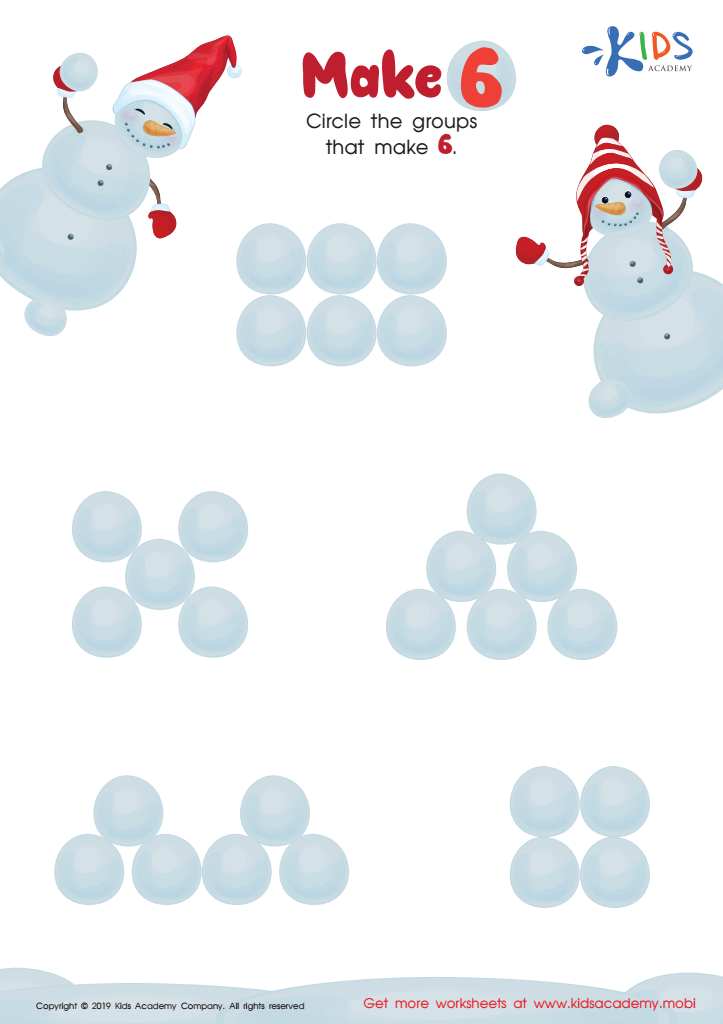
Make 6 Worksheet
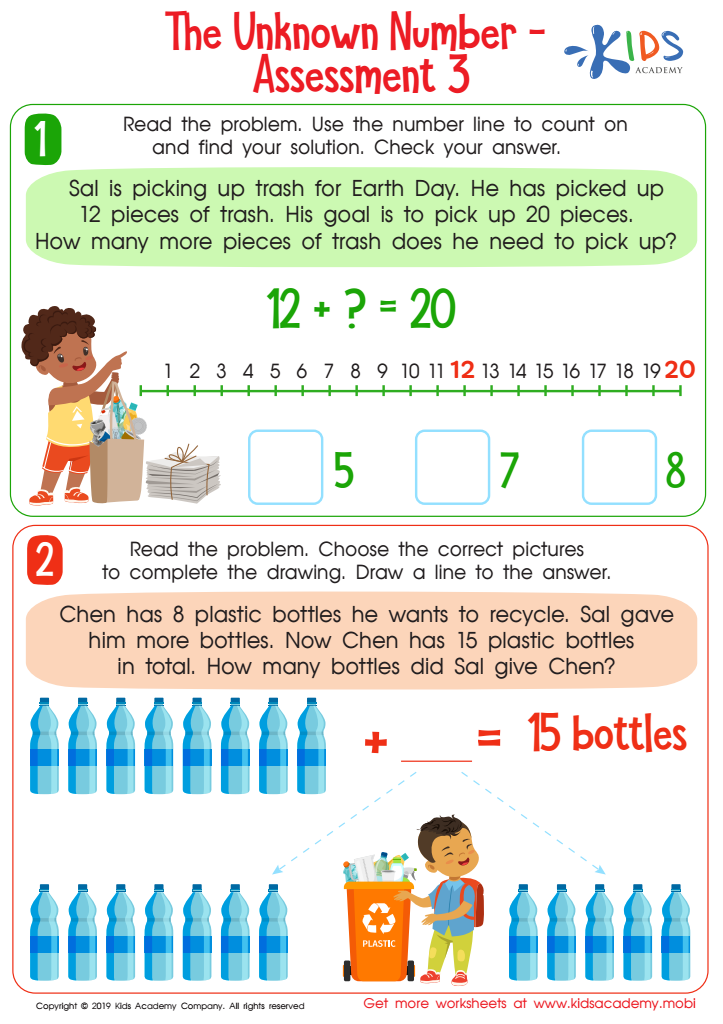
The Unknown Number - Assessment 3 Worksheet
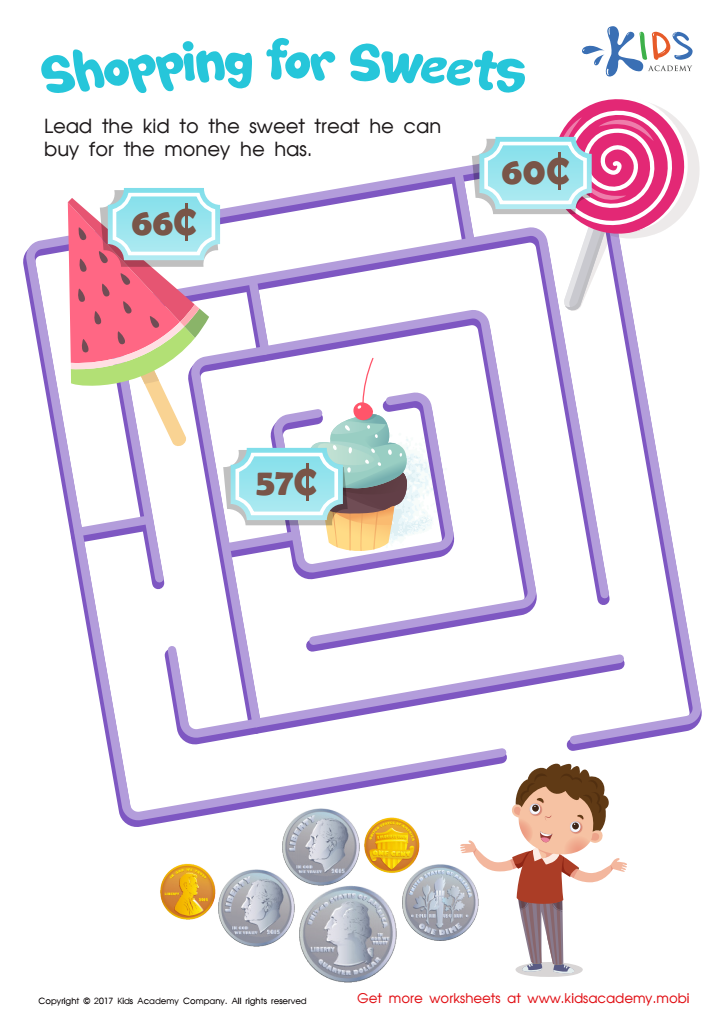
Shopping for Sweets Worksheet







Developing addition skills in kindergarten is crucial for laying the foundation for future mathematical success. At this age, children are in a critical period of cognitive development, and understanding basic arithmetic promotes logical thinking and problem-solving abilities. Early proficiency in addition helps children build confidence in their math skills, which can foster a positive attitude towards learning and education in general.
When parents and teachers prioritize teaching addition, they're not merely focusing on numbers but also enhancing crucial skills such as memory, attention, and perseverance. Counting and adding objects encourage students to visualize numbers and understand quantity, making abstract concepts more concrete. This hands-on experience is particularly important for young learners who benefit from concrete representations of mathematical ideas.
Additionally, math skills are interconnected with other areas of learning, such as reading and writing. Practicing addition can also strengthen a child's language and comprehension skills as they learn to follow instructions and communicate their thinking process. Furthermore, early math skills are predictive of later academic achievement, not only in mathematics but across disciplines.
Investing time and energy into teaching addition in kindergarten sets children on a path for academic success, ensuring they are well-prepared for increasingly complex mathematical challenges in higher grades and real-life problem-solving situations. Thus, parents and teachers play a crucial role in this early stage of educational development.








