Animal Classification Kindergarten Worksheets
4 filtered results
-
From - To
Introduce your little learners to the amazing world of animals with our Animal Classification Kindergarten Worksheets! Perfect for young minds, these engaging and educational printables will help your kindergartners understand the basics of animal classification while having fun. With bright images, simple exercises, and clear instructions, these worksheets are designed to cultivate curiosity and reinforce foundational skills in sorting, shape recognition, and categorizing animals. Your children will learn to differentiate between mammals, birds, reptiles, fish, insects, and more. Spark a lifelong love for science and nature by exploring our expertly crafted resources at Kids Academy.
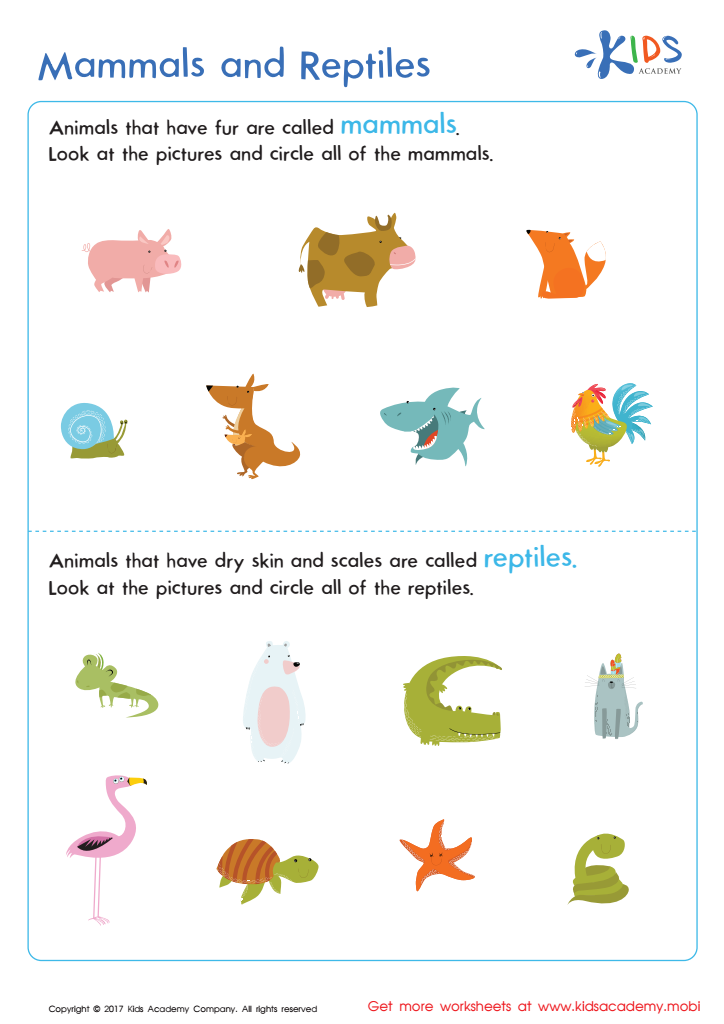
Mammals and Reptiles Worksheet
 Assign to My Students
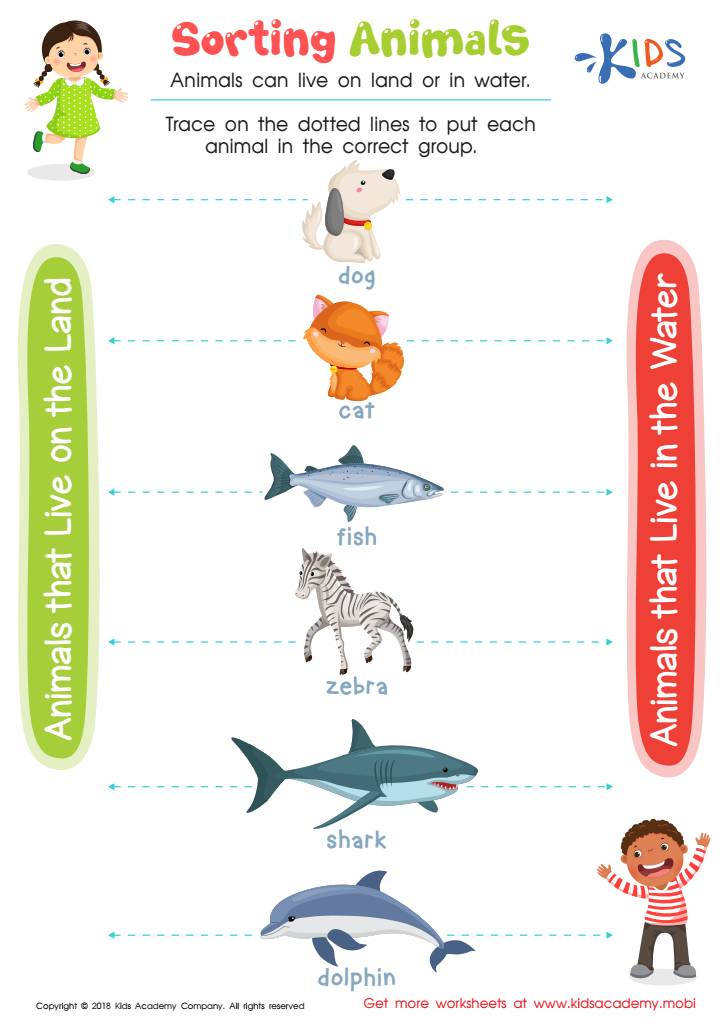
Sorting Animals Worksheet
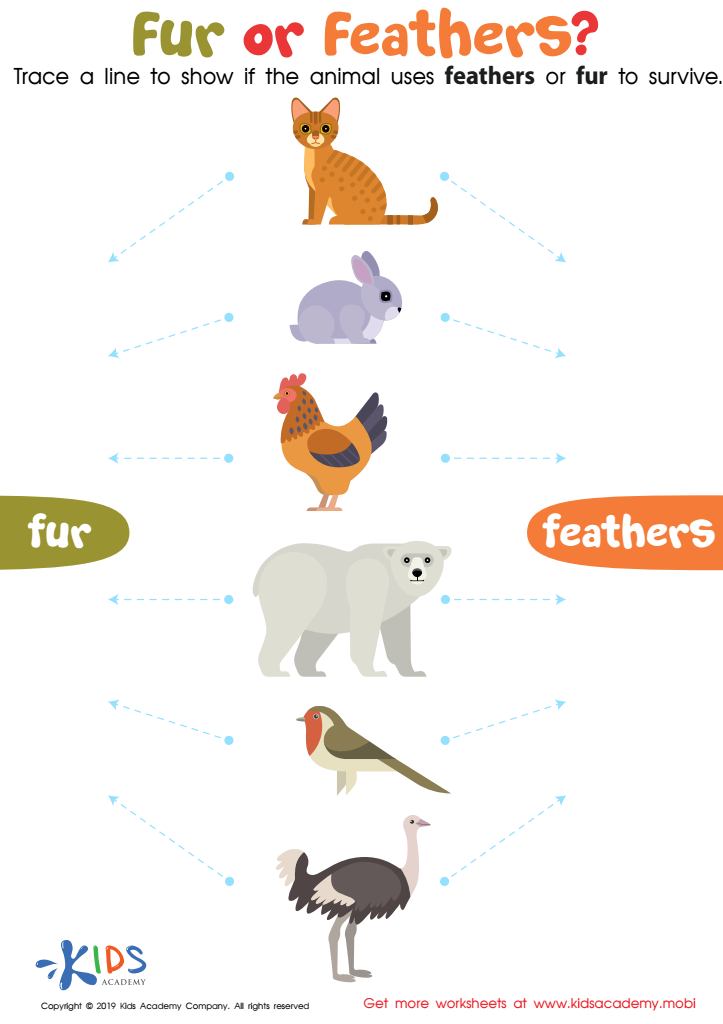
Fur or Feathers? Worksheet
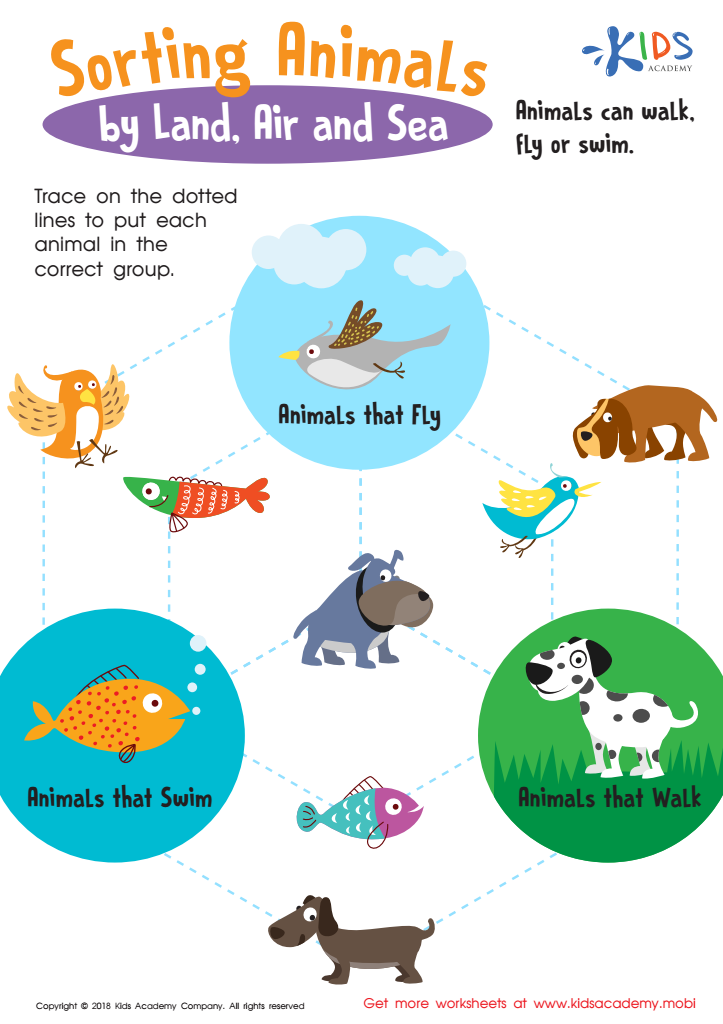
Sorting Animals by Land, Air and Sea Worksheet







Animal classification lessons in kindergarten play a vital role in early childhood development and education, offering various benefits that both parents and teachers should consider.
Firstly, introducing young children to animal classification nurtures their curiosity about the natural world. This foundational knowledge helps them recognize patterns, make observations, and build reasoning skills, fostering a connection with nature and a sense of environmental stewardship.
Secondly, understanding the basics of animal classification aids cognitive development by encouraging critical thinking. Differentiating animals based on characteristics like size, habitat, and dietary habits enhances children's ability to categorize and compare, which are essential cognitive skills used in various learning areas throughout their lives.
Thirdly, social and emotional learning is also intertwined with these lessons. Working in groups to explore and discuss animals promotes collaboration, communication, and sharing among peers. Children learn empathy and respect for different creatures, fostering kindness and responsible behavior.
Lastly, animal classification integrates well into interdisciplinary exploration, reinforcing literacy, terminology, and language skills by introducing new vocabulary. It also lays a preliminary foundation for scientific education, planting the seeds for a lifelong interest in science, technology, engineering, and mathematics (STEM).
Therefore, parents and teachers should care about animal classification in kindergarten because it provides fundamental skills and values, enhancing overall personal and academic growth in young learners.








