
Data interpretation Kindergarten Worksheets
3 filtered results
Difficulty Level
Grade
Age
-
From - To
Subject
Activity
Standards
Discover our engaging Data Interpretation Kindergarten Worksheets designed to spark curiosity and develop essential analytical skills in young learners. These worksheets provide a fun and interactive way for children to explore basic concepts of data interpretation through colorful charts, graphs, and relatable examples. Kids will practice categorizing objects, comparing quantities, and identifying patterns, all while enhancing their critical thinking and reasoning abilities. Perfect for classroom or home use, our printable resources align with early learning standards and encourage students to visualize information effectively. Download our worksheets today and provide your kindergarteners with the tools they need to confidently interpret data!
Favorites
With answer key
Interactive
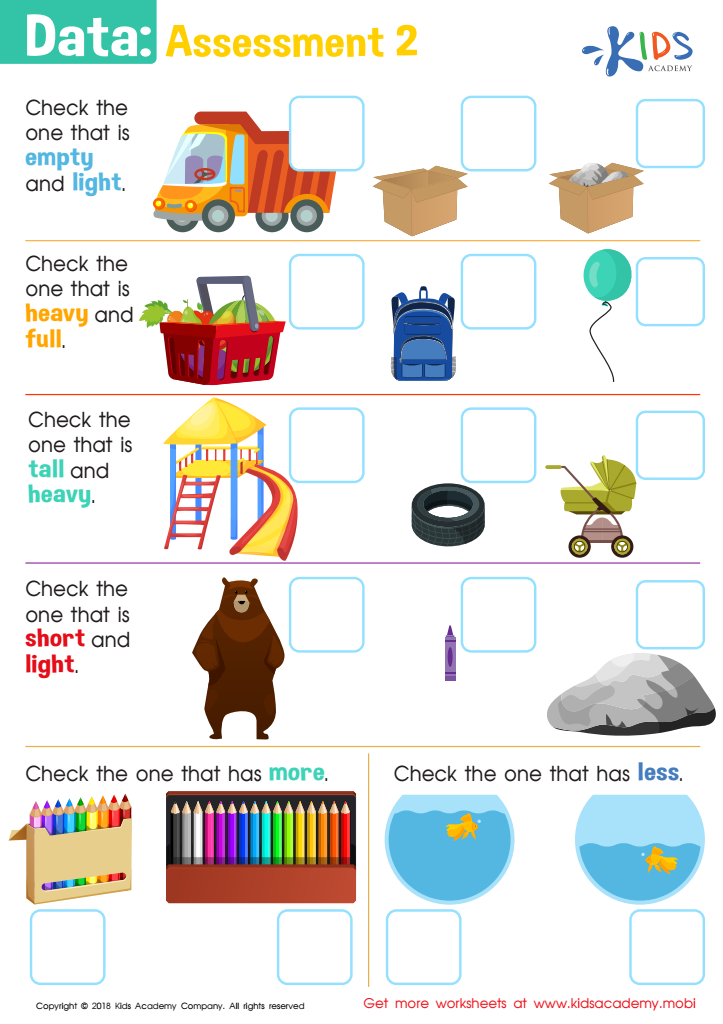
Data: Assessment 2 Worksheet
This PDF helps you assess your students' understanding of concepts like empty/light, full/heavy, tall/short, and more/less. With this worksheet, students use pictures to answer questions and check off the appropriate box. It's a fast, easy way to determine what concepts they have learned and which need more work.
 Assign to My Students
Data: Assessment 2 Worksheet
Worksheet
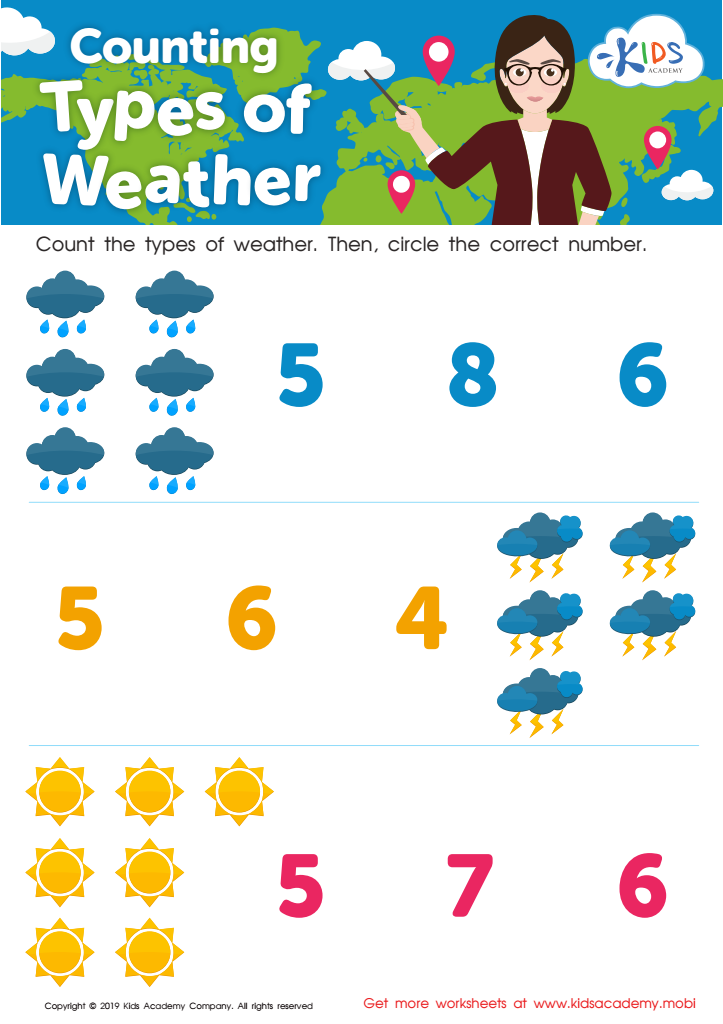
Counting Types of Weather Worksheet
Have your students look outside and tell you the weather today. Get kindergartners thinking by asking them to name different types of weather. Point to each one in the picture and get them to tell you what it is. Then, have them count the types and circle the number.
Counting Types of Weather Worksheet
Worksheet
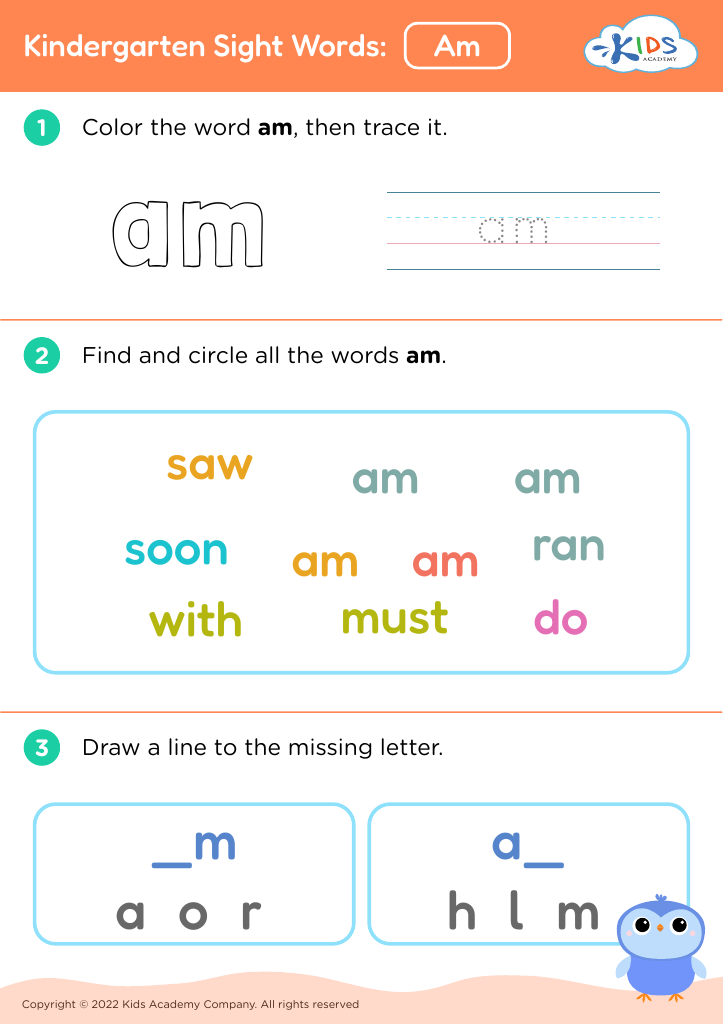
Join Kids Academy for Free
Who is primarily going to use this learning content?








Data interpretation skills are essential for young learners, making it crucial for parents and teachers to emphasize their importance in kindergarten. At this stage, children begin to recognize patterns, understand relationships, and analyze information, which lays the foundation for critical thinking used throughout their education and beyond. By engaging with simple data representation, such as graphs and charts, children learn to interpret information visually, enhancing their comprehension and analytical skills.
Moreover, data interpretation introduces children to foundational math concepts like counting, sorting, and categorizing, making these subjects more engaging and accessible. Understanding data also enhances a child's problem-solving abilities, encouraging them to ask questions and seek answers based on evidence rather than assumptions.
Involving parents in this process fosters a home environment that values inquiry and logical reasoning. Teachers, meanwhile, can integrate playful activities that teach data collection and interpretation—like surveying classmates about their favorite fruits—creating a fun and interactive learning experience.
Ultimately, a solid grasp of data interpretation helps children navigate a world increasingly driven by information, preparing them not only for academic success but also for informed decision-making in everyday life. Cultivating these skills at a young age sets the stage for lifelong learning and thoughtful citizenship.








