Improve vocabulary Kindergarten Worksheets
3 filtered results
Difficulty Level
Grade
Age
-
From - To
Subject
Activity
Standards
Enhance your child’s vocabulary with our engaging Kindergarten worksheets designed to support early literacy skills. Our printable resources include a variety of fun activities that encourage word recognition and usage, featuring colorful illustrations and interactive exercises. Each worksheet is tailored to spark curiosity and inspire a love for language, making learning enjoyable. From matching words to images, filling in the blanks, and identifying synonyms, these worksheets cater to diverse learning styles. Perfect for both classroom and home use, our vocabulary improvement activities build a solid foundation for reading and communication skills. Explore our worksheets and watch your child’s vocabulary flourish!
Favorites
With answer key
Interactive
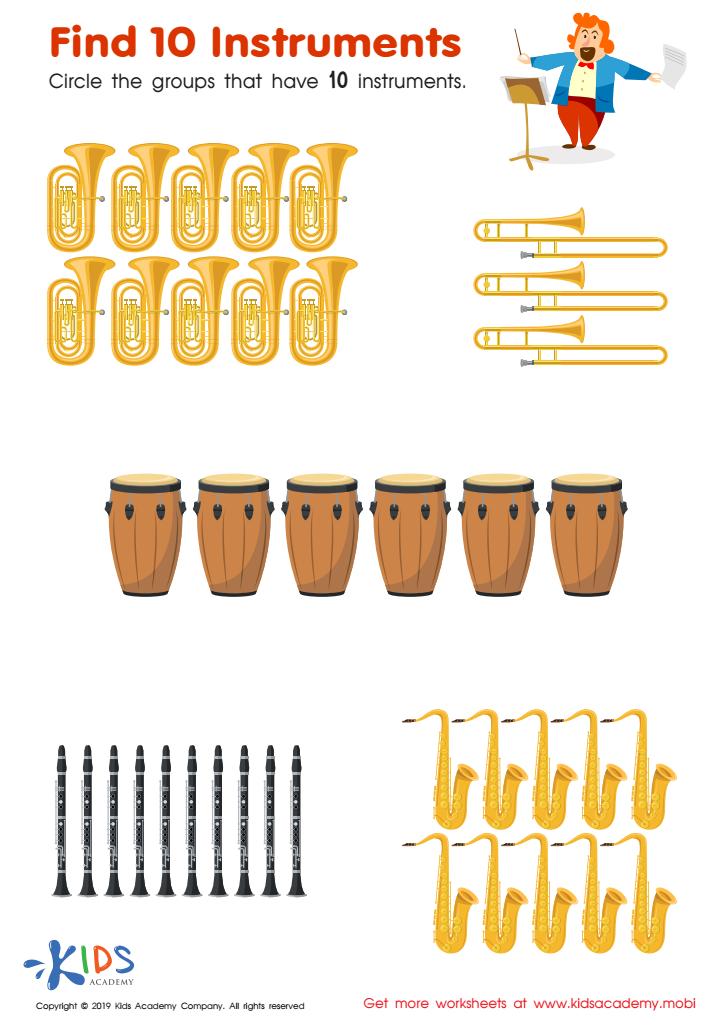
Find 10 Instruments Worksheet
Teach your kids to count with educational DVDs, video games and this worksheet. Show them the picture and help them count the instruments, then circle the groups of 10. It's a great way to practice counting numbers, one of the first things they'll learn.
 Assign to My Students
Find 10 Instruments Worksheet
Worksheet
Join Kids Academy for Free
Who is primarily going to use this learning content?




.jpg)



Improving vocabulary in kindergarten is crucial for several reasons, making it a priority for both parents and teachers. First, a strong vocabulary serves as a foundation for effective communication. Children with rich vocabularies are better equipped to express themselves, share ideas, and engage in conversations. This early development enhances their social skills and confidence.
Second, vocabulary growth is closely linked to reading comprehension. The more words children know, the better they can understand stories and instructions, leading to improved literacy skills. Increased vocabulary not only makes reading more enjoyable but also lays the groundwork for academic success in later years.
Additionally, vocabulary development supports critical thinking and cognitive skills. When children can articulate their thoughts and questions, they are more engaged in learning and exploration. This fosters a love for learning and encourages curiosity.
Finally, by working together, parents and teachers can create rich linguistic environments at home and in the classroom. This collaboration reinforces the importance of communication and learning and emphasizes that vocabulary building is a shared responsibility. Ultimately, enhancing vocabulary in kindergarten translates to lifelong benefits, ensuring children are well-prepared for future educational pursuits and interpersonal relationships.