Logical Reasoning Kindergarten Worksheets - Page 2
25 filtered results
-
From - To
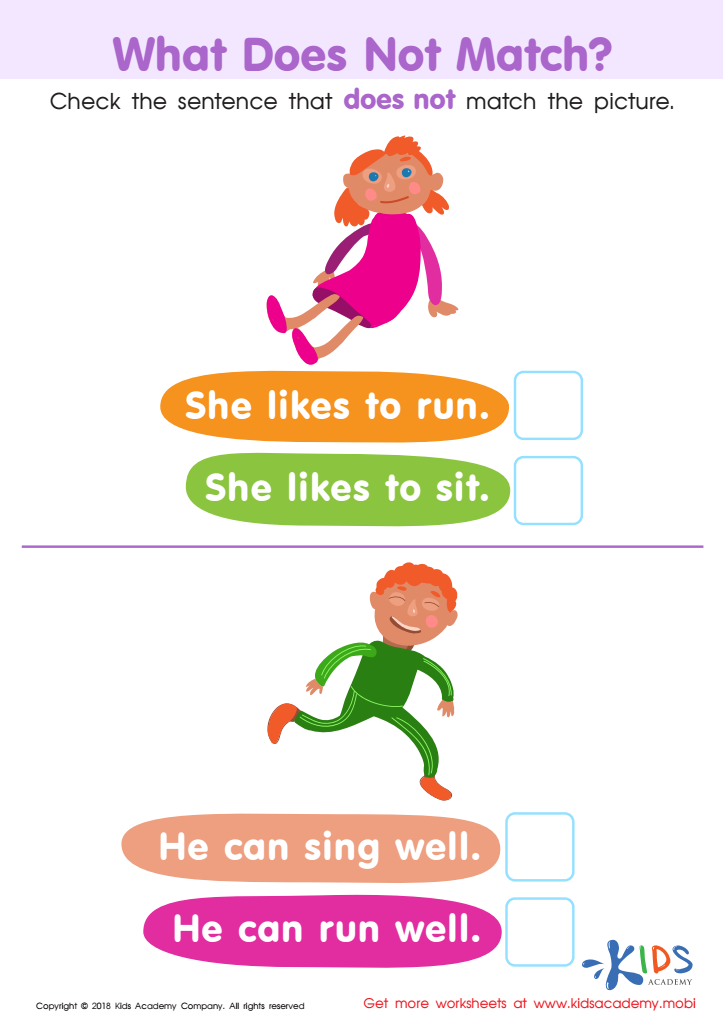
What Does Not Match? Worksheet
 Assign to My Students







Logical reasoning is a fundamental skill that lays the foundation for critical thinking and problem-solving abilities in young children. For parents and teachers, nurturing this skill in kindergarten is essential for several reasons.
Firstly, logical reasoning helps children understand relationships between concepts and encourages them to think sequentially. By engaging in activities that promote reasoning, such as puzzles, pattern recognition, and categorization games, children learn to analyze information and make connections, which are crucial for their overall cognitive development.
Secondly, these skills are vital for academic success later on. A strong foundation in logical reasoning enhances children's ability to tackle math, science, and reading comprehension tasks as they progress through their education, equipping them with the tools to navigate complex problems.
Additionally, logical reasoning fosters a growth mindset, encouraging children to embrace challenges and learn from mistakes. This resilience builds confidence in their abilities, fostering a lifelong love of learning.
Lastly, supporting logical reasoning development fosters collaboration and communication skills. Children learn to express their thoughts clearly and listen to others' ideas, important traits for their social interactions.
In summary, nurturing logical reasoning in kindergarten is key to supporting children's cognitive, emotional, and social growth, benefiting them throughout their educational journey and beyond.








