
Visual interpretation Kindergarten Worksheets
6 filtered results
Difficulty Level
Grade
Age
-
From - To
Subject
Activity
Standards
Visual interpretation Kindergarten Worksheets from Kids Academy are designed to help young learners enhance their observation skills, logical thinking, and ability to understand visual information. These engaging worksheets feature diverse activities like matching, pattern recognition, and image association that captivate children's interest while developing critical foundational skills. Each worksheet is crafted with colorful illustrations and easy-to-follow instructions to make learning fun and effective. Perfect for classroom use or home practice, these educational resources support children in building essential cognitive abilities that pave the way for future academic success. Discover a world of learning with Visual interpretation Worksheets today!
Favorites
With answer key
Interactive
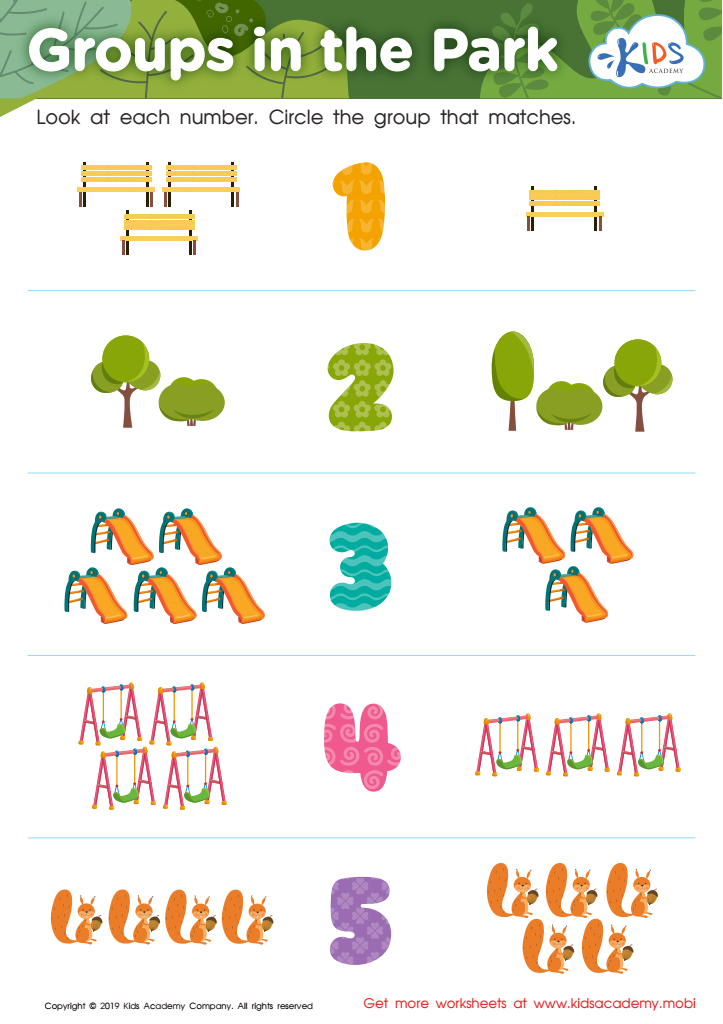
Groups in the Park Worksheet
Take your kids to the park and let them enjoy the freedom to play! Ask them what they love doing most and study a picture together - name items and count objects in the sets, then circle the correct one. It's a fun way for your kids to learn.
 Assign to My Students
Groups in the Park Worksheet
Worksheet
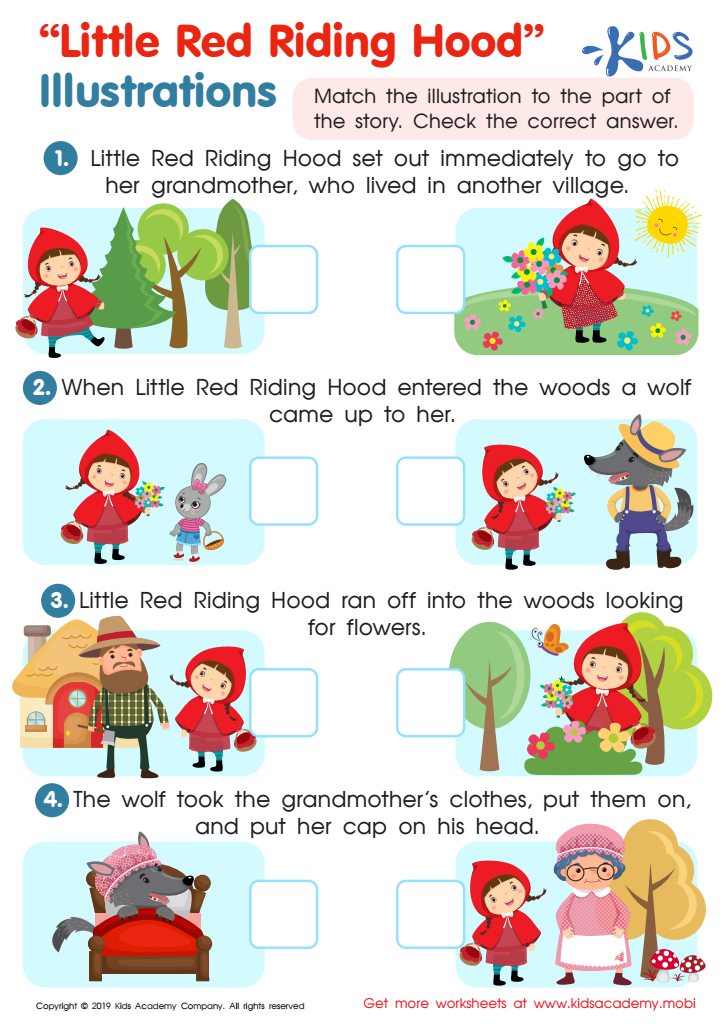
Little Red Riding Hood: Illustrations Worksheet
Comprehension is improved by having young readers recall and retell stories. This worksheet uses colorful illustrations of the fairytale Little Red Riding Hood. Children use their comprehension skills and strategy to match illustrations to the story parts, check off the appropriate boxes and use the pictures as clues.
Little Red Riding Hood: Illustrations Worksheet
Worksheet
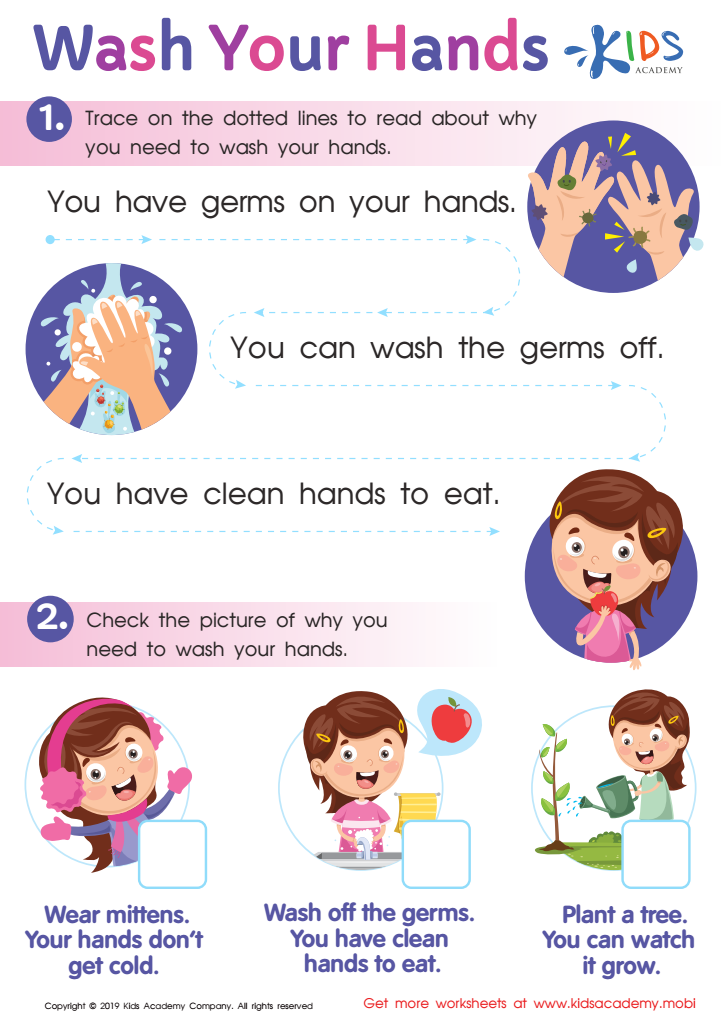
Wash Your Hands Worksheet
Kids learn best when they understand why they need to do something. This free worksheet uses traceable lines and pictures to teach them about germs and why washing hands is important. The child follows a left-to-right sequence and must check the correct picture to show they understand.
Wash Your Hands Worksheet
Worksheet
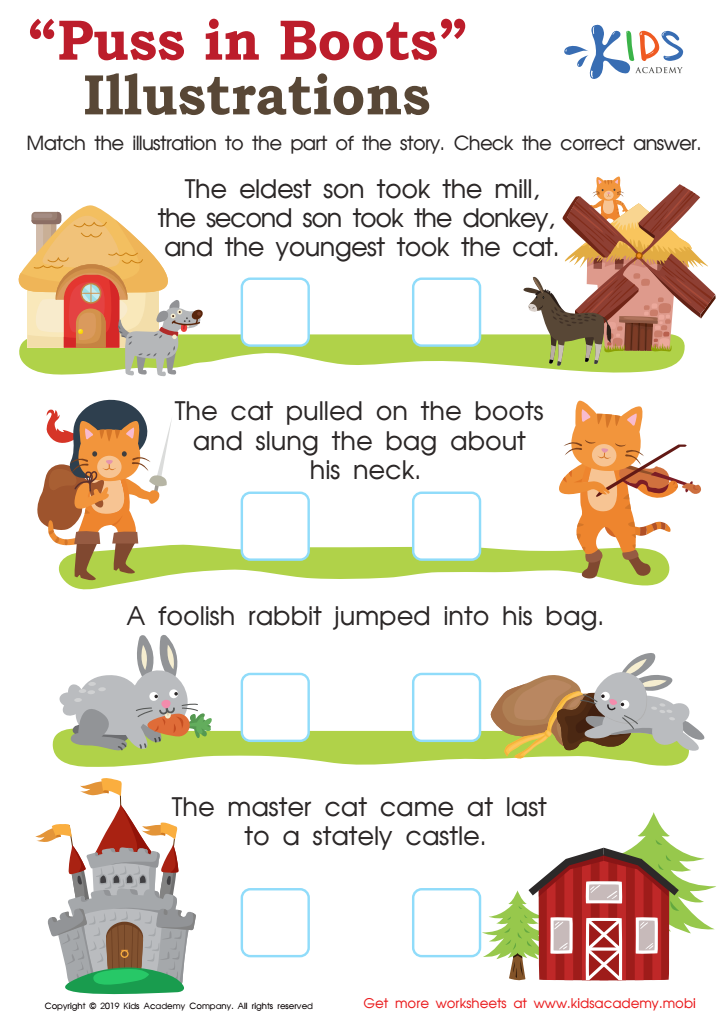
Puss in Boots Illustrations Worksheet
This Puss In Boots Illustrations worksheet is a great way to help kids learn about retelling stories. They'll match images to different parts of the story and check off the correct answer. As they recall events and put them in sequence they'll enjoy this fun and creative activity.
Puss in Boots Illustrations Worksheet
Worksheet
The Three Little Pigs and The Big Bad Wolf Printable
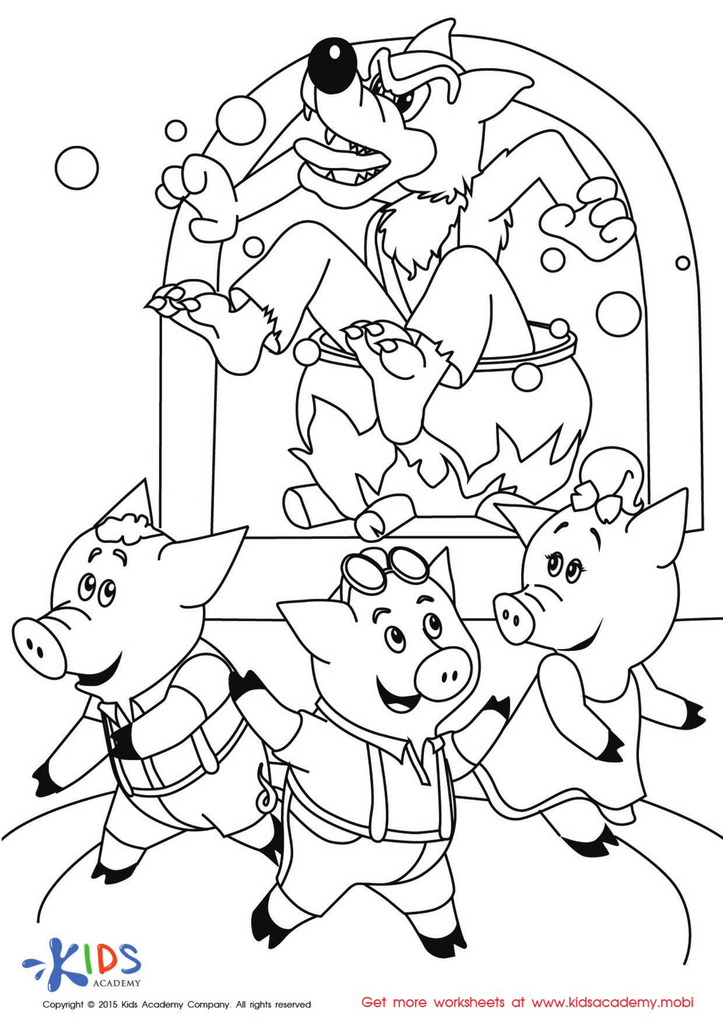
The Big Bad Wolf has learned his lesson: never bully little pigs! This free printable worksheet shows him falling into boiling water, while the three little pigs are safe and happy. Let your kids bring this scene to life by coloring it in whatever way they like. When they're done, ask them if they think the Big Bad Wolf will ever return.
The Three Little Pigs and The Big Bad Wolf Printable
Worksheet
Join Kids Academy for Free
Who is primarily going to use this learning content?






.jpg)
Visual interpretation is an essential skill for kindergarteners because it lays the foundation for many crucial cognitive and social abilities. Early exposure to interpreting visual information helps young children develop critical thinking and understanding, which are vital in their overall learning process. When parents or teachers focus on enhancing a child’s visual interpretation skills, they promote better attention to detail, improved memory retention, and an ability to understand cause-and-effect relationships.
For instance, when children engage with picture books or educational games, deciphering visual cues, symbols, and illustrations supports language development and reading skills. It helps them attach meaning to symbols, enriching their vocabulary and comprehension abilities. Furthermore, visual interpretation fosters creativity and imagination, as children's perceptions shape how they model and engage in creative play.
Socially, interpreting visual signals, such as facial expressions and body language, in peers includes understanding and reacting appropriately to social cues. This fosters empathy, better communication skills, and emotional intelligence. Emotional recognition is fundamental in building friendships and resolving conflicts effectively.
By nurturing visual interpretation in kindergarten, parents and teachers set a solid base for future academic achievement and emotional health, ensuring children grow into perceptive and well-adjusted individuals. This investment in early developmental stages yields long-term benefits across personal, social, and academic domains.








