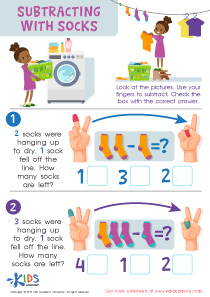
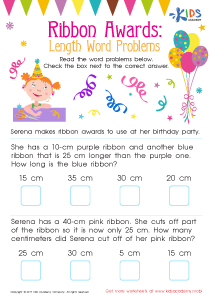
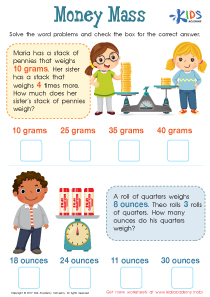
Basic arithmetic skills Kindergarten Addition and Subtraction Word Problems Worksheets
3 filtered results
-
From - To
Welcome to our collection of Kindergarten Addition and Subtraction Word Problems Worksheets! These engaging worksheets are designed to help young learners develop essential arithmetic skills through fun and interactive word problems. Catering specifically to kindergarten students, our resources encourage critical thinking as they relate math to real-world situations. Each worksheet presents challenges that promote understanding of basic addition and subtraction concepts while improving problem-solving abilities. By working through these playful scenarios, children will build confidence and a solid foundation in mathematics. Dive into our worksheets today and make learning math enjoyable for your little ones!
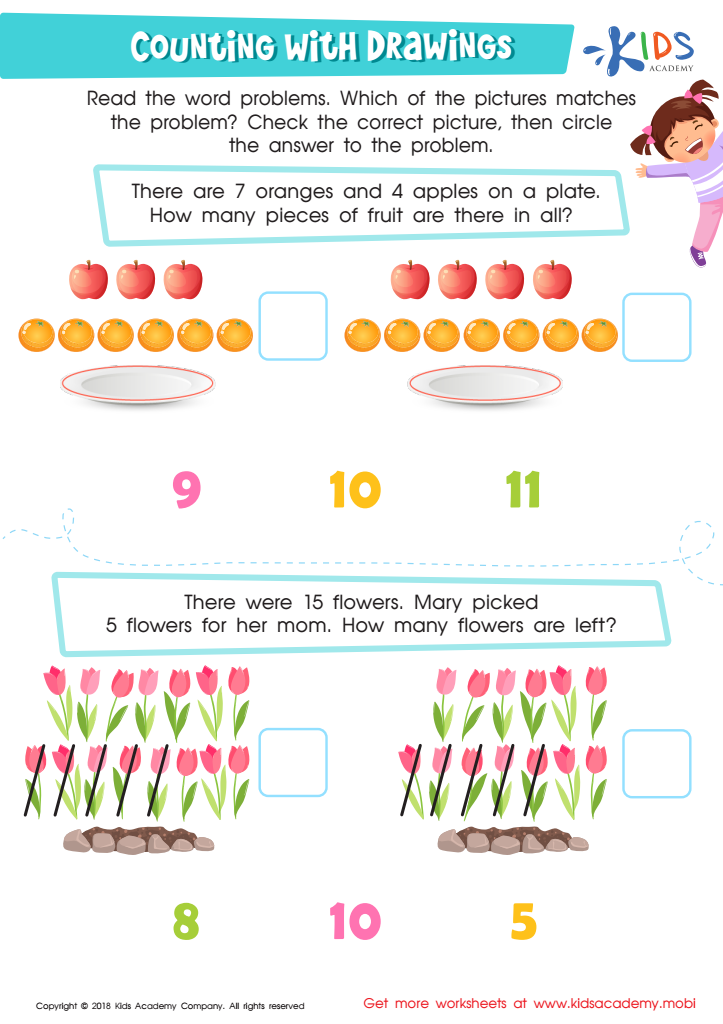
Counting with Drawings: Fruits & Chocolates Worksheet
 Assign to My Students
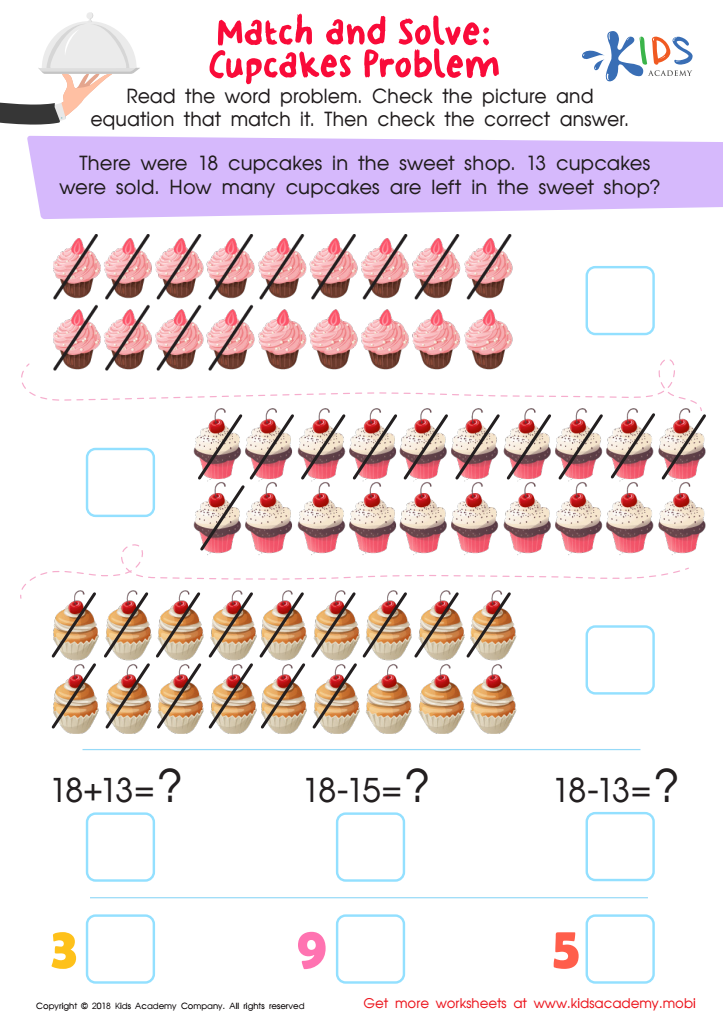
Match and Solve: Cupcakes Problem Worksheet
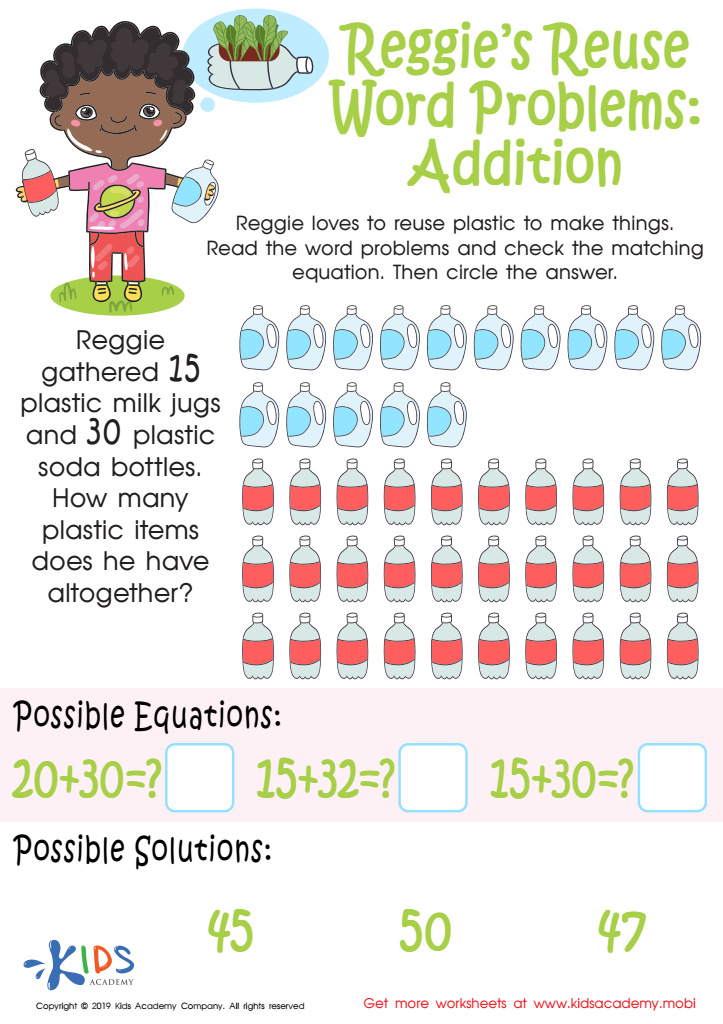
Reggie's Reuse Word Problems: Addition Worksheet








Basic arithmetic skills, particularly addition and subtraction through word problems, are fundamental to a child's early education and overall development. For parents and teachers, fostering these skills is crucial as they serve as building blocks for more advanced mathematics and critical thinking later on. Engaging children with word problems not only enhances their numerical fluency but also helps them develop problem-solving strategies and logical reasoning.
Moreover, word problems encourage comprehension and language skills, as children must read and understand the context before solving. This dual focus on math and language comprehension prepares young learners for the diverse challenges they will encounter in academic settings and everyday life. By mastering these basic skills, children gain confidence in their abilities, which can positively impact their attitudes toward schooling.
Additionally, addition and subtraction form the foundation for many daily activities—such as counting objects, measuring, or budgeting—which are essential life skills. Early proficiency can lead to better performance in math in higher grades, influencing overall academic success. In short, emphasizing basic arithmetic through engaging word problems equips children with essential cognitive tools that foster critical thinking, confidence, and a love for learning. It forms the heart of fostering curiosity and the ability to apply knowledge in real-world scenarios.