
Shape Recognition Kindergarten Numbers Worksheets
6 filtered results
Difficulty Level
Grade
Age
-
From - To
Subject
Activity
Standards
Shape Recognition Kindergarten Numbers Worksheets are essential tools designed to blend foundational math skills with playful learning. These engaging worksheets help young learners, ages 4-6, understand numbers while identifying various shapes. Featuring colorful graphics and fun exercises, they aid in developing key fine motor skills and cognitive abilities. Kids can trace, color, and count shapes, ensuring a hands-on and interactive experience that solidifies their grasp of shapes and numbers concurrently. Perfect for classroom settings or at-home practice, these worksheets prepare children for more advanced math concepts, laying a fundamental grounding in shape and number recognition in an enjoyable way.
Favorites
With answer key
Interactive
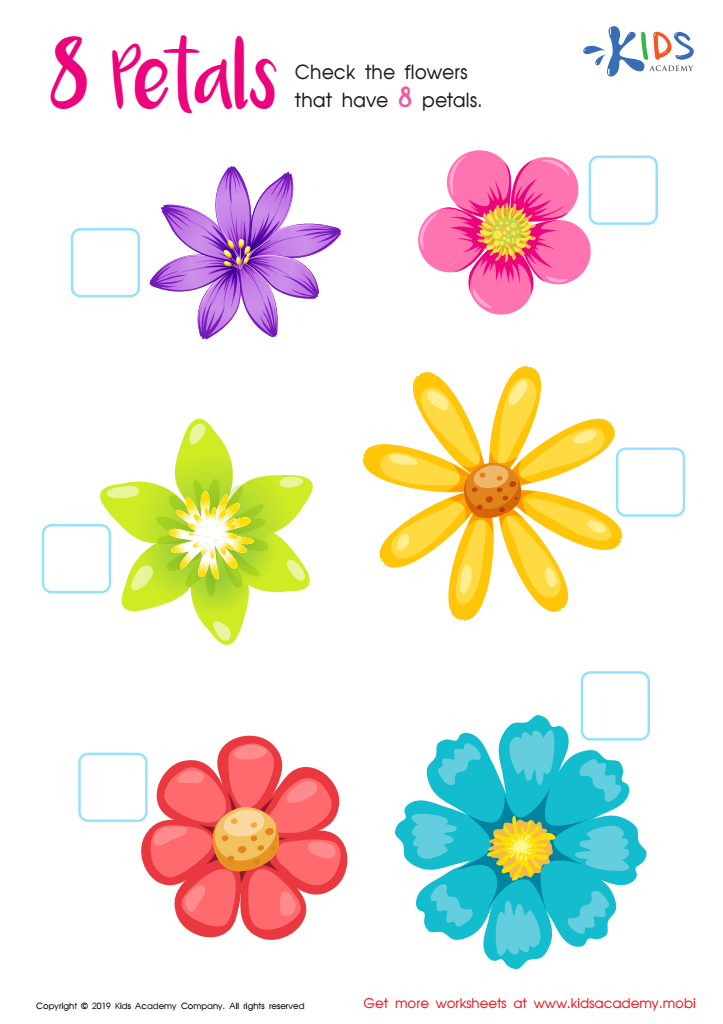
8 Petals Worksheet
Help your children master counting with this fun worksheet. It's filled with colorful flowers and they must count the petals and check the flowers with 8 petals. It's a great way to practice their counting skills and have some fun too!
 Assign to My Students
8 Petals Worksheet
Worksheet
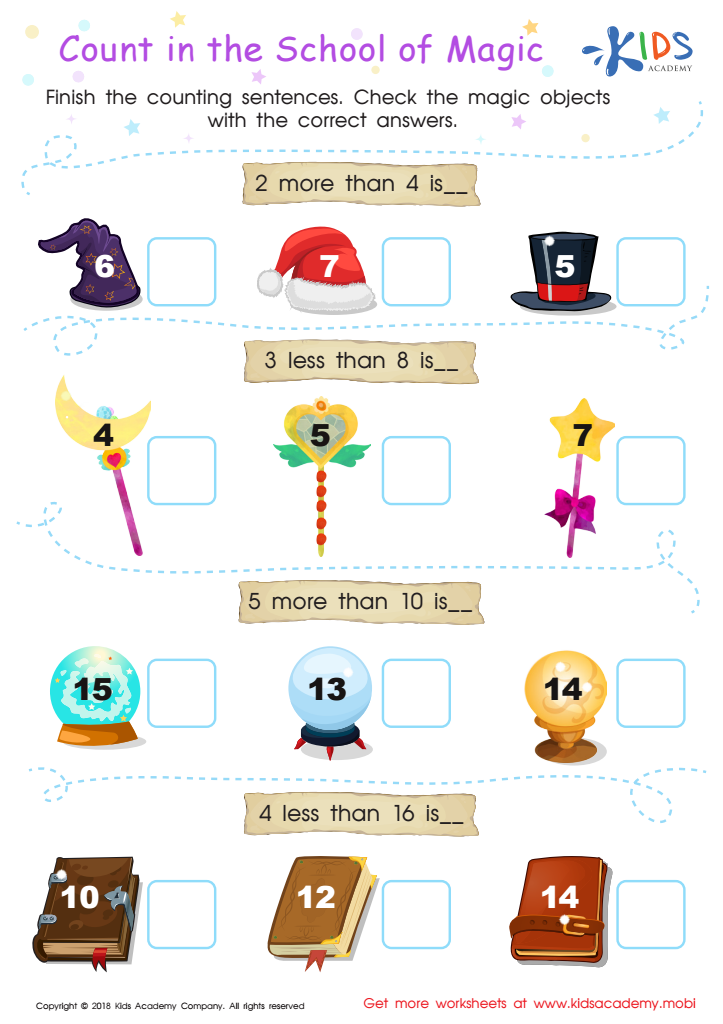
Count in the School of Magic Worksheet
Your math learners can explore the School of Magic with this worksheet. They'll read equations with addition and subtraction numbers under 20, count back and forth to find the answer, then complete the counting sentences. Fun pictures and easy accuracy make it an enjoyable and successful learning experience.
Count in the School of Magic Worksheet
Worksheet
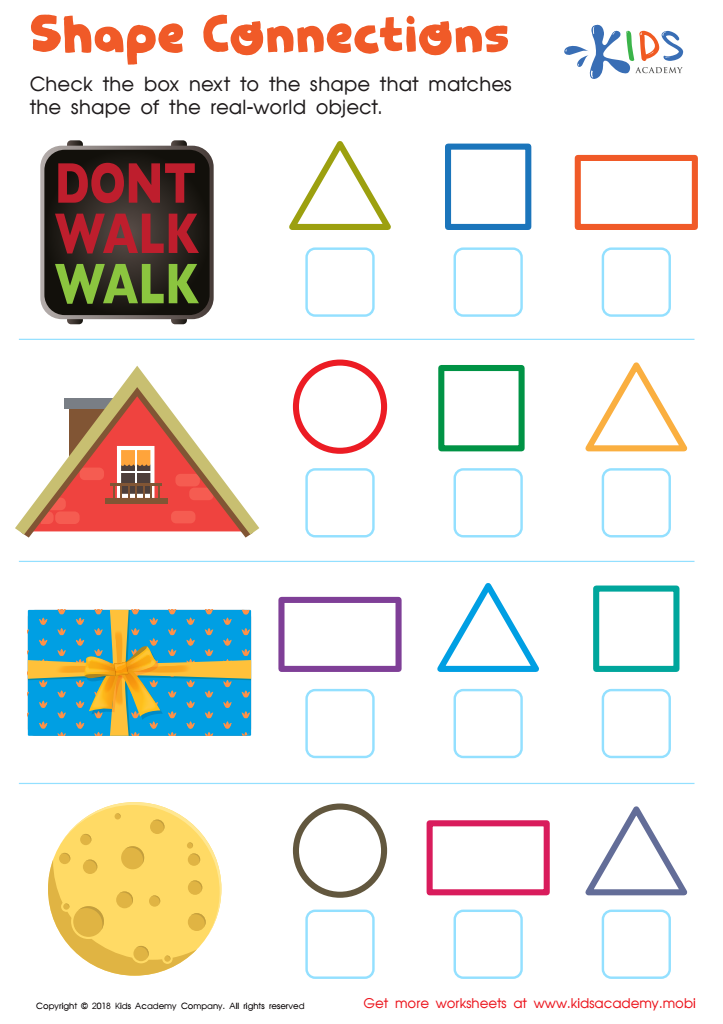
Shape Connections Worksheet
Geometric shapes are all around us and this fun worksheet brings it to life. Kids will match real-world pictures with the corresponding basic shapes, connecting how math is used in various aspects of daily life. A great way to reinforce these concepts!
Shape Connections Worksheet
Worksheet
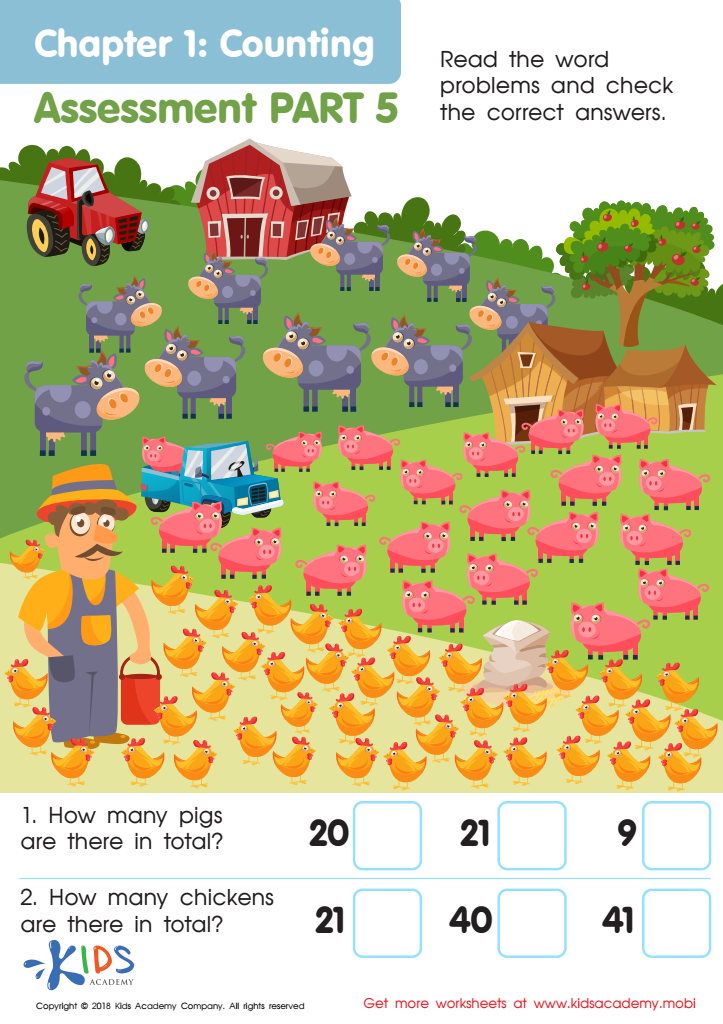
Counting: Assessment 5 Worksheet
Let your kids have fun counting farm animals on this worksheet! Help the farmer count the animals and have your child check the answers to assess their counting skills. Read the word problem at the bottom of the page and count the animals together. It's an entertaining way to practice counting and have a great time!
Counting: Assessment 5 Worksheet
Worksheet
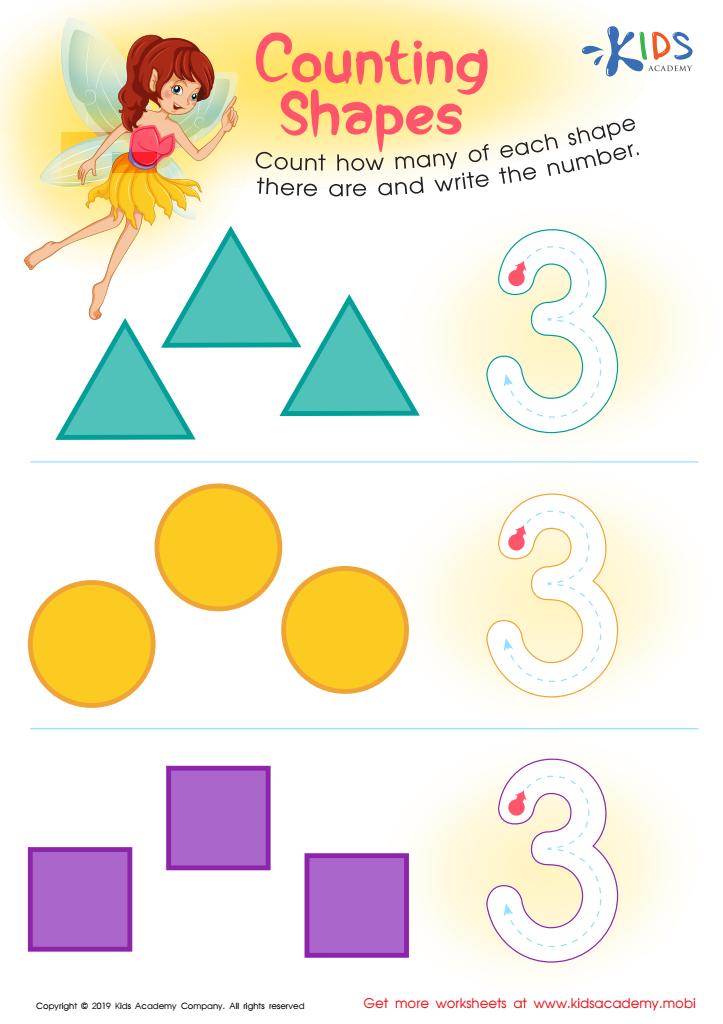
Counting Shapes Worksheet
Counting and number sense are essential skills. Picture representation helps kids understand and remember concepts. This free worksheet is perfect for introducing numbers and counting in groups of three. It also helps kids to practice writing numbers with traceable lines and guiding dots. It's an easy and fun way to give little mathematicians a successful start.
Counting Shapes Worksheet
Worksheet
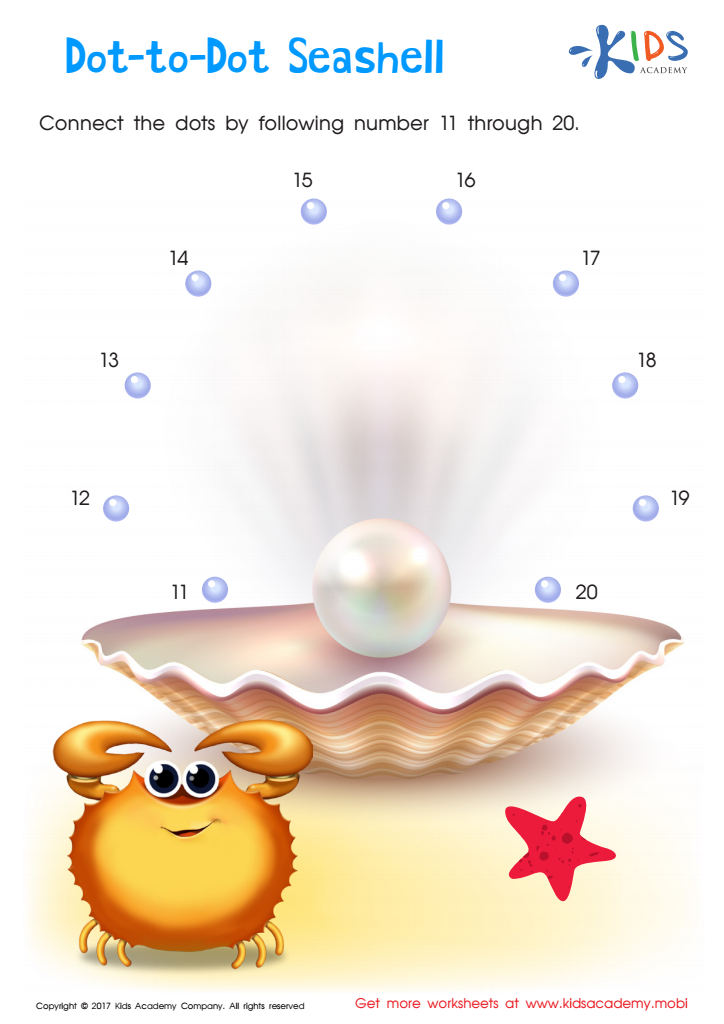
Ordering 11–20: Dot–to–dot Seashell Printable
Connecting the dots 11 to 20 is rewarding for kids, helping them practice counting, identifying numbers and gain cognitive and logical skills. Our worksheet features a vibrant image of a seashell, crab and sea star, and your child will feel rewarded creating it while honing their counting skills!
Ordering 11–20: Dot–to–dot Seashell Printable
Worksheet
Join Kids Academy for Free
Who is primarily going to use this learning content?


%20(1).jpg)





Shape recognition and kindergarten numbers are foundational skills that offer a variety of cognitive and practical benefits for young children, warranting the attention of both parents and teachers. Mastering shape recognition contributes to a child's ability to categorize objects, fostering critical thinking and problem-solving skills. Understanding different shapes helps children make sense of their environment, aiding in their ability to navigate and interpret space effectively. For instance, recognizing a circular ball or a rectangular block assists in building spatial awareness, which is crucial for tasks like reading and writing.
Similarly, an introduction to numbers at the kindergarten level is a key step in developing mathematical proficiency. Early numeracy skills enable children to understand quantity, order, and time, laying the groundwork for more complex mathematical concepts. Numbers are the foundation for simple arithmetic, which later translates into skills required for everyday tasks such as shopping, cooking, and budgeting.
Parents and teachers play a crucial role by incorporating shape recognition and number activities into daily routines and learning sessions. Games, puzzles, and storytelling that involve shapes and numbers make learning interactive and enjoyable, fostering an enthusiasm for education while solidifying essential skills. Early competency in these areas can provide a significant advantage as children progress through their academic journeys.








