
Comparing objects Kindergarten Math Worksheets
4 filtered results
Difficulty Level
Grade
Age
-
From - To
Subject
Activity
Standards
Discover engaging and fun Kindergarten math worksheets designed to help young learners master the skill of comparing objects! Our "Comparing Objects" worksheets feature colorful visuals and interactive activities that encourage children to analyze and compare different items by size, length, and weight. These printable resources support early math skills while promoting critical thinking and observational abilities. Ideal for classroom use or at-home learning, these worksheets aim to enhance student understanding of mathematical concepts in a playful manner. Empower your child’s learning journey with our thoughtfully crafted activities, making comparison an exciting adventure in their early math education!
Favorites
With answer key
Interactive
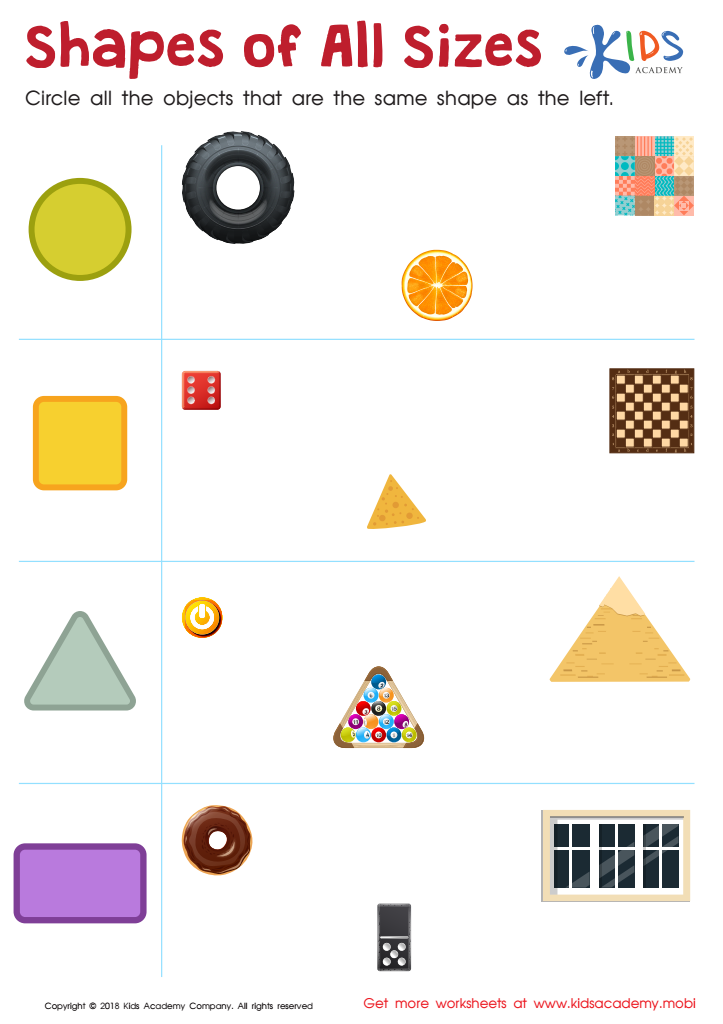
Shapes of All Sizes Worksheet
Students will have fun comparing basic shapes to familiar objects with this worksheet. It's an excellent way to help them recognize similarities in geometric shapes, building strong foundations for understanding congruence and similarity.
 Assign to My Students
Shapes of All Sizes Worksheet
Worksheet
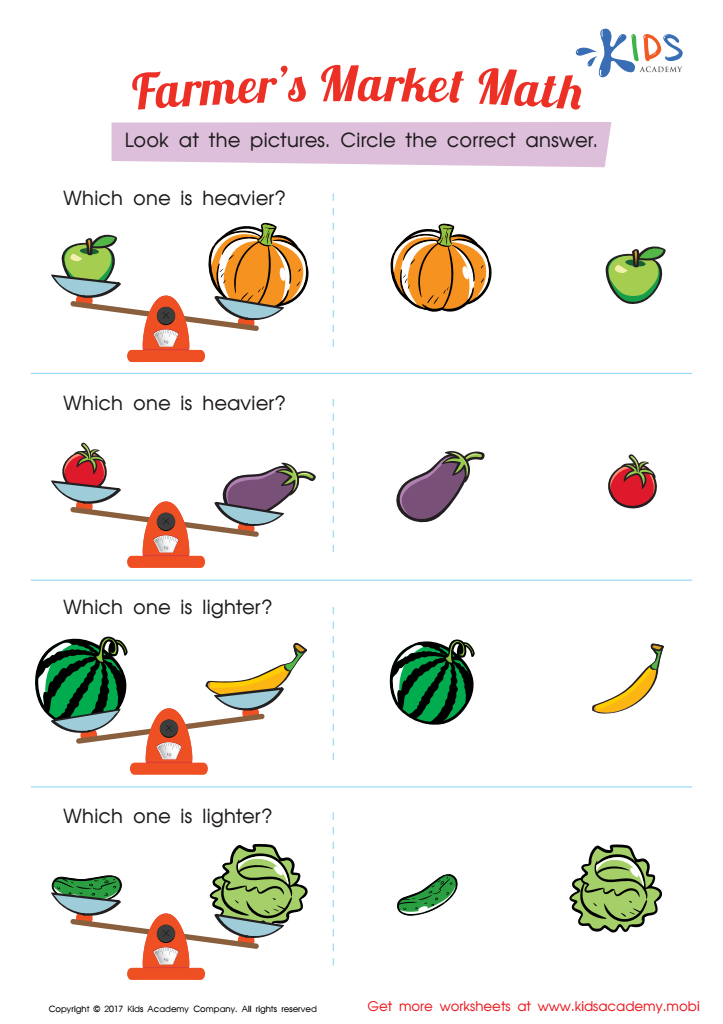
Which One Is Heavier Worksheet
Kindergartners can learn weight easily with this worksheet, featuring images of familiar fruits and veggies. Comparing which one is heavier helps them understand the concept better.
Which One Is Heavier Worksheet
Worksheet
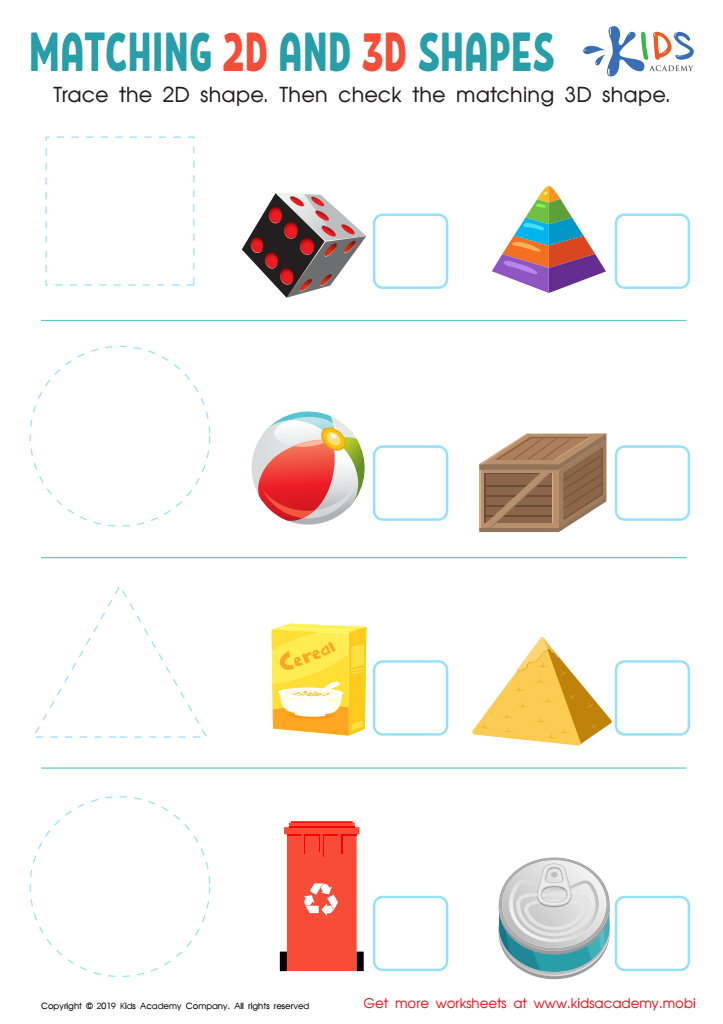
Matching 2D and 3D Shapes Worksheet
Before starting this worksheet, ask your kids what shapes they know and point out the 2D and 3D shapes on it. Help your kids trace the 2D shapes and then match them to the 3D versions. It'll be a fun new world for your kids to explore!
Matching 2D and 3D Shapes Worksheet
Worksheet
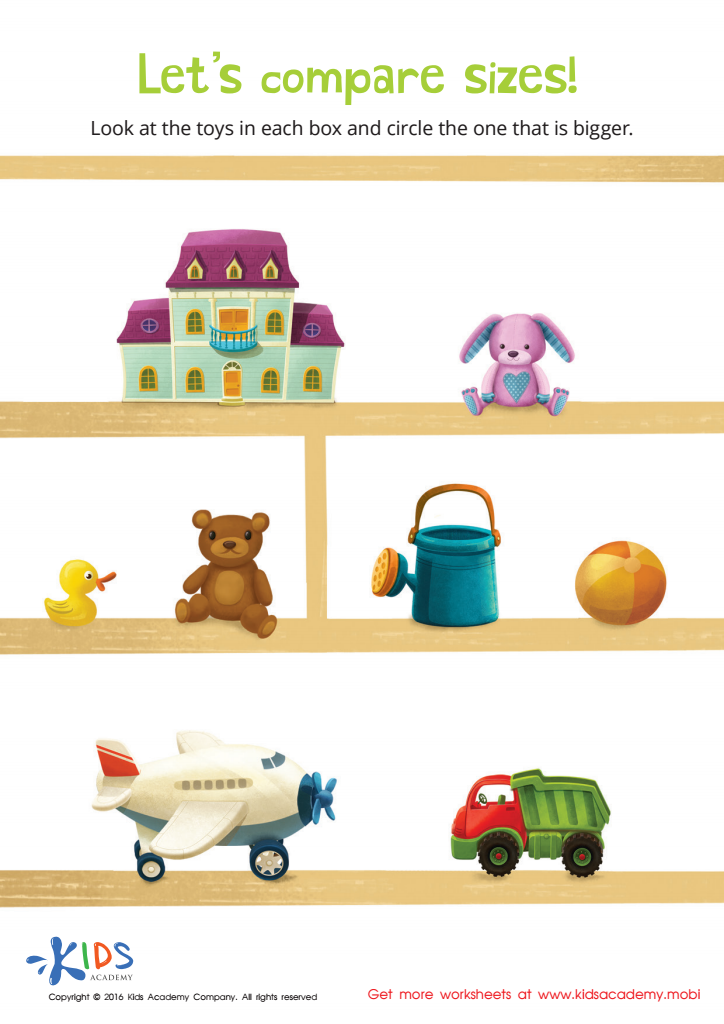
Classifying by Size Sorting Worksheet
Help your preschooler recognize differences in size using this fun worksheet! Your child will engage in important spatial recognition and problem-solving skills while talking with you about objects that can be small or large. Enjoy the vibrant pictures together!
Classifying by Size Sorting Worksheet
Worksheet
Join Kids Academy for Free
Who is primarily going to use this learning content?




.jpg)
.jpg)


Comparing objects is a foundational concept in kindergarten math that plays a crucial role in early childhood education. Parents and teachers should care about this skill because it nurtures critical thinking and analytical abilities in young learners. By comparing objects based on attributes such as size, weight, shape, and quantity, children develop a greater understanding of their environment. This practice enhances their ability to categorize and organize information, which is essential for future mathematical concepts.
Additionally, comparing objects promotes language development. As children articulate their observations—using terms like "bigger," "smaller," "heavier," or "more"—they practice communication skills essential for effective expression and collaboration.
Furthermore, engaging in comparative activities fosters curiosity and exploration. When children investigate and devise their comparisons, they become active participants in their learning journey. This foundational skill sets the stage for more complex math concepts in later grades, such as measurement, addition, and subtraction.
Ultimately, comparing objects in kindergarten is not just about math; it supports holistic development—cognitive, linguistic, and social—which is critical in creating a well-rounded educational experience for children. Thus, the importance of this foundational skill cannot be overstated for both parents and educators.








