Differentiating shapes Kindergarten Math Worksheets
3 filtered results
-
From - To
Explore our engaging Kindergarten Math Worksheets focused on differentiating shapes! Designed for young learners, these worksheets help children recognize, identify, and compare various geometric figures such as circles, squares, triangles, and more. Through fun activities and colorful illustrations, students will enhance their shape recognition skills, foster spatial awareness, and develop critical thinking. Perfect for teachers and parents alike, our printable resources support diverse learning styles and are aligned with educational standards. Encourage your child's mathematical growth while making learning enjoyable! Visit us today to access a variety of shapes worksheets guaranteed to inspire and educate your little ones.
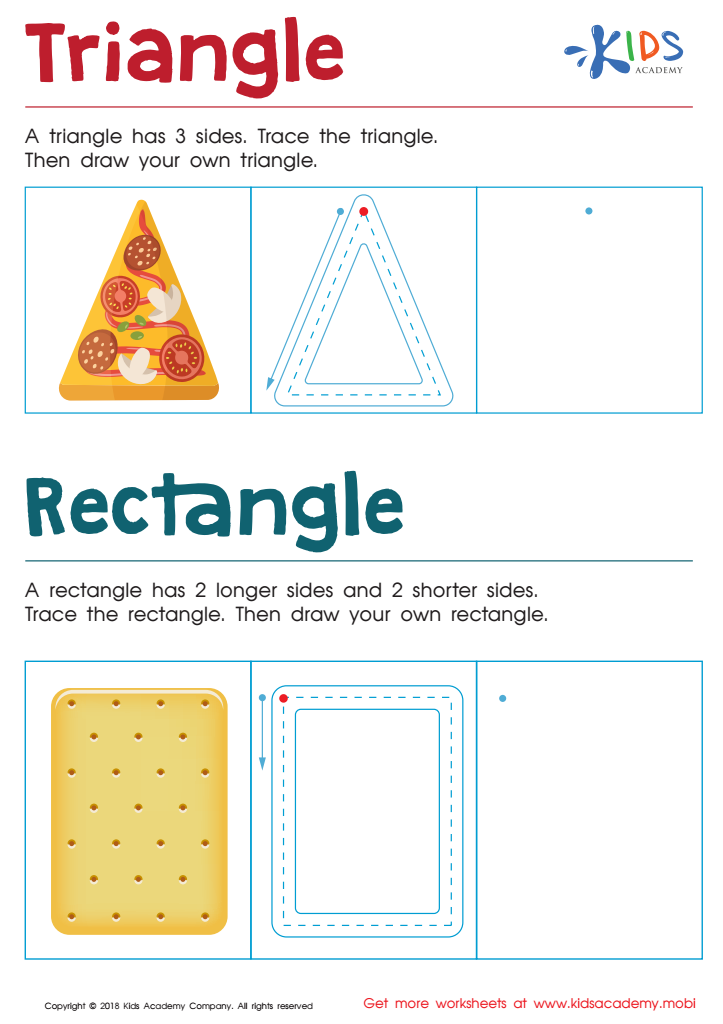
Triangle Rectangle Worksheet
 Assign to My Students
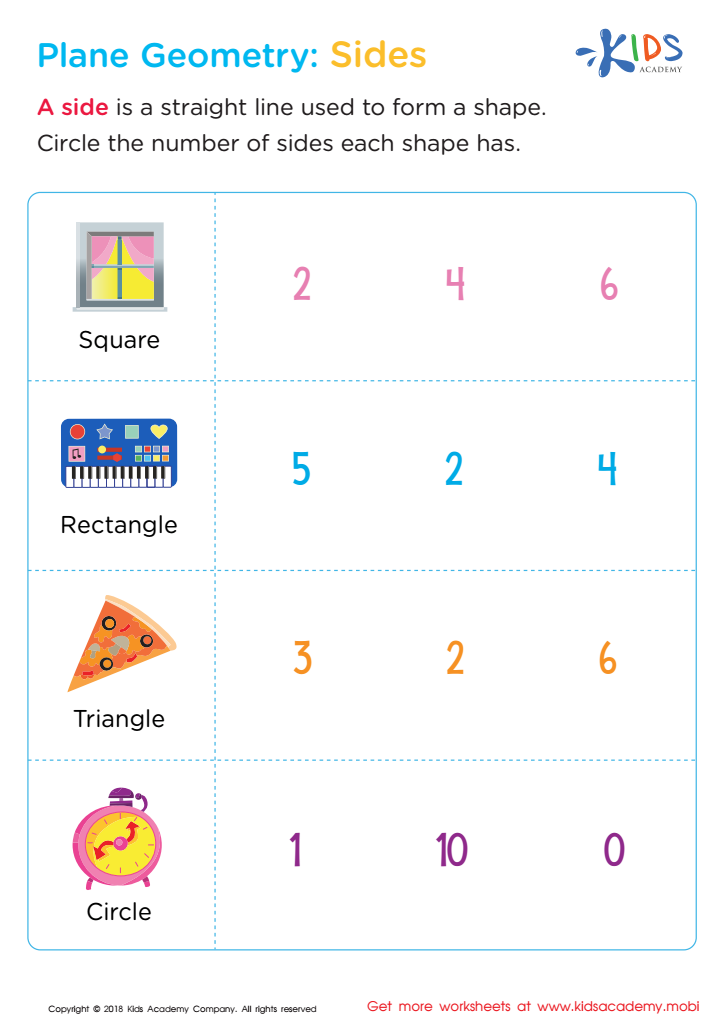
Plane Geometry: Sides Worksheet
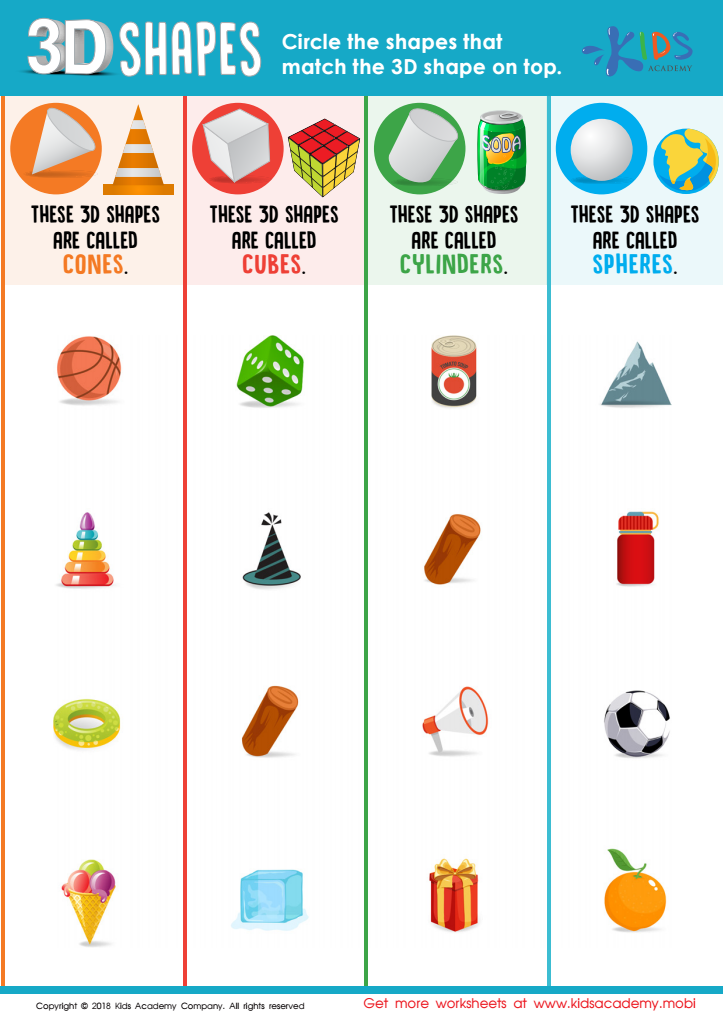
3D Shapes Worksheet






.jpg)
Differentiating shapes in Kindergarten math is essential for early childhood development as it lays the foundation for essential cognitive and spatial skills. Parents and teachers should care about this concept because it helps children build critical thinking and problem-solving abilities. When students learn to distinguish between different shapes, they enhance their observational skills, gain an understanding of basic geometry, and develop their capacity to categorize and analyze qualities of various objects.
Moreover, recognizing shapes plays a significant role in building vocabulary and enhancing communication skills. Children learn to describe, compare, and contrast shapes, further promoting their language development. Engaging with shapes through hands-on activities, like sorting or drawing, caters to various learning styles, ensuring that each child, regardless of their innate abilities, can thrive and gain confidence.
Additionally, pioneers in early education underscore the importance of experiential learning, and differentiating shapes offers numerous opportunities for interactive play, fostering social interaction and collaboration among peers. By caring about this aspect of Kindergarten math, parents and teachers contribute to creating a rich, integrative learning environment that prepares children not only for future mathematical challenges but also for practical problem-solving in their everyday lives.








