
Understanding directions Kindergarten Math Worksheets
4 filtered results
Difficulty Level
Grade
Age
-
From - To
Subject
Activity
Standards
Discover our engaging "Understanding Directions" kindergarten math worksheets, designed to develop essential listening and comprehension skills in young learners. These interactive worksheets provide a fun way for children to practice following directions while enhancing their spatial awareness and critical thinking abilities. With a variety of activities tailored to inspire curiosity, students will enjoy exploring concepts related to directionality, sequencing, and positional words. Perfect for classrooms or at-home learning, these worksheets support early math education in an enjoyable and effective manner. Join us in making learning directions a joyful journey for your little ones! Explore our resourceful collection today!
Favorites
With answer key
Interactive
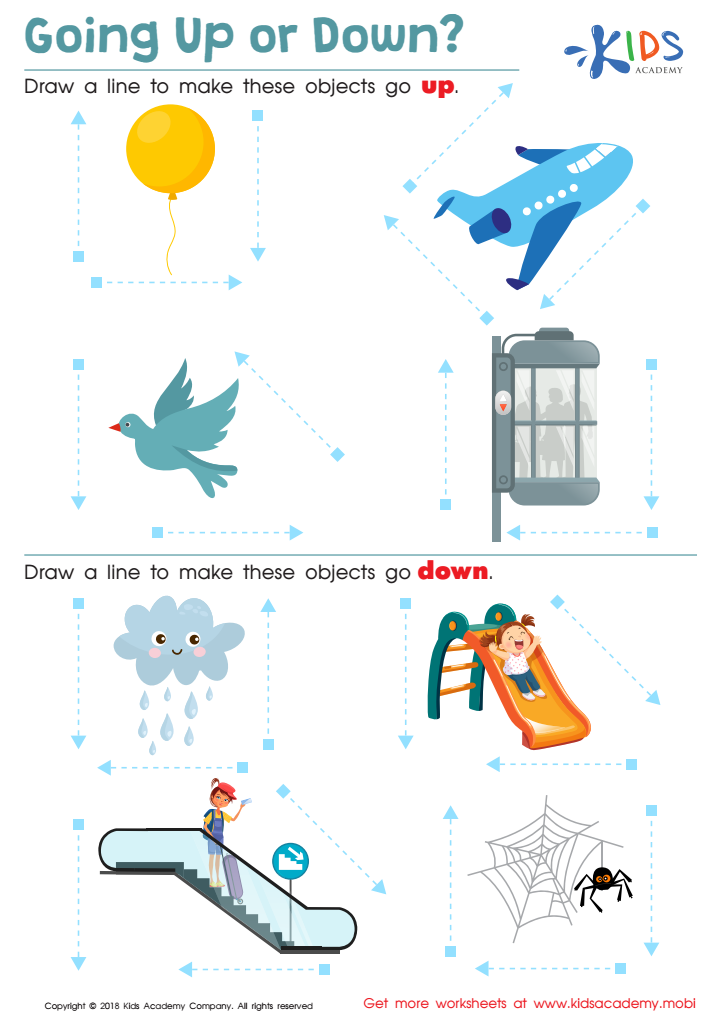
Going up or Down? Worksheet
Young students learn the concept of up and down with this geometry worksheet. They trace lines to identify relative positioning as an object travels. Kids can use position words to describe an object's movement, enhancing their spatial relationship skills - an important geometry foundation.
 Assign to My Students
Going up or Down? Worksheet
Worksheet
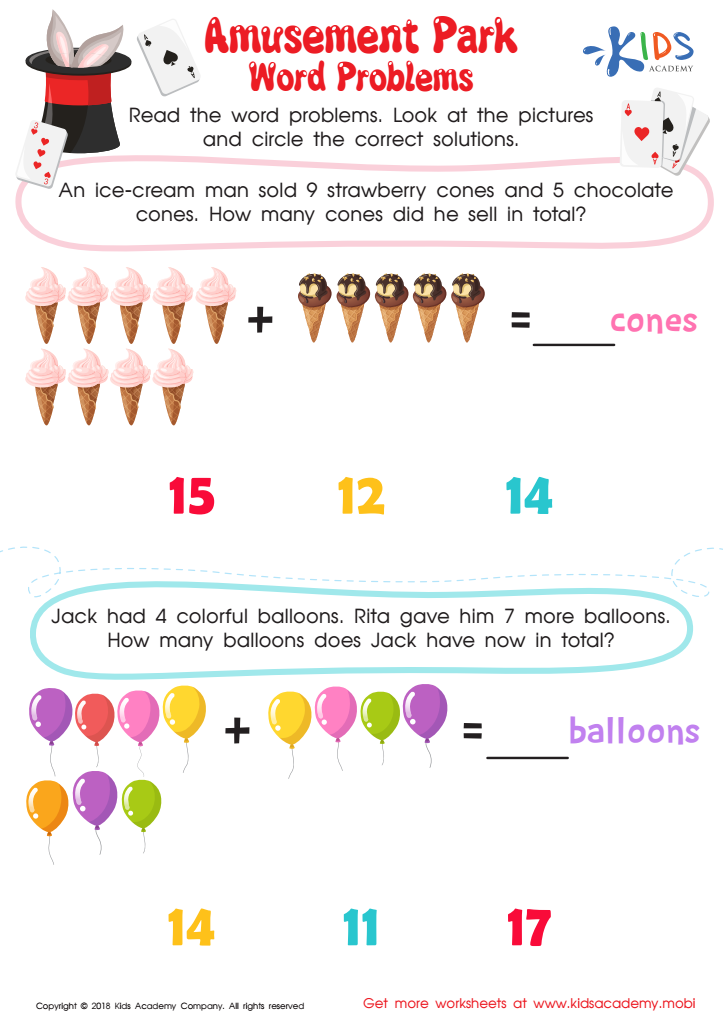
Amusement Park Word Problems Worksheet
Engage kids with math by making it realistic and incorporating manipulatives or pics they like! This worksheet helps kids understand word problems. Read the problem, note numbers and key phrases like "in total," then count the pics to find the total!
Amusement Park Word Problems Worksheet
Worksheet
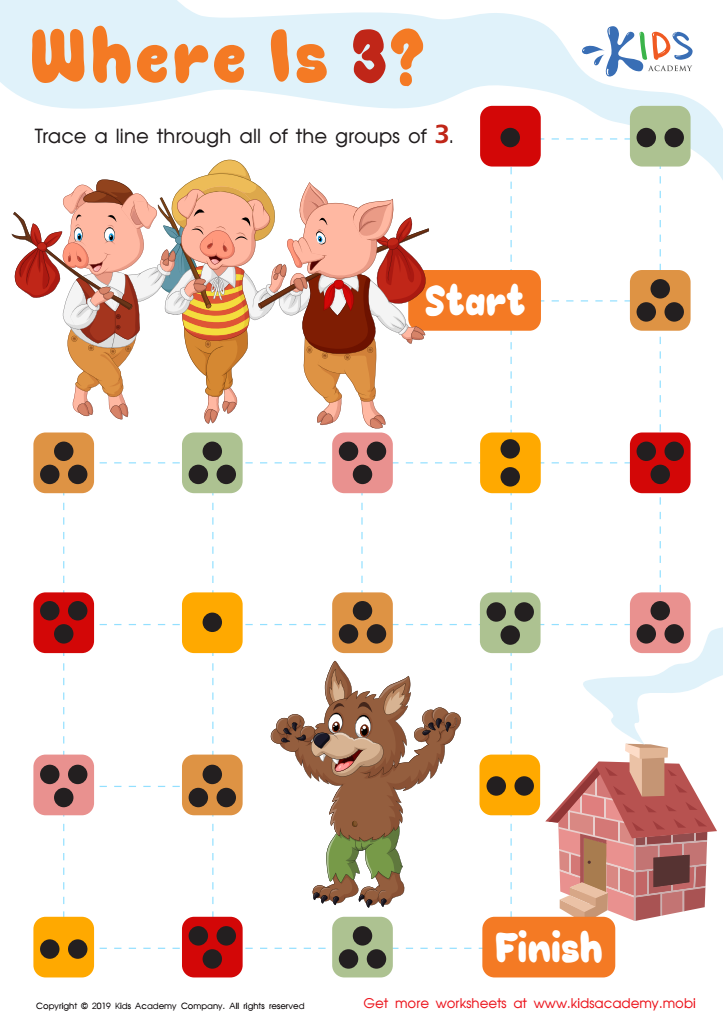
Where Is 3? Worksheet
Let your little mathematician join the Three Little Pigs on an adventure! With this free worksheet, they'll guide the pigs through a maze of numbered bricks, using one-to-one representation to get to the sturdy house. Have fun helping the piggy friends past the wolf!
Where Is 3? Worksheet
Worksheet
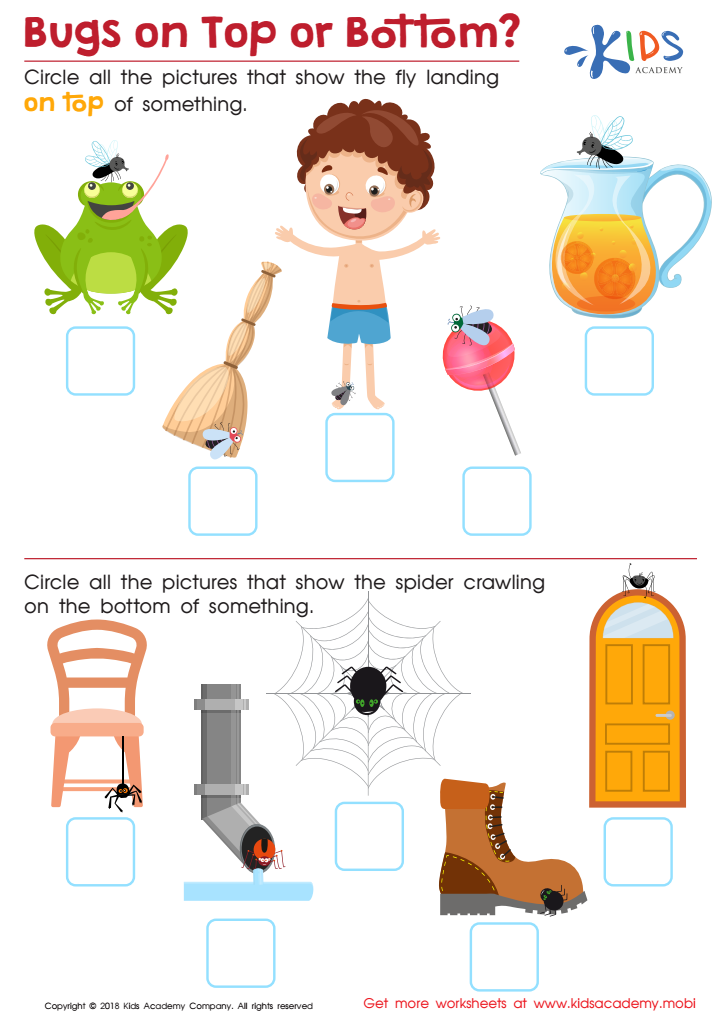
Bugs on Top or Bottom? Worksheet
Preschoolers need to learn directional skills such as top and bottom. This PDF worksheet helps them recognize bugs on the top or bottom using fun visuals. It builds their spatial reasoning while teaching prepositional words in an engaging way.
Bugs on Top or Bottom? Worksheet
Worksheet
Join Kids Academy for Free
Who is primarily going to use this learning content?








Understanding directions in Kindergarten math is fundamental for young learners, and both parents and teachers play crucial roles in this developmental stage. First, comprehending directions enhances a child's ability to follow instructions, which is essential not only in math but also in other academic areas and life skills. It encourages independent thinking and problem-solving; children learn not just to perform tasks but to understand the rationale behind them.
Additionally, mastering directional instructions—such as "add," "subtract," "divide," or "group"—builds a strong foundation for later mathematical concepts. When children are able to interpret and execute directions correctly, they gain confidence and a love for learning, which promotes active participation in math-related activities.
Moreover, parents and teachers who emphasize comprehension of directions can identify and address potential learning gaps early. This proactive approach enables tailored support, ensuring that no child falls behind. Ultimately, fostering an understanding of directions in Kindergarten math helps children develop critical cognitive skills, preparing them for future academic challenges and equipping them with the tools needed to navigate their educational journeys successfully. Engaging with children to clarify and practice these directions reinforces their mathematical understanding and enhances parent-teacher collaboration.








