Understanding sizes Kindergarten Math Worksheets
3 filtered results
-
From - To
Discover the joy of learning with our "Understanding Sizes Kindergarten Math Worksheets"! Tailored for young learners, these engaging worksheets help children grasp the concept of size comparison through fun, interactive activities. Through colorful illustrations and relatable objects, kids practice identifying, comparing, and categorizing items by size. Our worksheets foster critical thinking, vocabulary expansion, and enhance fine motor skills, making learning enjoyable and effective. Perfect for classroom or home use, these resources are designed to build a solid foundation in early math skills. Give your kindergartener a head start in their educational journey with our expertly crafted size comparison worksheets.
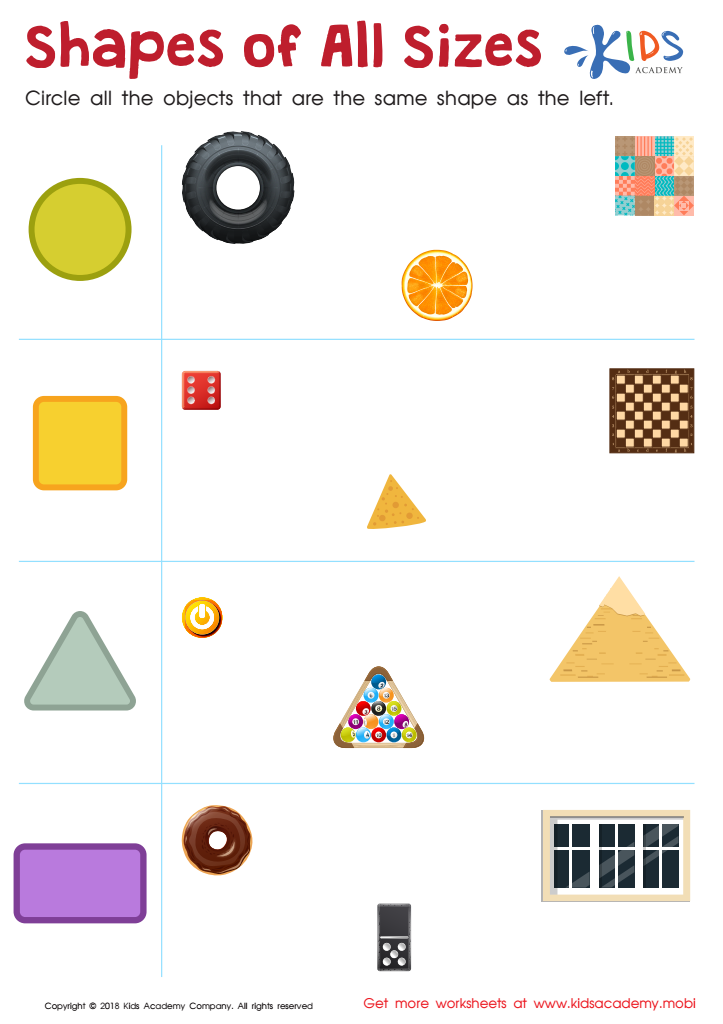
Shapes of All Sizes Worksheet
 Assign to My Students
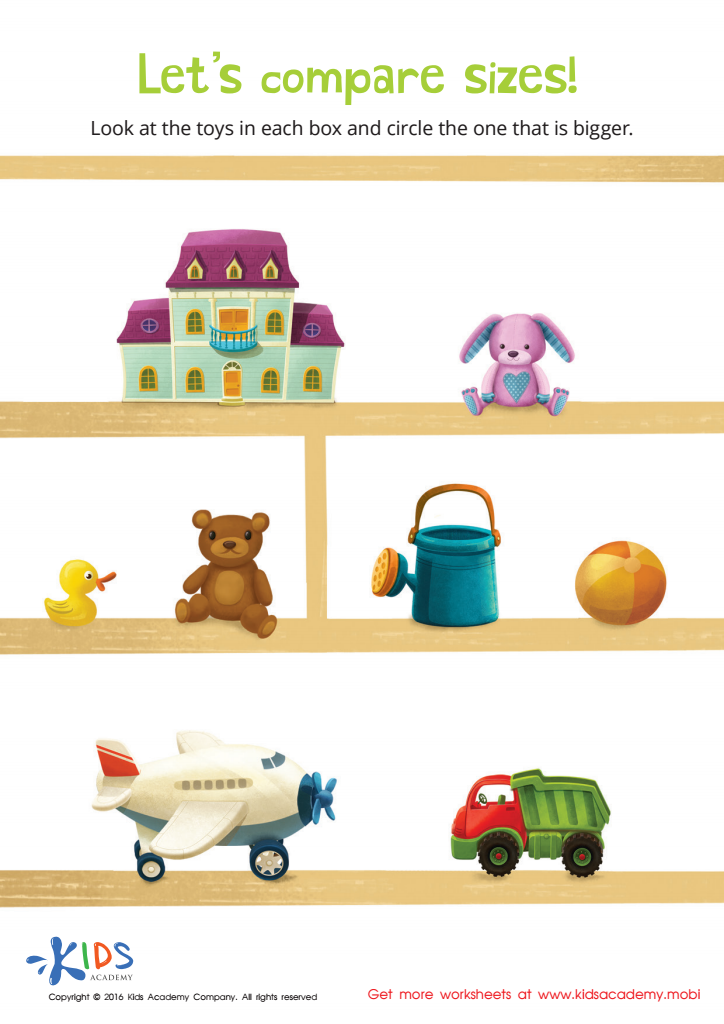
Classifying by Size Sorting Worksheet
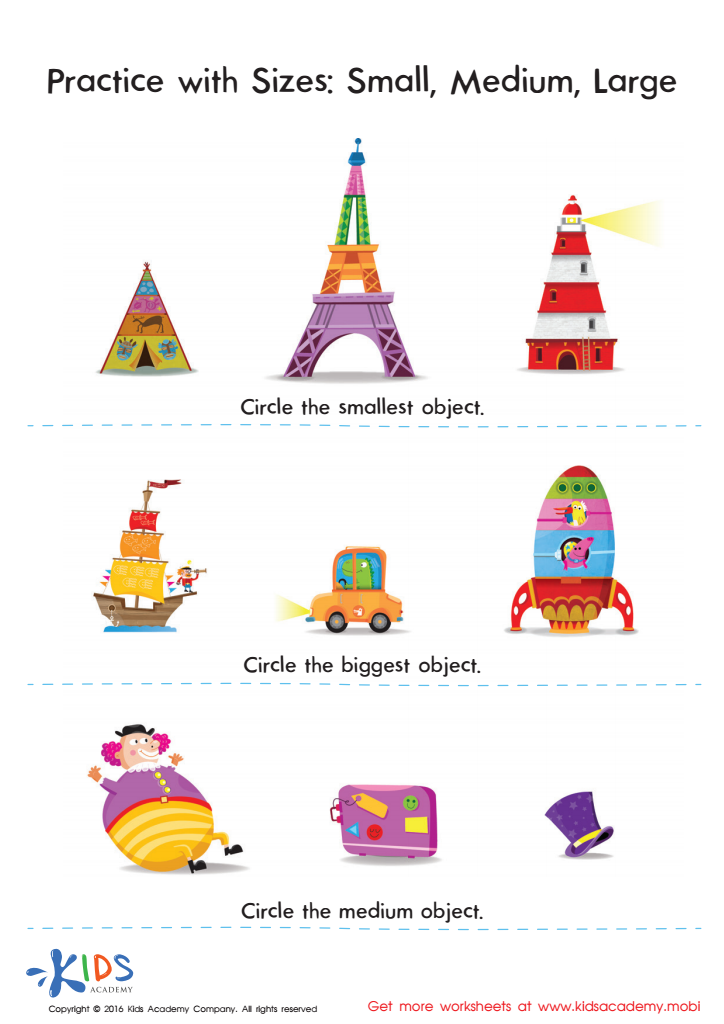






.jpg)
Understanding sizes in kindergarten math is fundamental for young learners and should be a priority for both parents and teachers. Introducing size concepts at an early age fosters children's ability to compare, categorize, and recognize relationships between objects, which are key skills in mathematical thinking and problem solving.
When children grasp ideas of big vs. small, tall vs. short, or heavy vs. light, they are not only mastering mathematical concepts but also learning vital language skills essential for communication and comprehension. These early lessons in measurement form the building blocks for more complex subjects such as geometry, algebra, and physics, ensuring a smoother progression in their educational journey.
Moreover, understanding sizes aids in everyday decision-making and spatial awareness, crucial for tasks ranging from following instructions to navigating their environment safely. It helps children organize and make sense of their world, promoting cognitive development and critical thinking.
Parents and teachers who actively engage in teaching size concepts through playful activities, hands-on projects, and real-life examples instill a strong, intuitive sense for mathematics. This effort nurtures children's confidence and enthusiasm towards learning, setting a positive foundation for their future academic achievements.








