Enhance your child's early math skills with our engaging Visual Discrimination Kindergarten Math Worksheets! Designed specifically for young learners, these worksheets help children identify similarities, differences, and patterns in shapes and objects, laying a strong foundation for future math success. With colorful visuals and age-appropriate activities, your child will develop critical thinking and problem-solving skills while having fun. Our resources promote active learning and reinforce visual recognition, essential for grasping more complex concepts later on. Perfect for at-home practice or classroom use, these worksheets are a valuable addition to any kindergarten curriculum. Explore our collection and watch your child thrive in math!

Check out this FREE Kindergarten Trial Lesson on Math!

Find 2 Objects that Share a Trait

Favorites
With answer key
Interactive
  • Kindergarten
  • Visual discrimination
  • Math
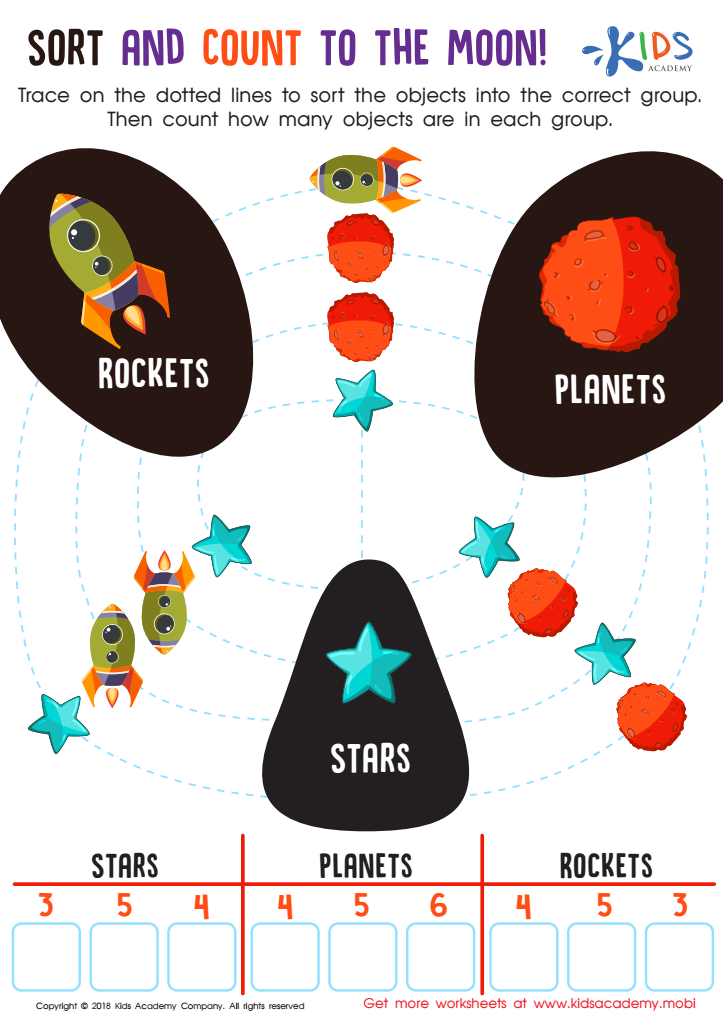
Sort and Count to the Moon Worksheet

Sort and Count to the Moon Worksheet

Little space explorers will love counting, sorting and strengthening number sense with this galactic worksheet! They'll use traceable lines to sort pictures of stars, planets and rockets into categories according to properties. After sorting, they'll count each item and fill in the boxes. Bold pictures make it fun and build critical thinking skills.
Sort and Count to the Moon Worksheet
Worksheet
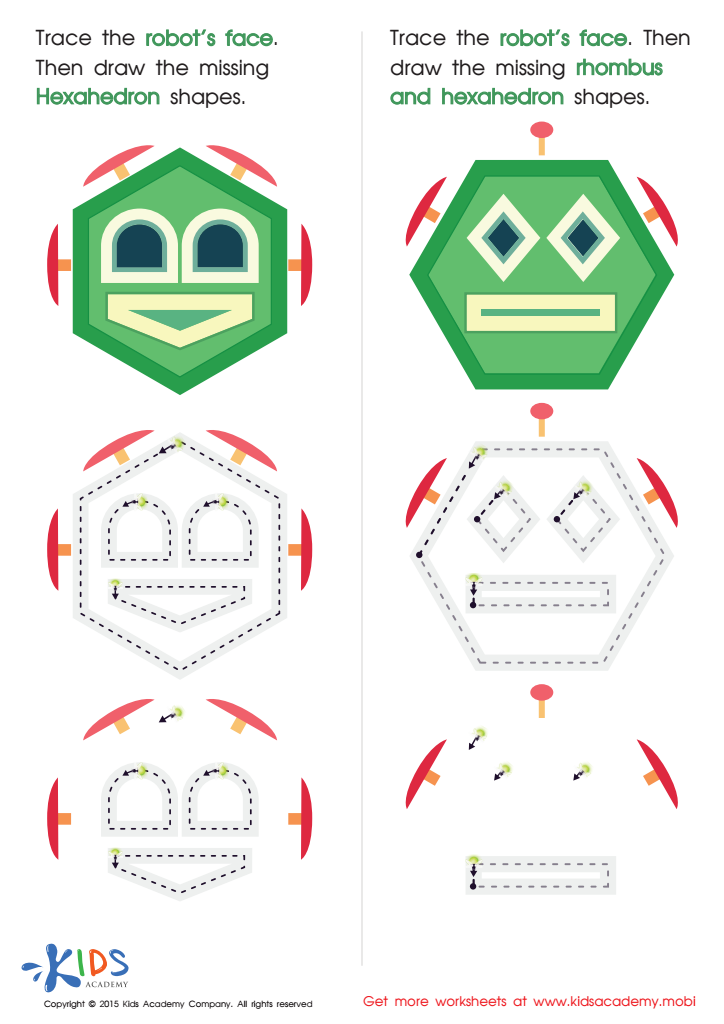
Geometric Shapes for Kids: Practice Drawing Hexahedrons And a Rhombus PDF

Practice Drawing Hexahedrons And a Rhombus Worksheet
Trace the Robot's face, draw hexahedron and rhombus shapes, then trace again. Our tracing shapes worksheets make it easy for kids to learn geometry. Get more materials from Kids Academy to practice all the shapes.
Practice Drawing Hexahedrons And a Rhombus Worksheet
Worksheet
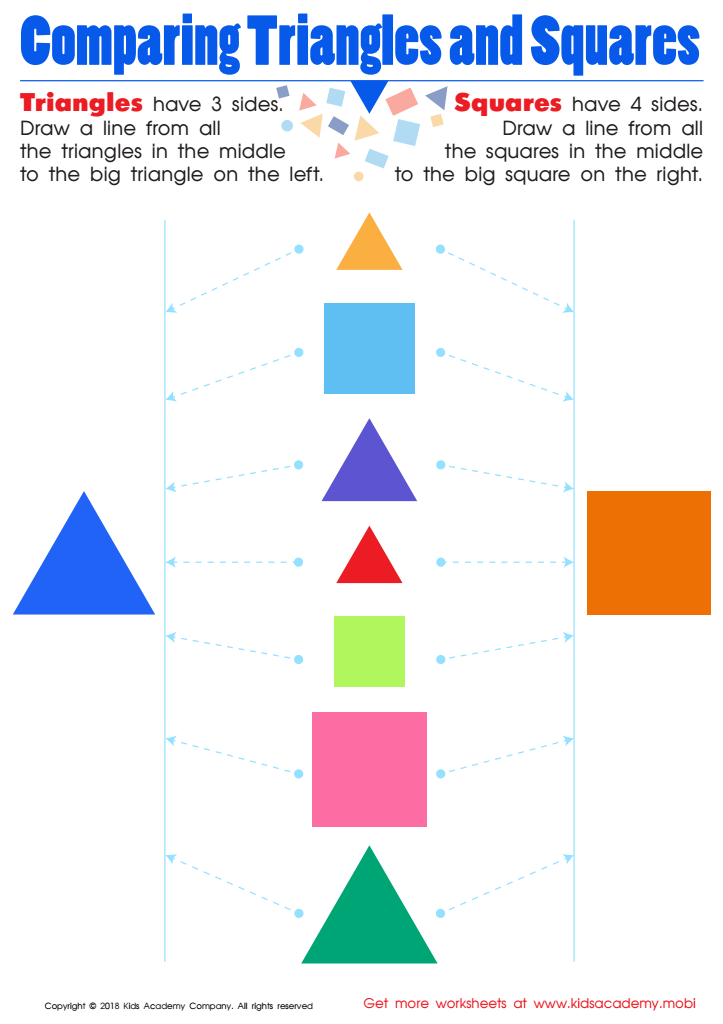
Comparing Triangles Squares Worksheet

Comparing Triangles Squares Worksheet

Squares and triangles are different in the number of sides they have. Challenge kids to compare them with this fun worksheet! Read the descriptions at the top, then use the left and right shapes to match up the middle ones. Go down the page, joining the middle shapes to the side using the dotted lines!
Comparing Triangles Squares Worksheet
Worksheet
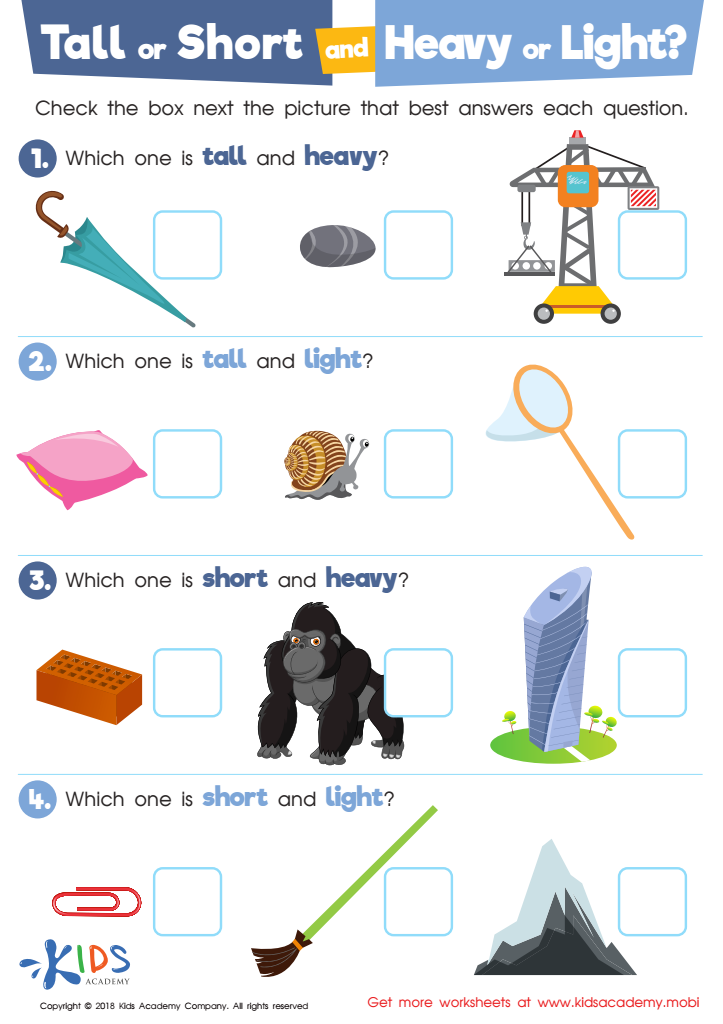
Tall or Short and Heavy or Light? Worksheet
Tall or Short and Heavy or Light? Worksheet

Young children can find basic measurement concepts tricky. This PDF introduces them to the appropriate vocabulary for describing heavy, light, tall and short items, by using familiar pictures. It helps them accurately select which items fit each category.
Tall or Short and Heavy or Light? Worksheet
Worksheet
Sorting Games for Kindergarten
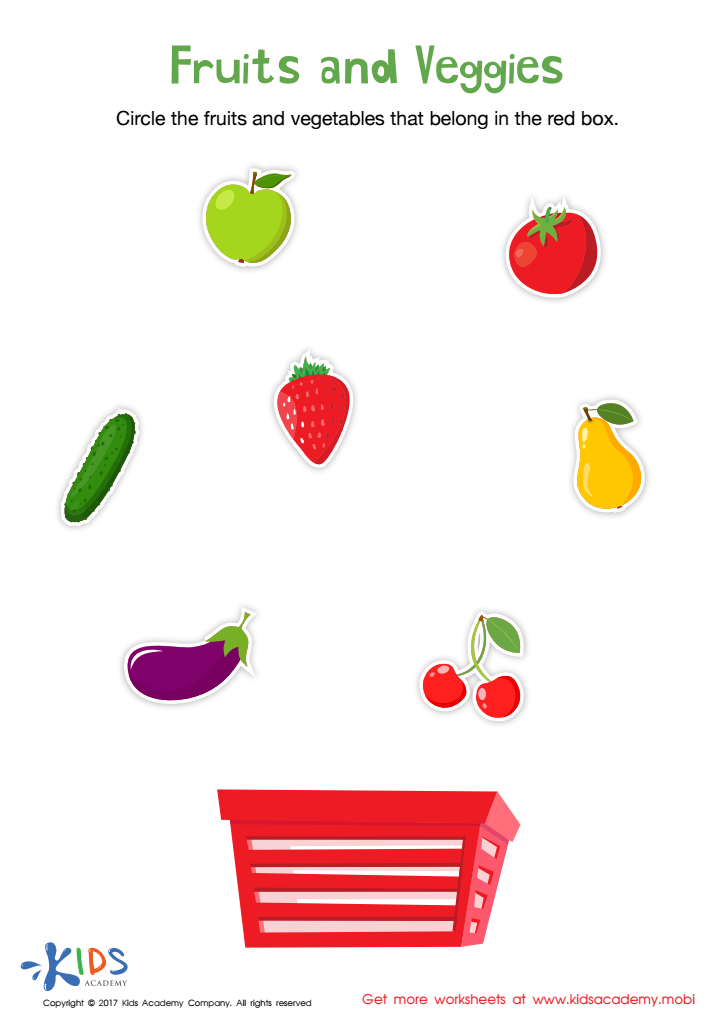
Classifying Fruits and Veggies by Color Sorting Worksheet
Worksheet
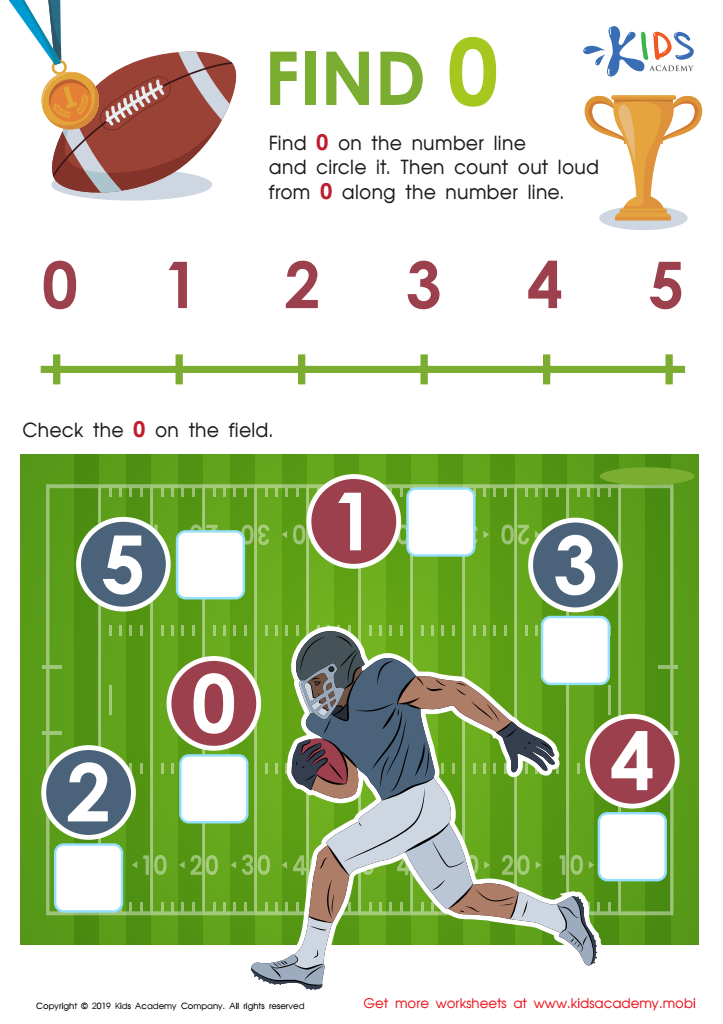
Find 0 Worksheet
Find 0 Worksheet

Find 0 Worksheet

Help make number learning easier with this worksheet! Ask your students to find and circle 0 on the number line, then count aloud from 0 to the last number. It might not be their favorite subject, but it's unavoidable - and with this worksheet, they'll be counting like pros!
Find 0 Worksheet
Worksheet
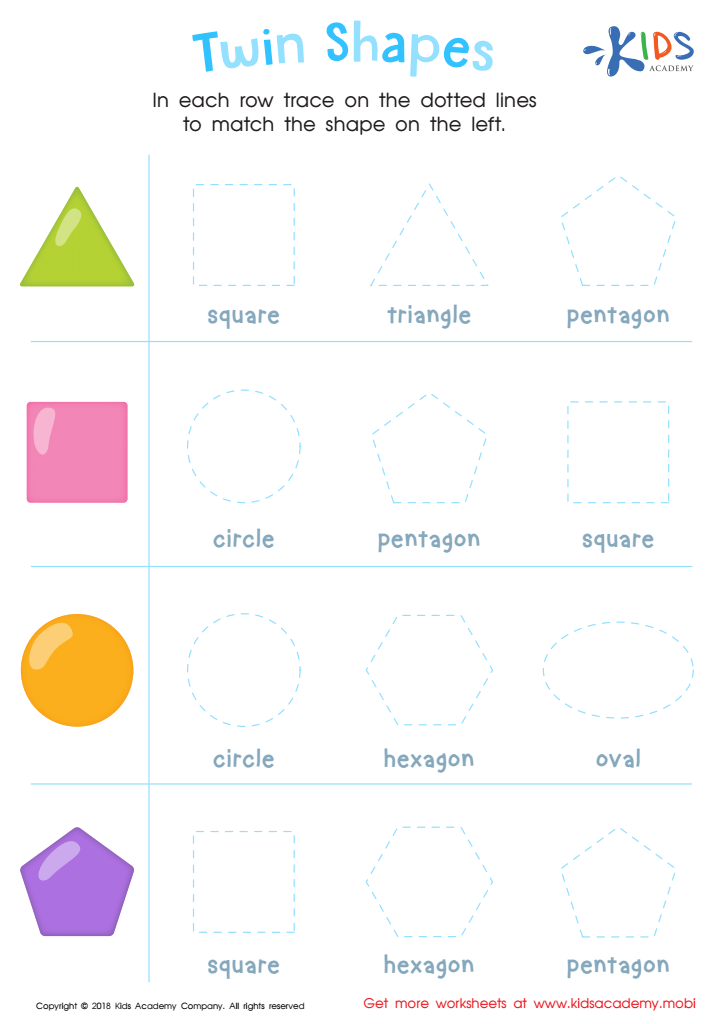
Twin Shapes Dot-to-Dot Worksheet

Twin Shapes Dot-to-Dot Worksheet

Test your child's ability to copy with this worksheet. Ask them to find and name the four shapes on the left. Then, they must match each with the dotted lines on the right. Help your child with all four shapes in this fun exercise.
Twin Shapes Dot-to-Dot Worksheet
Worksheet
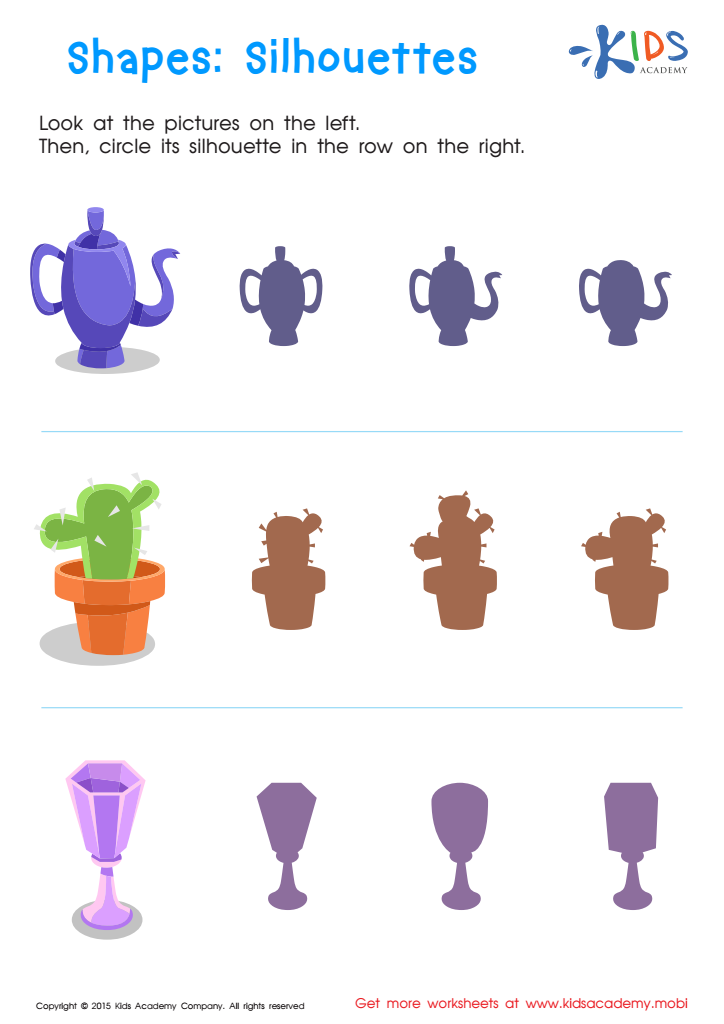
Silhouettes - shapes worksheet

Silhouettes – Shapes Worksheet

Kids can have fun while learning to compare sizes with this silhouettes shapes worksheet! Matching pictures to silhouettes helps them build early math skills, while enjoying the activity!
Silhouettes – Shapes Worksheet

Worksheet


Visual discrimination is a crucial cognitive skill that allows children to differentiate between similar objects, symbols, shapes, and patterns. In Kindergarten math, this skill is especially important as it forms the foundation for understanding numbers, shapes, and spatial relationships. Parents and teachers should care about visual discrimination because it directly influences a child’s ability to comprehend math concepts, solve problems, and succeed in later learning stages.

When children develop strong visual discrimination skills, they are better equipped to identify differences and similarities in numerical representations, interpret graphs, and recognize geometric shapes. This leads to improved problem-solving abilities, increased confidence in their mathematical skills, and enhanced overall academic performance.

Additionally, fostering visual discrimination can support children in recognizing letter and number formations, which is essential for reading and writing as well. Engaging activities that develop this ability source excitement about learning and encourage playful exploration in math.

By focusing on visual discrimination, parents and educators not only bolster children's early math skills but also promote critical thinking and creative problem-solving, skills essential for lifelong learning. Empowering young learners in these fundamental areas lays the groundwork for future success across all subjects, not just mathematics.