Division practice Kindergarten Multiplication and Division Word Problems Worksheets
4 filtered results
-
From - To
Welcome to our Division Practice worksheets designed for Kindergarten students! These engaging and interactive resources help young learners master essential division concepts through fun word problems. Our thoughtfully crafted worksheets combine storytelling with math, enabling children to visualize and solve real-life scenarios. Each problem encourages critical thinking and promotes a strong understanding of division principles. Ideal for both classroom and at-home learning, these worksheets provide clear explanations and guided practice to ensure comprehension. Start your child's journey toward mathematical confidence and success with our Division Practice worksheets, where learning math becomes an exciting adventure!
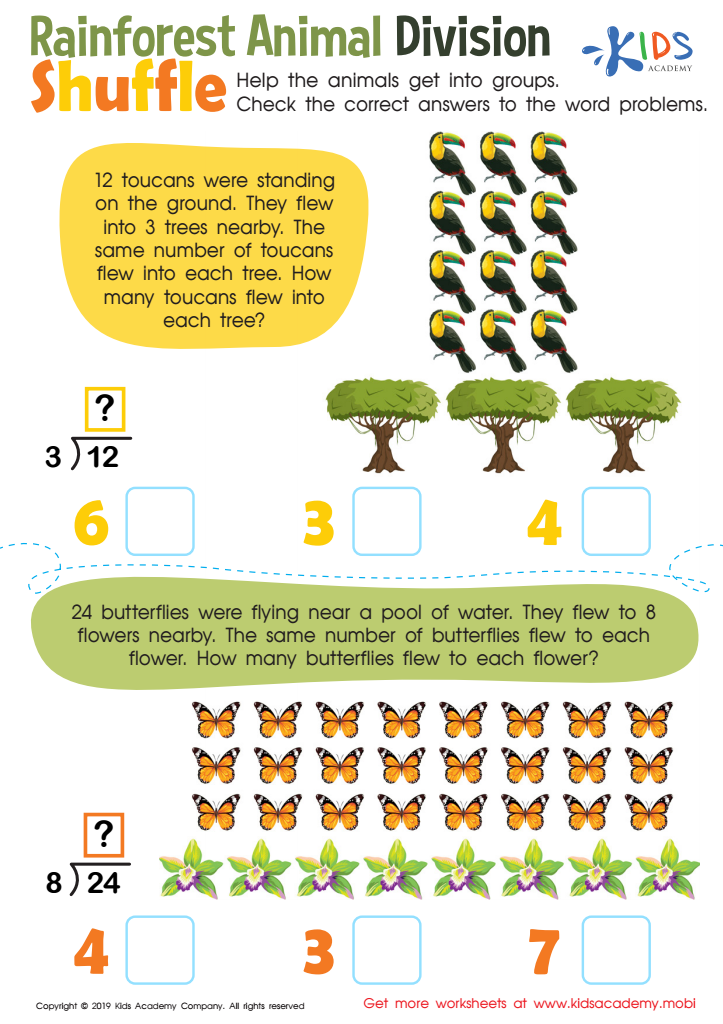
Rainforest Animal Division Worksheet
 Assign to My Students
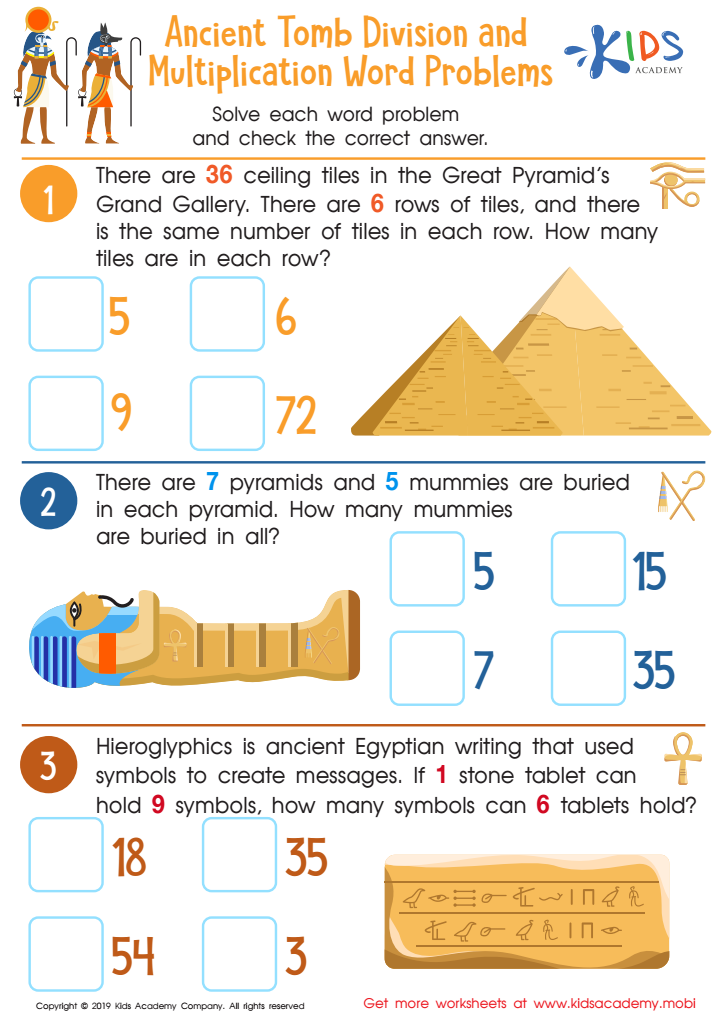
Ancient Tomb Division and Multiplication Word Problems Worksheet
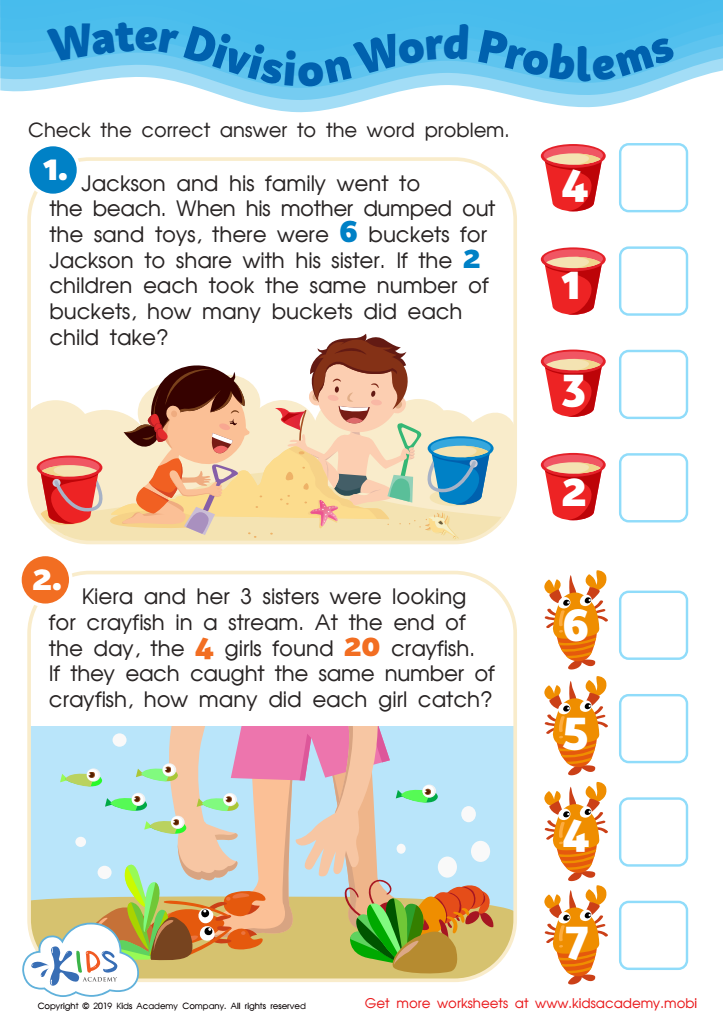
Water Division Word Problems Worksheet
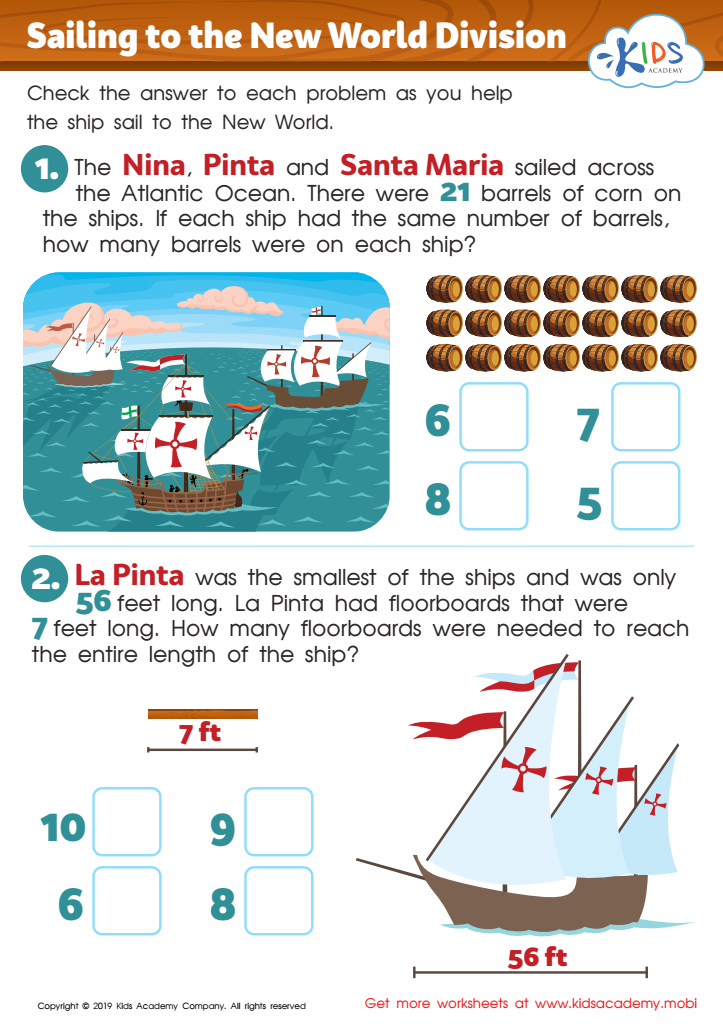
Sailing to the New World Division Worksheet




Parents and teachers should prioritize Division practice in Kindergarten, particularly when incorporating Multiplication and Division Word Problems, as it lays a crucial groundwork for students' mathematical understanding. Early exposure to these concepts fosters critical thinking and problem-solving skills, crucial for success in later grades.
Kindergarten serves as a pivotal time in a child's cognitive development, where they start to make connections between numbers and their practical applications. Engaging with word problems helps young learners understand the real-world relevance of math, building a strong foundation for literacy and numeracy. This practice supports their ability to interpret, analyze, and solve problems, essential skills not just in math, but across all subjects.
Additionally, mastering Division and related word problems encourages perseverance, as students learn to approach challenges with curiosity and resilience. It also aligns with educational standards that emphasize understanding and fluency in basic operations.
By integrating Division practice into daily routines and nurturing a positive, fun learning environment, parents and teachers can boost children's confidence and aptitude in mathematics, ultimately fostering a lifelong love for learning and preparing them for future academic success. Investing time in these early skills is vital for developing competent, confident young mathematicians.