Counting practice Kindergarten Numbers 11–20 Worksheets
4 filtered results
-
From - To
Enhance your kindergartener's math skills with our engaging Counting Practice Worksheets for numbers 11–20! Tailored for young learners, these printable resources provide fun activities that foster counting comprehension and number recognition. Each worksheet is designed to captivate children’s attention while promoting their understanding of basic math principles. Whether it's tracing numbers, counting objects, or solving simple puzzles, our worksheets offer a variety of exercises to keep your child motivated and excited about learning. Perfect for both home and classroom use, our materials are an excellent way to build confidence in math and prepare students for future success. Try them today!
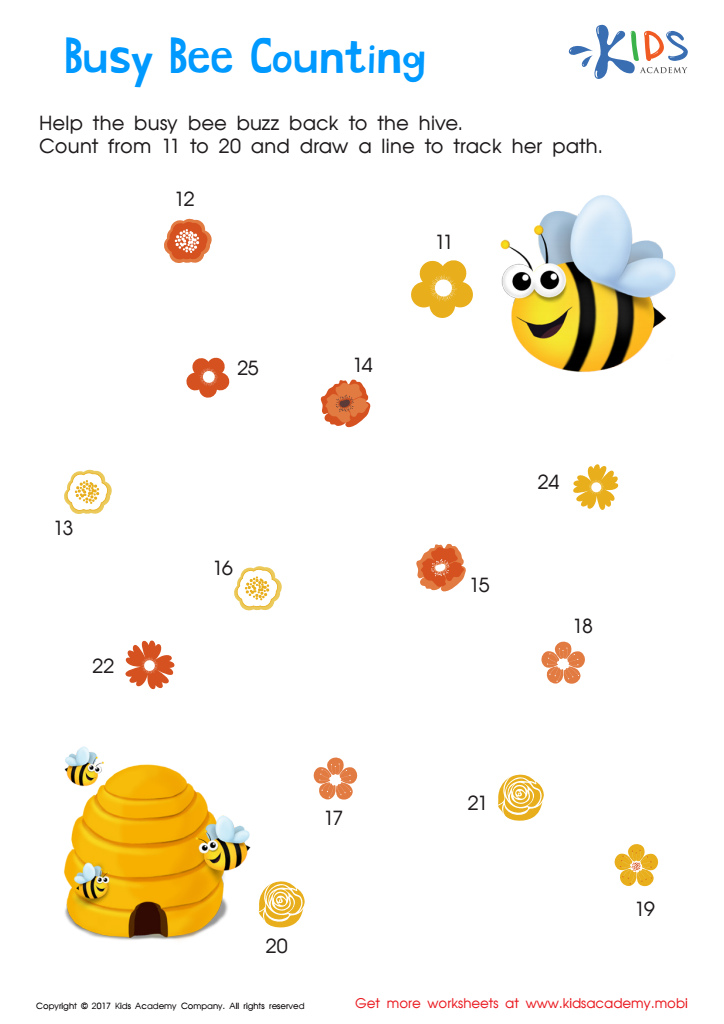
Ordering 11–20: Busy Bee Counting Worksheet
 Assign to My Students
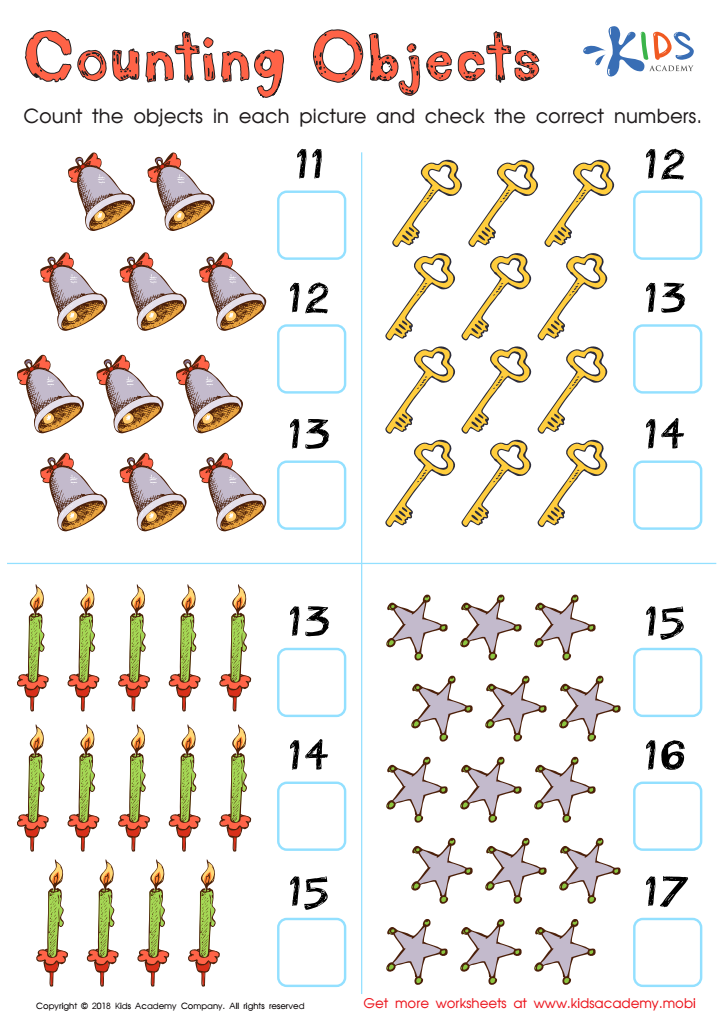
Counting Numbers Worksheet For Kindergarten
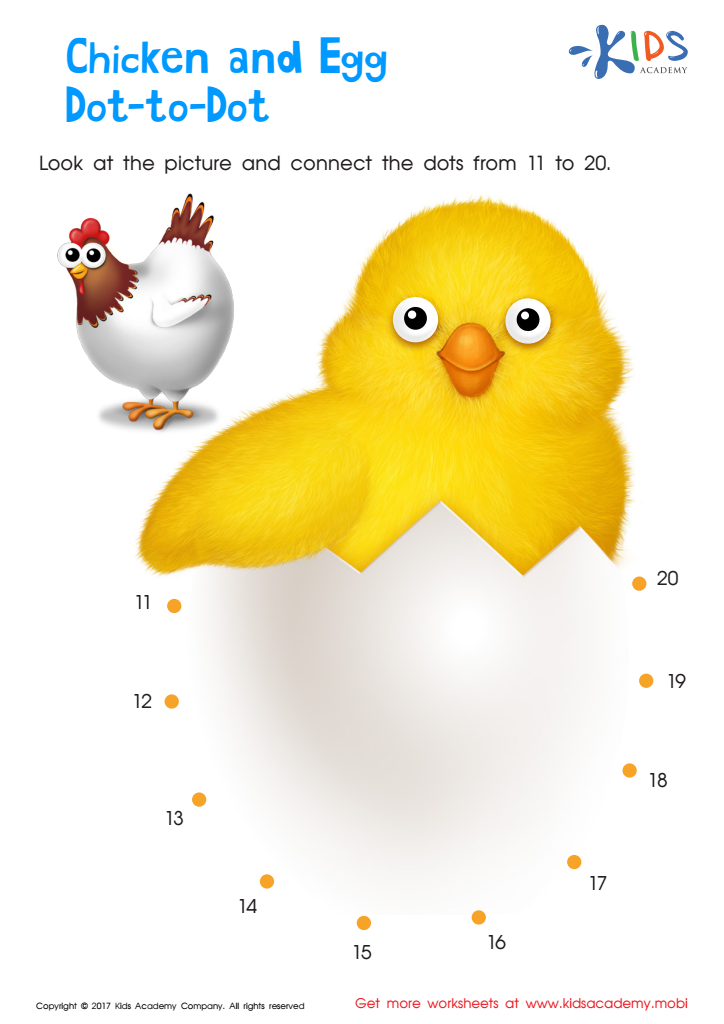
Ordering 11–20: Chicken & Egg Dot–to–dot Worksheet
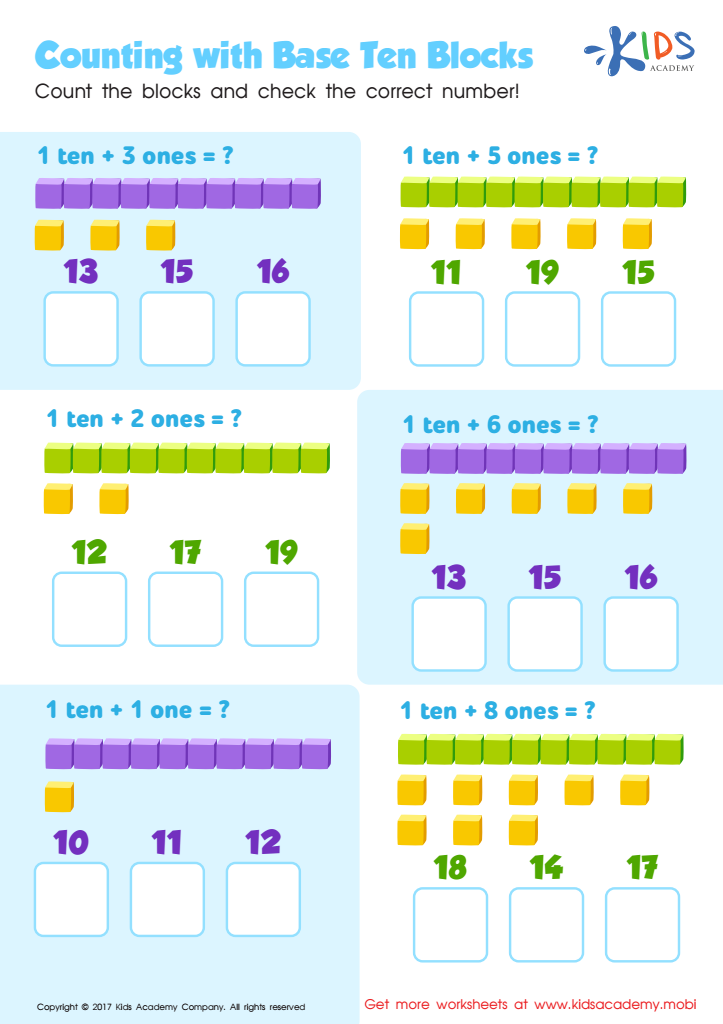
Counting with Base Ten Blocks Worksheet



Counting practice for Kindergarten Numbers 11–20 is crucial for a child's early mathematical foundation. First, it bridges the transition from understanding basic concepts of counting (1-10) to more complex numerical skills. Mastering numbers 11–20 enhances recognition of higher quantities, which is vital for everyday situations such as shopping, cooking, or sharing toys.
Moreover, this stage of counting teaches children about place value and number relationships, essential for understanding addition and subtraction later on. When parents or teachers ensure that children grasp these numbers, they are building confidence and fostering positive attitudes towards math.
Additionally, engaging in counting practice promotes fine motor skills through activities like drawing or building that reinforce numeral recognition. It also encourages vocabulary development, as children learn specific terms related to numbers and counting.
Socially, working in groups during counting activities supports communication and collaboration skills. Furthermore, it lays the groundwork for future mathematical learning, making alignment with educational standards more seamless.
Ultimately, parents and teachers who prioritize counting practice for numbers 11–20 contribute to a well-rounded, robust education, setting children on a path toward academic success and lifelong problem-solving skills.