Understanding ecosystems Kindergarten Plants and Animals Worksheets
4 filtered results
Difficulty Level
Grade
Age
-
From - To
Subject
Activity
Standards
Explore the wonders of nature with our "Understanding Ecosystems Kindergarten Plants and Animals Worksheets." Designed for young learners, these engaging worksheets introduce essential concepts of ecosystems, emphasizing the interplay between plants and animals. Children will discover how living organisms rely on each other and their environment to thrive. With vibrant illustrations and interactive activities, our resources make learning fun and accessible. These worksheets foster curiosity about wildlife, promote critical thinking, and support foundational science skills. Perfect for classroom or home use, they empower educators and parents to nurture a love for learning about ecosystems in early education. Begin your adventure today!
Favorites
With answer key
Interactive
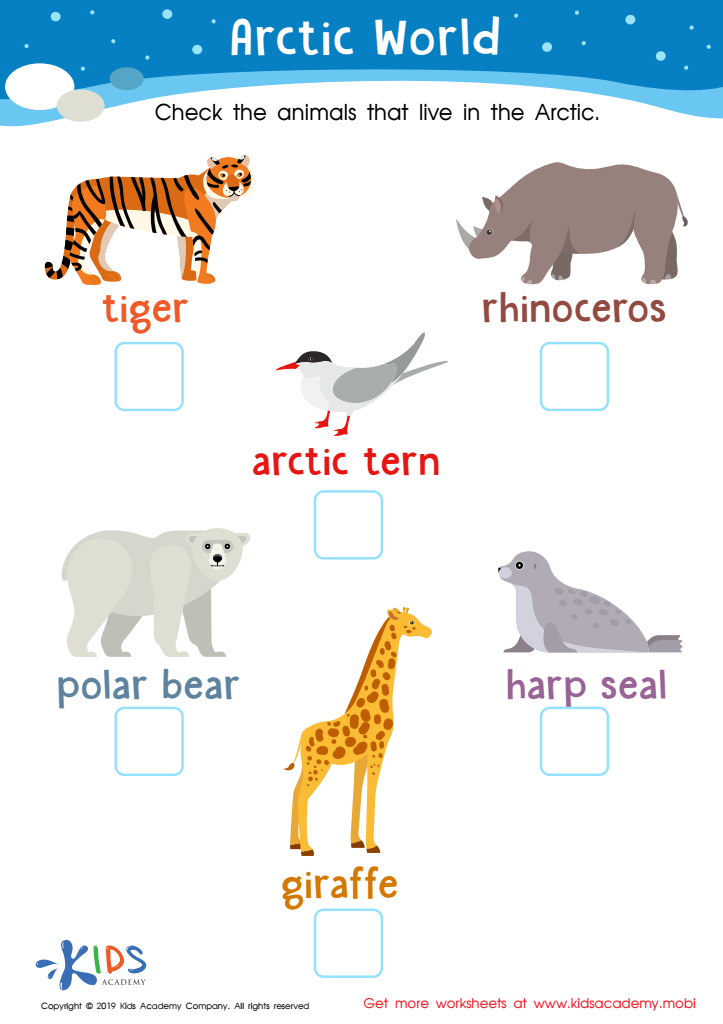
Arctic World Worksheet
Ask your students if they know where the Arctic is located and what lives there. If not, use a world atlas to show them. The Arctic is very cold and snow-covered; native animals have adapted to survive the harsh conditions. Look at the animals in the worksheet and help your students decide which ones live in the Arctic.
 Assign to My Students
Arctic World Worksheet
Worksheet
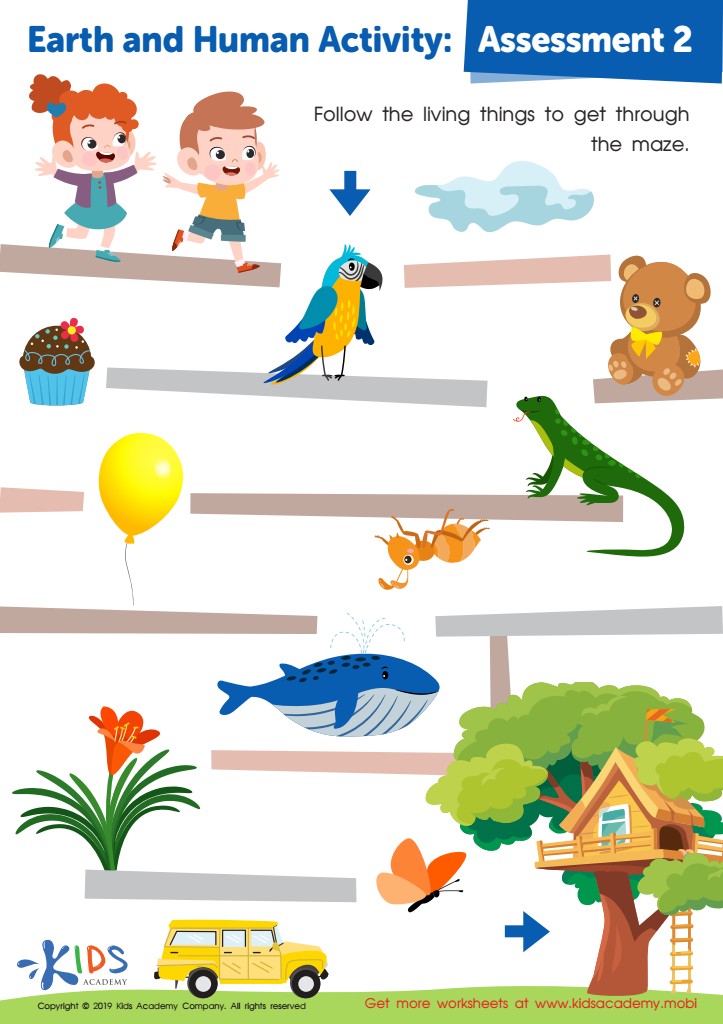
Earth and Human Activity: Assessment 2 Worksheet
Earth is alive with birds, trees, insects, and animals. Explain to your kids that the environment on Earth supports life. Ask for examples, then use the worksheet pictures to help them identify living things and complete the maze.
Earth and Human Activity: Assessment 2 Worksheet
Worksheet
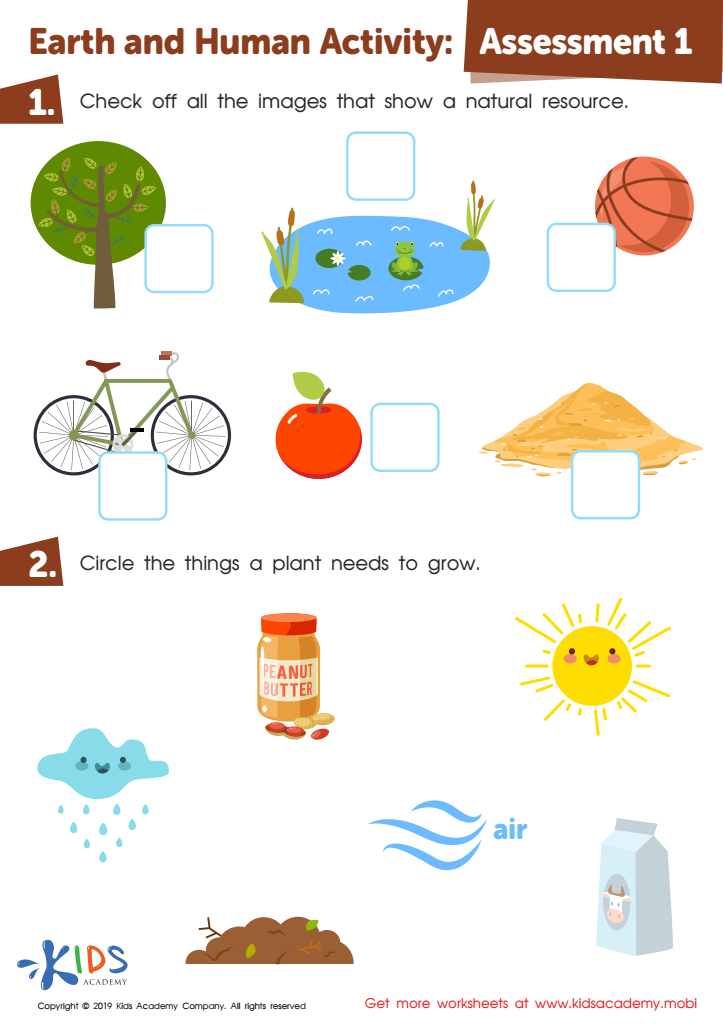
Earth and Human Activity: Assessment 1 Worksheet
Natural resources are gifts from Mother Nature that exist without man-made intervention. We use them to make essential items we use daily. Ask your kids for examples and have them check off images of natural resources on this worksheet.
Earth and Human Activity: Assessment 1 Worksheet
Worksheet
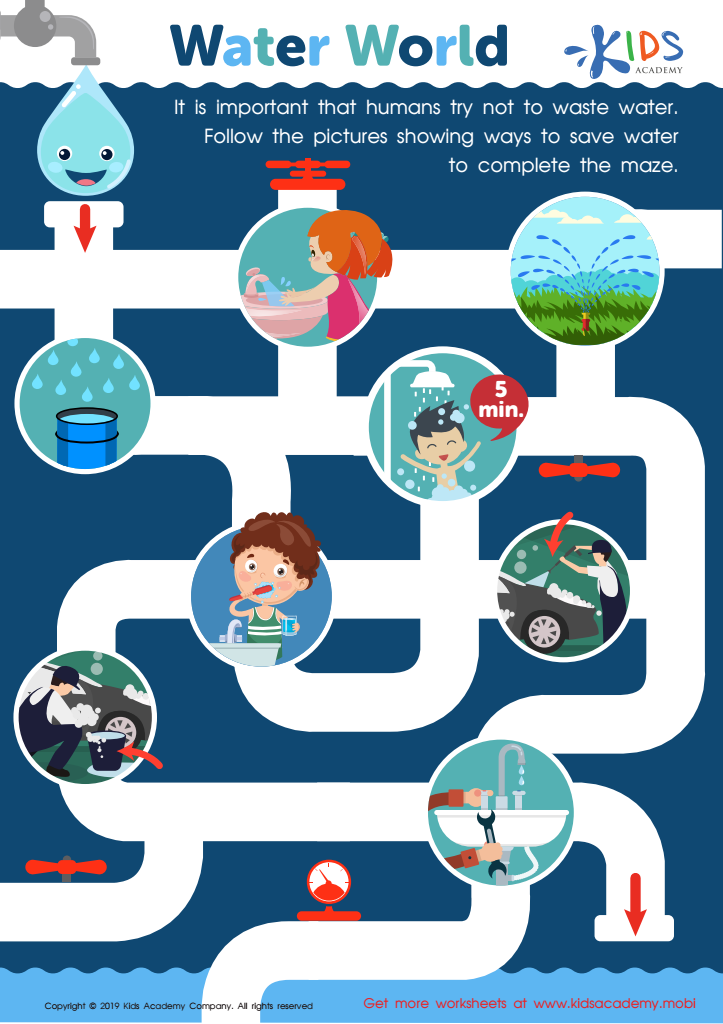
Water World Worksheet
Water is a vital necessity for living. Our bodies depend on it to stay healthy and survive. When we don't drink enough water, we become thirsty and run the risk of getting sick. Luckily, our planet is full of water and natural sources to stay hydrated. To prevent water waste, use this worksheet to teach your students how to conserve it and complete the maze.
Water World Worksheet
Worksheet
Join Kids Academy for Free
Who is primarily going to use this learning content?





Understanding ecosystems, particularly in the context of plants and animals, is essential for both parents and teachers, especially at the Kindergarten level. Teaching young children about ecosystems fosters a sense of wonder and curiosity about the natural world. This foundational knowledge promotes environmental stewardship early on, encouraging children to appreciate and care for their surroundings as they grow.
Moreover, engaging with ecosystems helps children develop critical thinking and observation skills. They learn to recognize the interconnections between plants, animals, and their habitats, understanding concepts such as food chains and the importance of biodiversity. Such comprehension nurtures a holistic view of life, enabling children to appreciate how their actions impact the environment.
Additionally, incorporating lessons about ecosystems in early education supports diverse learning styles—children can observe, touch, create, and explore through hands-on activities, making learning both fun and effective. It paves the way for integrated reading, writing, and science lessons, enriching their overall learning experience. By valuing lessons about ecosystems, parents and teachers can help cultivate empathetic, informed, and responsible individuals ready to face environmental challenges of the future. In summary, understanding ecosystems is not just an academic exercise but a life lesson that shapes future generations.