Analyzing data visually Worksheets for Kids
1 filtered results
-
From - To
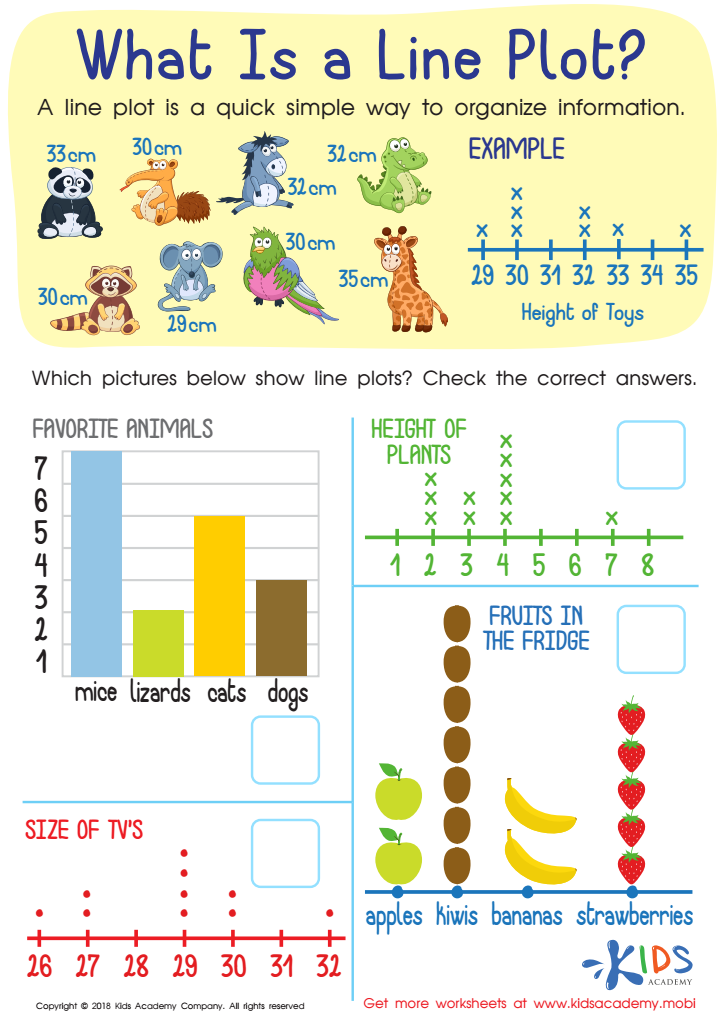
What Is a Line Plot? Worksheet
 Assign to My Students
Question/Answer

How does the mastery of the Analyzing data visually skill affect a student's performance at an early age?
Mastery of analyzing data visually at an early age significantly enhances a student's performance by improving their ability to interpret information, recognize patterns, and make informed decisions. This skill fosters critical thinking, boosts problem-solving abilities, and supports academic success across various subjects, including math, science, and social studies, by making complex data more understandable and engaging for young learners.
Why is the Analyzing data visually skill important for Grade 2 students?
Analyzing data visually is important for Grade 2 students because it enhances their ability to interpret information, recognize patterns, and make predictions. This skill lays the foundation for critical thinking, problem-solving, and decision-making abilities by developing their observational skills and understanding of how to represent and communicate data effectively, setting a vital groundwork for more advanced mathematical and scientific concepts.
What does the Analyzing data visually skill mean when it comes to Grade 2 Measurement learning?
The "Analyzing data visually" skill in Grade 2 Measurement learning involves teaching students how to interpret and understand information presented in visual formats, such as charts, graphs, and tables. It helps them to compare and contrast data, recognize patterns, and draw basic conclusions from the measurements and data represented visually.